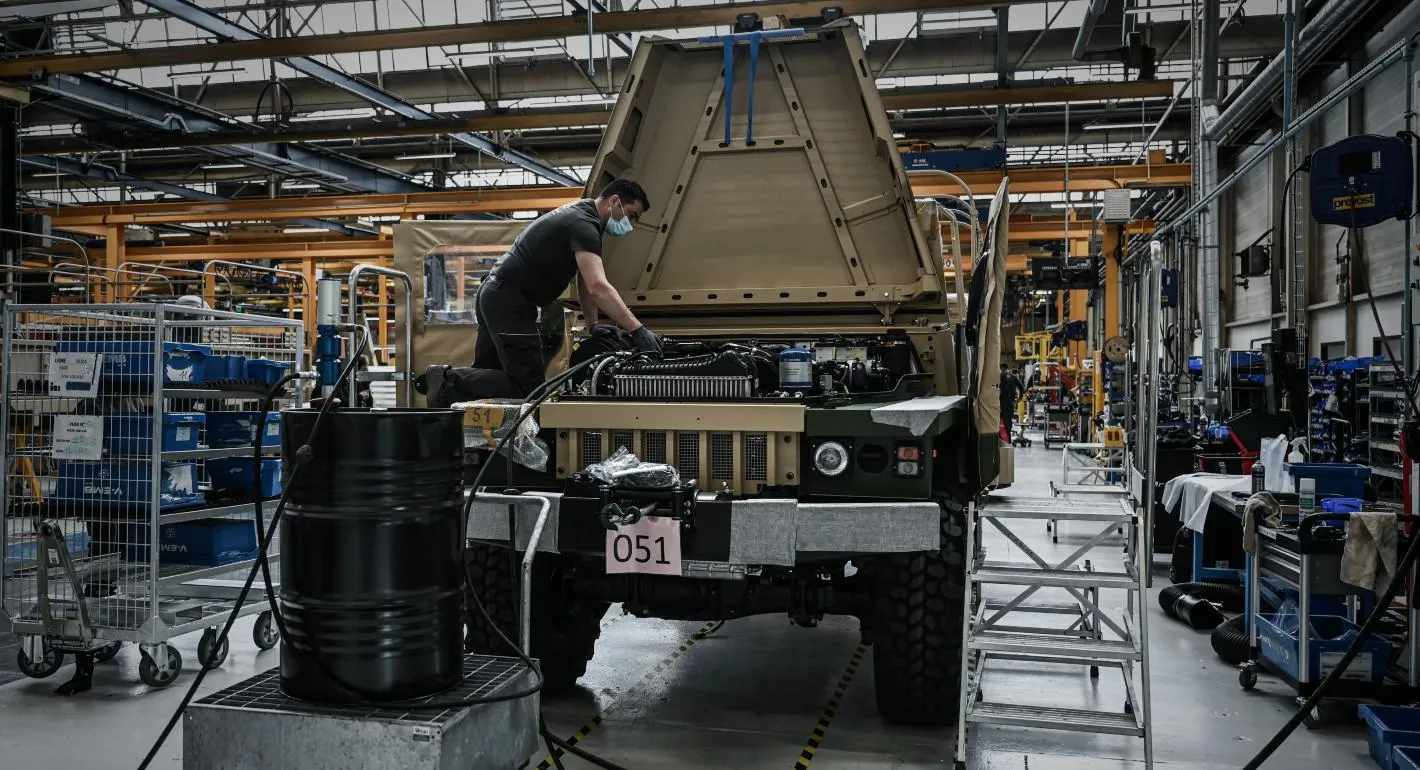
Europe is experiencing the most significant transformation of its defence posture since the end of the Cold War. For decades, the European Union largely approached security through diplomacy, economic integration, and selective military engagement, relying heavily on NATO and, above all, the United States to provide the strategic backbone of European defence. Today, however, this model is undergoing a fundamental reassessment. Russia’s war against Ukraine, persistent instability across Europe’s southern neighbourhood, the growing use of hybrid warfare, increasing uncertainty regarding the future trajectory of American security commitments, and the rapid militarisation of global strategic competition have collectively exposed a structural weakness that extends far beyond defence spending. The central challenge facing Europe is no longer whether it is willing to invest more in security, but whether it possesses the industrial capacity necessary to sustain military power over the long term.
Although European governments have announced unprecedented increases in defence budgets, financial commitments alone cannot generate military capability. Modern armed forces depend upon resilient industrial ecosystems capable of producing ammunition, missiles, armoured vehicles, air-defence systems, drones, satellite technologies, and advanced electronic components at a pace compatible with prolonged strategic competition. Current industrial capacity remains fragmented across national markets, constrained by decades of underinvestment, and insufficiently coordinated to meet both immediate operational requirements and future deterrence objectives. Without a comprehensive transformation of Europe’s defence industrial base, higher military expenditure risks producing only temporary improvements rather than sustainable strategic autonomy.
This paper argues that Europe has entered a new phase in which defence industrial capacity has become a strategic asset equal in importance to military personnel, operational readiness, and technological superiority. Industrial resilience is no longer merely an economic issue; it is a prerequisite for credible deterrence, Alliance solidarity, and Europe’s ability to respond independently to future crises. The European Union must therefore move beyond isolated procurement initiatives and develop an integrated defence industrial strategy capable of supporting sustained production, technological innovation, secure supply chains, and long-term strategic competitiveness.
The debate surrounding European security has traditionally focused on military capabilities, defence expenditure, and political cohesion among Allied governments. While these issues remain central, recent developments have revealed that the true foundation of military power lies not only in operational forces but also in the industrial systems that sustain them. Wars are no longer determined solely by the quality of military doctrine or battlefield performance. They increasingly depend upon the capacity of national economies to manufacture weapons, replenish ammunition stocks, maintain complex technological systems, and secure uninterrupted access to strategic raw materials. The ability to produce military capability continuously has become as important as the capability itself.
Europe’s experience since 2022 has fundamentally altered long-standing assumptions regarding defence preparedness. The rapid depletion of ammunition inventories, delays in weapons production, shortages of critical components, and dependence on external suppliers have demonstrated that decades of relatively low defence investment created structural weaknesses extending far beyond military budgets. Many European defence industries were designed to support limited peacetime procurement rather than sustained high-intensity production. Manufacturing facilities were consolidated, supply chains became increasingly globalised, and production lines prioritised efficiency over surge capacity. While economically rational during periods of relative stability, these models have proven inadequate in an international environment characterised by prolonged conflict, strategic competition, and accelerating geopolitical uncertainty.
The challenge facing Europe is compounded by the changing nature of modern warfare. Advanced military operations require sophisticated technologies that depend upon highly specialised industrial sectors, including semiconductor manufacturing, artificial intelligence, satellite communications, cybersecurity, precision engineering, rare earth processing, and advanced materials production. These sectors are deeply integrated into global supply chains that remain vulnerable to geopolitical disruption, economic coercion, and technological competition. Consequently, defence industrial policy can no longer be separated from broader questions of economic security, technological sovereignty, and strategic resilience. Industrial policy has become an essential component of national security policy.
At the same time, Europe’s defence industrial landscape remains characterised by fragmentation. Multiple national procurement systems, differing operational requirements, overlapping industrial programmes, and inconsistent investment strategies continue to reduce efficiency while limiting economies of scale. European manufacturers frequently compete against one another for relatively small domestic contracts instead of coordinating production across the Union. This fragmentation increases costs, delays procurement, complicates interoperability, and weakens Europe’s collective ability to respond rapidly during periods of crisis. Although initiatives such as the European Defence Fund, the European Defence Industrial Strategy, and joint procurement mechanisms represent important steps towards greater integration, implementation remains uneven and constrained by national political priorities.
The emerging security environment therefore demands a broader understanding of strategic autonomy. The concept should not be interpreted as reducing cooperation with NATO or replacing transatlantic security arrangements. Rather, strategic autonomy requires that Europe possess sufficient industrial capacity to contribute credibly to collective defence while maintaining the ability to sustain military operations during prolonged crises regardless of external political or economic pressures. This objective requires investment not only in military equipment but also in production facilities, workforce development, technological research, critical minerals, resilient supply chains, and regulatory frameworks capable of supporting rapid industrial mobilisation when required.
This paper examines the industrial dimension of Europe’s ongoing rearmament and argues that defence manufacturing has become one of the defining strategic challenges facing the European Union. It analyses the structural weaknesses of Europe’s current defence industrial base, explores the implications of fragmented production for military readiness and deterrence, evaluates recent European initiatives aimed at strengthening industrial resilience, and proposes policy recommendations designed to transform Europe’s defence industry into a strategic pillar capable of supporting the Union’s long-term security ambitions. Rather than viewing industrial production as a secondary economic activity, the paper contends that it must now be recognised as a core component of European strategic power in an increasingly contested international order.
From Defence Spending to Defence Production: Europe’s Strategic Bottleneck
For much of the post-Cold War period, European security debates revolved around defence expenditure. Successive NATO summits emphasised the importance of meeting agreed spending targets, while political discussions frequently measured commitment through percentages of national GDP allocated to defence. The assumption underpinning this approach was straightforward: increased financial investment would naturally translate into stronger military capability. However, recent conflicts have exposed a fundamental flaw in this logic. Financial resources alone cannot produce military power if the industrial infrastructure responsible for manufacturing weapons, ammunition, sensors, propulsion systems, and advanced military technologies lacks the capacity to respond. Europe is therefore confronting a strategic bottleneck in which political willingness to spend has outpaced industrial ability to deliver.
This imbalance has become increasingly evident as European governments attempt to replenish depleted military inventories while simultaneously supporting Ukraine and modernising their own armed forces. Orders for artillery ammunition, long-range missiles, air-defence interceptors, armoured vehicles, and precision-guided munitions have increased dramatically, yet production timelines often extend over several years. Defence manufacturers continue expanding facilities and recruiting skilled workers, but industrial scaling requires substantial capital investment, regulatory approvals, specialised machinery, secure supply contracts, and highly qualified personnel. These structural limitations mean that Europe cannot simply purchase greater security through larger budgets. Instead, military capability has become increasingly constrained by production capacity rather than financial availability.
The problem extends beyond factory output. Europe’s defence industry depends upon highly specialised supply chains that include advanced electronics, semiconductors, rare earth elements, explosives, composite materials, propulsion systems, and sophisticated software. Many of these components originate outside the European Union or rely upon complex international supply networks vulnerable to geopolitical disruption. As strategic competition intensifies, dependence on external suppliers creates significant risks for military readiness. Export restrictions, transportation disruptions, cyberattacks, or diplomatic crises affecting key suppliers could rapidly slow European defence production precisely when sustained manufacturing would be most essential. Consequently, industrial resilience has become inseparable from broader questions of economic security and technological sovereignty.
Another structural obstacle lies in the fragmentation of Europe’s defence industrial landscape. Unlike the United States, where a relatively integrated defence market supports large-scale production and standardised procurement, the European Union remains characterised by numerous national industries operating under different procurement rules, certification procedures, military requirements, and political priorities. Multiple countries continue developing similar weapons systems independently, often competing for limited export opportunities while failing to achieve economies of scale. This duplication increases costs, fragments research and development efforts, complicates logistics, and limits production efficiency. Although industrial competition can stimulate technological innovation, excessive fragmentation undermines Europe’s collective ability to generate military capability rapidly during periods of crisis.
The consequences of fragmented production are visible across nearly every category of military equipment. European armed forces continue operating a wide variety of tank platforms, artillery systems, fighter aircraft, naval vessels, communication architectures, and ammunition standards. Maintaining this diversity requires separate maintenance networks, distinct training programmes, specialised spare parts inventories, and parallel production lines. While national sovereignty remains an important consideration in defence procurement, the absence of greater industrial harmonisation imposes growing financial and operational costs at precisely the moment when Europe seeks to strengthen collective deterrence. Strategic autonomy cannot be achieved through dozens of isolated industrial strategies pursuing similar objectives independently.
Labour shortages represent another increasingly significant constraint. Expanding defence production requires engineers, metallurgists, software developers, cybersecurity specialists, precision machinists, welders, electronics technicians, and advanced manufacturing experts. Yet many European economies already face demographic pressures, ageing workforces, and intense competition for highly skilled personnel from civilian technology sectors. Defence manufacturers therefore confront a dual challenge: expanding production while simultaneously attracting and retaining specialised talent. Without long-term investment in technical education, vocational training, university partnerships, and workforce development, industrial expansion risks becoming constrained not by financial capital but by human capital.
Technological competition further complicates Europe’s industrial transformation. Modern defence systems increasingly integrate artificial intelligence, autonomous platforms, quantum technologies, cyber capabilities, advanced sensors, satellite communications, and cloud-based operational architectures. These technologies evolve far more rapidly than traditional procurement cycles, requiring industrial ecosystems capable of continuous innovation rather than episodic production. Europe’s future military competitiveness will therefore depend not only upon manufacturing larger quantities of equipment but also upon maintaining leadership in critical emerging technologies that increasingly determine operational effectiveness on contemporary battlefields.
These developments indicate that Europe’s rearmament should not be understood merely as an increase in military expenditure. It represents a broader process of industrial transformation in which factories, research institutions, logistics networks, technology companies, universities, and critical infrastructure collectively become components of national and European security. Defence industrial policy is no longer a specialised economic sector operating separately from strategic planning; it has become one of the principal determinants of Europe’s ability to deter aggression, sustain prolonged military operations, and preserve strategic autonomy in an increasingly contested international environment. The effectiveness of European security during the coming decades will depend less upon the number of defence strategies adopted than upon the industrial capacity available to transform political ambition into deployable military capability.
Building Europe’s Defence Industrial Base: From Fragmentation to Strategic Integration
If the first phase of Europe’s rearmament was defined by political declarations and increased defence budgets, the second phase must be characterised by industrial integration. The challenge confronting the European Union is no longer simply expanding defence production but fundamentally restructuring how military capability is designed, manufactured, procured, and sustained across the continent. Europe’s current industrial model remains largely organised around national priorities, reflecting decades during which defence policy was regarded primarily as a sovereign responsibility. While this approach preserved domestic industrial champions and protected national strategic interests, it also produced duplication, inefficiency, and limited interoperability. In the contemporary security environment, these structural characteristics have become strategic liabilities rather than sources of resilience.
The fragmentation of Europe’s defence industrial landscape is reflected not only in procurement practices but also in research and development, production planning, export policies, certification standards, and long-term investment strategies. European governments frequently finance parallel development programmes for comparable military capabilities, resulting in multiple armoured vehicle platforms, artillery systems, naval vessels, communication architectures, and missile technologies that perform similar operational functions while requiring separate production chains and logistical support. This duplication increases procurement costs and complicates multinational military operations, reducing the efficiency of collective defence at precisely the moment when interoperability has become essential to deterrence.
Industrial integration therefore represents more than an economic objective; it is a strategic requirement. A more coordinated European defence industry would enable larger production runs, reduce manufacturing costs, accelerate technological innovation, strengthen supply-chain resilience, and improve operational compatibility among European armed forces. Equally important, integrated production would enhance Europe’s ability to respond rapidly to future crises by allowing manufacturing capacity to be allocated according to collective priorities rather than fragmented national planning. Such an approach would also strengthen Europe’s negotiating position within the global defence market by creating economies of scale capable of competing with larger international defence producers.
Recent European initiatives indicate that policymakers increasingly recognise this challenge. Programmes designed to encourage joint procurement, expand cross-border industrial cooperation, and strengthen the European Defence Technological and Industrial Base represent important steps towards a more integrated defence economy. Nevertheless, these initiatives continue to encounter political resistance rooted in national industrial interests, employment considerations, and concerns regarding strategic sovereignty. Defence industries remain closely linked to domestic political economies, making governments reluctant to transfer production or procurement decisions to supranational mechanisms. Consequently, industrial integration progresses incrementally rather than strategically, often responding to immediate operational pressures instead of long-term structural planning.
The role of the private sector has also become increasingly central to Europe’s defence transformation. Modern military innovation is no longer driven exclusively by traditional defence contractors. Artificial intelligence, autonomous systems, cyber capabilities, satellite technologies, advanced software, quantum computing, and next-generation communications increasingly originate within commercial technology ecosystems rather than conventional defence industries. Europe’s ability to maintain military competitiveness therefore depends upon creating stronger partnerships between governments, established defence manufacturers, technology firms, universities, venture capital, and research institutions. Defence industrial policy must evolve beyond traditional procurement models and embrace innovation ecosystems capable of rapidly translating technological breakthroughs into deployable military capabilities.
Financial markets likewise play a growing strategic role in Europe’s defence industrial expansion. For many years, defence investments faced political hesitation within segments of European finance due to environmental, social, and governance (ESG) considerations that often discouraged investment in military production. However, the changing geopolitical environment has prompted a gradual reassessment of defence manufacturing as an essential contributor to European security rather than simply another industrial sector. Expanding access to long-term investment capital will be indispensable if manufacturers are to build new production facilities, modernise existing infrastructure, and invest in advanced manufacturing technologies capable of sustaining higher production volumes over extended periods.
Industrial resilience must also extend beyond weapons manufacturing itself. Europe’s defence sector relies upon reliable access to critical raw materials, advanced electronics, specialised chemicals, precision engineering equipment, and secure digital infrastructure. The growing strategic importance of rare earth elements, lithium, gallium, graphite, and semiconductor production illustrates that military capability increasingly depends upon industrial sectors traditionally viewed as civilian. Consequently, Europe’s defence industrial strategy cannot be separated from broader industrial policy concerning critical minerals, advanced manufacturing, energy security, and technological sovereignty. Every vulnerability within these interconnected sectors has the potential to become a strategic weakness during future crises.
Ultimately, Europe’s defence industrial transformation is not simply about producing more military equipment. It is about creating an industrial ecosystem capable of sustaining long-term strategic competition in an increasingly unstable international order. Military readiness can no longer be measured solely by the size of armed forces or the sophistication of weapons systems already in service. It must also be evaluated according to the resilience, flexibility, and scalability of the industrial networks capable of replacing losses, incorporating technological innovation, and maintaining operational effectiveness during prolonged periods of geopolitical confrontation. The success of Europe’s rearmament will therefore depend not only upon the political decisions made in Brussels or national capitals, but upon the continent’s ability to transform its fragmented industrial base into a coherent strategic asset that underpins both European security and transatlantic stability.