How Pressure from the United States, China and Russia Is Forcing the European Union to Redefine Economic Security
The European Centre for Strategic Studies and Policy (ECSAP)
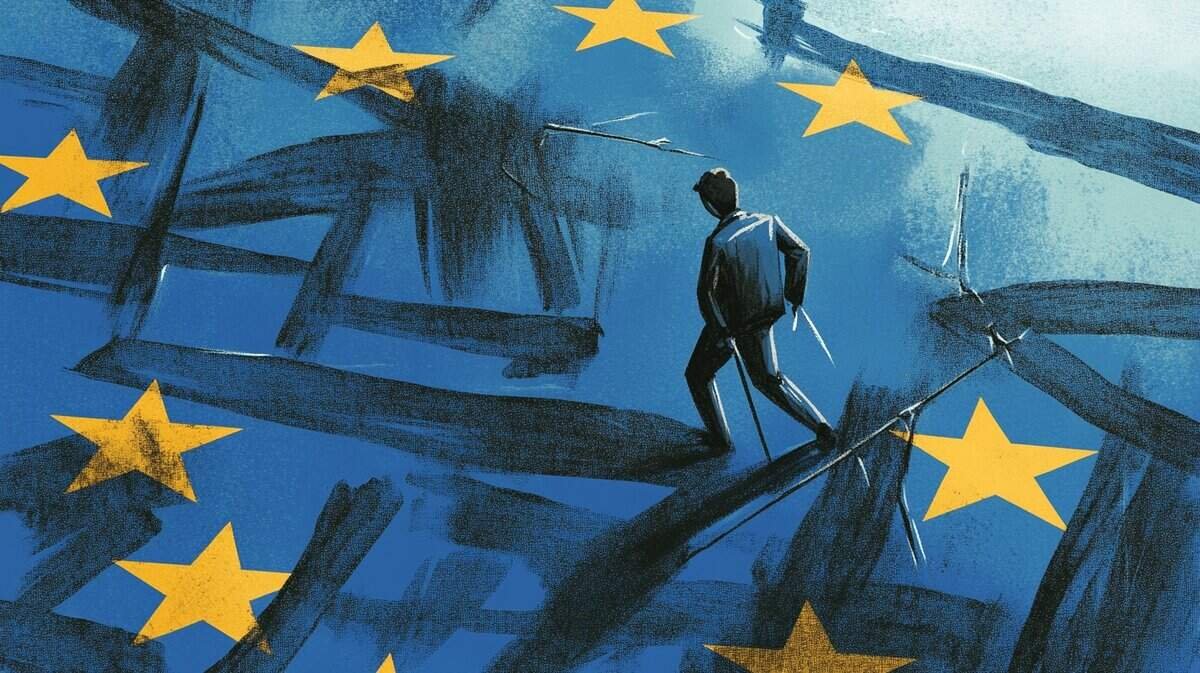
Europe is entering a strategic environment for which the European Union was not originally designed. The EU was built around the assumption that economic openness, expanding trade and regulatory integration would generally reinforce prosperity and political stability. In 2026, that assumption is being tested from several directions simultaneously. Russia has demonstrated that energy dependence can become a strategic vulnerability. China’s manufacturing scale and control over important segments of critical-material supply chains are intensifying pressure on European industry. At the same time, a more transactional United States is increasingly willing to use tariffs, market access, defence commitments and economic pressure as instruments of national strategy. Europe is therefore confronting an uncomfortable reality: three of the external relationships most important to its prosperity and security are simultaneously becoming sources of strategic uncertainty.
The scale of the challenge became unusually visible in European Commission President Ursula von der Leyen’s State of the Union address on September 16, 2026. She warned that the EU’s trade deficit with China has reached approximately €1 billion per day, described the impact on European industrial regions as already visible, and said Europe remains more than 80 percent dependent on China for many critical raw materials and around 90 percent for some rare earths. At the same time, she linked European energy vulnerability to the recent disruption around the Strait of Hormuz, saying higher imported fossil-fuel costs since the conflict began had imposed an additional €90 billion burden without providing Europe with additional energy.
These pressures do not mean that Europe is confronting three equivalent adversaries. Russia is waging a war against Ukraine and is subject to extensive EU sanctions. China remains simultaneously a partner, competitor and systemic rival, as the EU officially defines the relationship. The United States remains Europe’s principal NATO ally and one of its largest economic partners. Treating these relationships as identical would therefore obscure more than it explains. What connects them is something different: each exposes a European dependency that can constrain political freedom when geopolitical conditions deteriorate.
This is why the central strategic question facing Europe in 2026 is no longer simply how to increase economic growth. It is how to preserve economic openness while ensuring that openness does not become vulnerability. Europe must simultaneously remain competitive, finance rearmament, protect industrial capacity, secure energy, diversify critical-mineral supplies, maintain transatlantic security cooperation and avoid being trapped between American and Chinese economic strategies. Economic security has therefore moved from the margins of European policy into the centre of European statecraft.
For The European Centre for Strategic Studies and Policy (ECSAP), the defining transformation of 2026 is that Europe is beginning to discover that strategic autonomy cannot be achieved through declarations. It requires industrial capacity, energy infrastructure, technological capability, capital markets, defence production and diversified international partnerships. The next phase of European integration may therefore be determined less by traditional debates over sovereignty and more by whether the Union can build the material capabilities necessary to exercise sovereignty in practice.
Europe Has Entered the Age of Economic Power Politics
The international economic system that shaped Europe after the Cold War rested on a relatively simple proposition: deeper economic interdependence would generally make countries wealthier while increasing the cost of geopolitical confrontation. Europe embraced this model more extensively than almost any other major economic power. Supply chains stretched across continents, energy flowed from Russia, manufactured products arrived from China, American technology became deeply embedded in European economies and global markets rewarded efficiency rather than redundancy.
That model produced substantial economic benefits. It also created dependencies whose strategic implications became visible only when political relationships deteriorated. Russia’s invasion of Ukraine demonstrated the danger most dramatically. European countries discovered that cheap Russian energy was not merely an economic input but a geopolitical relationship capable of constraining policy choices. The response required rapid diversification, infrastructure investment and substantial economic adjustment.
Europe reduced that vulnerability considerably. According to the European Commission, Russian pipeline gas and LNG fell from around 45 percent of EU gas imports in 2021 to 12 percent in 2025. Russian crude oil accounted for only about 2 percent of EU crude imports in 2025 compared with 20 percent in 2022. The EU adopted legislation in February 2026 intended to phase out Russian LNG by the end of 2026 and Russian pipeline gas no later than November 30, 2027.
Yet escaping one dependency has revealed others.
Europe replaced significant quantities of Russian energy with supplies from global markets. That improved geopolitical flexibility but increased exposure to global maritime chokepoints, LNG competition and Middle Eastern instability. The disruption around the Strait of Hormuz in 2026 illustrated this vulnerability. Europe had diversified suppliers without eliminating dependence on imported fossil fuels.
The lesson is fundamental: diversification can redistribute vulnerability without necessarily eliminating it.
The Second China Shock Is Different from the First
China represents a more complicated strategic challenge because Europe’s relationship with Beijing is far deeper and more diversified than its former energy relationship with Moscow. China and the EU remain enormously important trading partners. EU-China trade in goods and services exceeded €880 billion in 2025, while the two economies together account for almost 30 percent of global trade and more than one third of global GDP.
But the relationship has become increasingly asymmetric.
In 2025, the EU exported approximately €199.5 billion in goods to China while importing more than €559 billion, producing a goods deficit of roughly €360 billion. Over the decade from 2015 to 2025, EU imports from China increased far more rapidly than European exports to the Chinese market.
The political significance of these numbers lies not simply in the existence of a trade deficit. Trade deficits do not automatically represent economic weakness. The strategic concern is the composition of trade and the industrial structure behind it.
China has built enormous manufacturing capacity in sectors that overlap increasingly with industries Europe considers essential to its own economic future: electric vehicles, batteries, solar technologies, electronics, machinery and clean technologies. Chinese industrial policy, state support, scale and intense domestic competition have helped Chinese producers achieve extraordinary cost advantages.
European companies therefore face pressure not merely from inexpensive consumer goods but from competition in sectors that Brussels considers central to Europe’s industrial transition.
That is why von der Leyen’s description of a “second China shock” carries strategic weight. The first China shock was associated largely with the relocation of labour-intensive manufacturing after China’s integration into the global economy. The emerging shock reaches deeper into advanced manufacturing.
Europe is no longer asking only whether Chinese imports threaten particular factories.
It is asking whether Europe can retain the industrial ecosystems required to remain a technologically advanced economic power.
Critical Minerals Reveal the Depth of Europe’s Dependency
The vulnerability becomes even more pronounced when Europe looks upstream. European manufacturing depends heavily on imported critical materials used in batteries, semiconductors, wind turbines, electric vehicles, aerospace systems and defence equipment.
According to the Commission, Europe remains more than 80 percent dependent on China for many critical raw materials and around 90 percent dependent in the case of some rare earths.
This creates an unusual strategic problem. Europe wants to compete with Chinese manufacturers while simultaneously depending heavily on Chinese-controlled or Chinese-linked supply chains for materials required to manufacture competing products.
Industrial policy and foreign policy therefore become inseparable.
A disruption in mineral supplies could affect civilian manufacturing and defence production simultaneously. Rare earths are not merely inputs for consumer electronics. They are relevant to advanced weapons, sensors, motors, aerospace systems and energy technologies.
Europe has consequently moved toward stockpiling, diversification and new international resource partnerships. Von der Leyen announced plans for a European Corporation on Critical Raw Materials intended to help secure and stockpile strategic materials.
But stockpiles provide time, not independence.
Long-term resilience requires mining, refining, processing, recycling and alternative suppliers. Europe possesses some resources domestically, but new mining projects face lengthy permitting procedures, environmental concerns and local opposition. Overseas diversification requires infrastructure and investment in countries where China has often spent years developing commercial relationships.
The critical-minerals race therefore demonstrates the central weakness of strategic autonomy: dependencies created over decades cannot be dismantled within a single political cycle.
America Has Become a Different Kind of Strategic Question
The American dimension is fundamentally different because the United States remains Europe’s principal security ally. NATO remains the foundation of collective defence for most EU member states, and American military capabilities remain deeply integrated into European deterrence.
Yet European policymakers are increasingly separating the question of alliance from the question of dependency.
The Trump administration’s pressure on NATO has contributed to a sharp increase in European defence spending, but it has also increased uncertainty about the durability of American commitments. Reuters reported on September 17 that at least eight NATO countries, including Poland, Denmark, Spain and Canada, are beginning to diversify aspects of weapons procurement away from reliance on US suppliers. The same investigation found that Washington continues to invest in strategically important European bases, illustrating the contradictory nature of the relationship: American and European defence structures remain deeply interconnected even as political trust is under strain.
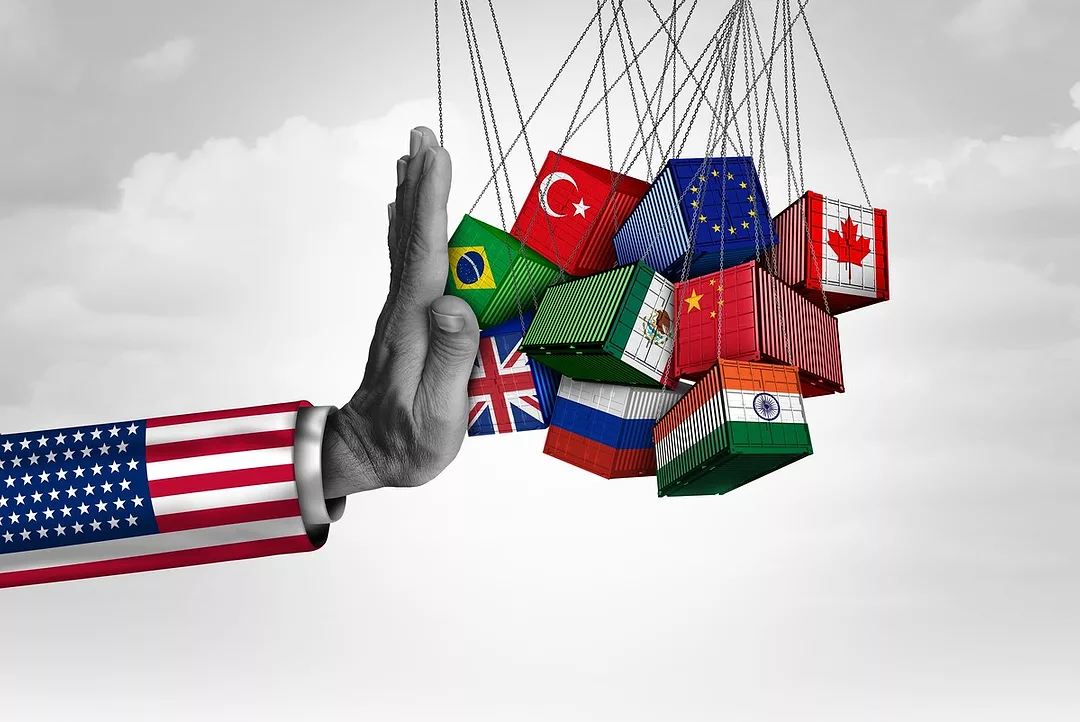
Trade creates another layer of complexity. The EU and United States reached a tariff framework in 2025, and the EU eliminated tariffs on US industrial goods from July 1, 2026 as part of its implementation. But the broader transatlantic relationship remains exposed to tariff threats and disagreements over industrial policy.
Europe therefore confronts a strategic dilemma that differs fundamentally from its relationships with Russia or China. The objective is not to decouple from the United States. Such a strategy would impose enormous economic and security costs and would contradict the continuing importance of NATO.
Instead, Europe is beginning to consider how to remain allied with the United States without remaining excessively dependent on American political decisions.
That distinction may define European strategic autonomy for the next decade.
The Defence Industry Is Becoming the Test of European Sovereignty
Nowhere is the problem clearer than defence.
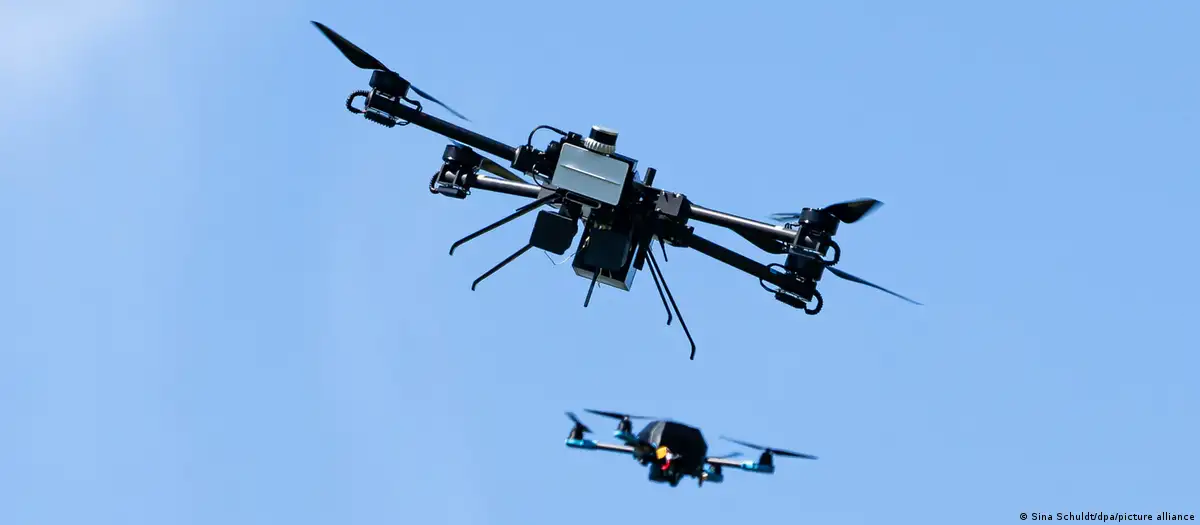
European governments are increasing military spending rapidly. The European Council has called for defence readiness to be strengthened decisively by 2030 and has identified air and missile defence, drones and counter-drone systems, deep precision strike, space capabilities and other strategic enablers as priorities.
But higher budgets do not automatically create European strategic capability.
If increased European defence expenditure primarily purchases non-European systems, Europe can become militarily stronger while remaining industrially dependent. Conversely, insisting on exclusively European procurement when European industry cannot deliver sufficient quantities quickly enough could weaken immediate defence readiness.
This creates one of the hardest policy dilemmas confronting Brussels.
Europe needs weapons now because the security threat is immediate. But it also needs industrial capacity tomorrow because long-term dependence carries strategic risks.
The solution cannot be complete protectionism. European forces benefit from interoperability with American systems, and US technology remains essential in several capability areas. But procurement policy increasingly needs to consider supply security, maintenance, ammunition availability, software access, production capacity and the political reliability of suppliers alongside price and technical performance.
Defence procurement is therefore becoming industrial strategy.
Ukraine Has Changed What Europe Understands About Production
The war in Ukraine has demolished assumptions about the quantity of military equipment required in sustained high-intensity conflict. Cheap drones can destroy expensive systems. Ammunition can be consumed at rates peacetime procurement systems were never designed to replace. Electronic warfare evolves rapidly. Equipment must be modified continuously in response to battlefield experience.
Europe’s defence-industrial challenge is consequently not simply producing more conventional weapons.
It must create a manufacturing system capable of adaptation.
The European Council has explicitly called for Europe to draw lessons from Ukraine’s experience with emerging technologies and to work with Ukrainian defence industry.
This could become one of the most important consequences of the war for European industrial policy. Ukraine has developed a defence ecosystem in which relatively small technology companies can move from prototype to battlefield deployment at extraordinary speed. European procurement systems, by contrast, have often been designed around long development cycles, complex tendering and large contractors.
Integrating Ukrainian innovation into European defence production could therefore reshape not merely what Europe manufactures but how it manufactures it.
Energy Remains Europe’s Hidden Industrial Tax
Europe’s industrial problem cannot be understood without energy.
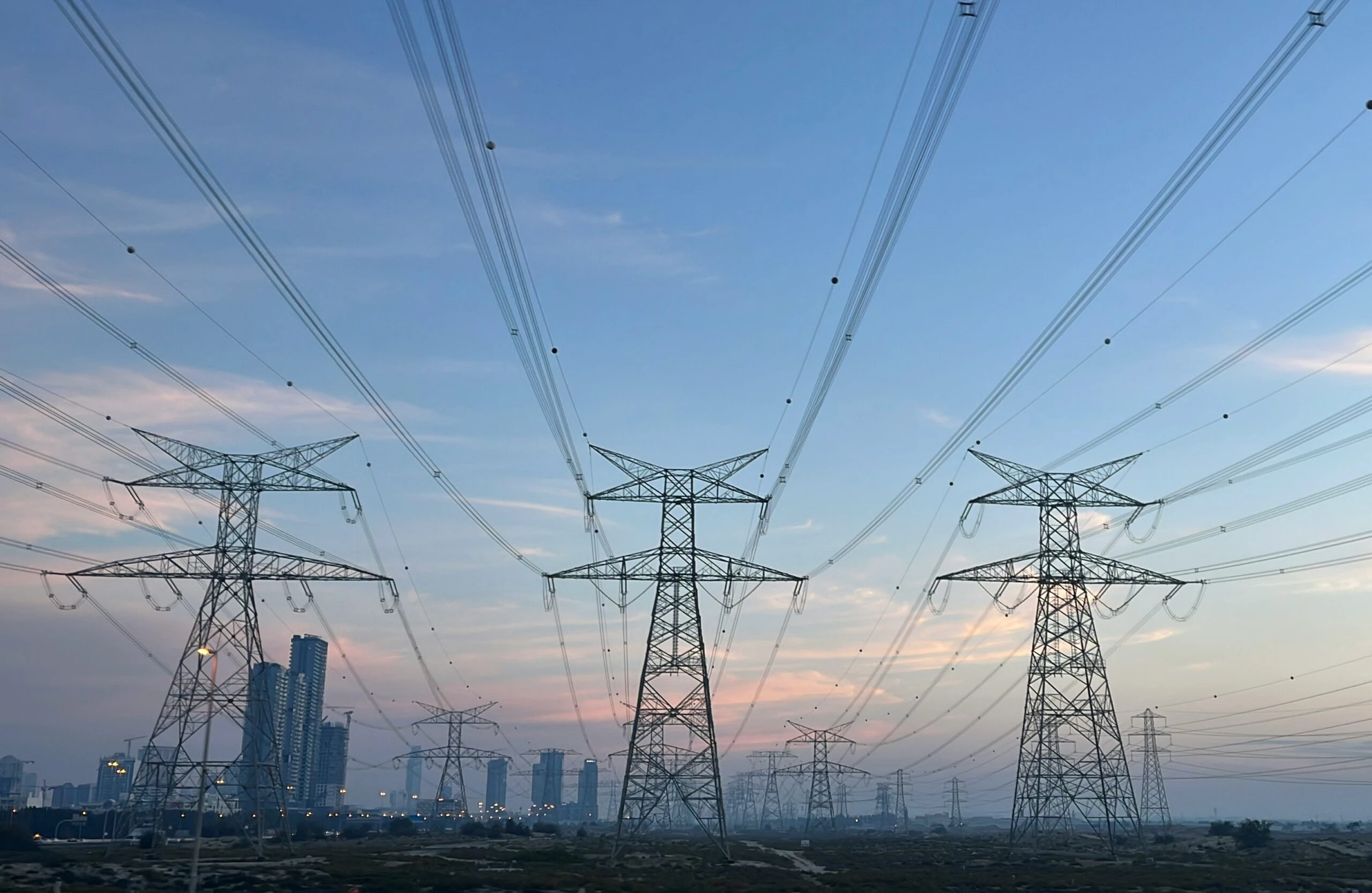
Von der Leyen acknowledged in her September address that Europe cannot remain an industrial powerhouse if energy prices remain structurally too high. She argued that greater electrification could reduce the EU’s fossil-fuel import bill by approximately €260 billion annually by 2040, while calling for faster investment in grids, storage and generation.
This issue sits at the intersection of almost every major European strategic ambition.
Europe wants to expand artificial intelligence and data centres, but they require electricity. It wants to manufacture batteries and semiconductors, which require substantial energy. It wants to expand defence production, electrify transport, decarbonise heavy industry and reduce fossil-fuel dependence simultaneously.
The energy system therefore becomes an industrial bottleneck.
Europe has installed substantial renewable generation, but grid capacity has not expanded at the same pace. Von der Leyen said more than six times the renewable capacity installed last year is currently waiting for grid connections.
Generating electricity is therefore only one part of the problem.
Europe must move it.
Grid infrastructure, storage, interconnectors and permitting are becoming strategic assets. Without them, energy abundance in one region cannot translate efficiently into industrial competitiveness elsewhere.
Hormuz Has Exposed the Limits of Energy Diversification
The Middle Eastern crisis has added another dimension. The European Commission reported on September 8 that EU oil supplies remained secure and commercial and emergency stocks were sufficient, but it warned that geopolitical instability and autumn-winter demand could tighten markets, particularly for diesel and jet fuel.
The immediate situation is manageable.
The structural message is less reassuring.
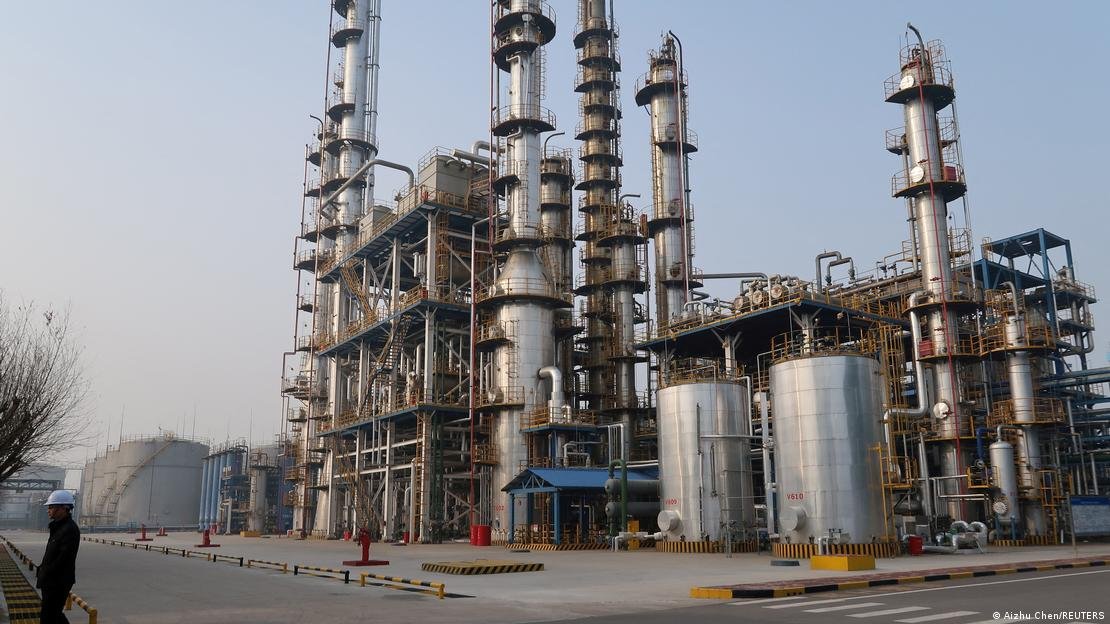
Europe spent years reducing its dependence on Russian hydrocarbons by expanding access to global suppliers. This was strategically necessary. But global supply requires maritime routes, shipping insurance, stable chokepoints and competition with Asian buyers.
The Strait of Hormuz demonstrates that diversification away from Russia does not create energy sovereignty if Europe remains heavily dependent on imported hydrocarbons.
This strengthens the strategic case for electrification, renewable energy, nuclear power where member states choose it, storage and stronger European grids.
Energy transition is therefore no longer solely a climate project.
It is increasingly a geopolitical project.
Europe’s Technology Problem Is Becoming a Sovereignty Problem
A similar logic applies to technology.
Europe remains scientifically sophisticated and possesses world-class industrial companies, universities and research institutions. Yet it has struggled to produce digital platforms and technology companies at the scale of the United States and China.
This matters more in 2026 because artificial intelligence, cloud computing, semiconductors, satellites, cybersecurity and quantum technologies are increasingly dual-use capabilities.
Technological dependence can therefore become strategic dependence.
Europe’s challenge is not simply creating more start-ups. It is enabling successful European companies to become global companies without needing to relocate financing, ownership or strategic decision-making outside Europe.
This is partly a capital-market problem. European savings are enormous, but European capital markets remain fragmented. Innovative firms often find it easier to obtain large-scale growth financing in the United States.
Von der Leyen’s renewed emphasis on the Savings and Investments Union, banking reform and the Scaleup Europe Fund reflects recognition that sovereignty ultimately requires capital.
Europe cannot regulate its way into technological leadership.
It must finance it.
Trade Policy Is Becoming Security Policy
The boundary between European trade and security policy is disappearing.
On September 14, the Commission updated the EU’s dual-use export-control list to include additional semiconductor manufacturing equipment, advanced computing integrated circuits and technologies relevant to high-performance materials and aerospace applications.
The technical nature of these controls can obscure their strategic significance.
Governments increasingly recognise that advanced technologies can contribute simultaneously to civilian growth and military capability. Exporting semiconductor equipment, AI-related technologies or advanced materials therefore carries security implications.
Europe must consequently navigate between two risks.
Controls that are too weak can allow strategically important technology to strengthen potential competitors. Controls that are too broad can damage European companies, fragment international research and encourage customers to develop alternative suppliers.
Economic security therefore requires precision rather than indiscriminate protectionism.
The Single Market Is Europe’s Greatest Weapon — and Its Unfinished Project
Europe possesses one strategic advantage neither Russia nor most individual European states can replicate: the scale of the Single Market.
With hundreds of millions of consumers and enormous regulatory influence, the EU can shape global commercial behaviour. Companies around the world frequently adapt products to European regulations because losing access to the European market is commercially costly.
But Europe’s internal fragmentation prevents it from fully converting market size into strategic power.
Capital markets remain divided. Energy infrastructure is insufficiently interconnected. Defence procurement remains fragmented across national systems. Services face regulatory barriers. Technology companies often encounter different administrative environments as they scale across borders.
Europe therefore suffers from a paradox.
Externally, the EU is large enough to influence global rules.
Internally, it often behaves like 27 partially separated economies.
Completing the Single Market is consequently no longer merely an economic-efficiency project. It has become part of European security strategy.
A fragmented Europe cannot compete effectively with continental-scale American and Chinese markets.
Customs Reform Shows the Direction of Travel
The overhaul of the EU customs system approved by the Council in September 2026 illustrates how European economic governance is beginning to adapt. The reform establishes a new EU customs authority and data hub while strengthening controls over rapidly expanding e-commerce flows. More than 90 percent of e-commerce parcels entering the EU in 2025 originated in China, according to the Council.
This is not simply an administrative reform.
E-commerce has created an enormous channel through which foreign goods enter Europe directly, often challenging traditional customs enforcement, consumer standards and European retailers.
Modernising customs therefore serves several objectives simultaneously: revenue collection, product safety, fair competition, data collection and economic security.
It also reflects a broader shift toward European-level enforcement.
Strategic autonomy becomes difficult when national authorities separately attempt to police economic flows operating at continental scale.
Europe Is Building New Partnerships Because De-Risking Requires Alternatives
Reducing dependence cannot succeed through restrictions alone.
If Europe wants fewer strategic dependencies on China, it needs alternative suppliers. If it wants greater energy resilience, it needs new energy relationships. If it wants more secure critical-mineral chains, it needs investment partnerships with resource-producing countries.
This explains the increasingly ambitious European trade agenda.
In her State of the Union address, von der Leyen pointed to agreements concluded in 2026 with India, Mercosur, Mexico, Australia and Indonesia and announced plans for a Middle Corridor connectivity initiative linking Central Asia and the South Caucasus more directly to European markets, with the EU seeking to mobilise up to €12 billion in investment.
Canada provides another example. Brussels is proposing an unusually deep strategic relationship encompassing critical minerals, defence industry, artificial intelligence, quantum technologies, energy, batteries and the Arctic.
The emerging European strategy is therefore not autarky.
It is networked resilience.
Instead of replacing dependence with self-sufficiency, Europe is attempting to replace concentrated dependence with diversified interdependence.
But Diversification Has a Price
The economics of resilience are uncomfortable.
For decades, companies optimised supply chains primarily for cost. Strategic resilience requires additional criteria: geographical diversity, political reliability, spare capacity, inventories and alternative suppliers.
All of these cost money.
A factory sourcing a critical component from three countries rather than one may be safer but less efficient. Maintaining strategic stockpiles ties up capital. Building redundant infrastructure increases costs. Producing some technologies inside Europe may be more expensive than importing them.
European governments therefore need to acknowledge a basic reality: economic security carries an insurance premium.
The political question is how much Europe is prepared to pay.
Attempting to eliminate every foreign dependency would be economically destructive. Ignoring dangerous dependencies would be strategically reckless.
The objective must be selective resilience.
Europe needs to distinguish ordinary commercial dependence from dependencies capable of threatening essential economic or security functions during crisis.
The Risk of Fighting Three Economic Battles at Once
Europe must also avoid turning de-risking into simultaneous economic confrontation with every major power.
A trade conflict with China, persistent confrontation with Russia and deteriorating economic relations with the United States would place enormous pressure on European industry.
This is why strategic prioritisation matters.
Russia represents an immediate security challenge. China presents a long-term industrial and technological challenge combined with significant opportunities for trade and cooperation. The United States presents an alliance-management challenge involving a partner whose policies have become less predictable but whose security and economic importance remains enormous.
European strategy must therefore differentiate.
Strategic autonomy should not become strategic equidistance.
Europe does not need identical relationships with Washington, Beijing and Moscow. It needs sufficient capability to determine those relationships according to European interests rather than dependency.
The Real Meaning of Strategic Autonomy
The phrase “strategic autonomy” has generated years of debate because different European governments understand it differently. For some, it implies reducing dependence on the United States. For others, it means strengthening Europe’s contribution to NATO. For others still, it primarily concerns industrial, technological or energy independence.
The events of 2026 are gradually providing a more practical definition.
Strategic autonomy is not isolation.
It is the capacity to make political decisions without facing intolerable economic or security consequences because another power controls an indispensable resource, technology or capability.
Under this definition, Europe does not need to manufacture everything domestically.
It needs alternatives.
It does not need to abandon American defence technology.
It needs enough European capability that cooperation remains a choice rather than an absolute necessity.
It does not need to stop trading with China.
It needs to ensure that China cannot dominate inputs without which strategic European industries cannot function.
It does not need complete energy self-sufficiency.
It needs an energy system resilient enough that disruption in Russia, the Middle East or another supplier cannot create an existential economic crisis.
Europe’s Economic Model Is Becoming a Security Model
This transformation will have profound consequences for European governance. Decisions previously considered economic policy are increasingly being evaluated through national-security criteria.
Energy infrastructure is security policy.
Semiconductor investment is security policy.
Ports are security policy.
Critical minerals are security policy.
Capital markets are security policy.
Artificial intelligence is security policy.
Defence procurement is industrial policy, while industrial policy increasingly determines military capability.
This convergence creates institutional challenges because the EU’s political architecture was designed around relatively distinct policy areas. Trade belonged to trade officials. Energy belonged to energy ministries. Defence largely remained national. Competition policy focused on preventing market distortion.
The strategic environment increasingly requires these policies to interact.
Europe must therefore become better at coordinating instruments that were developed separately.
The Greatest Risk Is Not Dependency — It Is Slow Decision-Making
Europe possesses many of the resources required to adapt. Its economy remains enormous. Its population is highly educated. It has sophisticated manufacturing, advanced scientific institutions, substantial savings and some of the world’s strongest industrial companies.
The more serious vulnerability may be political speed.
China can mobilise industrial policy rapidly. The United States can deploy enormous fiscal resources and use executive authority aggressively. Russia operates under a wartime economy.
European decisions must navigate 27 governments, EU institutions, national parliaments, regulatory procedures and competing industrial interests.
This structure protects pluralism and national sovereignty, but it can make strategic action slow.
The European Council has itself acknowledged the urgency, calling for defence capabilities to be delivered “at pace and at scale” and for strategic dependencies to be reduced.
The challenge is therefore institutional as much as financial.
Europe does not simply need more money.
It needs the ability to convert money into capability before strategic conditions change again.
Conclusion: 2026 May Be the Year Europe Stops Treating Economics and Security as Separate Worlds
Europe’s strategic crisis in 2026 is not one single emergency. It is the convergence of several pressures that expose the same structural weakness.
Russia revealed the danger of energy dependency. China is exposing the danger of industrial and critical-material dependency. Changes in US policy are exposing the risks associated with excessive reliance even on an ally. Middle Eastern instability has demonstrated that replacing one external energy supplier with others does not automatically create resilience. Ukraine has shown that industrial production and technological adaptation can determine military endurance.
Together, these developments are forcing Europe toward a different economic model.
The objective cannot realistically be European self-sufficiency. The continent depends on international trade, imported resources, foreign markets and security partnerships. Attempting to retreat behind economic walls would weaken the prosperity required to finance Europe’s strategic ambitions.
The alternative is strategic interdependence: remaining open while reducing concentrated vulnerabilities; trading with China while developing alternative critical-mineral chains; maintaining the American alliance while strengthening European military capability; eliminating Russian energy dependence while reducing overall fossil-fuel exposure; and building partnerships with Canada, India, Australia, Latin America, Central Asia and other regions capable of widening Europe’s strategic options.
This transformation will be expensive. Redundancy costs more than efficiency. Stockpiles cost more than just-in-time supply chains. European defence production may initially cost more than purchasing mature foreign systems. New grids, energy storage, semiconductor facilities and mineral-processing capacity require enormous investment.
But the relevant comparison has changed.
The cost of resilience can no longer be measured only against the cheaper economic system Europe once enjoyed. It must also be measured against the cost of dependency during crisis.
Europe learned that lesson with Russian gas.
It is now confronting it in Chinese manufacturing, critical minerals, American security guarantees, global energy routes and advanced technology.
For The European Centre for Strategic Studies and Policy (ECSAP), this is the defining European strategic question of 2026. The continent is not choosing between globalization and isolation, nor simply between Washington and Beijing. It is attempting something substantially more difficult: remaining an open economic power while acquiring the capabilities of a geopolitical one.
Whether Europe succeeds will depend less on the number of strategies Brussels publishes than on what exists physically by the end of the decade: factories capable of producing weapons and advanced technologies, electricity grids capable of powering European industry, diversified mineral supplies, deeper capital markets, secure infrastructure and partnerships broad enough that no single external actor can exercise decisive economic leverage.
The European Union was built during an era in which economic integration was expected to constrain geopolitics.
The world of 2026 is forcing Europe to confront the reverse proposition: economic capacity has itself become geopolitical power.
And if Europe cannot convert its market, capital, technology and industrial base into strategic capability, it risks discovering that economic size alone is no longer enough to guarantee political influence in the emerging world order.