The European Centre for Strategic Studies and Policy (ECSAP)
Europe enters the winter of 2026–2027 in a paradoxical position. It is considerably better prepared for a major disruption of Russian pipeline gas than it was when Moscow’s invasion of Ukraine shattered the continent’s old energy model, yet it is entering the heating season with lower gas inventories, expensive energy, greater exposure to the global liquefied natural gas market and a new set of geopolitical dependencies stretching from the United States and the Middle East to the world’s maritime chokepoints. The European Commission insists that the gas system remains sufficiently flexible to meet winter demand, and the infrastructure constructed since the 2022 crisis gives Europe far more capacity to redirect supplies than it possessed four years ago. But resilience should not be confused with immunity. Europe has largely solved the specific vulnerability that defined the 2022 crisis—extreme dependence on Russian pipelines—without solving the larger strategic problem of dependence on imported energy. It has changed the geography and mechanisms through which that dependence operates.
The numbers illustrate the new reality. EU underground gas storage was approximately 72% full on October 1 and reached around 75% by October 21, substantially below historical levels after a difficult and expensive summer refill. Gas Infrastructure Europe estimated that the EU entered October with approximately 74 billion cubic metres in storage, compared with about 85 bcm one year earlier. Meanwhile, the European Union Agency for the Cooperation of Energy Regulators, ACER, estimates that the upper-bound cost of replenishing storage during 2026 reached €27 billion and that the average cost of injected gas was the second highest of the past decade. The problem is therefore no longer simply whether Europe can obtain enough gas. It is increasingly whether it can obtain sufficient energy at prices compatible with industrial competitiveness, household affordability and macroeconomic stability.
This winter will also test a fundamentally different European energy architecture. LNG is expected to account for approximately 40% of European gas supply under one of ENTSOG’s central scenarios, while Norway provides around 27%. Europe possesses approximately 145 bcm of LNG regasification capacity for a winter season, giving the continent impressive physical flexibility. Yet terminals do not produce gas; they merely allow Europe to receive it. LNG cargoes must still be purchased in a global market where European buyers compete with Asia, where Middle Eastern disruptions can affect supply and shipping, and where weather conditions thousands of kilometres away can influence prices paid by European households and factories.
The European energy crisis has therefore changed character. In 2022, the central fear was that Russia would close a pipeline. In winter 2026–2027, the more relevant risk is that several smaller pressures occur simultaneously: a colder winter, constrained LNG availability, continuing disruption in the Middle East, stronger Asian demand, depleted European storage late in the season, high electricity demand and another geopolitical or infrastructure shock. None of these events alone necessarily produces a crisis. Their combination could.
For the European Centre for Strategic Studies and Policy (ECSAP), this paper argues that Europe is entering the second generation of its post-Russian energy-security challenge. The first generation was about diversification: replacing Russian pipelines, expanding LNG infrastructure, reducing demand and building alternative suppliers. The second must be about strategic resilience: limiting exposure to global price shocks, maintaining sufficient inventories, protecting industrial competitiveness, strengthening electricity networks, reducing structural gas demand and ensuring that Europe does not replace one dominant dependency with another. The strategic lesson of winter 2026–2027 may ultimately be uncomfortable but necessary: changing suppliers is not the same as eliminating vulnerability.
Europe Is Safer Than in 2022 — But the Margin for Error Is Smaller
The starting point for understanding the coming winter is that Europe is not returning to the emergency conditions of 2022. The physical gas system has changed substantially. LNG import capacity has expanded, infrastructure has become more interconnected, demand has declined and governments possess far more experience coordinating storage, emergency planning and cross-border supply. The European Commission’s Gas Coordination Group concluded on October 8 that the EU gas system was sufficiently flexible to meet demand during the coming winter despite lower storage levels. ENTSOG reached a broadly similar conclusion: Europe possesses a resilient infrastructure capable of handling multiple scenarios, and its approximately 145 bcm of seasonal LNG regasification capacity can compensate partly for weaker inventories.
That reassuring headline, however, contains an important qualification. Europe is physically resilient but begins the season with less stored energy and therefore less insurance against adverse conditions. Gas Infrastructure Europe reported that storage was around 72% full on October 1, approximately eleven percentage points below the previous year. By October 21, ACER placed the figure at roughly 75%, but inventories remained below the historical range. Storage matters because it performs a function that LNG cargoes cannot replicate instantaneously. When temperatures suddenly collapse and heating demand surges, Europe cannot order a tanker from across the Atlantic and have the gas arrive the next morning. Underground storage provides the rapid withdrawal capacity necessary to respond to daily and weekly fluctuations in consumption. The lower the inventory becomes during winter, the more vulnerable the system becomes to a late cold spell or another external disruption.
This is why the real danger may emerge not in December but in February or March. A relatively mild first half of winter could leave Europe comfortable, whereas prolonged cold conditions could accelerate withdrawals and progressively reduce flexibility. ENTSOG’s modelling shows how quickly the margin can deteriorate under adverse assumptions. Gas Infrastructure Europe reports that under tight LNG conditions, storage could fall to around 13% by the end of March even under reference-winter demand. Under cold-winter scenarios, aggregate European storage could fall to roughly 11%, with demand-response requirements or potentially uncovered demand becoming considerably larger. These are scenarios rather than forecasts, but they demonstrate why headline storage percentages in October provide only a partial picture of winter security.
Germany illustrates the concern. On October 23, Trading Hub Europe awarded contracts worth almost €245 million to secure additional winter gas supplies because storage levels remained significantly below normal. The intervention does not imply that Germany expects shortages; rather, it demonstrates that Europe’s largest economy is willing to pay explicitly for additional insurance against a winter in which ordinary market incentives may not generate the reserve levels policymakers consider strategically prudent.
The distinction between availability and affordability is equally important. Europe can survive a winter while still suffering economically from it. A continent that obtains every required molecule of gas at extremely high prices has achieved physical energy security but not economic energy security. That distinction is becoming central to European policy because the prolonged energy shock has already weakened energy-intensive industries, affected household budgets and widened concerns about Europe’s competitiveness relative to the United States and parts of Asia.
From Russian Pipelines to the Global LNG Market
Europe’s most significant post-2022 achievement has been diversification away from Russian pipeline gas. REPowerEU, expanded LNG infrastructure, Norwegian production, energy conservation and new commercial relationships dramatically changed the structure of European supply. This transformation reduced Moscow’s ability to reproduce the precise form of leverage it possessed before the invasion of Ukraine. But the transition has produced a fundamentally different dependency: Europe is now far more deeply integrated into the global LNG market.
ACER’s October assessment captures the scale of that change. US LNG now accounts for around 30% of total EU gas supply, while total Russian gas is around 11%. Qatar, which ordinarily represents another important LNG source, supplied no significant LNG volumes to the EU during summer 2026 amid disruption associated with the Middle East conflict. ACER expects additional LNG requirements during the coming winter to come mainly from the United States given reduced Qatari availability and the scheduled phase-out of Russian LNG from the beginning of 2027.
This is strategically preferable to Europe’s previous reliance on a single pipeline supplier capable of directly manipulating deliveries. The United States is a NATO ally, global LNG is more fungible than pipeline gas, and Europe can theoretically purchase cargoes from multiple producers. Nevertheless, LNG introduces its own vulnerabilities because supply is mediated through global markets. A cargo leaving the United States can sail to Europe or Asia depending on contractual arrangements and prices. European buyers therefore compete not only with one another but with Japanese, South Korean, Chinese and other customers.
A cold winter in Europe can raise prices. A cold winter in Asia can also raise European prices because Asian buyers bid for the same flexible LNG cargoes. Strong Chinese industrial demand can matter to Germany even when no Chinese gas molecule ever enters Europe. An outage at an American liquefaction terminal can influence prices in Amsterdam. A disruption in Qatar can increase European dependence on US exports. A maritime security crisis can raise shipping and insurance costs. Europe’s energy security has therefore become more diversified geographically while simultaneously becoming more exposed to the global system.
This is the defining paradox of the LNG era. Diversification reduces the danger that one supplier can deliberately shut down Europe, but globalisation increases the number of events capable of affecting European prices. The old European energy model concentrated geopolitical risk in Russia. The new model distributes risk across producers, shipping lanes, markets and continents.
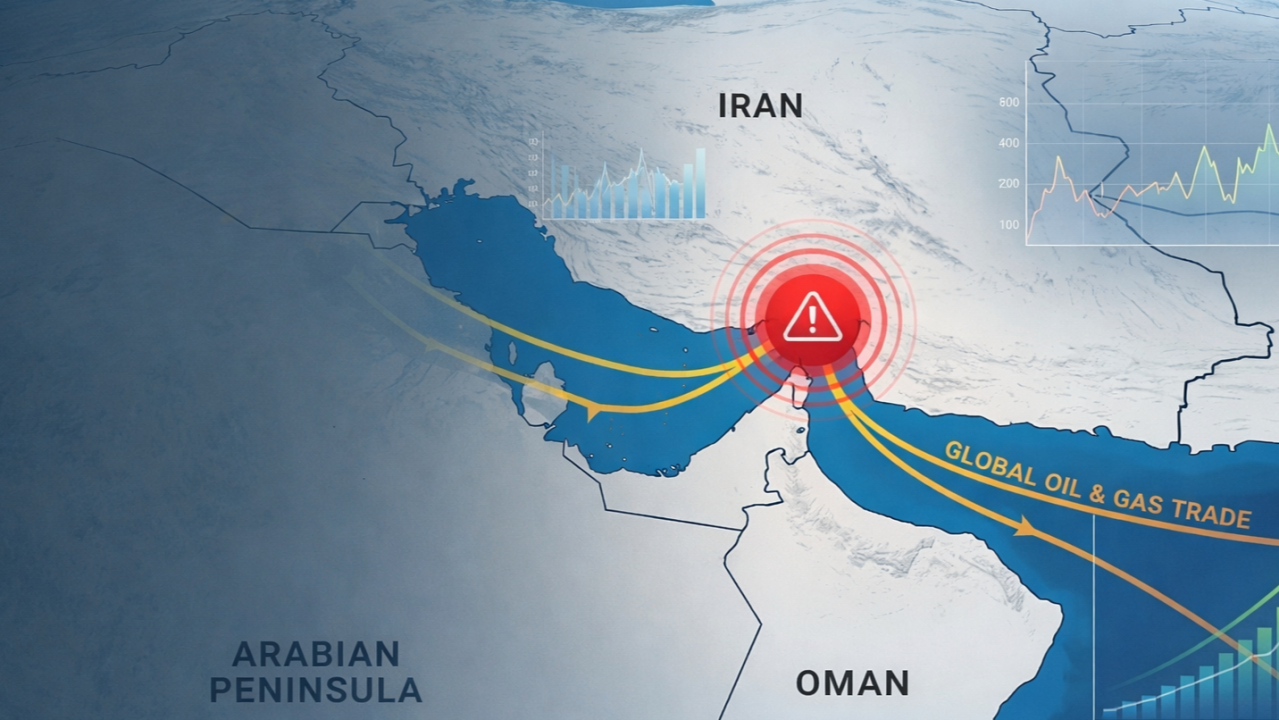
The Middle East crisis of 2026 has demonstrated this clearly. ACER estimates that the conflict added between €18 billion and €33 billion to Europe’s gas-import bill for the same quantity of gas, depending on the price benchmark used. Disruption to Qatari LNG exports through the Strait of Hormuz increased European reliance on alternative suppliers, particularly the United States. In strategic terms, Europe did not lose the physical ability to obtain energy. It paid more for access to a global market disrupted elsewhere.
That is a different form of vulnerability from 2022, but it remains vulnerability.
Winter 2026–2027 Is Really a Test of Three Markets at Once
The coming winter cannot be analysed through the gas market alone because Europe’s gas, electricity and oil-product systems increasingly interact. Gas remains essential for heating and industrial processes, but it is also a flexible fuel for electricity generation. When nuclear or hydroelectric production falls, gas-fired plants can compensate. When gas prices rise sharply, coal can become economically attractive again. Energy security therefore operates through a chain in which pressure in one market can rapidly migrate into another.
The summer of 2026 demonstrated this interaction. ACER reports that heatwaves, hotter rivers and reduced water flows constrained nuclear and hydroelectric generation, while electricity demand remained elevated. Gas-fired power generation consequently rose by almost 9% during the gas summer and by approximately 20% in August compared with the same month in 2025. Solar generation helped absorb part of the additional demand, but it could not completely compensate for weaker hydro and nuclear output.
This matters for winter because Europe’s electricity system increasingly relies on balancing among different technologies. Wind output can vary sharply. Solar production is seasonally weaker during northern European winter months. Hydropower depends on reservoir conditions. Nuclear plants provide valuable low-carbon baseload power but remain vulnerable to maintenance requirements and, in some regions, hydrological conditions. Gas therefore retains a strategic role even as its overall share of the energy system declines.
The result is that a gas shock can become an electricity-price shock, which then becomes an industrial-cost shock. Energy-intensive industries do not care whether the original disruption began in an LNG terminal, a shipping lane or an unusually cold weather system. They experience it through the price of electricity and fuel required to operate plants.
Oil and refined products add another dimension. On October 26, International Energy Agency Executive Director Fatih Birol warned that he did not expect energy markets to return to pre-war conditions during 2027 and highlighted continued concerns over winter demand, particularly for diesel. Europe must therefore prepare for a winter in which gas supply may remain physically adequate while broader energy costs continue exerting pressure across transport, manufacturing and household consumption.
This is why the phrase “energy crisis” can be misleading. Europe no longer faces one single crisis. It faces an interconnected system of risks in which gas inventories, LNG competition, oil prices, diesel availability, electricity generation and weather can reinforce one another. The policy challenge is consequently not to prevent every shock but to stop shocks from cascading across the system.
The Real Strategic Risk Is the Cost of Security
The most dangerous outcome for Europe this winter may not be households losing heating. The continent’s infrastructure and emergency mechanisms make a widespread physical shortage considerably less likely than during the early stages of the 2022 crisis. The more persistent strategic problem is that Europe may secure enough energy while paying a structural premium for doing so.
ACER reported that European hub prices approached €90 per megawatt-hour in mid-October amid tight global LNG conditions, while the 2026 storage refill itself was unusually expensive. These costs eventually move through the economy. Households encounter them directly or through taxes and subsidies designed to cushion bills. Industrial companies experience them through production costs. Governments face political pressure to intervene. Central banks must consider the inflationary consequences of energy shocks. Public finances absorb the cost of emergency support.
For energy-intensive European industries, the challenge is particularly acute because energy prices influence investment decisions. Chemicals, fertilisers, steel, glass, ceramics and other sectors operate in globally competitive markets. If European production remains structurally more expensive than production in the United States, the Middle East or parts of Asia, the issue eventually moves beyond temporary factory shutdowns toward investment relocation and permanent loss of industrial capacity.
This is where energy security and European strategic autonomy intersect. A Europe capable of buying LNG but incapable of producing internationally competitive chemicals, metals or fertilisers cannot describe its energy strategy as fully successful. Industrial capacity itself has strategic value. Defence production depends on chemicals, metals and energy-intensive manufacturing. Food security is connected to fertiliser production. Infrastructure expansion requires steel, cement and industrial materials. Energy costs therefore influence capabilities extending far beyond household heating.
Europe’s policy objective should consequently shift from simply securing supply toward securing affordable strategic supply. That does not mean returning to cheap Russian gas. The geopolitical cost of the old model became undeniable. It means building an energy system in which the premium paid for security progressively falls as domestic low-carbon generation, networks, storage and efficiency improve.
The winter of 2026–2027 may therefore be remembered not for whether Europe “runs out of gas,” but for whether Europe finally recognises that persistent high prices can produce strategic damage even when physical supply remains intact.
Europe’s New Dependency on America Requires Careful Management
The rapid growth of US LNG has been essential to European energy security. American exporters provided flexible volumes when Europe urgently needed alternatives to Russian pipeline gas and continue to form a central pillar of the continent’s supply architecture. The relationship benefits both sides: Europe gains access to one of the world’s largest gas producers, while American exporters gain a massive and relatively wealthy market.
But a 30% share of total EU gas supply from US LNG, as reported by ACER for summer 2026, raises a broader strategic question. Diversification should not mean moving from excessive dependence on one country toward excessive dependence on another, even when the political relationship with the new supplier is fundamentally different.
The vulnerability is not equivalent to the former Russian dependency. American LNG is produced by commercial companies, shipped through global markets and embedded in a very different political relationship. Washington cannot simply turn a pipeline valve connecting directly to Germany. European buyers also possess alternative LNG sources. Nevertheless, concentration matters because domestic US policy, export-terminal outages, weather events, shipping conditions and global prices can all influence the volumes and costs available to Europe.
The appropriate European response is not to reduce American LNG artificially. That would weaken security during a period when those supplies remain essential. Instead, Europe should treat US LNG as a strategic bridge while continuing to diversify suppliers and, more importantly, reduce the structural quantity of imported gas required by the European economy.
This is a crucial distinction. Supplier diversification manages external dependence. Electrification, renewable generation, nuclear energy where politically chosen, efficiency and storage reduce external dependence itself.
The second is strategically more powerful than the first.
Europe’s long-term objective should therefore not be to discover the perfect foreign supplier. No such supplier exists. It should be to build an energy system in which the disruption of any single external supplier is economically painful but strategically manageable.
The Weather Has Become a Geopolitical Variable
Winter energy security ultimately depends on something governments cannot negotiate with: temperature. A mild winter can make mediocre storage levels sufficient. A severe winter can transform the same inventories into a source of anxiety within weeks.
ENTSOG’s October modelling demonstrates the importance of this variable. Under favourable LNG conditions, Europe’s infrastructure can manage significant demand. Under a cold-winter scenario, however, even strong LNG availability could leave a demand-response requirement or potentially uncovered demand equivalent to around 7% of total cold-winter demand, according to Gas Infrastructure Europe’s summary of the outlook. Under tight LNG availability, that figure rises to roughly 12%.
These scenarios should not be interpreted as predictions that European households will lose gas. Demand response can include industrial reductions and other measures before protected household customers are affected. Nevertheless, they demonstrate how rapidly weather can change the security equation.
Climate change adds another paradox. Europe is warming over the long term, which could reduce average heating demand, but energy systems must still withstand extreme events. Hotter summers can increase electricity demand for cooling while drought can reduce hydroelectric generation and interfere with nuclear output. Winter cold spells remain possible even within a warming climate.
Energy security therefore requires infrastructure designed around volatility rather than averages.
The European energy transition must be capable of handling the coldest weeks, the hottest weeks, low-wind periods, drought and geopolitical supply disruption. Building a system that functions beautifully under average conditions but becomes unstable during extremes would merely replace fossil-fuel dependence with a different type of fragility.
Storage consequently remains strategically important even as Europe decarbonises. Gas storage is crucial today, but electricity storage, pumped hydro, thermal storage, hydrogen and demand flexibility will become increasingly important as renewable penetration rises.
Europe is moving from an energy system built around storing fuels toward one that must increasingly learn how to store flexibility.
The Winter After This Winter May Be the More Difficult Question
One of the least appreciated aspects of energy security is that every winter affects the next one. Gas withdrawn in February must eventually be replaced. If inventories finish March at extremely low levels, Europe enters the summer refill season needing large volumes precisely when it may already be competing aggressively for LNG.
ENTSOG therefore stresses the importance of preserving sufficient storage not only to survive winter 2026–2027 but to facilitate replenishment during summer 2027. Gas Infrastructure Europe calculates that maintaining approximately 30% storage at the end of the coming winter under certain scenarios would require around 96 bcm of LNG over the season. Under tight LNG conditions, storage could instead fall to around 13% by the end of March.
This creates a strategic intertemporal problem. Using more gas today increases the amount Europe must purchase tomorrow. If summer-winter price spreads discourage commercial injection, governments may again need to intervene or create incentives for storage. Security of supply therefore cannot be managed as a sequence of isolated winters.
The scheduled reduction of Russian LNG adds another variable to the 2027 refill challenge. The Commission is already preparing for the end of Russian long-term LNG contracts from the beginning of next year, while ACER expects the resulting supply requirement to increase reliance on other LNG sources, particularly the United States.
Europe therefore faces an unusual transition period. It must enter winter with adequate inventories, survive the heating season without excessive depletion, reduce Russian LNG exposure and then replenish storage for the following winter in a global market that remains geopolitically unstable.
The strategic planning horizon cannot end in March.
European policymakers should already be thinking about winter 2027–2028.
From Emergency Energy Policy to Permanent Resilience
Europe’s achievements since 2022 should not be underestimated. The continent built LNG terminals at remarkable speed, reduced gas consumption, diversified suppliers, strengthened cross-border coordination and demonstrated that the collapse of Russian pipeline deliveries did not produce the economic breakdown Moscow may have expected. These were major strategic accomplishments.
But emergency adaptation is not the same as a sustainable energy model.
Europe now needs to institutionalise resilience. Storage policy must balance market incentives with strategic requirements. LNG contracts should preserve diversification rather than create excessive concentration. Electricity grids must expand rapidly enough to accommodate electrification and renewable generation. Cross-border interconnectors need strengthening so that surplus power or gas in one region can support another. Demand-response mechanisms should become permanent features of the market rather than emergency instruments activated only during crises.
The continent must also accelerate energy efficiency because the cheapest imported molecule is the one Europe no longer needs to purchase. Building renovation, industrial efficiency and heat electrification can reduce exposure to gas markets permanently rather than merely changing the identity of the supplier.
At the same time, Europe should avoid treating every energy-security problem as an argument for a single technology. Renewables, nuclear energy, LNG, storage, interconnectors and efficiency perform different functions. The strategic objective should be a diversified system with enough redundancy that failure in one component does not destabilise the whole.
The transition will require investment, and that creates political difficulties. Households already experiencing high energy costs may resist additional spending. Industry wants lower prices immediately. Governments face competing demands from defence, welfare and fiscal consolidation.
Yet postponing investment does not eliminate the cost.
It converts investment costs into vulnerability costs.
Conclusion: Europe Has Escaped the Russian Pipeline Trap, Not the Energy Security Trap
The winter of 2026–2027 will not resemble the winter Europe feared in 2022. Russian pipeline gas no longer possesses the same ability to determine the continent’s economic fate. LNG infrastructure has expanded dramatically, consumption has fallen, Norway remains a major supplier and European governments have accumulated several years of crisis-management experience. The European Commission is therefore justified in arguing that the gas system is physically prepared for winter despite lower storage.
But Europe should resist declaring victory.
Its energy vulnerability has changed form rather than disappeared. Storage stood at approximately 75% on October 21 after a difficult refill season. US LNG now represents around 30% of EU gas supply. Qatar’s disruption has demonstrated the significance of Middle Eastern instability. European buyers must compete with Asia for flexible LNG cargoes. High energy prices continue to affect industrial competitiveness, while weather can rapidly transform a manageable supply balance into a much tighter one.
The strategic distinction is fundamental. The Europe of 2021 depended heavily on gas travelling through fixed pipelines from a politically hostile supplier. The Europe of 2026 depends increasingly on a global network of liquefaction plants, tankers, maritime routes, terminals, storage sites, interconnected electricity markets and foreign suppliers. The new system is more diversified and therefore more resilient to a single act of coercion. But it is also exposed to a much wider range of global disruptions.
A hurricane affecting LNG production in the United States, a cold winter in Asia, conflict near the Strait of Hormuz, disruption to Norwegian infrastructure, low European wind generation or an extended cold spell can all become European energy-security events.
That is the defining feature of the new era.
Europe has globalised its energy security.
The appropriate policy response is not renewed energy isolation. Europe will remain connected to global markets, and those markets provide valuable flexibility. The objective should instead be to reduce the economic consequences of external disruption by lowering structural import dependence, expanding domestic generation, improving efficiency, strengthening networks and maintaining sufficient storage and strategic flexibility.
This winter should therefore be judged by more than whether homes remain warm. Policymakers should ask whether European industry can remain competitive, whether storage remains adequate at the end of the season, whether emergency subsidies are required again, whether LNG concentration increases further and whether Europe enters the summer of 2027 in a stronger or weaker position than it entered October 2026.
Those indicators will reveal whether Europe has truly built energy resilience or merely constructed a more sophisticated system for purchasing expensive security.
The larger lesson is already visible. Energy independence does not mean producing every unit of energy domestically. It means ensuring that no external supplier, shipping route, market shock or geopolitical crisis can acquire disproportionate power over European political and economic choices.
Europe has made enormous progress toward that objective since 2022, but winter 2026–2027 will expose how much remains unfinished. The continent has broken much of Russia’s old pipeline leverage, but it has entered a world in which LNG cargoes, global prices, maritime chokepoints, American exports, Middle Eastern instability and weather increasingly determine the margin between resilience and renewed crisis.
For the European Centre for Strategic Studies and Policy (ECSAP), the central strategic conclusion is therefore clear: Europe’s next energy-security doctrine cannot be built around finding a replacement for Russia. It must be built around ensuring that no replacement ever becomes another Russia-sized dependency.
The coming winter is the first major test of whether Europe has learned that lesson.