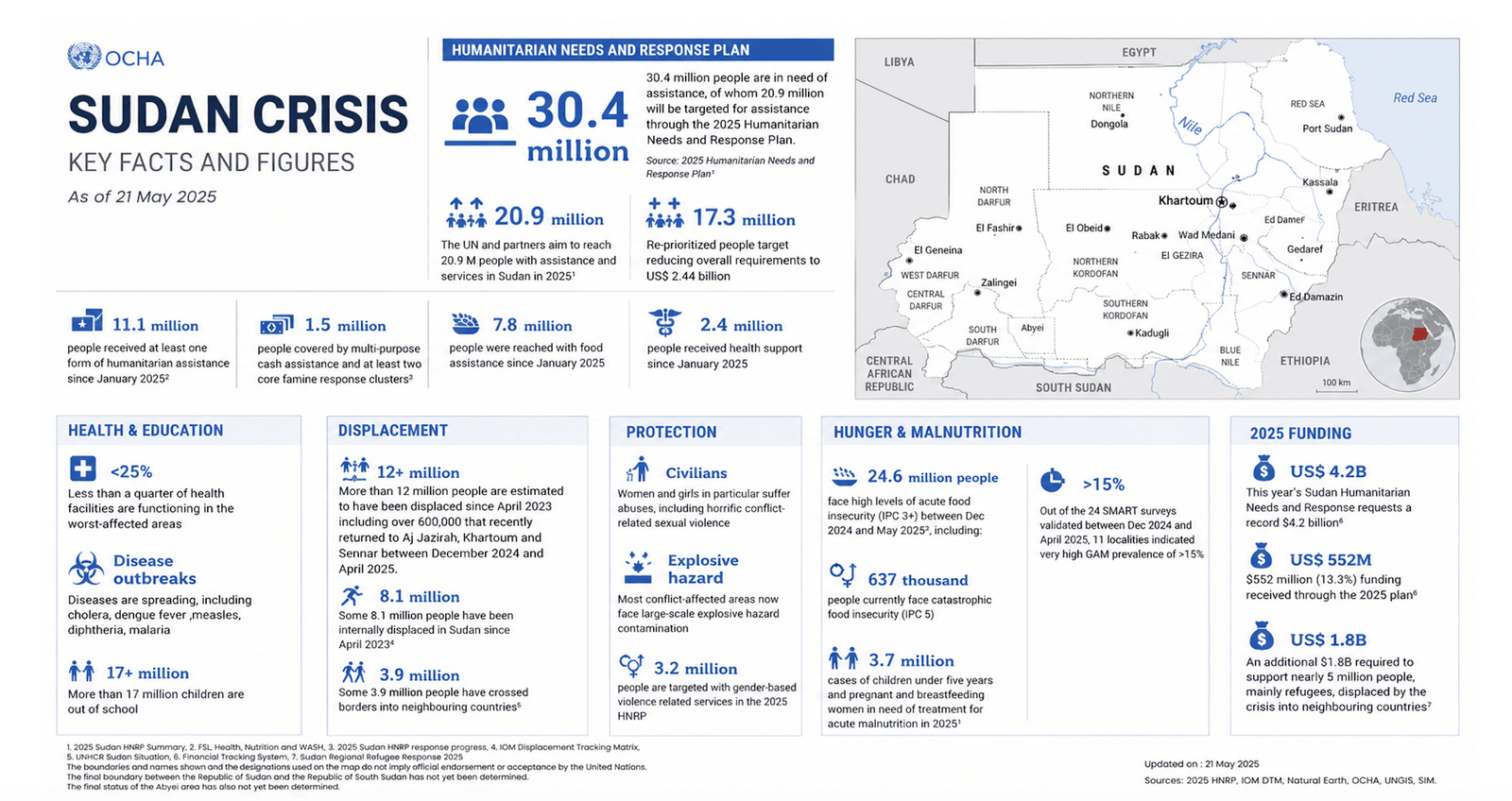
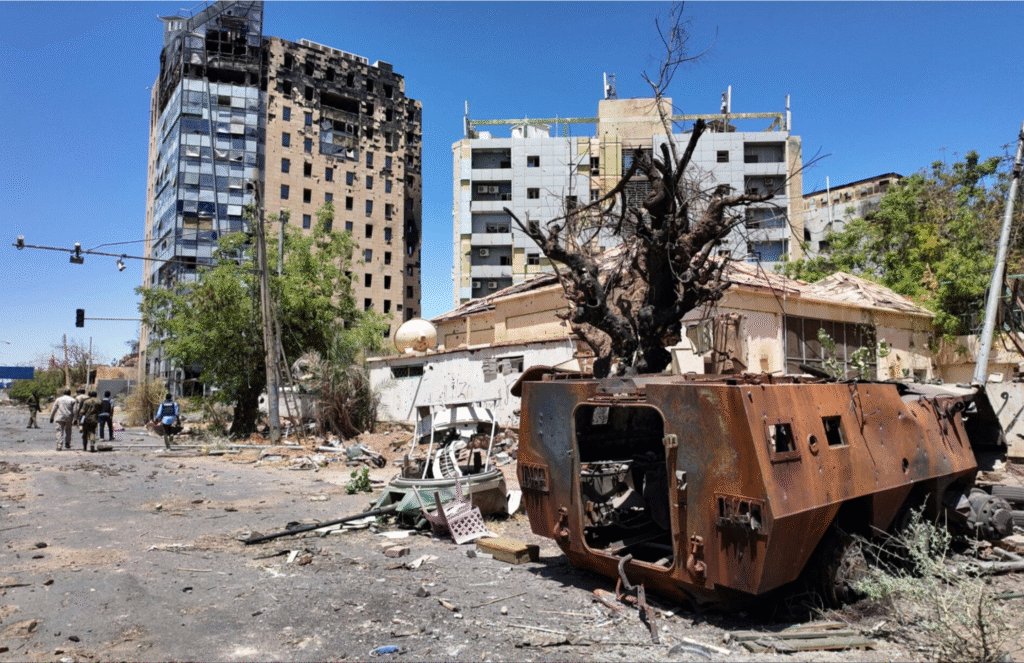
For the past three years, Sudan has been engulfed in an open war between the Sudan Founding Alliance (“Ta’sis”) forces and the army loyal to the Port Sudan authorities, amid a rapidly deteriorating humanitarian situation. The conflict has killed tens of thousands of civilians and displaced millions both inside and outside the country.
The war erupted in mid-April 2023 following the escalating political crisis triggered by the military coup led by Abdel Fattah al-Burhan against the civilian government headed by Abdalla Hamdok, which had been formed after the overthrow of Omar al-Bashir during the December Revolution.
Since the outbreak of the conflict, several regional and international mediation efforts have sought to end the war, which has displaced nearly 14 million Sudanese. However, all such initiatives have failed to secure a lasting ceasefire, largely due to the army’s refusal to engage in meaningful negotiations, while the Ta’sis alliance has publicly expressed willingness to consider ceasefire proposals.
Among the most prominent initiatives was the “Quad Mechanism,” which includes the United States, the UAE, Saudi Arabia, and Egypt. The initiative received support from the African Union as a possible framework to prevent Sudan from sliding further into chaos, yet Burhan rejected it.
Observers believe that the army commander’s insistence on a military solution is linked to the continued flow of weapons through logistical networks and regional transit corridors, while Sudan’s Islamist movement continues to reposition itself within Port Sudan and state institutions, benefiting from the continuation of the war and the deepening political deadlock.
Iranian Supplies
Meanwhile, amid Iran’s broader strategy of expanding its influence across Africa, Tehran appears to have found in Port Sudan a strategic gateway for regional expansion, benefiting from the city’s location on the Red Sea and Sudan’s internal instability. According to an analytical report published by the Middle East Forum, Port Sudan has increasingly become a hub for growing Iranian military and logistical activity.
The report noted that after decades of fluctuating relations and repeated diplomatic ruptures, Tehran and Khartoum restored diplomatic ties in October 2023 — a timing described as “far from coincidental.”
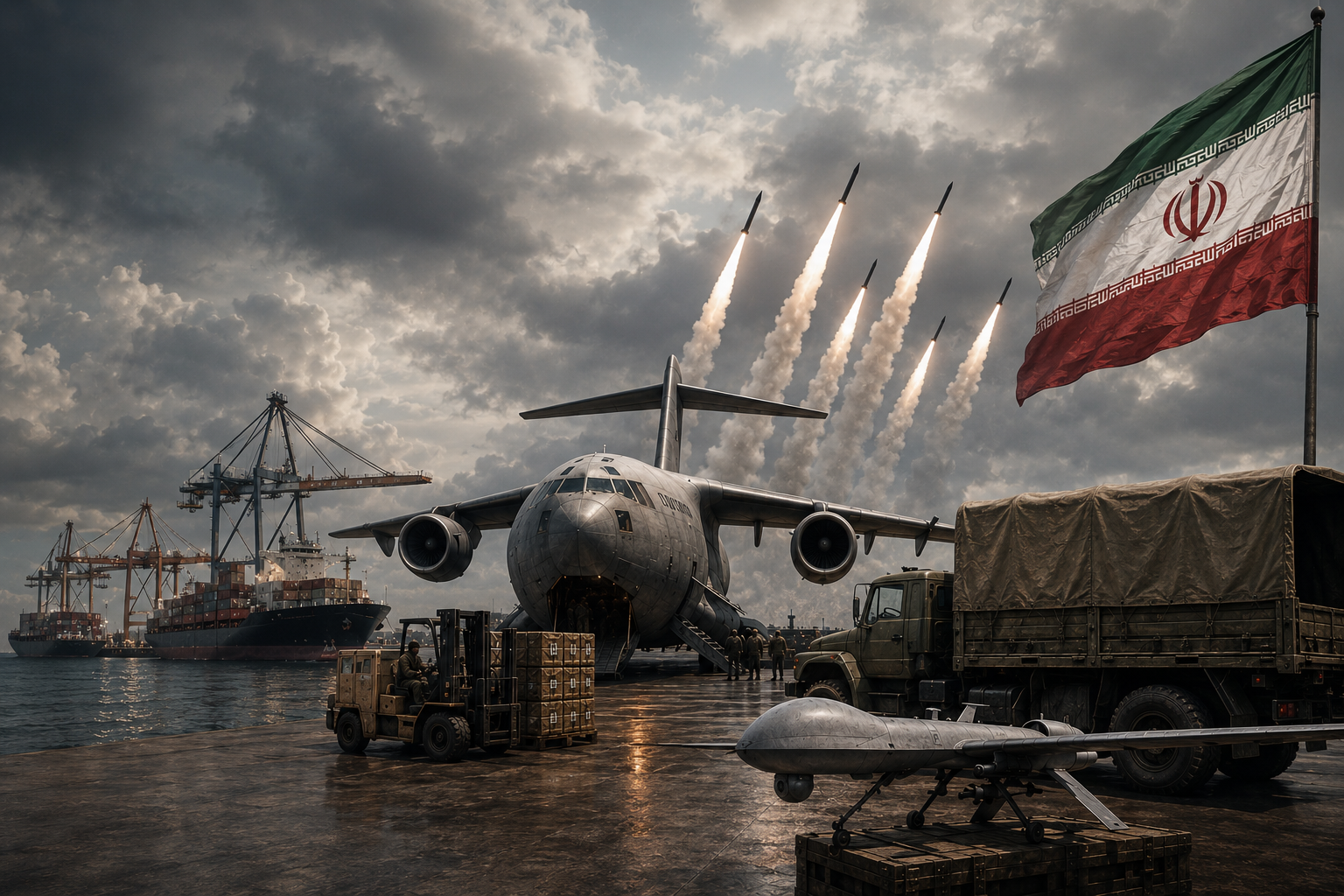
According to the report, “what emerged between the two countries goes beyond a simple arms deal. It has evolved from scattered weapons shipments into an integrated logistical and military network through which drones are delivered to African battlefields, alongside the development of alternative supply chains operating outside the reach of Western sanctions and based on arms-for-gold and minerals exchanges.”
The report added that field videos released in late March 2026 showed Iranian drones flying over Khartoum, alongside footage of Iranian military trainers instructing Sudanese recruits in the fundamentals of remote aerial warfare.
It also stated that open-source intelligence analysts tracked what they described as an “Iranian-African air bridge,” noting that since late 2023 Iranian cargo aircraft have operated regular flights between Port Sudan and the southern Iranian city of Bandar Abbas. According to the report, a Boeing 747 linked to the Iranian company Qeshm Fars Air conducted at least six round trips between December 2023 and January 2024.
In a separate report, Bloomberg quoted Western officials as saying that Iran had supplied the Sudanese army with Mohajer-6 drones capable of surveillance and carrying explosives.
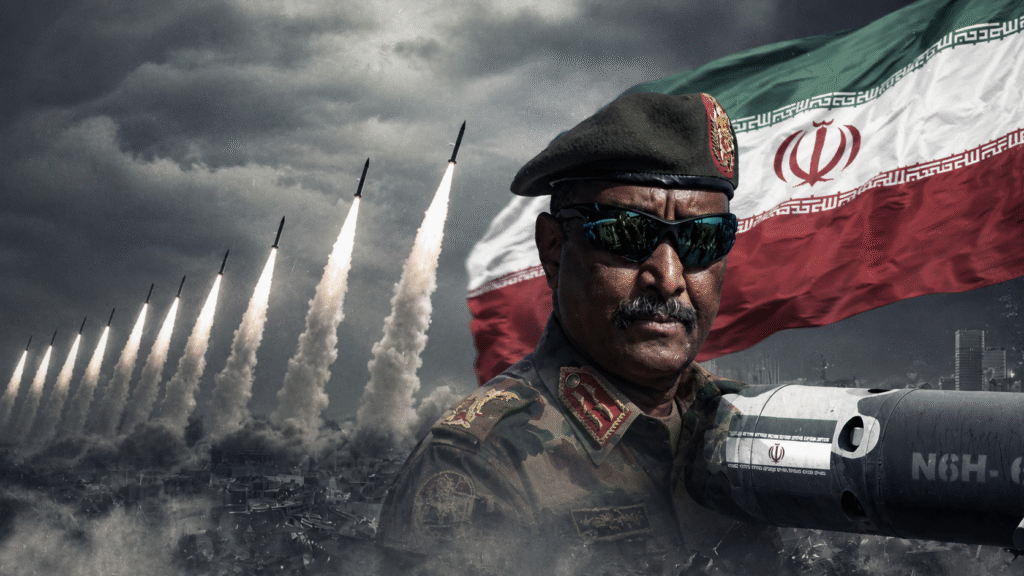
The agency reported that satellite imagery captured this month showed an Iranian-made Mohajer-6 drone at Wadi Seidna Air Base north of Omdurman, an area controlled by the Sudanese army. Three Western officials, speaking anonymously, also confirmed that “Sudan received shipments of the Mohajer-6, a single-engine drone manufactured in Iran and equipped with guided munitions.”
At Port Sudan airport, some arriving planes are carrying more than passengers and luggage. Reports speak of drone and missile shipments, hinting at a quiet alliance taking shape on the Red Sea.
This is not just another scene in Sudan’s civil war. It reaches far beyond the battlefield.
On September 12, the U.S. State Department sanctioned Sudanese Finance Minister Gibril Ibrahim and the Sudanese Islamist militia “Al-Baraa bin Malik Battalion,” reviving scrutiny of Sudan’s ruling Sovereign Council, led by Gen. Abdel Fattah al-Burhan, and Khartoum’s growing ties with Tehran.
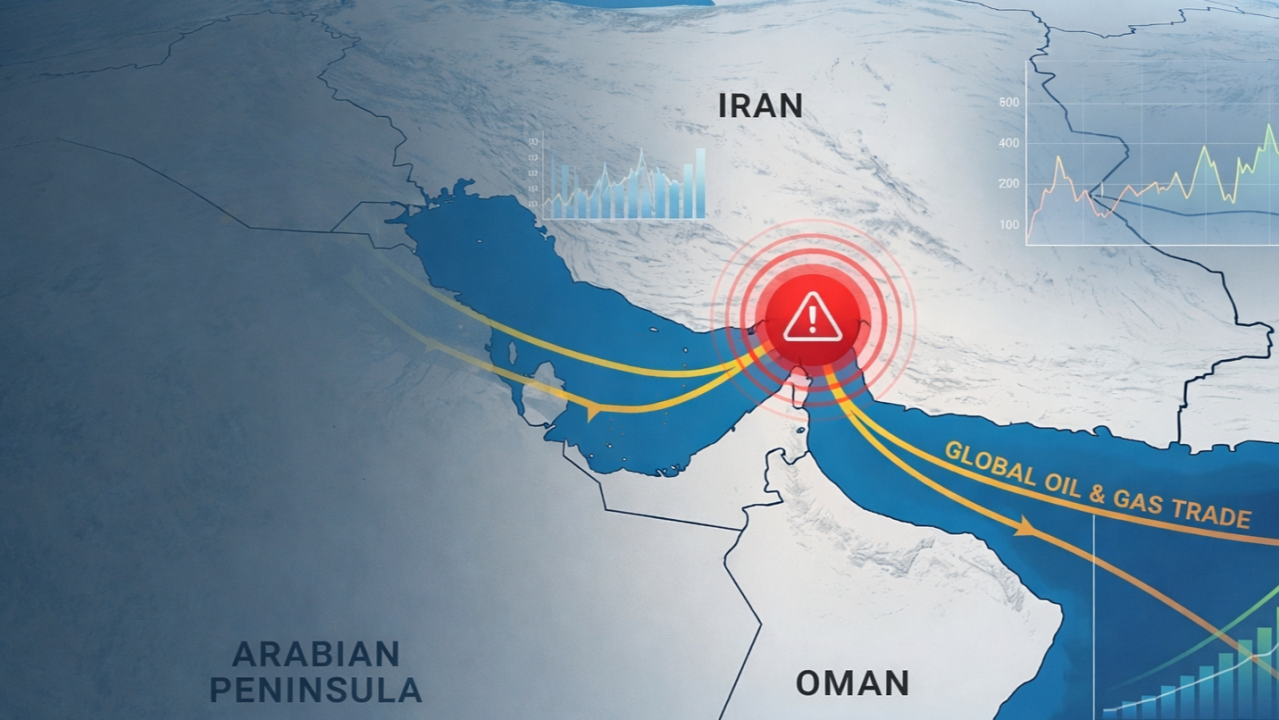
For Burhan, the renewed relationship offered a political and military lifeline. For Iran, it opened a corridor to one of the world’s most critical maritime routes as well as a gateway into Africa.
Turkey–Egypt–Sudan Route
Military supplies reaching the army in Port Sudan have reportedly moved through multiple regional transit corridors involving several regional partners, contributing to the intensification of the fighting and the prolongation of the bloody conflict.
In December 2025, the intelligence platform “Eekad” revealed a sharp increase in air cargo traffic, which it said reflected a strategic shift in the posture of the Port Sudan authorities and their allies. According to the report, this intensified logistical movement coincided with the collapse of international ceasefire proposals.
The report stated that the escalation came “after worsening battlefield losses following the fall of El Fasher, Babanusa, and later the Heglig oil field to the Rapid Support Forces, prompting an accelerated flow of military supplies aimed at strengthening the army’s defensive and offensive capabilities.”
According to the report, “the number of flights during December surged dramatically, rising from four flights in the first week to twelve flights between December 8 and 16 — a threefold increase within the same month, occurring suddenly rather than gradually.”
The investigation added that “through analyzing air traffic between December 1 and 17, we tracked at least 16 cargo flights arriving at Port Sudan airport from Cairo, Istanbul, Muscat, and East Oweinat in Egypt.” It noted that Boeing 737F aircraft dominated the traffic, followed by Airbus A320s and a Russian Il-76 cargo aircraft, “suggesting that these flights likely exceeded normal commercial cargo activity and were linked to the transfer of military equipment or logistical supplies.”
According to the data analyzed by the team, the most intensive flight activity originated from Istanbul to Port Sudan, followed by routes from Cairo and Egypt’s East Oweinat region to the same destination.
Smuggling Through Jeddah
In a related development, an investigative report published in February 2026 revealed details surrounding the arrival of chemical weapons materials in Sudan, which the United States later said had been used by the Sudanese army, leading Washington to impose sanctions on Sudan.
According to the report, the use of internationally prohibited chemical weapons contributed to a worsening humanitarian crisis, with mysterious illnesses emerging in several cities and cholera outbreaks spreading, according to the independent Sudanese Emergency Lawyers group.
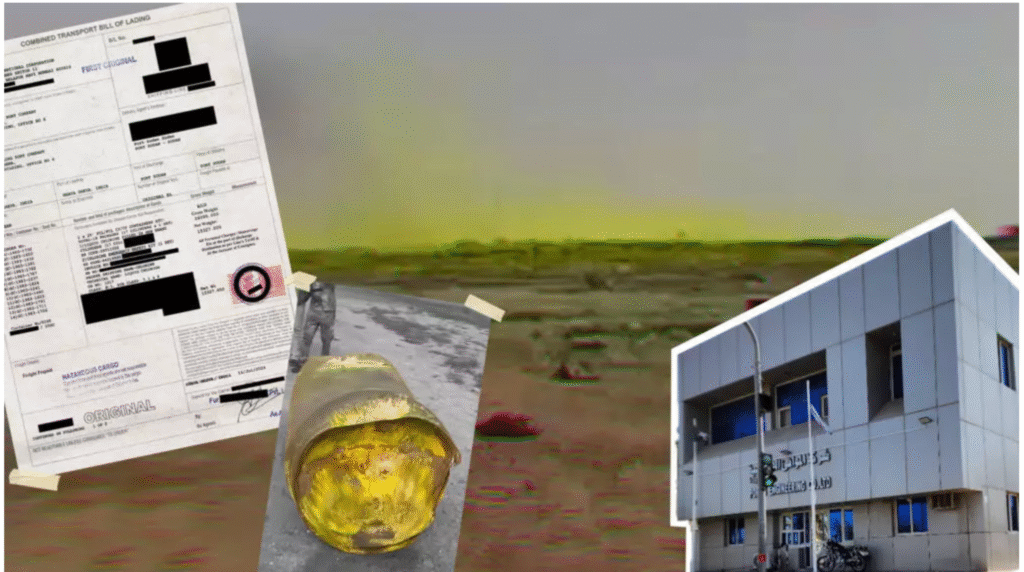
The investigation stated that the transfer of chemical materials into Sudan began through a complex external procurement operation. It identified the director of the importing company as Colonel Anas Younis, an active-duty military officer who reportedly appeared in civilian clothing when signing contracts and in military uniform during official assignments, despite Sudanese law prohibiting serving military personnel from engaging in commercial activities or owning private companies.
The company allegedly used the name “Ports Engineering Company” as a civilian front, claiming to specialize in water treatment in order to legally justify the import of chlorine before customs authorities. The report noted that the material was shipped in 17 large tonner cylinders — containers typically intended for military or heavy industrial use rather than civilian cleaning purposes.
According to the investigation, such cylinders are considered militarily preferable because they can be converted into improvised chemical bombs or explosive barrels.
The operation reportedly took place during the summer of 2024 away from international scrutiny and coincided with peace negotiations hosted under the “Jeddah platform.” The containers were first transported from India to Jeddah Islamic Port, where they remained for 18 days while arrangements were made to classify them as transit cargo.
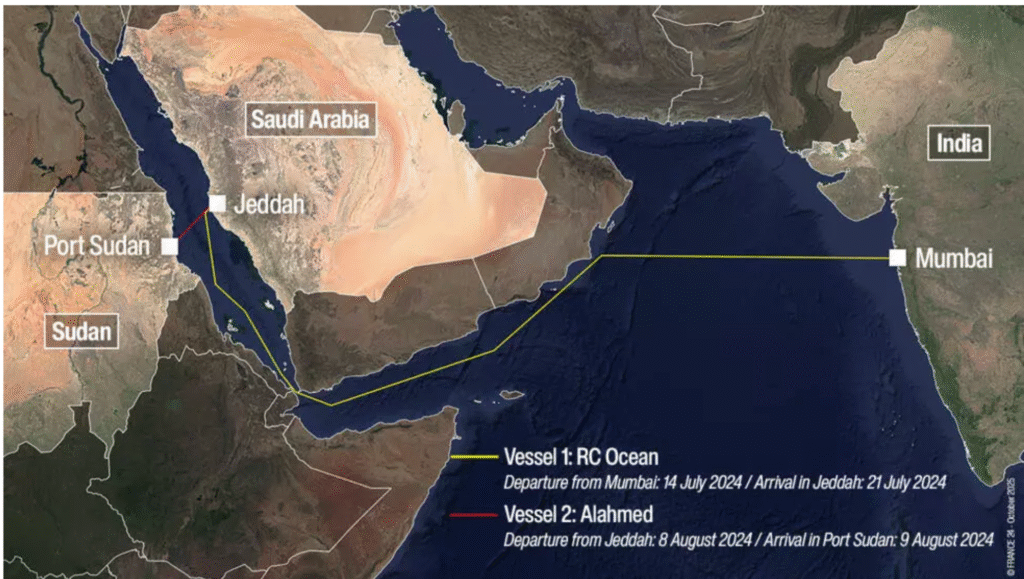
The report further claimed that the Sudanese army exploited customs facilitation measures granted to Sudanese goods in Saudi Arabia in order to move the shipment without detailed inspection of its military-related contents. On August 8, 2024, the cargo was reportedly loaded onto the vessel ALAHMED, operated by Baaboud Shipping Company, to ensure what the report described as a credible commercial cover, following a route originating from India.
Jeddah–Sudan Route
The logistical operation was reportedly overseen by the Defense Industries System, headed by internationally sanctioned figure Mirghani Idris — a close ally and right-hand man of Abdel Fattah al-Burhan — who has also been linked in reports to narcotics and Captagon trafficking networks. Idris was placed under U.S. sanctions in October 2024 on charges related to expanding the war and procuring weapons from foreign suppliers, including China and Russia.
According to the investigation, internal documents described the operation as a “diplomatic betrayal” of Saudi Arabia, accusing those involved of exploiting Saudi ports to smuggle materials intended for military purposes without the knowledge of Saudi authorities. The report noted that while Riyadh was simultaneously sponsoring peace mediation efforts, approximately 17 tons of toxic gas were allegedly transported through Saudi territory. The shipment was ultimately unloaded at Port Sudan on August 9, 2024.
Meanwhile, the United States imposed sanctions on Abdel Fattah al-Burhan over allegations linked to war crimes, destabilization, and undermining Sudan’s democratic transition.
The U.S. Treasury Department stated that the Sudanese army under Burhan’s command had carried out deadly attacks against civilians, including airstrikes targeting protected civilian infrastructure such as schools, markets, and hospitals.