Europe is now confronting a central strategic question: can the European Union evolve from an economic bloc into a genuine geopolitical power capable of defending its interests in an increasingly unstable international order?
The European Centre for Strategic Studies and Policy (ECSAP)
The European Union is undergoing one of the most consequential geopolitical transformations in its modern history. For decades, the EU primarily viewed itself as an economic and political project built around integration, trade, diplomacy, and soft power. European security relied heavily on NATO and the strategic umbrella provided by the United States, while the Union focused on economic growth, democratic governance, and internal stability.
However, a series of overlapping global crises has fundamentally altered Europe’s strategic environment. Russia’s invasion of Ukraine, growing tensions between China and the West, migration pressures, energy insecurity, technological competition, cyber threats, climate change, and the return of great-power rivalry have forced the EU to reconsider its global role.
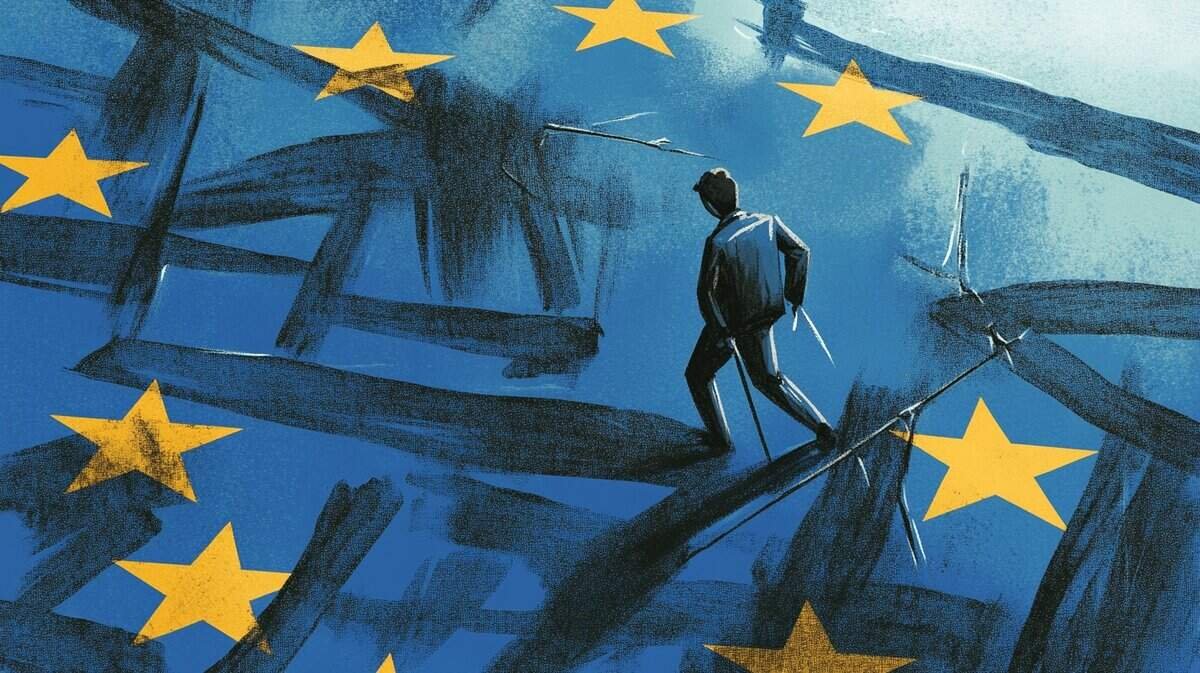
Europe is now confronting a central strategic question: can the European Union evolve from an economic bloc into a genuine geopolitical power capable of defending its interests in an increasingly unstable international order?
The concept of “strategic autonomy” has therefore become one of the defining debates shaping European policy. European leaders increasingly seek greater military, technological, industrial, and energy independence while simultaneously maintaining transatlantic partnerships with the United States.
Yet achieving this transformation remains deeply challenging due to internal divisions, economic pressures, political fragmentation, and the complexity of balancing national sovereignty with collective European integration.
The future of the European Union may ultimately depend on whether Europe can successfully adapt to a rapidly changing geopolitical landscape.
Europe After the War in Ukraine
Russia’s full-scale invasion of Ukraine marked a historic turning point for European security.
For decades after the Cold War, many European governments assumed that large-scale interstate war on the continent had become unlikely. Economic interdependence with Russia, especially in the energy sector, was widely viewed as a stabilizing factor.
The invasion shattered those assumptions completely.
European governments suddenly faced the return of high-intensity war, territorial aggression, energy coercion, cyber warfare, and military insecurity on the continent. The conflict exposed Europe’s dependence on Russian energy, weaknesses in defense production, and limited military readiness.
As a result, European states dramatically increased defense spending, expanded military cooperation, and accelerated efforts to reduce dependence on Russian oil and gas.
The war also revitalized NATO and strengthened transatlantic security coordination.
At the same time, it intensified debates regarding Europe’s ability to act independently in global crises.
Strategic Autonomy and European Power
The idea of European strategic autonomy has gained increasing importance in recent years.
Strategic autonomy refers to Europe’s ability to defend its interests, maintain industrial and technological independence, and act geopolitically without excessive dependence on external powers.
French President Emmanuel Macron has been one of the strongest advocates for greater European strategic independence, particularly in defense and industrial policy.
Supporters argue that Europe must become more self-sufficient in military production, energy systems, semiconductors, artificial intelligence, and critical infrastructure.
The goal is not necessarily to replace NATO or sever ties with the United States, but to reduce vulnerabilities created by excessive external dependence.
However, European countries remain divided regarding how far strategic autonomy should go.
Eastern European states, particularly Poland and the Baltic countries, continue prioritizing close military cooperation with the United States due to concerns about Russian aggression.
These divisions complicate efforts to build a unified European geopolitical strategy.
Europe’s Energy Crisis and Economic Vulnerability
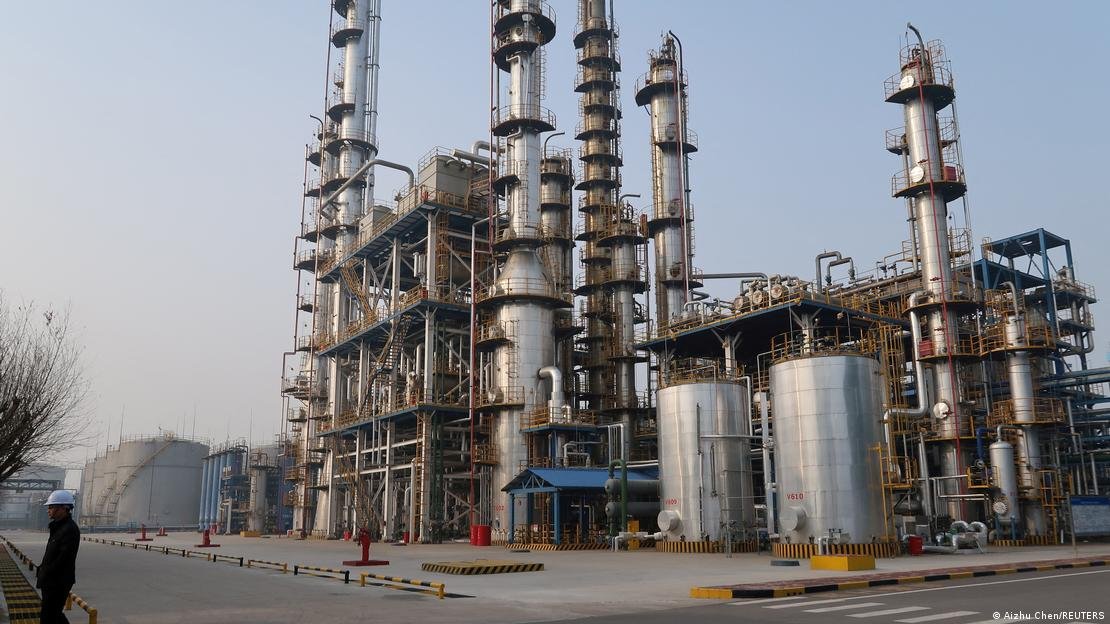
The war in Ukraine triggered one of the largest energy crises in modern European history.
For years, Europe relied heavily on Russian natural gas to power industries, heat homes, and support economic growth. Sanctions, supply disruptions, and geopolitical tensions forced European governments to rapidly diversify energy sources.
The crisis exposed the strategic risks of energy dependence and accelerated investment in renewable energy, liquefied natural gas (LNG) infrastructure, and alternative suppliers.
At the same time, rising energy prices contributed to inflation, industrial pressure, and economic instability across Europe.
Energy security has therefore become central to European strategic planning.
The transition toward renewable energy is now viewed not only as a climate objective, but also as a geopolitical necessity.
Europe and the United States
The relationship between Europe and the United States remains the foundation of Western security architecture.
NATO continues serving as Europe’s primary defense framework, and American military capabilities remain essential for European deterrence against Russia.
However, European leaders increasingly recognize the risks of excessive dependence on U.S. political stability and foreign policy priorities.
The possibility of changing American administrations, shifting global priorities, or reduced U.S. commitment to European security has intensified calls for stronger European defense capabilities.
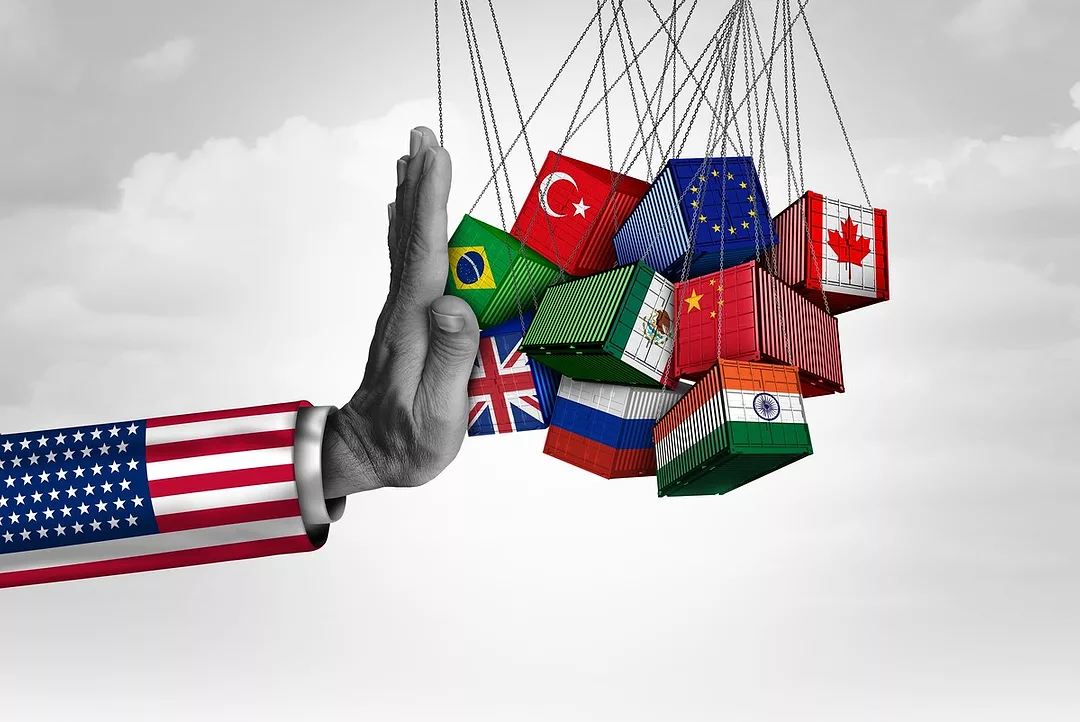
At the same time, tensions occasionally emerge regarding trade, technology regulation, industrial subsidies, and relations with China.
Europe therefore faces a complex balancing act: strengthening strategic independence while preserving transatlantic unity.
China and Europe’s Strategic Dilemma
China represents both an economic partner and a geopolitical challenge for Europe.
European economies remain deeply connected to Chinese markets, manufacturing supply chains, and trade networks. However, concerns regarding technological dependence, human rights, industrial competition, and national security have intensified significantly.
The European Union increasingly views China as simultaneously a partner, competitor, and systemic rival.
European governments are becoming more cautious regarding Chinese investments in critical infrastructure, telecommunications, artificial intelligence, and strategic industries.
At the same time, Europe seeks to avoid direct economic confrontation with Beijing similar to the broader U.S.-China rivalry.
Managing relations with China may become one of Europe’s most difficult geopolitical challenges during the coming decades.
Migration and Political Polarization in Europe
Migration remains one of the most politically sensitive issues within the European Union.
Conflicts in the Middle East, Africa, and Asia, combined with economic instability and climate pressures, continue driving migration flows toward Europe.
The migration crisis of 2015 deeply reshaped European politics, strengthening nationalist and far-right movements across the continent.
Political debates surrounding migration increasingly involve questions of identity, border security, integration, labor markets, and national sovereignty.
Far-right parties have expanded significantly in countries including France, Germany, Italy, the Netherlands, Austria, and Sweden.
Migration therefore not only affects humanitarian policy, but also the stability of European democracy itself.
The Rise of Far-Right and Populist Movements
Europe is experiencing growing political fragmentation and polarization.
Far-right parties increasingly challenge traditional political systems by emphasizing nationalism, anti-immigration policies, Euroskepticism, and opposition to globalization.
Economic inequality, inflation, housing crises, migration pressures, and distrust in political elites have contributed to growing public frustration.
Some populist movements openly challenge core European Union principles involving judicial independence, press freedom, minority rights, and democratic norms.
This internal political fragmentation complicates Europe’s ability to develop coherent long-term strategic policies.
The future stability of the European project itself may depend on whether democratic institutions can successfully manage rising polarization.
European Defense and Military Integration
The war in Ukraine accelerated European discussions regarding defense integration.
European governments increasingly recognize the need for stronger domestic defense industries, ammunition production, military coordination, and strategic preparedness.
Several EU initiatives now focus on joint procurement, defense investment, cyber defense, and military mobility across Europe.
However, significant challenges remain.
European military systems are still highly fragmented, with multiple national procurement systems and varying strategic priorities.
Achieving deeper defense integration requires balancing national sovereignty with collective security objectives.
The long-term question remains whether Europe can evolve into a genuinely independent military actor or whether NATO will continue dominating European defense architecture.
Technology, AI, and Digital Sovereignty
Technology competition has become central to European strategic thinking.
The European Union increasingly seeks “digital sovereignty” — the ability to control critical technologies, data systems, cloud infrastructure, semiconductors, and AI development.
European policymakers fear excessive dependence on American technology companies and Chinese industrial supply chains.
The EU has therefore prioritized technology regulation, data privacy, semiconductor investment, and AI governance.
Europe’s approach differs from both the American market-driven model and China’s state-centered technological system.
Instead, the EU seeks to position itself as a global regulator emphasizing privacy, ethics, transparency, and democratic oversight.
Whether Europe can remain technologically competitive while maintaining strict regulatory frameworks remains uncertain
Climate Change and Green Transition
Climate policy is one of the European Union’s defining strategic priorities.
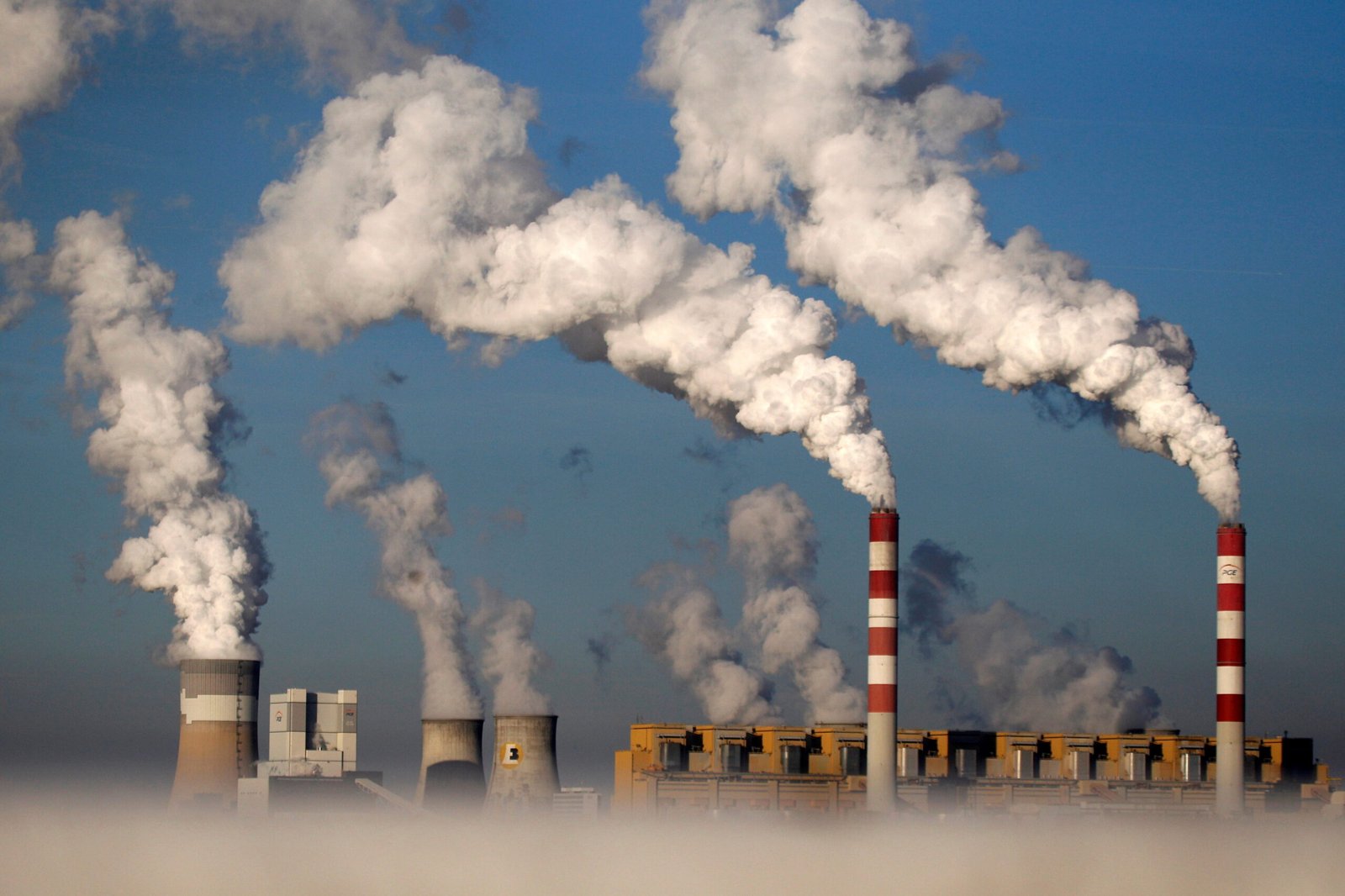
The European Green Deal aims to transform Europe into a climate-neutral economy through renewable energy expansion, industrial transition, emissions reduction, and sustainable infrastructure.
However, the green transition also creates economic and political tensions involving industrial competitiveness, energy costs, labor transitions, and social inequality.
Europe increasingly views climate leadership as both an environmental responsibility and an opportunity for global industrial influence.
The transition toward green technologies may significantly shape Europe’s future economic position within the global economy.
Europe in a Multipolar World
The global order is becoming increasingly multipolar and unstable.
The European Union now operates within a world shaped by U.S.-China rivalry, Russian aggression, technological competition, economic fragmentation, and declining international consensus.
Europe must navigate relations with multiple competing powers while protecting its economic interests, democratic systems, and strategic autonomy.
Unlike traditional military powers, the EU’s strength historically relied on economic integration, diplomacy, law, and regulatory influence.
The challenge now is whether those tools remain sufficient in a world increasingly shaped by military competition and geopolitical confrontation.
The European Union stands at a historic crossroads.
Global instability, war in Ukraine, energy insecurity, migration pressures, technological competition, and political polarization are forcing Europe to redefine its role in international politics.
The era in which Europe could rely primarily on economic power and soft diplomacy is fading. European governments increasingly recognize the need for stronger defense capabilities, industrial resilience, technological independence, and geopolitical strategy.
Yet major internal divisions remain regarding sovereignty, migration, defense, energy, and relations with global powers.
The future of Europe may ultimately depend on whether the European Union can successfully transform itself into a more cohesive strategic actor capable of defending its interests in an increasingly fragmented and competitive world.
Europe’s response to these challenges will likely shape not only the future of the EU itself, but also the broader future of the international order in the twenty-first century.