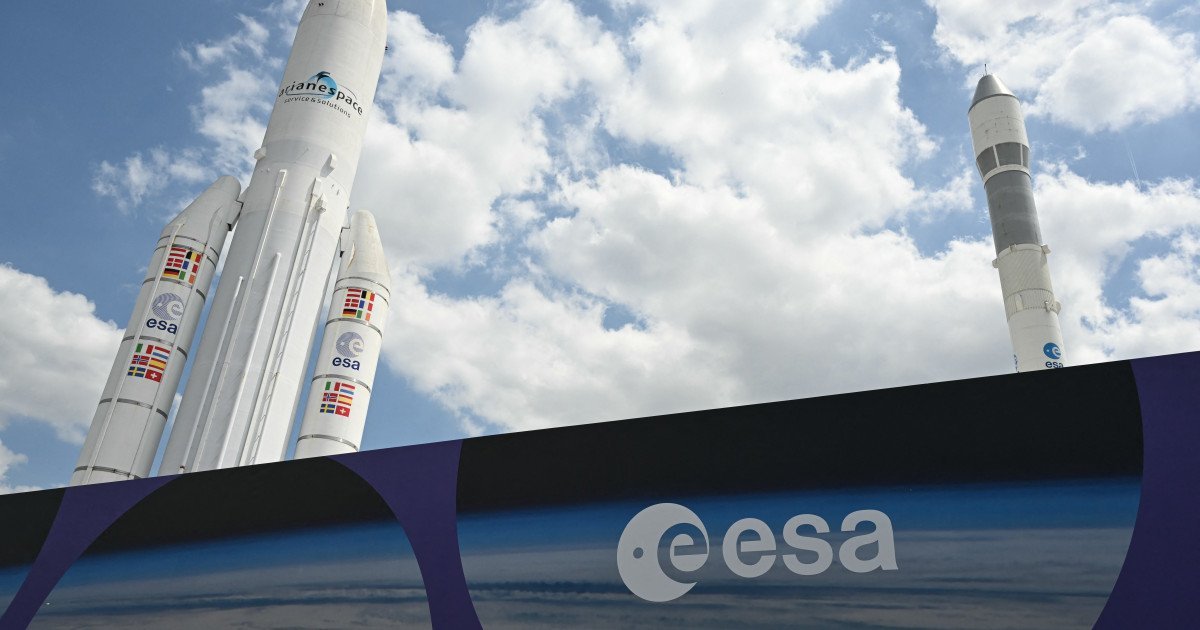
Europe is taking its biggest step yet into space militarization, as for the first time in its history, the European Space Agency (ESA) will fund a program explicitly designed for military use, shifting away from its long-standing commitment to “exclusively peaceful” space activity, ESA reported on November 27.
Outer space is rapidly transforming from a domain primarily associated with scientific exploration and satellite communications into one of the most strategically contested arenas in global geopolitics. Major powers increasingly view space not only as essential for economic development and technological innovation, but also as a critical component of national security, military superiority, intelligence gathering, and geopolitical influence.
The modern global economy depends heavily on space infrastructure. Satellites now support communications, banking systems, navigation, weather forecasting, military coordination, intelligence operations, internet services, transportation networks, and global financial systems. As reliance on space technology grows, the vulnerability of these systems has become a major strategic concern for governments and military institutions worldwide.
At the same time, the rise of private space companies, technological advancements, anti-satellite weapons development, cyber capabilities, and geopolitical rivalry between the United States, China, and Russia are accelerating the militarization of space.
What was once dominated by Cold War competition between superpowers has evolved into a complex global contest involving states, corporations, intelligence agencies, and military alliances.
The future of space may therefore become one of the defining geopolitical battlegrounds of the twenty-first century.
The Evolution of Space as a Strategic Domain
During the early decades of the space age, outer space was primarily associated with scientific achievement, prestige, and ideological competition between the United States and the Soviet Union.
The launch of Sputnik in 1957 marked the beginning of the space race and demonstrated how technological advances in space could reshape global power perceptions. Space achievements quickly became symbols of national prestige and strategic capability during the Cold War.
However, space technology rapidly evolved beyond symbolic competition. Satellites became essential for military reconnaissance, missile warning systems, communications, and navigation.
Modern military operations now depend heavily on space-based infrastructure. Precision-guided weapons, drone operations, intelligence systems, battlefield communications, and missile defense networks all rely extensively on satellite technologies.
As a result, space has become deeply integrated into modern military strategy and global security systems.
The United States and Space Dominance
The United States remains the world’s leading space power. American military and intelligence systems possess extensive satellite networks supporting communications, surveillance, navigation, missile detection, and strategic operations worldwide.
The establishment of the United States Space Force in 2019 reflected growing recognition that space had become a distinct military domain comparable to land, sea, air, and cyberspace.
Washington increasingly views space superiority as essential for maintaining global military dominance.
At the same time, private American companies such as SpaceX, Blue Origin, and others are revolutionizing the commercial space sector. The close relationship between private industry and national security institutions is reshaping how the United States approaches space strategy.
SpaceX’s satellite systems, reusable rockets, and global communication infrastructure have already demonstrated how private companies can influence geopolitical dynamics and modern warfare.
The integration of commercial innovation into military strategy may become one of the defining features of future space competition.
China’s Expanding Space Ambitions
China has emerged as one of the most rapidly advancing space powers in the world. Beijing views space development as central to its long-term geopolitical, technological, and military strategy. The Chinese government has invested heavily in satellite infrastructure, lunar missions, space stations, missile technologies, and anti-satellite capabilities.
China’s military increasingly integrates space systems into intelligence operations, navigation, missile targeting, cyber warfare, and battlefield coordination.
The development of the BeiDou navigation system reduced China’s dependence on American GPS infrastructure and demonstrated Beijing’s ambition for technological independence.
China also seeks long-term leadership in lunar exploration, asteroid mining, and deep-space technologies.
For Washington, China’s expanding space capabilities represent one of the most significant strategic challenges of the coming decades.
Russia and the Militarization of Space
Russia continues viewing space as a critical strategic domain despite economic and technological challenges. Moscow inherited significant Soviet-era space infrastructure and expertise, including satellite systems, launch capabilities, and military space programs.
Russian military doctrine increasingly emphasizes counter-space operations, electronic warfare, cyber capabilities, and anti-satellite weapons designed to disrupt adversary space systems during conflicts.
The war in Ukraine highlighted the growing importance of space infrastructure in modern warfare, particularly satellite communications and real-time intelligence systems.
At the same time, sanctions and economic pressures may limit Russia’s ability to compete technologically with the United States and China over the long term.
Nonetheless, Russia remains a major actor in the militarization of space.
Anti-Satellite Weapons and Orbital Warfare
One of the most dangerous developments in space militarization involves anti-satellite (ASAT) weapons. Several countries, including the United States, China, Russia, and India, have demonstrated the ability to destroy satellites using missile systems or other technologies.
Satellites are highly vulnerable targets because they are essential to military communications, navigation, surveillance, and economic infrastructure.
Destroying or disabling satellites during conflict could severely disrupt military operations, financial systems, transportation networks, and global communications.
However, anti-satellite tests also create dangerous space debris capable of threatening civilian and military satellites alike.
The growing development of ASAT technologies increases concerns regarding future orbital warfare and accidental escalation in space.
Space and Modern Warfare
Modern warfare increasingly depends on space-based systems. Military satellites provide real-time intelligence, navigation, targeting support, secure communications, weather monitoring, and missile detection capabilities.
Precision-guided weapons systems rely heavily on satellite navigation. Drone operations, naval coordination, and battlefield logistics all depend on uninterrupted space infrastructure.
This dependence creates significant vulnerabilities.
Future conflicts between major powers may involve efforts to disable or disrupt space systems early in a war in order to cripple enemy communications and intelligence networks.
As a result, protecting space infrastructure has become a major strategic priority for advanced militaries.
The Role of Private Space Companies
Private corporations are playing an increasingly important role in global space competition. Companies such as SpaceX, Blue Origin, Rocket Lab, and others are rapidly expanding commercial launch capabilities, satellite networks, and space technologies.
This privatization of space introduces entirely new geopolitical dynamics.
Private companies now possess technological capabilities once limited to governments. In some cases, corporate decisions may significantly influence military operations, communications infrastructure, and international politics.
For example, satellite internet systems have already affected battlefield communications in active conflict zones.
Governments increasingly rely on private-sector innovation for military space infrastructure, creating closer relationships between corporations and national security institutions.
The future of space competition may therefore involve not only states, but also powerful transnational technology companies.
Cybersecurity and Space Infrastructure
Space systems are increasingly vulnerable to cyberattacks. Satellites, communication networks, and space control systems rely heavily on software, data networks, and digital infrastructure that may be targeted by hostile actors.
Cyberattacks against satellites could disrupt military operations, communications systems, transportation infrastructure, and financial markets.
As space systems become more interconnected with critical infrastructure on Earth, cybersecurity becomes central to space security itself.
The overlap between cyber warfare and space warfare will likely intensify during future geopolitical conflicts.
Space Resources and Economic Competition
The future of space competition also involves economic interests beyond Earth. Governments and private companies increasingly explore the possibility of extracting resources from the Moon, asteroids, and other celestial bodies.
Rare minerals, water resources, and future fuel production capabilities could eventually become economically significant.
The commercialization of space may create new geopolitical disputes regarding ownership rights, legal frameworks, and resource access.
International space law remains relatively underdeveloped in addressing future economic competition beyond Earth.
As technological capabilities expand, competition over extraterrestrial resources may become increasingly politically sensitive.
International Law and the Governance of Space
The militarization of space raises major legal and diplomatic challenges. The 1967 Outer Space Treaty established principles limiting the placement of weapons of mass destruction in space and emphasized peaceful exploration.
However, modern technologies including anti-satellite weapons, cyber capabilities, autonomous systems, and military satellite networks create legal ambiguities not fully addressed by existing treaties.
There is currently no comprehensive international framework regulating many forms of military activity in space.
As geopolitical tensions increase, international institutions face growing pressure to develop new norms and agreements governing space security.
Without stronger legal frameworks, the risk of conflict escalation in space may increase significantly.
Artificial Intelligence and Autonomous Space Systems
Artificial intelligence is increasingly integrated into space operations. AI systems can assist with satellite management, threat detection, autonomous navigation, data analysis, and defensive operations.
Military planners are exploring autonomous satellite systems capable of responding rapidly to threats without direct human intervention.
At the same time, AI introduces risks involving automation errors, cyber vulnerabilities, and reduced human oversight during high-pressure security situations.
The combination of AI, cyber warfare, and space militarization may create highly unpredictable strategic environments.
The Future of Geopolitical Competition in Space
Space is becoming one of the central arenas of global strategic competition. The United States, China, Russia, India, and other powers increasingly view dominance in space as essential to military superiority, technological leadership, and geopolitical influence.
Control over satellite infrastructure, communications systems, launch capabilities, and space technologies may shape future balances of power.
At the same time, the boundaries between civilian and military space activities are becoming increasingly blurred.
Commercial infrastructure, scientific research, military operations, and intelligence systems often overlap within the same technological ecosystems.
Future geopolitical rivalries may therefore extend far beyond Earth itself. The militarization of space is transforming global security and geopolitics.
Space infrastructure has become essential to modern economies, military systems, communications networks, and intelligence operations. As dependence on these technologies grows, competition over space capabilities is intensifying among major powers.
The rise of anti-satellite weapons, cyber threats, private space companies, artificial intelligence, and strategic rivalries has accelerated the transformation of outer space into a contested geopolitical domain.
At the same time, legal frameworks governing military activity in space remain limited and increasingly outdated.
The future of space competition will likely shape not only military power and technological leadership, but also the broader structure of international politics during the twenty-first century.
Humanity is entering a new era in which the struggle for global influence extends beyond borders, oceans, and cyberspace — into orbit itself.