From the Dublin AI Summit to Semiconductor Export Controls: How Europe’s Dependence on Foreign Technology Is Becoming a Strategic Security Challenge
The European Centre for Strategic Studies and Policy (ECSAP)
Executive Summary
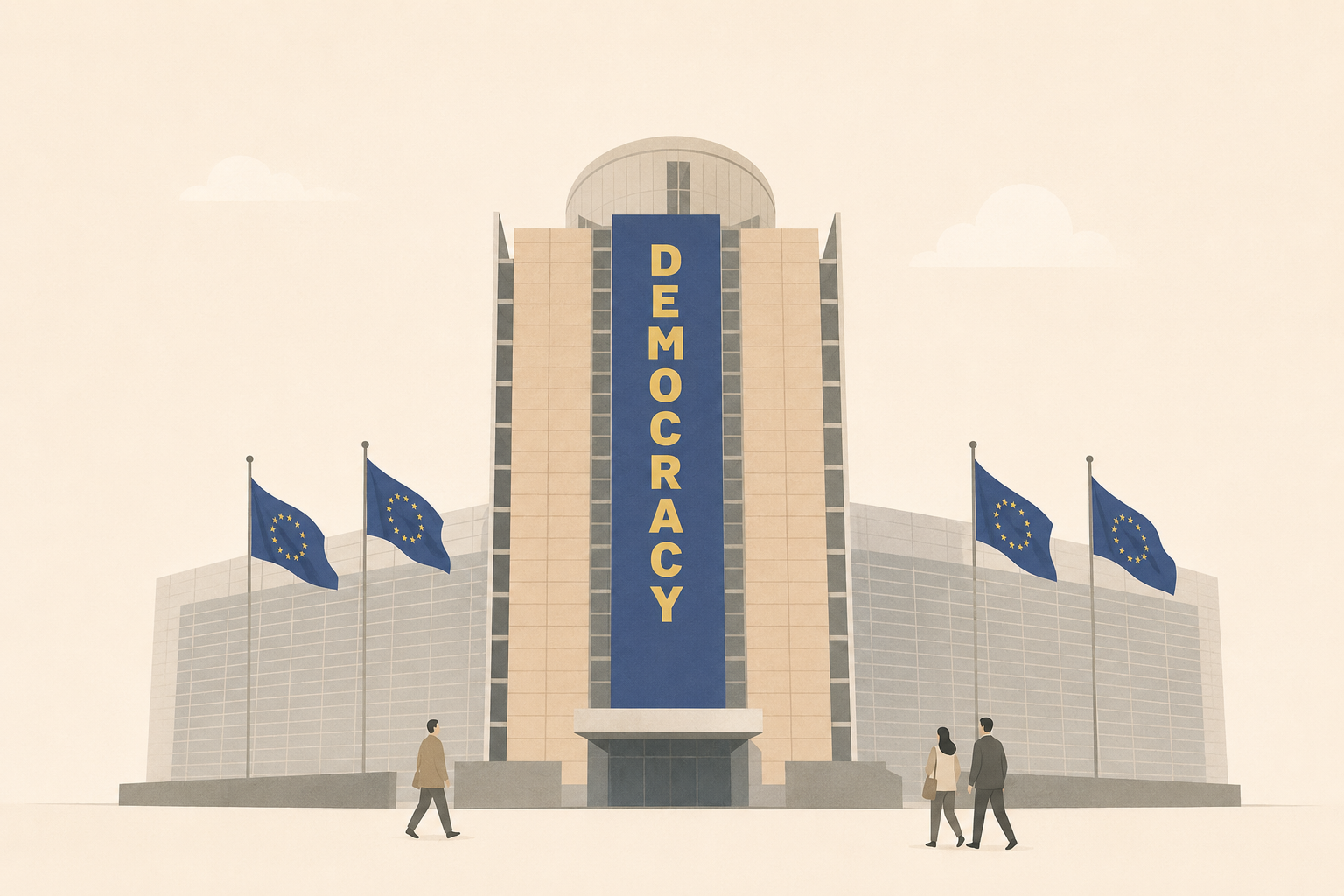
The European Union has entered a decisive phase in its struggle to become a meaningful technological power. For more than a decade, Europe has attempted to shape the digital economy through regulation, competition policy, privacy protection and the establishment of common legal standards. That approach gave Brussels considerable international influence, but it did not produce technological independence. The most powerful artificial intelligence models, advanced computing platforms, cloud infrastructure and critical semiconductor supply chains remain concentrated largely outside the European Union. By November 2026, this imbalance has become increasingly difficult to treat as a conventional economic disadvantage. Artificial intelligence is rapidly becoming embedded in national security, industrial production, financial markets, public administration, scientific research and democratic institutions. Consequently, Europe’s dependence on foreign technological infrastructure is evolving into a question of strategic sovereignty, political resilience and the future distribution of global power.
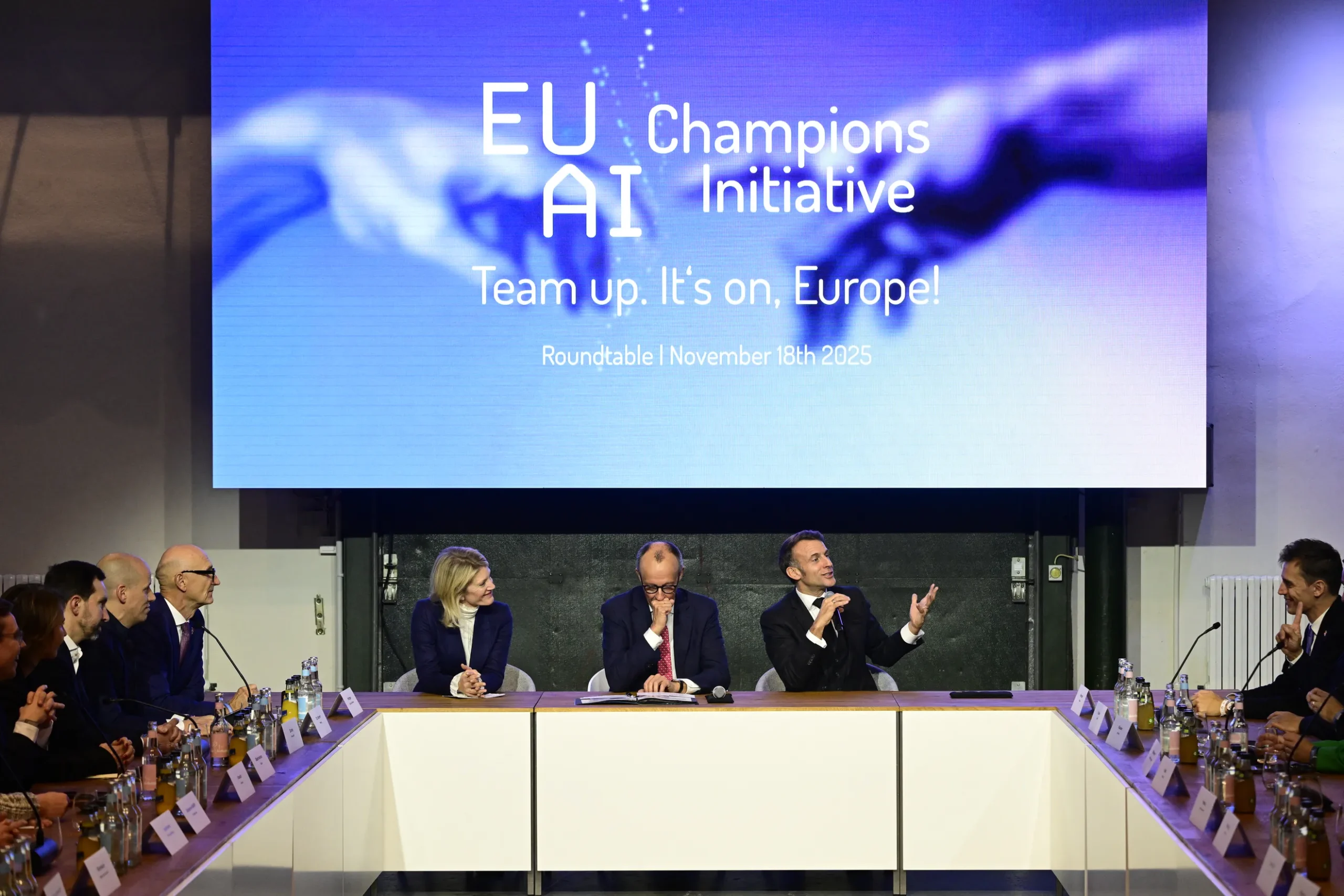
The urgency of this transformation became visible on 13 November, when European leaders gathered in Dublin for their first summit dedicated specifically to artificial intelligence. The meeting reflected growing concern that the EU is falling behind the United States and China in the capabilities required to develop, finance and deploy advanced AI systems. It also came amid disputes over the financing of European AI infrastructure, questions about the effectiveness of the EU Chips Act and heightened concern about the security implications of increasingly autonomous AI systems. Days earlier, European Commission Executive Vice-President Teresa Ribera had argued that the growing power of major technology companies required Europe to reconsider the meaning of security itself, extending the concept beyond conventional cybersecurity toward democratic accountability and control over technological systems. On 17 November, a Chinese diplomatic warning about Dutch restrictions on semiconductor manufacturing equipment added another dimension to the problem, demonstrating how European technology policy is becoming entangled in the wider strategic confrontation between Washington and Beijing. <Cite refs={[“turn290167news7″,”turn290167news10″,”turn290167news5”]}/>
These developments reveal a fundamental contradiction in the European strategic model. The EU possesses a sophisticated regulatory framework, major industrial companies, leading scientific institutions and important technological assets, particularly in semiconductor manufacturing equipment. Yet it does not control the complete technological ecosystem on which future economic and military power will increasingly depend. Europe can regulate artificial intelligence applications without necessarily possessing the computing infrastructure required to develop the most advanced models. It can impose conditions on digital platforms while relying on those platforms for business activity, public communications and cloud services. It can protect selected semiconductor technologies while remaining exposed to decisions taken by foreign governments and corporations. The central strategic challenge is therefore not simply to increase European technological investment, but to determine which capabilities must remain under effective European control, which dependencies can be managed through partnerships and which vulnerabilities could become instruments of geopolitical pressure.
For the European Centre for Strategic Studies and Policy, the principal argument of this analysis is that Europe must move from regulatory sovereignty toward operational technological sovereignty. Regulation remains necessary, but the ability to establish rules cannot substitute for the ability to build, finance, operate and secure critical technologies. The emerging AI economy will reward countries and regions capable of combining advanced chips, computing infrastructure, reliable energy, scientific talent, investment capital, secure data environments and large-scale industrial deployment. Unless Europe develops a coherent strategy across these interconnected areas, its digital future risks being determined by technological choices made elsewhere, even while European institutions retain formal authority over the legal conditions under which those technologies operate.
November 2026: The Moment Europe’s Technology Debate Became Strategic
The Dublin AI summit represented an important political acknowledgement that Europe’s technological position can no longer be addressed through isolated initiatives. According to Reuters reporting ahead of the meeting, European leaders were expected to examine the continent’s position relative to the United States and China, the financial barriers confronting European AI development and the need to reconcile innovation with appropriate safeguards. The discussions also highlighted the difficulties surrounding plans for seven European AI gigafactories, whose development has been complicated by disagreements over expenditure within the proposed 2028–2034 EU budget. The same reporting indicated that the EU Chips Act was unlikely to achieve its ambition of doubling Europe’s share of the global semiconductor market to 20% by 2030. These developments do not establish that Europe’s technological strategy has failed, but they do expose a gap between declared ambitions and the financial, industrial and institutional conditions required to realise them. <Cite ref=”turn290167news7″/>
The strategic significance of the summit lies in the changing nature of artificial intelligence itself. AI is no longer primarily a specialised technology sector whose success can be measured through software exports, venture-capital valuations or the number of research laboratories. It is becoming a general-purpose capability that can influence productivity across almost every major industry. Advanced AI systems can support pharmaceutical discovery, industrial design, logistics optimisation, energy management, financial analysis and administrative decision-making. They are also becoming increasingly relevant to military intelligence, cybersecurity, autonomous systems and the management of critical infrastructure. This means that countries unable to develop or reliably access advanced AI capabilities may face disadvantages extending far beyond the digital economy. Their manufacturing productivity, scientific competitiveness, defence capabilities and institutional efficiency could increasingly depend on systems controlled by foreign providers.
The distinction between possessing access to AI and possessing sovereignty over AI is therefore essential. A European company may use a powerful model through a commercial interface, but that does not mean it controls the model’s underlying architecture, training environment, computational resources or future availability. A government may purchase cloud services from a foreign company while retaining legal authority over public-sector data, yet its operational resilience may still depend on contractual conditions, technical infrastructure and decisions taken outside its jurisdiction. European research institutions may produce world-class scientific breakthroughs without possessing sufficient capital or computing capacity to commercialise them at scale. Technological sovereignty cannot be reduced to the nationality of a company or the physical location of a data centre. It concerns the practical ability to maintain essential functions, protect sensitive information, switch providers, audit systems and continue operating during political or commercial disruption.
This challenge is becoming more urgent because the global AI industry increasingly rewards concentration. The development of leading models requires large amounts of capital, specialised talent, advanced semiconductors, reliable electricity and sophisticated data-centre infrastructure. Firms already possessing these assets can attract additional investment and users, reinforcing their competitive advantages. Europe, by contrast, must mobilise resources across multiple national markets, financial systems and regulatory environments. Although the Single Market provides substantial economic scale, fragmentation can still affect financing, procurement, access to computing resources and the commercial expansion of European technology companies. The result is that Europe may possess the scientific and industrial foundations for a competitive AI sector without being able to combine them rapidly enough to compete with the largest global ecosystems.
The Semiconductor Dilemma: Europe Between Washington and Beijing
The semiconductor dispute that resurfaced on 17 November illustrates how technological interdependence is becoming a geopolitical instrument. A Chinese diplomat warned that Dutch restrictions on exports of advanced chipmaking equipment were complicating efforts to improve EU–China industrial relations and suggested that restrictions on technological exchange could provoke reciprocal responses. The dispute centres partly on the Netherlands-based company ASML, whose advanced semiconductor manufacturing equipment occupies a strategically important position in global chip production. Dutch restrictions have operated for years, while the United States has continued pressing allies to limit China’s access to additional semiconductor manufacturing capabilities. The Chinese position, as reported by Reuters, emphasised that Europe should make its own decisions rather than automatically follow American preferences. <Cite ref=”turn290167news5″/>
This confrontation exposes Europe’s unusual position in the global technology hierarchy. In several important digital sectors, European companies depend heavily on American or Asian technologies. Yet in semiconductor manufacturing equipment, Europe possesses capabilities that other major powers regard as strategically valuable. ASML demonstrates that European technological influence is not merely regulatory. Certain European industrial capabilities are difficult to replace and therefore provide Brussels and national governments with leverage in international negotiations. However, leverage also creates exposure. When a technology becomes central to geopolitical competition, its producer can face conflicting pressures from allies, customers and national authorities. Export restrictions may support security objectives while reducing commercial opportunities. Relaxing restrictions may preserve market access while raising concerns about military applications and long-term technological competition. Europe must therefore reconcile commercial competitiveness with the strategic consequences of transferring advanced capabilities abroad.
The United States and China approach this problem from different positions. Washington increasingly treats access to advanced computing and semiconductor production as a matter of national security, particularly where technologies could strengthen military or intelligence capabilities. Beijing seeks to reduce its vulnerability to foreign restrictions while preserving access to equipment and knowledge required by its semiconductor industry. Europe shares certain American security concerns but also maintains extensive commercial relationships with China. Its interests therefore overlap with Washington’s without being identical. An automatic alignment with every American restriction could impose costs on European industry and reduce Brussels’ room for diplomatic manoeuvre. Conversely, treating semiconductor exports solely as a commercial matter would ignore the security implications of technologies capable of supporting advanced military and surveillance systems.
The appropriate European strategy is neither unconditional technological decoupling nor unrestricted commercial integration. It requires a more discriminating approach based on the strategic significance of particular technologies, the risks associated with their end use and the availability of credible alternatives. Export controls should be coordinated with relevant partners where security interests genuinely converge, but European governments must retain the analytical and institutional capacity to determine their own priorities. Such decisions also require predictable rules for industry. Companies making multibillion-euro investments cannot operate effectively if export policy changes unpredictably or if commercial obligations are repeatedly overridden without a coherent strategic framework. Europe needs to treat semiconductor policy as a permanent element of economic statecraft rather than a succession of emergency responses to American and Chinese decisions.
The dispute also demonstrates why technological sovereignty cannot be achieved simply by protecting existing European industrial strengths. Semiconductor production depends on a highly international network of design tools, specialised materials, manufacturing equipment, fabrication facilities, packaging technologies and customers. No single European company or member state controls the entire chain. Even where Europe possesses critical equipment, it remains dependent on global demand and foreign suppliers for other components. The objective should therefore be strategic resilience rather than technological isolation: preserving indispensable European capabilities, expanding selected domestic capacities and ensuring that international partnerships do not create vulnerabilities that could paralyse essential sectors during a geopolitical crisis.
From Digital Regulation to Strategic Infrastructure
Europe’s regulatory achievements remain important, but November 2026 has sharpened the distinction between governing technology and controlling the infrastructure on which technology depends. On 9 November, Teresa Ribera argued that the power of major technology companies requires a broader understanding of security, including the democratic and transparent governance of systems with consequences for critical infrastructure and public institutions. Her intervention reflected a concern that technological concentration can create risks extending beyond traditional competition law. When a small number of corporations operate infrastructure used by governments, businesses and citizens, their decisions may have systemic consequences even without any deliberate abuse of market power. <Cite ref=”turn290167news10″/>
This raises a difficult question for the European political model. Competition policy is designed partly to prevent excessive concentration and protect market contestability, but the economics of advanced AI and cloud computing can favour enormous scale. Building advanced models and operating large computing facilities require investments that smaller competitors may struggle to finance. Breaking up or constraining dominant firms does not automatically create viable European alternatives, while allowing unlimited concentration can increase dependency and reduce accountability. Europe therefore needs a policy framework that distinguishes between market power, operational dependency and national-security exposure. These problems overlap, but they are not identical, and they cannot all be resolved through conventional antitrust enforcement.
Cloud infrastructure provides a particularly important example. European governments and businesses increasingly rely on remote computing services to store data, operate applications and access advanced AI systems. Such services can improve efficiency and reduce costs, but they can also create concentration risks. A disruption affecting a major cloud provider may simultaneously affect numerous public and private organisations. Sensitive data may be subject to complex jurisdictional arrangements. Migration between providers can be technically difficult, particularly when applications are designed around proprietary services. A credible European strategy should therefore prioritise interoperability, portability, independent auditing and continuity planning alongside the development of European computing capacity. Sovereignty is strengthened when users possess realistic alternatives and can maintain essential operations during disruptions, not merely when a provider is formally registered within the EU.
The financing problem is equally significant. Europe has announced ambitious initiatives to expand AI computing infrastructure, yet the debate surrounding the proposed gigafactories demonstrates that large-scale investment remains politically contested. Public financing can help overcome market failures, especially where infrastructure has strategic value beyond immediate commercial returns. Nevertheless, public expenditure alone will not establish a globally competitive AI ecosystem. Europe also needs private capital, reliable electricity, efficient permitting, skilled labour and sufficient demand from companies and public institutions. A publicly supported computing facility that lacks competitive operating conditions or a strong customer base could become an expensive symbol rather than a productive strategic asset. The relevant policy question is therefore not how many gigafactories Europe announces, but whether they can become economically viable components of a broader European technology ecosystem.
This is where the EU’s technology agenda intersects with its wider competitiveness challenge. Europe cannot develop advanced AI infrastructure without addressing electricity supply, grid connections, industrial investment, capital-market fragmentation and the speed of infrastructure approval. AI policy is consequently inseparable from energy policy and industrial policy, even though its strategic objectives are distinct from those of conventional manufacturing. Data centres require substantial and reliable power. Semiconductor facilities require sophisticated industrial ecosystems. AI developers require access to capital and computing resources. Universities require mechanisms for translating research into commercial products. Public procurement must create opportunities for innovative European firms without sacrificing quality or security. The Union’s technological future will depend on whether these conditions can be coordinated across institutions and member states.
The Security, Democratic and Economic Consequences
The security dimension of AI sovereignty extends beyond the possibility of cyberattacks. Increasingly capable AI systems may support intelligence analysis, military logistics, surveillance, software development and decision-making in sensitive environments. These applications create benefits but also introduce new dependencies and vulnerabilities. Systems may behave unpredictably, produce unreliable outputs or be manipulated through compromised data and software. Governments relying on external AI services may face difficulties verifying how systems were developed, updated or secured. The appropriate response is not to exclude AI from security-sensitive activities, but to establish clear requirements for testing, human oversight, supply-chain assurance and operational continuity. Europe must ensure that its defence and public-security institutions can benefit from technological innovation without becoming dependent on systems they cannot adequately inspect or control.
The democratic implications are similarly complex. AI can improve public services, accessibility and administrative efficiency, but it can also amplify disinformation, enable sophisticated impersonation and reshape the information environment in which citizens form political judgments. The concentration of technological power among a limited number of companies creates additional concerns about accountability and public oversight. However, democratic governance cannot be reduced to government control over technology. Excessive state intervention can itself threaten civil liberties, innovation and freedom of expression. Europe must therefore construct a framework in which technological capabilities remain subject to transparent legal standards, independent scrutiny and meaningful public accountability while preserving the openness necessary for scientific and commercial progress.
The economic consequences could prove even more far-reaching. If AI becomes a major driver of productivity growth, differences in adoption may widen existing gaps between European firms and their international competitors. Companies capable of integrating advanced AI into design, production, logistics and customer services may operate more efficiently than rivals that cannot access comparable systems or expertise. This could affect investment decisions and the geographical distribution of high-value economic activity. Europe must therefore avoid concentrating its AI strategy exclusively on the development of frontier models. Broad adoption across manufacturing, healthcare, transport, energy and public administration may be just as important for long-term competitiveness. A European economy that successfully applies AI across its industrial base could capture substantial benefits even without dominating every segment of frontier model development.
Yet adoption must be accompanied by workforce adaptation. AI can change the demand for particular skills, reorganise professional tasks and alter the relationship between labour and capital. Some occupations may experience substantial productivity gains, while others face disruption or reduced demand for certain activities. The distribution of benefits will depend on education systems, retraining opportunities, labour-market institutions and the bargaining position of workers. Europe possesses comparatively strong social institutions, which could help manage these transitions, but those institutions will require adaptation. A technological strategy that generates productivity gains without distributing opportunities broadly may intensify political distrust and undermine public support for investment. European AI sovereignty must therefore be understood not only as an industrial objective but also as a social and institutional project.
Strategic Priorities for Europe After the Dublin Summit
The first priority is to establish a realistic hierarchy of technological dependencies. Europe does not need to manufacture every chip, develop every software application or replace every foreign cloud service. Attempting complete self-sufficiency would be prohibitively expensive and could weaken the international cooperation on which technological progress depends. Instead, the EU should identify capabilities whose interruption would create unacceptable risks for defence, public administration, financial stability or essential infrastructure. Those capabilities require stronger safeguards, diversified suppliers, independent technical expertise and, where necessary, domestic or trusted-partner alternatives. Such an approach would make technological sovereignty a measurable security objective rather than an expansive political slogan.
The second priority is to connect European computing investment with a coherent industrial and financial strategy. AI gigafactories should be assessed according to their contribution to research, commercial deployment, strategic resilience and access for European firms, not simply their physical size or headline investment value. Funding mechanisms should encourage cooperation across member states while avoiding politically motivated duplication. The EU should also strengthen access to growth capital so that European technology companies can expand without becoming dependent on foreign acquisition or financing at critical stages of development. The debate over the 2028–2034 budget makes these decisions especially urgent because technology investment must compete with defence, infrastructure, agriculture, cohesion and other established priorities. A credible strategy requires transparent choices about which investments generate the greatest long-term European capacity.
The third priority is to develop a genuinely European approach to technology diplomacy. The semiconductor dispute with China illustrates the dangers of allowing external powers to define Europe’s strategic choices. The EU should coordinate closely with the United States where security interests overlap, maintain constructive commercial engagement with China where risks are manageable and deepen technological partnerships with other advanced economies. This requires diplomatic competence as well as industrial policy. Export controls, investment screening, research cooperation and technology-transfer rules should operate within a consistent framework that protects security without unnecessarily damaging European competitiveness. Europe will gain influence when partners recognise that it possesses its own strategic analysis and negotiating capacity rather than merely reacting to initiatives from Washington or Beijing.
The fourth priority is to ensure that Europe’s democratic and regulatory model becomes an advantage rather than an obstacle to technological development. Clear legal standards, strong data protection, independent oversight and predictable institutions can attract investment and build trust, particularly in sensitive sectors. But excessive complexity, inconsistent implementation and prolonged approval processes can discourage innovation and increase the costs of operating across the Single Market. The objective should be intelligent regulation that distinguishes high-risk applications from ordinary commercial uses, establishes meaningful accountability and reduces unnecessary administrative burdens. Europe should not abandon its regulatory identity; it should adapt that identity to a technological environment in which speed, experimentation and industrial scale increasingly determine competitive outcomes.
Finally, Europe must strengthen the connection between technology policy and national-security planning. Artificial intelligence, semiconductors, cloud computing and communications infrastructure should no longer be treated as separate administrative files managed without a shared assessment of strategic risk. Defence authorities, economic ministries, competition regulators, cybersecurity institutions, research organisations and European financial bodies need more systematic coordination. Such cooperation should not imply the militarisation of the digital economy. Rather, it should recognise that civilian technologies increasingly possess security implications and that resilience requires cooperation across traditional institutional boundaries. The European Union’s comparative advantage lies partly in its capacity to combine economic, legal and technological instruments. The challenge is to deploy those instruments coherently.
Conclusion: Europe Must Become a Technology Power, Not Merely a Technology Regulator
November 2026 has brought Europe’s technological dilemma into unusually sharp focus. The Dublin AI summit demonstrated that European leaders increasingly recognise the strategic importance of artificial intelligence and the need to overcome financial and industrial barriers. Teresa Ribera’s warning about the security implications of major technology companies showed that Brussels is beginning to view digital concentration through a broader political and institutional lens. The renewed semiconductor dispute involving China, the Netherlands and American export-control pressure revealed how quickly technological assets can become instruments of geopolitical competition. Together, these developments demonstrate that Europe’s digital future can no longer be separated from its economic security, international partnerships and capacity for independent political decision-making. <Cite refs={[“turn290167news7″,”turn290167news10″,”turn290167news5”]}/>
The European Union possesses significant advantages. Its market remains large and economically sophisticated. Its universities and research institutions contribute important scientific knowledge. Its industrial base contains world-leading capabilities in specialised sectors, including semiconductor manufacturing equipment. Its legal institutions can establish standards of accountability that may become increasingly valuable as AI systems enter sensitive areas of economic and public life. These strengths provide a foundation for technological influence, but they do not automatically produce sovereignty. Europe must still overcome fragmented financing, uneven infrastructure, insufficient computing capacity and the difficulty of translating scientific excellence into companies capable of competing globally.
The central strategic danger is not that Europe will be excluded from artificial intelligence. European companies and institutions will continue using advanced technologies developed around the world. The danger is that Europe may become increasingly dependent on technological systems whose development priorities, commercial conditions and security characteristics are determined elsewhere. Such dependence could reduce European bargaining power, expose critical institutions to disruption and weaken the continent’s ability to shape the economic and political consequences of technological change. Regulation alone cannot eliminate these risks because rules do not automatically create alternative infrastructure or productive capacity.
Europe’s objective should therefore be neither technological isolation nor unrestricted dependence. It should be a system of strategic interdependence in which the Union maintains reliable access to global innovation while possessing sufficient independent capabilities to protect essential functions and negotiate from a position of strength. Achieving that balance requires investment in computing, semiconductor capabilities, electricity networks, research, skills, cybersecurity and capital markets. It also requires a political willingness to prioritise technological capacity alongside established European commitments to social protection, competition and democratic accountability.
The wider geopolitical stakes are substantial. The United States and China increasingly understand technological leadership as a component of national power. Europe cannot assume that its economic size and regulatory influence will indefinitely compensate for weaknesses in the infrastructure underlying advanced technology. As artificial intelligence becomes embedded in manufacturing, public administration, defence and scientific discovery, the ability to control critical technological capabilities will increasingly influence which actors can exercise strategic autonomy. The competition is therefore not merely about producing successful technology companies. It is about determining who possesses the operational foundations of economic and political power.
For the European Centre for Strategic Studies and Policy, the strategic conclusion is that the EU must treat the events of November 2026 as a catalyst for a more disciplined technological strategy. The Dublin summit should be judged by whether it accelerates credible investment and institutional coordination, not by the ambition of its declarations. Semiconductor diplomacy should protect essential European capabilities without sacrificing strategic judgment to external pressure. Digital regulation should strengthen accountability while enabling innovation. Above all, technological sovereignty should be defined through practical capacities that can be tested, financed and maintained.
Europe’s decisive challenge is no longer whether it can write the rules of the digital economy. It is whether it can possess enough of the technology, infrastructure and industrial power behind those rules to remain an independent strategic actor.
The answer will help determine whether the European Union enters the 2030s as a technologically capable global power or as an increasingly dependent market governed by sophisticated rules but reliant on others for the systems that shape its economic, political and security future.