Prepared for: The European Centre for Strategic Studies and Policy (ECSAP)
Executive Summary
Recent developments in the war between Russia and Ukraine challenge the widespread perception that the conflict has entered a strategic stalemate. While Russia continues to intensify missile and drone attacks against Ukrainian cities, evidence from the battlefield suggests a more complex reality. Ukraine has demonstrated remarkable resilience, technological adaptability, and military innovation, while Russia faces growing manpower shortages, mounting casualties, logistical pressures, and increasing vulnerabilities within its military-industrial system.
This paper argues that beneath the headlines of escalating Russian attacks lies a gradual shift in the strategic balance. Ukraine’s ability to innovate rapidly in drone warfare, strike deep inside Russian territory, and disrupt critical military supply routes is creating new challenges for Moscow. At the same time, Russia’s dependence on attritional warfare, combined with increasing economic and logistical strains, raises important questions about the sustainability of its current military strategy.
The findings suggest that while Russia retains significant destructive capabilities, particularly through long-range missile and drone attacks against civilian infrastructure, Ukraine may be entering a phase where qualitative advantages increasingly compensate for Russia’s quantitative superiority.
Introduction
As the war in Ukraine enters its fifth year, international attention often focuses on Russia’s large-scale missile attacks, battlefield offensives, and apparent military superiority. Such perceptions have been reinforced by continued Russian strikes on Ukrainian cities, including some of the deadliest attacks witnessed during 2026.
However, developments observed on the ground suggest a more nuanced strategic picture.
Despite enduring repeated attacks on civilian infrastructure, Ukraine has maintained operational effectiveness, strengthened domestic defense production, and continued adapting to evolving battlefield realities. Meanwhile, Russia’s military campaign appears increasingly constrained by rising casualties, logistical vulnerabilities, and the growing effectiveness of Ukrainian long-range strike capabilities.
Understanding these parallel trends is essential for assessing the future trajectory of the war and its broader implications for European security.
Russia has significantly expanded its use of drones, ballistic missiles, cruise missiles, and long-range strike systems against Ukrainian cities.
The scale of recent attacks reflects Moscow’s growing production capacity and its strategy of applying sustained pressure on civilian morale and critical infrastructure. Major urban centers including Kyiv, Odesa, and Dnipro have experienced repeated waves of attacks designed to overwhelm air defenses and disrupt daily life.
The temporary diversion of some Western air-defense resources to other global crises has further complicated Ukraine’s ability to intercept incoming missiles. This has increased civilian vulnerability and intensified calls for expanded European missile-defense production and continued Western support.
Yet despite the destructive impact of these attacks, there is little evidence that they have achieved Russia’s broader political objective of breaking Ukrainian resistance.
The Limits of Russian Battlefield Progress
While Russia continues to launch large-scale attacks, its battlefield performance presents a different picture.
Throughout 2025, Russian forces achieved only limited territorial gains despite sustaining extremely high casualty rates. By early 2026, these gains had slowed further, while Russian losses continued to rise. Recent assessments indicate that Russian casualties exceeded 35,000 personnel in a single month, placing increasing pressure on recruitment systems and force generation capabilities.
More importantly, Russia now faces growing difficulties replacing battlefield losses at the same rate they occur.
This trend highlights a critical challenge for Moscow’s strategy of attritional warfare. While Russia retains larger manpower reserves than Ukraine, sustained casualty rates create long-term pressures on military readiness, social stability, and economic resources.
Ukraine’s Innovation Advantage
One of the most significant developments in the war has been Ukraine’s emergence as a global leader in military innovation.
Unlike traditional defense industries characterized by lengthy procurement cycles, Ukraine has developed a decentralized system that directly links engineers, drone manufacturers, and frontline military units. This structure allows new technologies to be tested, modified, and deployed at extraordinary speed.
The result has been the rapid expansion of Ukrainian drone capabilities across multiple categories, including reconnaissance drones, strike systems, naval drones, and long-range attack platforms.
Ukraine now produces millions of drones annually through a network of dispersed production facilities. This model has attracted growing international attention, with Western military planners increasingly studying Ukrainian approaches as a potential model for future warfare.
The conflict has therefore become not only a war of attrition but also a competition between military-industrial ecosystems.

Deep Strike Operations and Strategic Pressure on Russia
Ukraine’s expanding drone capabilities have created new strategic challenges for Moscow.
Long-range Ukrainian drones are increasingly capable of striking targets located more than one thousand miles from Ukrainian territory. These attacks have targeted energy infrastructure, military production facilities, logistics centers, and other strategic assets deep inside Russia.
Particularly significant has been the impact on Russia’s energy sector.
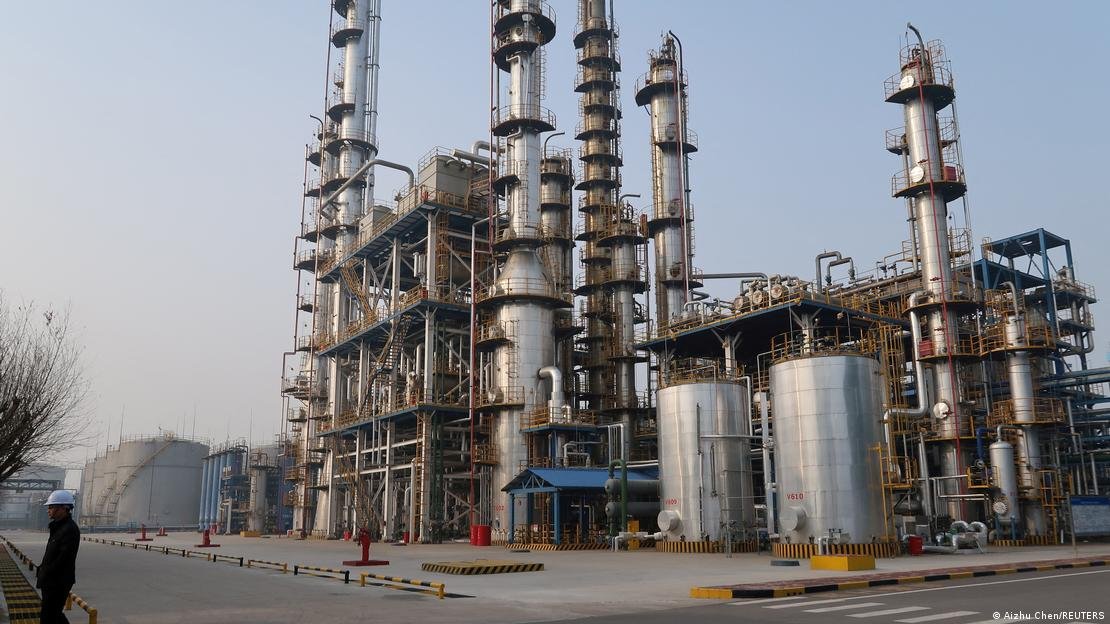
Repeated strikes against refining infrastructure have contributed to a decline in Russian oil refining output, placing additional pressure on both military logistics and government revenues. While these disruptions alone are unlikely to determine the outcome of the war, they increase the economic costs associated with sustaining prolonged military operations.
Moreover, attacks occurring near politically symbolic events and locations undermine the Kremlin’s image of stability and control.
Crimea: Russia’s Strategic Vulnerability
Perhaps the most important emerging vulnerability concerns Crimea and southern Ukraine.
Russian military operations in Crimea depend heavily on supply routes connecting occupied territories in southern Ukraine with the peninsula. These routes facilitate the movement of fuel, ammunition, equipment, and personnel.
Recent Ukrainian drone operations have increasingly disrupted transportation networks along this land corridor. Reports indicate reductions in rail and road logistics, as well as growing shortages of critical supplies in parts of Crimea.
If Ukraine succeeds in significantly degrading or severing these supply routes, Russia could face difficult operational choices regarding troop deployments and resource allocation across occupied territories.
Such a development would carry both military and political consequences, potentially exposing deeper weaknesses within Russia’s occupation infrastructure.
Strategic Implications for Europe
The evolving dynamics of the war hold important lessons for European security policy.
First, the conflict demonstrates that technological adaptability can partially offset numerical disadvantages. Ukraine’s success in drone warfare highlights the growing importance of innovation, decentralization, and rapid procurement in modern military strategy.
Second, the war underscores the continuing importance of industrial capacity. Both Ukraine and Russia increasingly depend on their ability to sustain production of drones, missiles, ammunition, and electronic systems.
Third, the conflict illustrates the vulnerability of critical infrastructure to long-range precision strikes. European governments must increasingly prepare for security environments characterized by persistent drone threats, cyber operations, and attacks on strategic assets.
Finally, Ukraine’s experience reinforces the importance of resilience. Despite extensive attacks on civilian infrastructure, Ukrainian society continues to demonstrate remarkable adaptability and resistance.
Conclusion
The fifth year of Russia’s invasion presents a strategic paradox.
On one hand, Russia retains the capacity to inflict significant destruction through missile and drone attacks against Ukrainian cities. On the other, Ukraine continues to demonstrate growing military sophistication, technological innovation, and operational effectiveness.
Beneath the surface of daily battlefield reports, important structural trends are emerging. Russia faces increasing manpower pressures, logistical vulnerabilities, and economic strain. Ukraine, meanwhile, continues to develop capabilities that allow it to challenge Russian advantages in new ways.
While it would be premature to predict a decisive shift in the war’s outcome, current developments suggest that Russia may be more vulnerable than commonly assumed. The conflict increasingly reflects a contest between a larger but increasingly strained military power and a smaller but highly adaptive state capable of leveraging innovation as a strategic force multiplier.
For European policymakers, the central lesson is clear: Ukraine’s resilience is not merely a national achievement—it remains one of the most important factors shaping the future security architecture of Europe itself.