The European Centre for Strategic Studies and Policy (ECSAP)
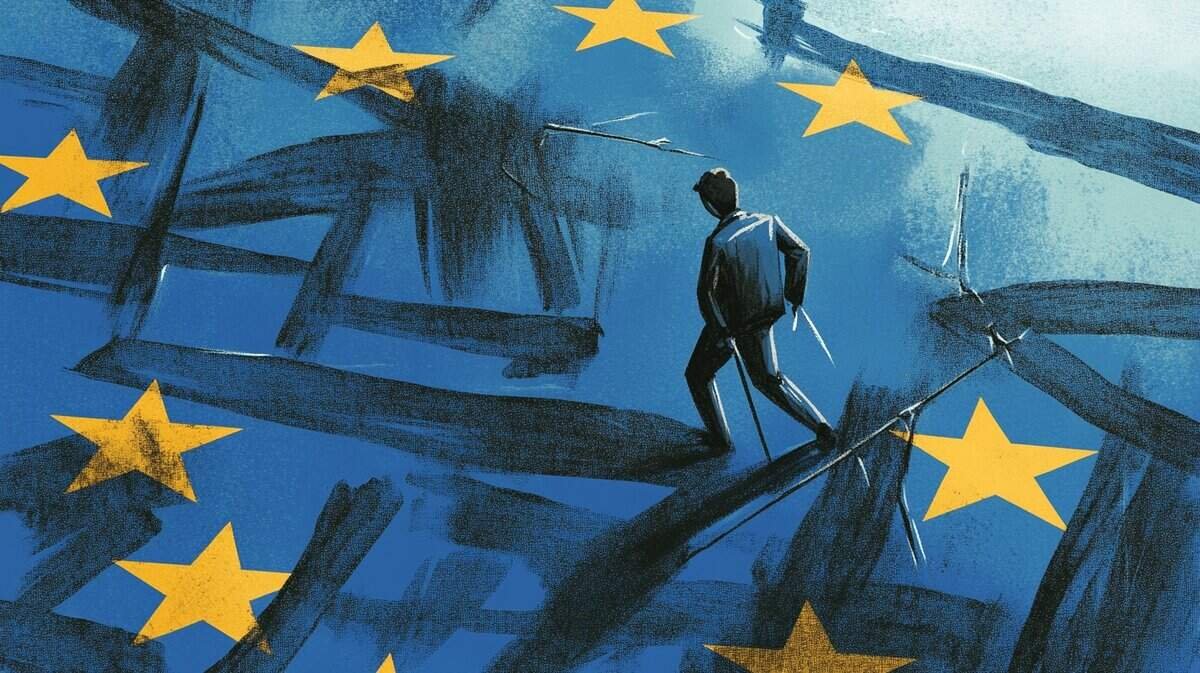
More than four years after Russia launched its full-scale invasion of Ukraine, the conflict has evolved from a regional war into a defining challenge for the European security order. What is at stake is no longer only Ukraine’s sovereignty or territorial integrity. The outcome of the war will influence the future of European deterrence, NATO’s credibility, EU enlargement policy, energy security, defence industrial capacity, and the broader balance of power across the continent.
Ukraine has become both a frontline state and a catalyst for strategic transformation within Europe. The war has accelerated defence spending, strengthened transatlantic cooperation, expanded NATO, and forced European governments to reconsider assumptions that shaped security policy since the end of the Cold War.
Yet Europe now faces a new question. As the conflict enters a prolonged phase, how can the European Union sustain support for Ukraine while preparing for a future in which security competition with Russia may continue for decades?
This paper argues that Ukraine’s future integration into European political, economic, and security structures has become a strategic necessity rather than a political option. The stability of Europe after the war will depend largely on whether Ukraine emerges as a secure, resilient, and integrated European state.
The war in Ukraine represents the most significant military conflict on European soil since the Second World War.
When Russian forces crossed Ukraine’s borders in February 2022, many observers expected a rapid collapse of Ukrainian resistance. Instead, the war transformed into a prolonged struggle that reshaped European politics, defence planning, and geopolitical calculations.
The conflict has demonstrated both the resilience of Ukraine and the vulnerabilities of Europe’s post-Cold War security architecture. It exposed the risks of dependence on Russian energy, revealed limitations in European military readiness, and highlighted the importance of industrial capacity in sustaining long-term defence efforts.
For Europe, the central challenge is no longer simply helping Ukraine survive. It is defining the role Ukraine will play in the future European order.
Ukraine as Europe’s Strategic Frontier
Ukraine has become the primary geographic buffer between the European Union and Russia.
Its military experience, defence innovations, and battlefield adaptation have transformed the country into one of Europe’s most capable security actors. Ukrainian forces now possess operational experience unmatched by most European militaries.
This reality has profound implications.
Before 2022, discussions about Ukraine’s future often focused on economic reform, governance, and democratic consolidation. Today, security considerations dominate. Ukraine’s ability to defend itself directly influences the security of NATO’s eastern flank, the Baltic region, Central Europe, and the Black Sea.
A stable and secure Ukraine therefore contributes to the stability of the entire continent.
Conversely, a weakened or fragmented Ukraine would create long-term security risks extending far beyond its borders.
The Transformation of European Defence
One of the most significant consequences of the war has been the revival of European defence policy.
For decades, many European governments reduced military spending and relied heavily on American security guarantees. The assumption that large-scale interstate war had become unlikely shaped defence planning across the continent.
The war in Ukraine shattered that assumption.
European governments have since increased defence budgets, expanded procurement programs, strengthened military readiness, and accelerated investments in defence industries. Germany’s historic Zeitenwende policy, Poland’s military modernization efforts, and the accession of Finland and Sweden to NATO illustrate the scale of this transformation.
Yet challenges remain.
European defence industries continue to face production bottlenecks. Ammunition shortages, fragmented procurement systems, and differing national priorities limit efficiency. Sustaining support for Ukraine while rebuilding European military capabilities requires long-term strategic planning rather than emergency measures.
Ukraine and the Future of EU Enlargement
The war has also transformed the debate surrounding European Union enlargement.
Ukraine’s candidacy for EU membership is no longer viewed solely through the lens of economic integration. It is increasingly understood as a geopolitical project.
The European Union faces a strategic choice.
It can either accelerate Ukraine’s integration and strengthen its influence in Eastern Europe, or risk creating a prolonged grey zone vulnerable to instability and external pressure.
Enlargement, however, is not without challenges.
Ukraine’s reconstruction needs are enormous. Governance reforms, anti-corruption measures, judicial modernization, and institutional strengthening remain essential. At the same time, existing EU members must prepare for the political and economic implications of integrating a large post-war state.
The success of this process will influence the credibility of the European project itself.
Russia’s Long-Term Challenge
Even if active hostilities decline, Europe will continue to face a long-term strategic challenge from Russia.
The war has fundamentally altered relations between Moscow and the West. Trust has collapsed, economic ties have weakened, and military competition has intensified.
Future European security planning must therefore assume prolonged instability in relations with Russia.
This does not necessarily imply permanent confrontation. Diplomatic engagement will remain important. However, deterrence, resilience, and preparedness must become central components of European strategy.
The experience of Ukraine demonstrates that security cannot be taken for granted.
Reconstruction as a Strategic Investment
Ukraine’s reconstruction should not be viewed solely as a humanitarian or economic project.
It is also a strategic investment in European stability.
The reconstruction effort offers an opportunity to modernize infrastructure, strengthen democratic institutions, accelerate digital transformation, and integrate Ukraine into European supply chains.
Successful reconstruction would enhance resilience, reduce vulnerabilities, and support long-term economic growth.
Failure, by contrast, could generate instability, migration pressures, political fragmentation, and security risks affecting the entire continent.
The scale of reconstruction required will likely exceed any previous European recovery effort since the Marshall Plan.
The Black Sea Dimension
The future of the Black Sea region will play a critical role in determining Europe’s security environment.
The war has demonstrated the strategic importance of maritime trade routes, energy infrastructure, grain exports, and naval capabilities.
Control over the Black Sea affects not only Ukraine and Russia but also Romania, Bulgaria, Türkiye, Moldova, and wider European interests.
As Europe develops its post-war strategy, greater attention must be paid to maritime security, port infrastructure, and regional connectivity.
The Black Sea is increasingly becoming a central component of European strategic planning.
Policy Recommendations
European governments should develop a long-term Ukraine strategy extending beyond immediate military assistance. This strategy must integrate defence, reconstruction, economic development, and institutional reform.
The European Union should establish a structured roadmap for Ukrainian accession, linking reforms to concrete integration milestones while maintaining political momentum.
NATO should continue supporting Ukraine’s defence capabilities and interoperability, regardless of the pace of formal membership discussions.
European defence industries should expand joint procurement initiatives and increase production capacity to support both Ukraine and European security requirements.
Finally, European policymakers should frame support for Ukraine not as external assistance but as an investment in the future stability and security of Europe itself.
The war in Ukraine is not only shaping the future of one nation. It is reshaping the future of Europe.
The decisions taken during the coming years will determine whether Europe emerges stronger, more resilient, and strategically coherent, or whether it remains vulnerable to recurring instability along its eastern frontier.
Ukraine’s future is now inseparable from Europe’s future.
The country has become a central pillar of the continent’s evolving security architecture, a catalyst for defence transformation, and a test of Europe’s ability to respond collectively to geopolitical challenges.
Ultimately, the question facing Europe is not whether Ukraine belongs within the European security order. The war has already answered that question.
The challenge now is determining how that integration can be achieved in a manner that strengthens both Ukraine and Europe for the decades ahead.