The European Centre for Strategic Studies and Policy (ECSAP)
Executive Summary
The confrontation between the United States and Iran has entered a phase in which the central strategic question is no longer simply whether Washington can inflict greater economic and military damage on Tehran. It is whether that pressure can actually produce the political outcome Washington seeks. The distinction is critical. States can become economically weaker without becoming strategically compliant, and regimes can survive conditions that outside observers assume should force them to negotiate.
The Iranian leadership appears to be operating precisely on this assumption. The analysis provided for this paper argues that the formative experience of many senior figures in the current Iranian security establishment remains the Iran-Iraq War: a prolonged conflict defined by extraordinary casualties, economic exhaustion and years of stalemate. From this perspective, endurance itself became a strategic instrument. The current leadership may therefore interpret American pressure not primarily as an incentive for compromise but as another contest over which side can absorb political and economic costs for longer.
This creates a dangerous strategic asymmetry. Washington may believe that sanctions, military pressure and diplomatic isolation will progressively narrow Tehran’s options. Tehran, meanwhile, may calculate that escalation can raise the economic and political costs for the United States and its allies sufficiently to produce concessions before Iran’s own vulnerabilities become intolerable. Neither strategy requires immediate victory. Both depend on time.
For Europe, this confrontation is far from peripheral. Continued instability involving Iran affects energy prices, maritime security, Gulf stability, migration pressures, European military planning and the future of nuclear non-proliferation. Europe therefore faces a difficult strategic reality: a weakened Iran is not necessarily a more predictable Iran. Under sufficient pressure, it may become more willing to take risks precisely because the cost of maintaining the status quo becomes unacceptable.
The decisive issue is therefore not simply whether Iran is weakening. It is whether economic deterioration eventually changes the calculations of the institutions that keep the political system functioning.
The Misunderstanding at the Heart of the Iran Debate
Western assessments of Iran have repeatedly struggled with the distinction between social dissatisfaction and regime vulnerability. Iranian society contains substantial political, generational and cultural divisions, but widespread frustration does not automatically translate into the collapse of state authority. The Islamic Republic has survived repeated demonstrations, sanctions, diplomatic isolation and periods of severe economic deterioration because its survival ultimately depends less on universal popularity than on the cohesion of the institutions capable of exercising coercive power.
That distinction is particularly important in 2026. According to the source analysis, the resilience of the Iranian system depends heavily on three interconnected factors: maintaining security-force cohesion, preserving enough regional influence to deter external pressure, and preventing economic frustration from developing into unrest capable of fracturing the regime’s traditional social and institutional base.
This explains why predictions of imminent Iranian capitulation should be approached cautiously. Revolutionary political systems do not necessarily respond to economic pressure according to conventional cost-benefit assumptions. Their leaders may interpret compromise under external coercion as more dangerous to regime survival than continued economic suffering.
Once that logic becomes institutionalised, sanctions can produce two contradictory effects. They can weaken the state’s financial capacity while simultaneously strengthening the leadership’s belief that political survival requires resistance.
Iran’s strategy is therefore not necessarily based on defeating the United States militarily or economically. It may be based on ensuring that the price of forcing Iranian capitulation becomes politically unacceptable to Washington.
The Iran-Iraq War Still Shapes Tehran’s Strategic Culture
One of the most important factors in understanding Tehran’s behaviour is generational memory. The Iran-Iraq War ended almost four decades ago, but many senior figures in Iran’s security establishment were directly shaped by it. The conflict taught a generation of Iranian officials that enormous casualties, economic isolation and battlefield stalemate could be endured without the destruction of the political system.
The lesson was not that Iran could always win. The lesson was that Iran could survive.
That distinction remains strategically significant. A leadership shaped by prolonged attritional warfare may possess a fundamentally different understanding of acceptable costs from policymakers operating within democratic electoral cycles.
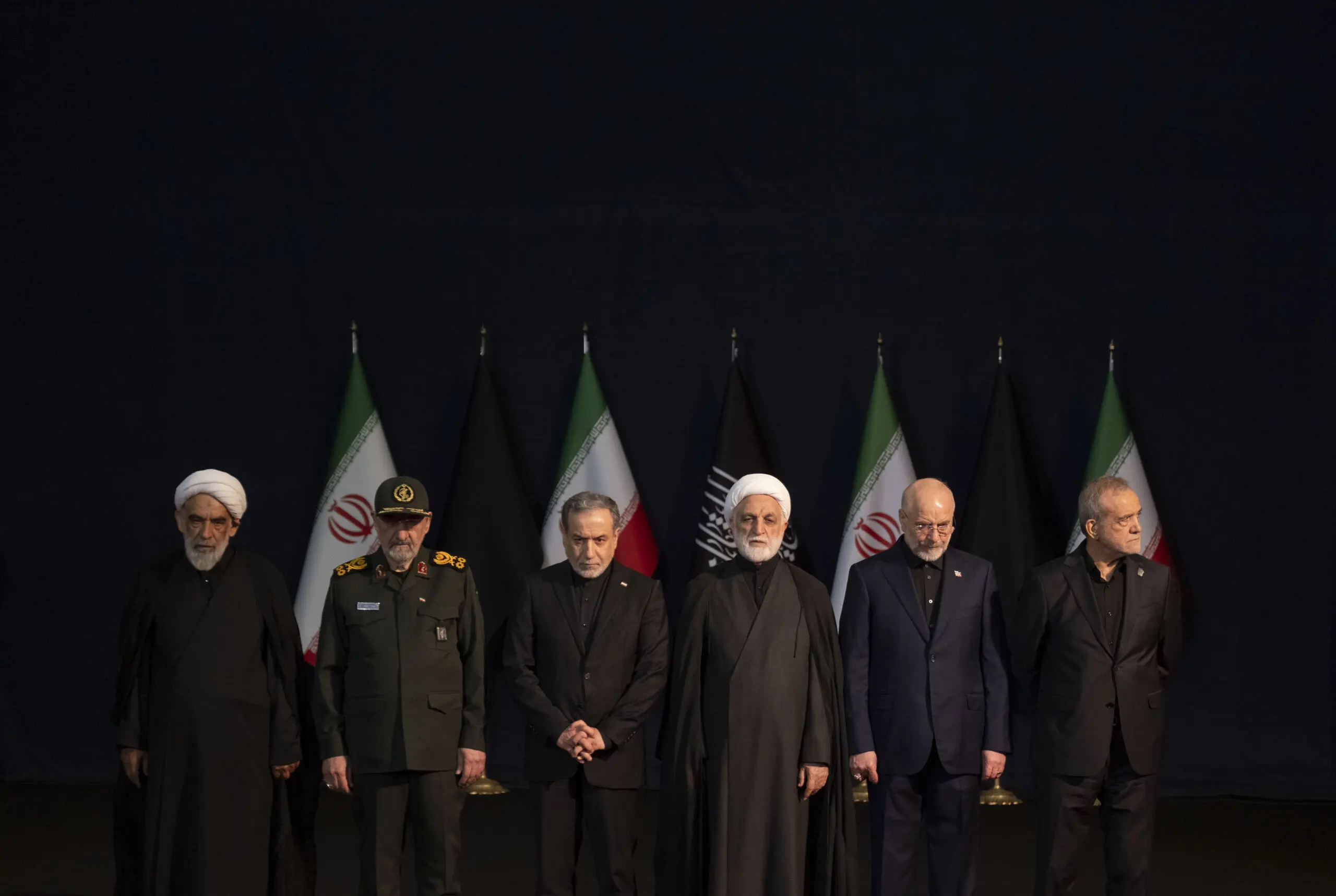
Several senior Iranian officials identified in the source material have backgrounds connected to the Iran-Iraq War and the Islamic Revolutionary Guard Corps. That experience contributes to a political culture in which resistance to external coercion carries institutional as well as ideological significance.
This does not make Iranian decision-making irrational. On the contrary, endurance can represent a rational strategy if Tehran believes its opponent possesses lower tolerance for prolonged economic disruption, military casualties or domestic political pressure.
The critical Iranian calculation may therefore be temporal: can Tehran remain politically cohesive long enough for the costs of confrontation to alter American behaviour?
That question sits at the centre of the current crisis.
Economic Warfare Targets the Regime’s Real Vulnerability
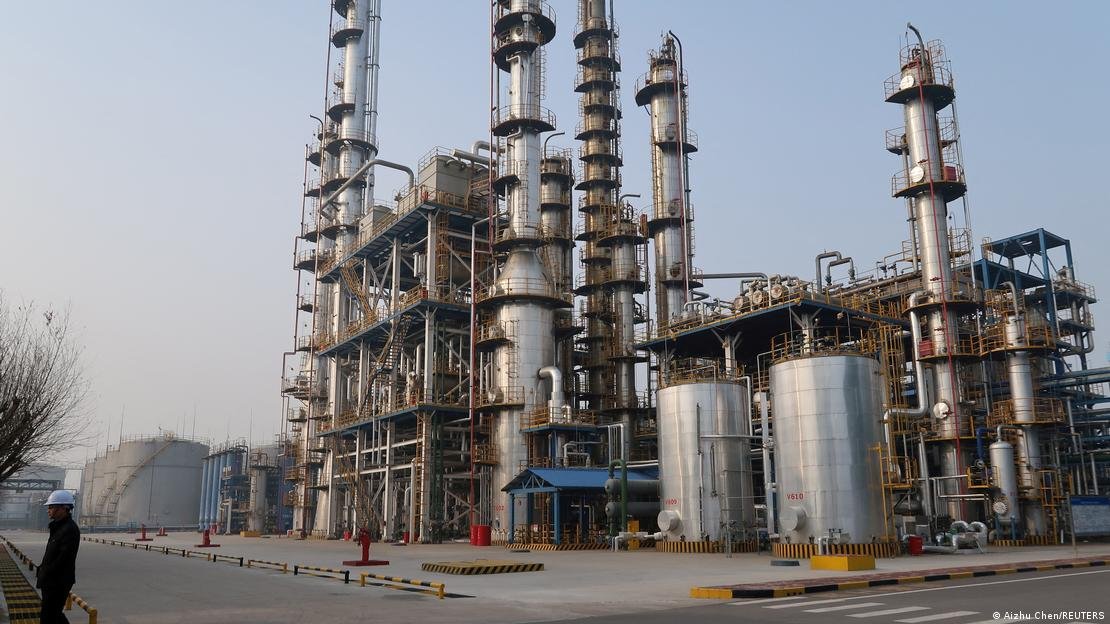
Iran’s capacity for political endurance should not obscure the seriousness of its economic vulnerabilities. The Islamic Republic requires hard currency to finance imports, stabilise the rial, maintain government operations and support regional partners. Oil exports have historically been one of the principal mechanisms through which Tehran acquires those resources.
The historical evidence demonstrates the effectiveness of sustained pressure on this sector. The source material notes that Iranian oil exports fell significantly under previous international sanctions and that accessible foreign-exchange reserves subsequently declined sharply during the earlier US maximum-pressure campaign.
This is why the current economic confrontation potentially poses a deeper threat than headline measures such as individual sanctions might suggest. The objective is not simply reducing Iranian economic growth. It is restricting the financial resources through which the state maintains political and strategic capacity.
A government can survive recession. It becomes considerably more vulnerable when it struggles to finance imports, stabilise its currency, pay security institutions and sustain external commitments simultaneously.
Yet economic pressure operates gradually. This creates an interval during which Iran may still possess enough resources to retaliate but increasingly fewer reasons to exercise restraint.
That interval may be the most dangerous stage of the confrontation.
The Paradox of a Weakening Iran
Western strategy frequently assumes that weakening an adversary reduces the threat it presents. The Iranian case demonstrates why this is not always true.
A state confident in its long-term position may behave cautiously because it has something valuable to preserve. A state that believes time is working against it may become more willing to accept short-term risks.
Iran therefore presents what could be called the weakening-state paradox.
The more successful economic pressure becomes, the stronger Tehran’s incentive may become to alter the strategic environment before its leverage disappears.
That could mean intensified pressure on maritime trade, attacks through regional partners, cyber operations, pressure against Gulf states or other forms of asymmetric escalation. The precise form cannot be predicted, but the underlying strategic logic is clear: declining power can create incentives to use remaining capabilities before they become less effective.
The source analysis captures this dilemma directly, arguing that Iran is likely to escalate before economic exhaustion forces fundamental concessions.
This means policymakers should avoid treating escalation as evidence that economic pressure has failed.
Paradoxically, escalation could indicate that pressure is succeeding. The problem is that successful coercion can become extremely dangerous before it becomes politically productive.
The Strait of Hormuz Changes the Equation
Iran possesses another important source of leverage: geography.
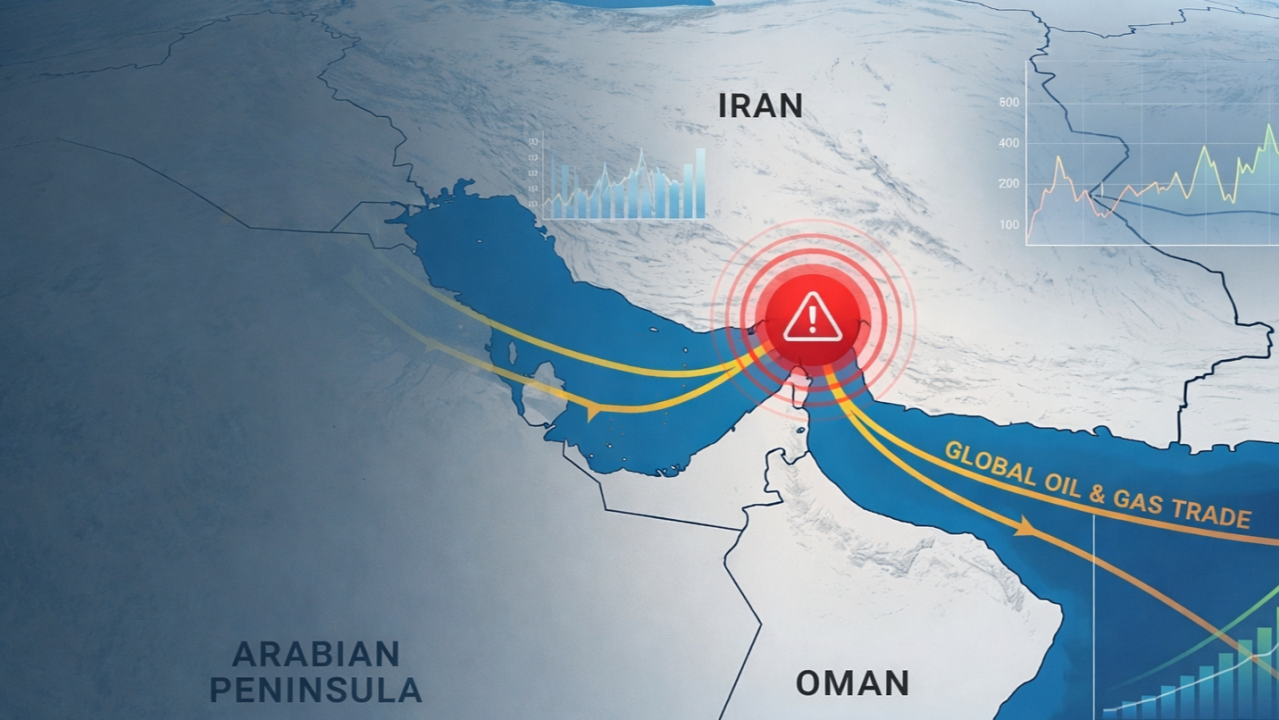
The Strait of Hormuz remains one of the most strategically important maritime chokepoints in the global economy. Any sustained disruption affects not only Gulf producers but global energy markets, shipping insurance, freight costs and inflation.
This gives Tehran an instrument capable of internationalising the economic consequences of pressure.
Iran cannot match the United States conventionally. It does not need to.
If Tehran can ensure that pressure against Iran generates higher costs for energy consumers in Europe, Asia and the United States, it can attempt to transform a bilateral confrontation into a global economic problem.
This strategy relies on indirect coercion. The message is effectively that economic isolation of Iran cannot occur without consequences for the wider international system.
That places Europe in a particularly difficult position. European governments may support efforts to constrain Iranian nuclear and military capabilities while simultaneously facing domestic economic costs from prolonged instability in Gulf shipping.
The longer the crisis continues, the more those interests can diverge.
Why Europe Cannot Remain a Spectator
For Europe, the Iran confrontation creates at least four interconnected strategic risks. The first is energy. Even European economies that do not depend directly on Iranian petroleum remain exposed to global prices. Disruption involving Gulf exports can increase energy and transportation costs across the continent.
The second is maritime security. European trade depends heavily on secure international shipping routes. A prolonged crisis around Hormuz forces European governments to consider whether protecting commercial navigation should become a larger military responsibility.
The third is regional instability. Escalation involving Iran can affect Iraq, the Gulf, the Levant and potentially wider migration patterns. Europe has repeatedly experienced how Middle Eastern instability can generate consequences far beyond the region.
The fourth is nuclear proliferation. If diplomacy collapses completely and Iranian leaders conclude that conventional deterrence is insufficient, incentives surrounding nuclear weapons could become stronger rather than weaker.
Europe therefore has an interest not merely in preventing Iran from achieving strategic objectives through coercion but in preventing the pressure campaign itself from producing an uncontrolled escalation cycle.
That is an extraordinarily difficult balance.
The Internal Front May Ultimately Be Decisive
The most important battlefield may eventually be inside Iran rather than across the Gulf. Economic hardship alone does not necessarily threaten regime survival. What matters is whether hardship changes the behaviour of social constituencies connected to the political system.
The source material makes an important distinction between protests among groups traditionally opposed to the Islamic Republic and unrest among working-class or lower-middle-class communities from which institutions such as the Basij and IRGC draw personnel and support. If economic protests begin significantly affecting these constituencies, the implications for regime stability become more serious.
This provides a more useful measure of Iranian stability than demonstrations alone.
The decisive question is not how many people protest. It is who protests, where they protest and whether the security apparatus remains willing to suppress them.
Authoritarian systems can survive substantial popular opposition while their coercive institutions remain cohesive. Once those institutions fracture, political change can accelerate dramatically.
This is why outside predictions of regime collapse are inherently unreliable. The critical indicators are often institutional and behavioural rather than simply economic.
Three Thresholds to Watch
Iran’s future trajectory may depend on the interaction of three pressures. The first is the state’s ability to continue earning sufficient hard currency, particularly through energy exports. The second is the cohesion of the security establishment and Iran’s ability to sustain its regional military position. The third is whether inflation and economic deterioration produce sustained unrest among constituencies traditionally more integrated into the Islamic Republic’s social base. The source analysis similarly identifies the convergence of declining oil revenues, weakening internal cohesion and widespread economically driven unrest as potentially decisive.
None of these factors alone guarantees political collapse. Iran has previously endured severe sanctions. It has suppressed major protests. It has absorbed military and political setbacks.
The danger emerges if several pressures converge simultaneously. An economic crisis can become a political crisis when the government cannot compensate supporters.
A political crisis can become a security crisis when security personnel begin questioning orders. And a security crisis can become a regime crisis when elites begin doubting whether the existing leadership can protect their interests.
The progression is not inevitable. But this is the pathway European policymakers should monitor more closely than dramatic predictions about imminent regime collapse.
The Regional Security Architecture Is Already Changing
The confrontation is also accelerating a broader transformation across the Middle East.
Gulf governments cannot assume indefinitely that external security guarantees will insulate them from Iranian retaliation. At the same time, they cannot necessarily rely on accommodation with Tehran if the Iranian leadership itself becomes increasingly unpredictable under pressure.
The result is strategic hedging. Regional states are diversifying security relationships, developing military capabilities and seeking additional partnerships. The source material points to emerging regional security arrangements as evidence of a wider scramble for protection amid Iranian threats and uncertainty.
For Europe, this matters because the Gulf security architecture that emerges from the current crisis may endure long after the immediate confrontation ends.
A more militarised region could generate stronger deterrence. It could also create more complex alliance commitments, arms competition and escalation risks.
European strategy therefore needs to look beyond the immediate Iran-US confrontation and consider what kind of regional order will replace the increasingly fragile security arrangements of the previous decades.
What Should Europe Do?
Europe’s strategic objective should not be defined as rescuing Tehran from pressure or undermining Washington’s leverage. Nor should European governments assume that maximum economic pressure alone provides a complete strategy.
Europe’s comparative advantage lies elsewhere.
It can work to preserve diplomatic channels precisely when official relations become most difficult. It can coordinate maritime security, prepare energy contingency mechanisms and communicate clearly the conditions under which economic restrictions could be modified in exchange for verifiable Iranian concessions.
Most importantly, European governments should distinguish between pressure as an instrument and political transformation as an assumption.
Sanctions can degrade capabilities. They cannot guarantee regime change. Military action can destroy infrastructure.
It cannot automatically produce political moderation. Economic crisis can generate unrest. It cannot determine who ultimately controls the state.
European strategy should therefore be designed around outcomes that can realistically be influenced: nuclear restraint, maritime stability, reduced regional escalation and enforceable agreements.
Predicting Iran’s political future should not become the foundation of policy.
Conclusion: Iran May Bend Long Before It Breaks
The Iranian regime faces serious vulnerabilities. Its economy is under pressure, oil exports remain central to access to hard currency, regional confrontation imposes substantial costs and domestic frustration represents a persistent political danger.
None of this means capitulation is imminent.
The leadership governing Iran has been shaped by a strategic culture in which endurance carries enormous political value. For officials whose formative experience was the Iran-Iraq War, survival under extraordinary pressure is not an abstract historical memory. It is part of the institutional mythology of the Islamic Republic.
Washington’s strategy may therefore succeed economically long before it succeeds politically.
That gap is where the greatest danger lies.
A weakening Iran that still possesses missiles, regional networks, maritime leverage and significant security capabilities may become more dangerous before it becomes more accommodating. Europe should prepare accordingly.
The strategic challenge is not simply applying enough pressure to force Tehran to choose between resistance and surrender. States rarely confront choices that cleanly.
The real task is creating a pathway in which de-escalation eventually becomes more valuable to Iranian decision-makers than continued confrontation while ensuring that escalation does not become the rational response to approaching weakness.
For The European Centre for Strategic Studies and Policy (ECSAP), the central conclusion is therefore straightforward: the decisive measure of Western strategy will not be how much economic damage Iran can absorb, but whether that damage changes Tehran’s strategic calculations without triggering a wider conflict first.
Iran has not folded because endurance remains part of its strategy.
The question facing Europe and the United States is whether they possess an equally coherent strategy for what happens if that endurance finally begins to fail.