The European Centre for Strategic Studies and Policy (ECSAP)
Executive Summary
China’s exposure to disruptions in Iranian and Venezuelan oil supplies has revived a much larger strategic debate: how vulnerable can a major power afford to remain when critical energy flows depend on politically unstable suppliers and maritime chokepoints beyond its control?
The question matters far beyond Beijing.
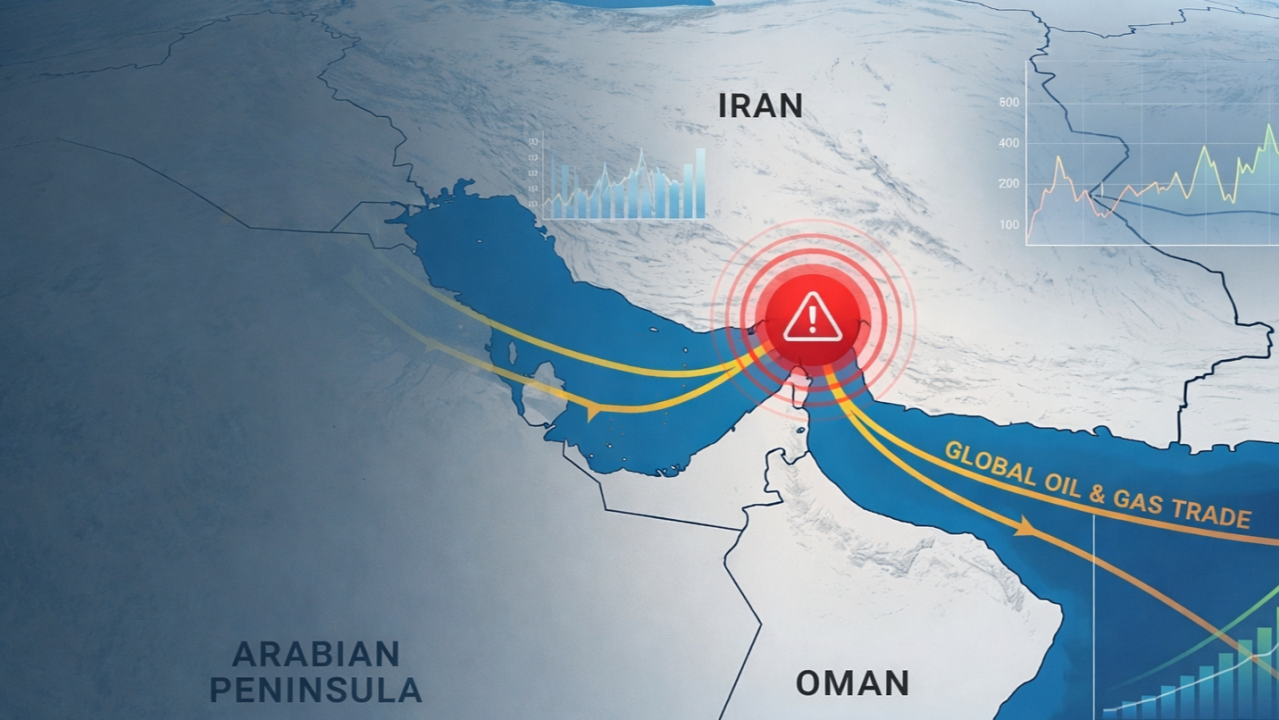
China remains one of the world’s largest oil consumers and importers, and a significant share of its crude supply still depends on seaborne trade. The Strait of Hormuz remains the main export route for several major Gulf producers, while the Strait of Malacca continues to represent a long-standing strategic concern for Chinese planners because so much imported energy must pass through narrow maritime corridors vulnerable to disruption. The International Energy Agency notes that the bulk of oil leaving Hormuz heads to Asian markets, with China among the principal destinations.
Recent shocks have highlighted the limits of China’s ability to substitute imported crude with domestic production. Beijing has invested heavily in exploration, offshore development, tight oil and ageing legacy fields, but domestic output has risen only gradually. This means China’s energy-security strategy increasingly depends not on achieving oil self-sufficiency, but on combining strategic stockpiles, diversified suppliers, electrification and massive renewable deployment.
That model offers an important lesson for Europe.
Europe’s energy-security debate has focused heavily on reducing dependence on Russian fossil fuels, but the Chinese case demonstrates a broader principle: dependence is not removed merely by changing suppliers. Strategic vulnerability can migrate from pipelines to maritime routes, from one exporting state to another, or from fossil fuels to critical technologies and raw materials.
This paper argues that China’s current oil dilemma should be viewed by European policymakers as a warning about the limits of supplier diversification without structural demand reduction. China’s greatest long-term energy-security advantage may not come from producing substantially more oil, but from using less of it through electrification and renewable energy. For Europe, the implication is equally significant: genuine strategic autonomy depends less on securing unlimited access to imported energy than on reducing the economic damage that any future supply disruption can cause.
Introduction: The Limits of Energy Independence
Energy security is often discussed as though it were primarily a question of production.
If a country imports too much oil, the apparent solution is straightforward: produce more domestically.
China’s experience demonstrates why the reality is more complicated.
Since 2019, Beijing has pushed its major energy companies to increase domestic exploration and production. Billions have been invested in mature oil fields, offshore projects and unconventional resources. Yet China’s largest legacy fields are ageing, and additional production has often been required simply to offset natural decline.
The result is an uncomfortable strategic reality.
China can increase investment substantially without generating a corresponding increase in output.
That matters because its economy continues to consume enormous quantities of petroleum products, even as electrification begins to moderate demand in transport.
The current international environment has made this vulnerability more visible.
Iran has been an important source of discounted crude for Chinese refiners, while Venezuela has also supplied oil despite years of sanctions pressure. Renewed disruption affecting these producers does not simply reduce access to specific barrels. It raises the broader question of how many politically complicated supply relationships China can lose simultaneously before the costs become strategically significant.
The answer is shaped partly by geography.
Imported oil does not appear magically at Chinese refineries.
It travels through maritime corridors.
The Strait of Hormuz is particularly important because a large share of global Gulf exports passes through it. The IEA has described the strait as the principal export route for major Gulf producers and notes that China is among the largest destinations for those flows.
Farther east, the Strait of Malacca has long occupied a special place in Chinese strategic thinking. A substantial share of China’s seaborne energy imports passes through the narrow waterway linking the Indian and Pacific oceans.
This dependence creates what Chinese strategists have historically viewed as a maritime vulnerability.
A major power may possess enormous industrial capacity and a large military while still relying on a relatively small number of shipping lanes for essential energy supplies.
The paradox is striking.
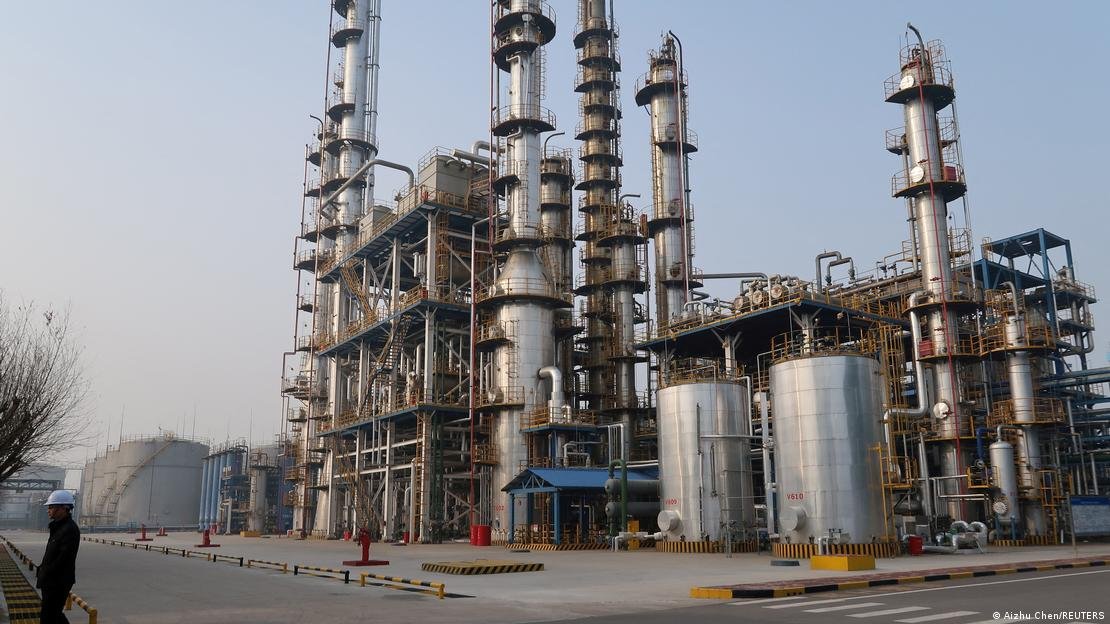
China has built one of the world’s largest refining systems.
It has invested heavily in domestic production.
It has developed major pipeline connections with Russia and Central Asia.
It has expanded strategic petroleum reserves.
And yet imported crude remains indispensable.
This demonstrates why energy independence is often an unrealistic objective for large industrial economies.
The more practical goal is energy resilience.
Resilience does not require eliminating imports.
It requires ensuring that the economy can continue functioning when imports are disrupted.
China’s strategy increasingly reflects this distinction.
I. Why Domestic Oil Cannot Solve China’s Problem
China’s domestic oil sector faces a geological constraint that policy cannot easily overcome.
Several of its major producing fields have been operating for decades. Mature fields require increasing investment simply to maintain production, while new discoveries often involve more technically challenging geology or offshore environments.
This means additional spending does not necessarily translate into rapid supply growth.
China’s oil companies can improve recovery rates, develop tight oil and expand offshore production, but these efforts face diminishing returns.
The strategic significance is clear.
Domestic production can provide a stable floor.
It cannot realistically replace imported crude at the scale required by the Chinese economy.
This is why stockpiling has become so important.
The IEA reported in 2025 that China’s crude inventories had risen significantly, supported by an Energy Law aimed at strengthening energy security. Chinese stocks were already substantially above pre-pandemic levels before the latest crisis.
During the 2026 supply shock, China continued adding crude to storage. In April, the IEA reported that China had added around 40 million barrels to tanks amid severe disruptions to global oil markets.
Strategic reserves give governments time.
They do not create permanent supply.
A stockpile can cushion an interruption lasting weeks or months, allowing authorities to avoid panic buying and maintain critical sectors.
But reserves eventually run down.
They are therefore best understood as a bridge between disruption and adjustment rather than a substitute for a diversified energy system.
This distinction matters for European policymakers as well.
Europe learned during the gas crisis following Russia’s invasion of Ukraine that storage can be extraordinarily valuable.
But storage alone cannot eliminate vulnerability.
The deeper solution lies in reducing the amount of imported energy required to sustain economic activity.
China increasingly appears to understand this.
II. Electrification Is Becoming China’s Real Oil Security Strategy
The most consequential component of China’s energy-security policy may not be oil production at all.
It may be electrification.
China has spent years shifting parts of transportation and industry away from direct fossil-fuel consumption toward electricity.
Electric vehicles now represent a very large share of new vehicle sales, while major cities have electrified bus fleets and expanded charging infrastructure.
This transition reduces gasoline demand.
And that changes the strategic equation.
Every electric vehicle replacing an internal-combustion vehicle reduces future exposure to imported oil.
The same principle applies to industrial processes and buildings.
Electrification does not eliminate energy dependence automatically, because electricity itself must be generated.
But China possesses significant domestic coal resources and has simultaneously built renewable energy at extraordinary scale.
That allows Beijing to shift part of its energy system away from internationally traded oil toward electricity produced increasingly within its own borders.
The expansion of renewable generation has been particularly significant.
Massive investment in solar and wind has increased domestic electricity supply while reducing the amount of fossil fuel required for incremental growth in some sectors.
This does not mean China is becoming independent of oil.
Aviation, petrochemicals, shipping, heavy transport and parts of industry will continue requiring petroleum for years.
But the strategic objective is not necessarily zero oil imports.
It is reducing the proportion of national economic activity that becomes vulnerable when oil imports are disrupted.
This is a more sophisticated definition of energy security.
III. China’s Chokepoint Problem Is Also Europe’s Problem
Europe and China have very different energy systems, but they share a common strategic vulnerability.
Both depend heavily on global trade routes.
Europe significantly reduced dependence on Russian pipeline gas after 2022 by expanding LNG imports and diversifying suppliers.
That improved resilience against one particular geopolitical risk.
It also increased the strategic importance of maritime infrastructure.
LNG terminals, shipping lanes, ports and global gas markets became more important to European energy security.
This illustrates a fundamental rule of strategic dependence:
vulnerability rarely disappears; it changes form.
China’s dependence on Hormuz and Malacca demonstrates the same phenomenon.
Beijing has diversified suppliers, expanded pipelines and increased reserves, yet geography continues to impose constraints.
Europe should therefore avoid defining energy security solely in terms of supplier diversification.
Replacing one external supplier with three external suppliers is safer than dependence on one.
But a system remains vulnerable if all three depend on the same maritime corridor, technology, payment system or infrastructure network.
This logic is increasingly influencing the European Union’s broader economic-security strategy.
The EU now explicitly describes de-risking as reducing critical dependencies rather than severing economic relations altogether.
That principle should apply to energy as much as trade.
IV. The Strategic Value of Demand Reduction
The Chinese experience highlights a point frequently underestimated in energy-security discussions.
Reducing demand can create strategic power.
If an economy can produce the same level of output while consuming less imported oil, it becomes harder to coerce through supply disruption.
Efficiency therefore becomes a security capability.
Electrification becomes a security capability.
Public transport becomes a security capability.
Renewable energy becomes a security capability.
These policies are often framed almost exclusively through climate change.
Their geopolitical significance may be equally important.
Europe has already moved substantially in this direction.
Electric vehicles, heat pumps, renewable generation and efficiency improvements reduce fossil-fuel exposure.
But the strategic logic should be made more explicit.
Climate policy and energy-security policy are increasingly aligned because both benefit from reducing dependence on globally traded fossil fuels.
That does not mean Europe should abandon diversified oil and gas supplies before alternatives are available.
An excessively rapid transition without sufficient infrastructure could create new vulnerabilities.
The objective is instead to reduce demand steadily enough that each future geopolitical shock has a smaller macroeconomic effect.
China’s strategy provides a useful example.
Beijing continues expanding domestic oil production and maintaining relationships with external suppliers.
At the same time, it is investing heavily in technologies that reduce future oil dependence.
This is not a contradiction.
It is layered resilience.
V. Strategic Reserves Still Matter
One of the clearest lessons from China is the importance of stockpiling.
Oil markets can adjust relatively quickly in normal conditions, but major disruptions can create severe short-term price spikes before alternative supplies reach consumers.
Strategic reserves provide governments with time to manage that adjustment.
The IEA requires its members to maintain emergency oil stocks equivalent to at least 90 days of net imports.
China is not an IEA member, but its own stockpiling strategy demonstrates how seriously Beijing takes emergency supply.
For Europe, the lesson extends beyond crude oil.
Strategic reserves may become increasingly relevant for fuels, critical minerals, transformers, semiconductors and other inputs whose disruption could disable key sectors.
The broader objective is not to stockpile everything.
It is to identify which shortages would create disproportionate strategic consequences and build sufficient reserves to manage temporary shocks.
This logic connects energy security with Europe’s wider economic-security agenda.
VI. Energy Security Is Becoming Technology Security
The long-term shift toward electrification reduces oil dependence.
It creates other dependencies.
Electric vehicles require batteries.
Renewable energy systems require critical minerals.
Power grids require transformers and semiconductors.
Digital energy systems require software and communications infrastructure.
China is exceptionally strong across several of these supply chains.
This creates an important challenge for Europe.
A strategy designed to reduce dependence on imported fossil fuels must avoid replacing that vulnerability with excessive dependence on imported clean-energy technology.
The EU already recognises this problem.
Its Critical Raw Materials Act explicitly aims to reduce concentrated external dependencies, while the European Chips Act seeks greater resilience in semiconductor supply chains.
This is where China’s energy strategy becomes particularly relevant.
Beijing has not approached electrification simply as climate policy.
It has built domestic industrial ecosystems around batteries, electric vehicles, solar manufacturing and grid infrastructure.
That industrial integration provides China with strategic advantages far beyond lower oil consumption.
Europe’s transition will be more secure if it develops its own technological and industrial capacity alongside electrification.
Otherwise, energy dependence may simply be transformed into technology dependence.
Conclusion: Europe Should Study China’s Vulnerability, Not Copy Its Model
China’s oil dilemma is a useful strategic case study because it reveals the limitations of traditional energy-security thinking.
Beijing invested heavily in domestic production.
It diversified suppliers.
It expanded refining.
It accumulated strategic reserves.
And still, imported oil remains a major vulnerability.
The reason is straightforward.
A large industrial economy cannot easily drill its way out of geological and geographic constraints.
China’s more durable response has therefore emerged elsewhere: electrification, renewable energy, storage and demand reduction.
For Europe, the lesson is not that China has solved its energy-security problem.
It has not.
The lesson is that resilience requires several layers operating simultaneously.
Domestic production where economically viable.
Diversified external suppliers.
Strategic reserves.
Secure infrastructure.
And, most importantly, structural reduction of dependence itself.
This matters because geopolitical shocks will continue.
Iran and Venezuela are only the latest examples of how political instability, sanctions and military confrontation can disrupt energy trade.
Other crises will emerge in different regions and affect different supply chains.
Europe cannot predict every disruption.
It can reduce the damage they are capable of causing.
That is the real meaning of strategic autonomy.
Europe’s energy strategy should therefore move beyond the question:
Where will the next barrel come from?
The more important question is:
How many barrels will Europe still need when the next crisis arrives?
China’s current vulnerability demonstrates why that distinction may become one of the defining questions of global energy security in the coming decade.