Executive Summary
The discovery of an explosives-laden drone at Leipzig/Halle Airport has exposed a security vulnerability that extends far beyond Germany. According to the information reported from the incident, the aircraft was able to reach one of Germany’s major airports and remain apparently unnoticed for hours. German Interior Minister Alexander Dobrindt described the case as a suspected “hybrid attack scenario,” while the Federal Prosecutor’s Office took over the investigation. Suspicion has been directed toward possible foreign involvement, although responsibility has not been publicly established.
The strategic importance of the incident lies not only in who operated the drone but in what the drone was apparently able to accomplish. It penetrated the security environment surrounding critical civilian infrastructure while carrying explosives. The episode therefore raises a more consequential question than attribution alone: if a relatively small unmanned aircraft can reach a major European airport, what does this reveal about the protection of ports, railway hubs, energy facilities, military logistics centres and defence industries across Europe?
Germany is already confronting a broader pattern. More than 1,000 suspicious drone flights were recorded by the Federal Criminal Police Office in 2025, according to the material provided. Previous drone incidents have disrupted German airports, including Munich, while suspicious flights have been observed around ports, industrial sites and military facilities. Germany has responded by establishing a Joint Counter Drone Center, expanding specialised federal police units and amending legislation to permit military intervention under exceptional circumstances. Yet the Leipzig incident suggests that institutional reform has moved faster than operational capability.
The problem is increasingly European rather than purely German. The war in Ukraine has transformed drones from specialised military systems into relatively accessible instruments of reconnaissance, disruption and attack. Their low cost, small physical profile and ability to operate at low altitude make them particularly challenging for security architectures originally designed to detect conventional aircraft or missiles.
Europe therefore faces an emerging security gap between traditional air defence and domestic infrastructure protection.
This paper argues that counter-drone defence should become a core component of European critical infrastructure security. Airports represent only the most visible vulnerability. Electricity grids, nuclear facilities, ports, ammunition depots, defence factories, telecommunications networks and transportation corridors could all face similar threats.
The Leipzig incident should consequently be interpreted not as an isolated German security failure, but as an early warning of how hybrid warfare is moving into Europe’s lower airspace.
Europe’s New Security Problem Is Flying Below the Radar
Europe has spent the years since Russia’s full-scale invasion of Ukraine strengthening conventional deterrence. Governments have increased defence expenditure, ordered new weapons, expanded ammunition production and reinforced NATO’s eastern flank. Yet one of the continent’s fastest-growing vulnerabilities exists far below the altitude traditionally associated with military air threats.
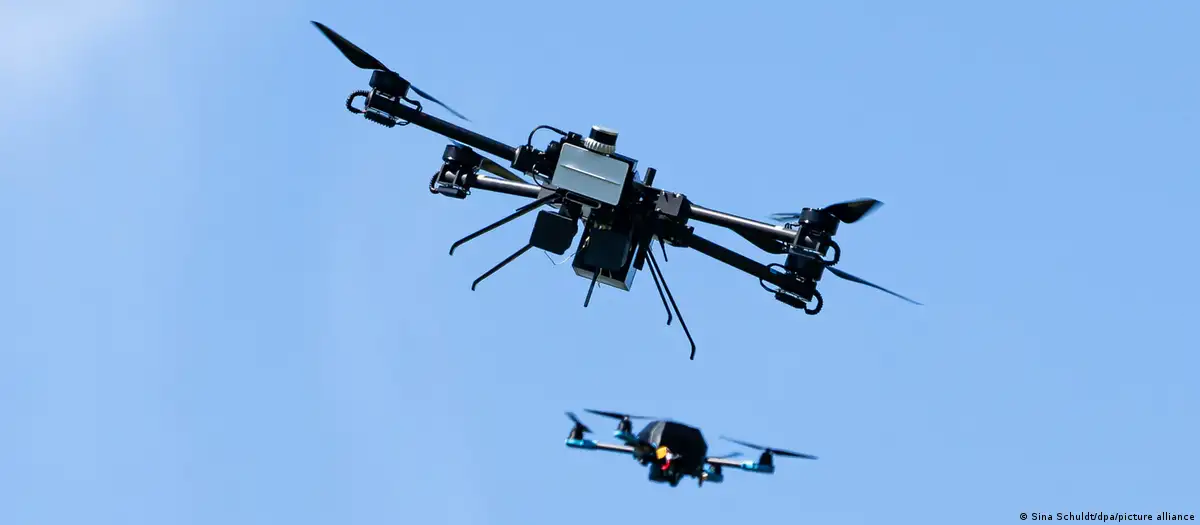
Small drones are changing the security environment. Their strategic importance comes partly from their accessibility. An adversary does not necessarily require advanced combat aircraft or long-range missiles to approach sensitive infrastructure. Small unmanned systems can potentially conduct surveillance, test security responses, interrupt civilian operations or carry dangerous payloads.
The Leipzig/Halle incident demonstrates the seriousness of this evolution. An explosives-laden drone reaching an airport creates a fundamentally different threat from an unidentified drone merely observed near restricted airspace. Even without an explosion, penetration itself can reveal weaknesses in detection and response systems.
This distinction is crucial. A successful hybrid operation does not always need to destroy its target. Sometimes demonstrating that the target could have been destroyed can produce strategic effects of its own.
The resulting uncertainty forces governments to increase security expenditure, disrupt operations and reconsider the vulnerability of infrastructure previously regarded as safely located deep inside national territory.
Germany’s challenge therefore represents a wider European dilemma. Europe’s internal infrastructure was largely designed for an era in which major military threats were expected to originate outside national borders. Airports, ports, power stations and railway systems were protected primarily against terrorism, criminal activity, accidents and conventional sabotage.
Drone proliferation has weakened that distinction between external and internal security. A hostile actor can now potentially project limited physical power into sensitive areas without deploying conventional forces and without immediately revealing its identity.
That combination of accessibility, ambiguity and deniability makes drones particularly suited to hybrid confrontation.
Leipzig and the Collapse of the Safe Rear
The first strategic lesson from Leipzig is that Europe’s geographical depth no longer guarantees infrastructure security.
During conventional military planning, countries traditionally distinguish between the frontline and the rear. The frontline contains military forces exposed to direct attack, while infrastructure farther away provides logistics, transportation, production and reinforcement.
Modern drones increasingly blur that distinction. An airport hundreds of kilometres from any military frontier may still perform strategically important functions. Leipzig/Halle is particularly relevant because cargo aviation forms an important part of its operations. The reported proximity of the drone to a Ukrainian Antonov cargo aircraft has contributed to suspicions surrounding the incident, although the investigation must establish whether that proximity was intentional.
The uncertainty itself demonstrates the problem. Was the drone conducting reconnaissance? Was it intended to attack? Was it testing security procedures? Was its presence connected to the Ukrainian aircraft?
Without confirmed attribution and intent, those questions remain unresolved. But European security planning cannot wait until every future incident produces a definitive answer.
The capability demonstrated by penetration matters independently of motive.
This is especially important because Germany recorded more than 1,000 suspicious drone flights during 2025. Not every unidentified flight represents hostile state activity. Some may involve irresponsible civilian operators, commercial activity or criminal behaviour. Treating every drone as a foreign attack would therefore be both operationally impractical and politically dangerous.
The security challenge is distinguishing harmless activity from genuine threats quickly enough to respond. That requires persistent awareness of lower airspace.
Traditional radar networks were developed primarily around larger and faster aircraft. Small drones may fly slowly and close to buildings or terrain, producing detection challenges significantly different from those associated with conventional aviation.
Europe consequently needs what might effectively become a new layer of air traffic awareness. The proposal cited by the European Association for Unmanned Aviation for real-time monitoring of lower airspace reflects this requirement. If authorities cannot reliably determine what is flying near critical infrastructure, they cannot determine when intervention is necessary.
Detection therefore becomes the first line of defence. But Leipzig demonstrates that detection alone is insufficient.
The Detection–Interception Gap
Germany’s emerging counter-drone architecture exposes a problem likely to affect many European countries: knowing that a drone exists and being able to stop it are two entirely different capabilities.
Detection systems can use radar, radio-frequency monitoring, optical cameras, acoustic sensors and other technologies to identify potential unmanned aircraft. Combining several sensor types can improve reliability because no single technology performs equally well against every drone or in every environment.
Once a suspicious aircraft is identified, however, authorities must determine what to do.
That decision can become extraordinarily difficult at an airport.
Electronic jamming may interfere with the drone, but it can also create risks for legitimate communications or navigation systems. Kinetic interception may destroy the aircraft, but debris could fall onto passengers, buildings, aircraft or fuel infrastructure. An interceptor drone may capture or disable the target, but this requires the system to respond rapidly enough.
The operational environment therefore demands more than simply purchasing anti-drone equipment. Authorities need a layered system capable of detecting, identifying, tracking and neutralising different categories of threat.
And they need that process to occur within minutes. This is where Germany’s fragmented institutional responsibilities become strategically significant.
According to the material provided, responsibility can shift between state police, federal police and, under exceptional circumstances, the Bundeswehr depending on where a drone is operating and the severity of the threat.
Germany’s federal political system makes such divisions understandable. Drones do not respect them. A hostile aircraft can move between jurisdictions in minutes, potentially forcing several authorities to coordinate while the threat itself remains airborne.
The establishment of the Joint Counter Drone Center in Berlin represents an attempt to improve this coordination by bringing together information from police, intelligence and military institutions. Yet an information hub cannot compensate for inadequate sensors or interception systems on the ground.
The Leipzig incident therefore exposes the difference between institutional coordination and operational defence. Europe needs both.
The Legal Problem: Who Can Pull the Trigger?
Counter-drone security also creates a difficult legal question. Who should possess the authority to destroy an aircraft over civilian territory?
Germany’s constitutional and legal framework traditionally separates military defence from domestic policing. Police forces are responsible for internal security, while the Bundeswehr focuses primarily on external defence. Drone threats increasingly occupy the space between those categories.
A small aircraft carrying explosives near an airport may constitute terrorism, criminal sabotage or a foreign hybrid attack. Authorities may have only minutes to respond and may not know which category applies until much later.
Germany amended its aviation security legislation in March 2026, according to the supplied report, allowing the Bundeswehr under exceptional circumstances to shoot down drones outside military property when necessary to prevent a particularly serious disaster.
The amendment addresses one part of the legal uncertainty. It does not eliminate the operational dilemma. Deploying armed forces permanently around civilian infrastructure would be unrealistic. Germany contains enormous numbers of potential targets, and the Bundeswehr itself must protect extensive military facilities.
This means civilian security agencies will need substantial counter-drone capabilities of their own. The European lesson is important.
Counter-drone defence cannot become a capability possessed exclusively by armed forces. Police, border agencies and specialised infrastructure-security units will increasingly require access to technologies previously associated mainly with military organisations.
The traditional boundary between homeland security and national defence is becoming increasingly porous.
Airports Are Only the Beginning
The most dangerous conclusion Europe could draw from Leipzig would be to treat the problem primarily as airport security.
Airports are obvious targets because disruption immediately becomes visible. A small number of drones can interrupt flights, strand passengers and generate international media coverage.
But the European infrastructure potentially exposed to unmanned systems is far larger. Ports represent an important example. European military reinforcement increasingly depends on commercial ports capable of receiving equipment and supplies. Surveillance drones operating near loading areas could gather intelligence on military movements without necessarily conducting an attack.
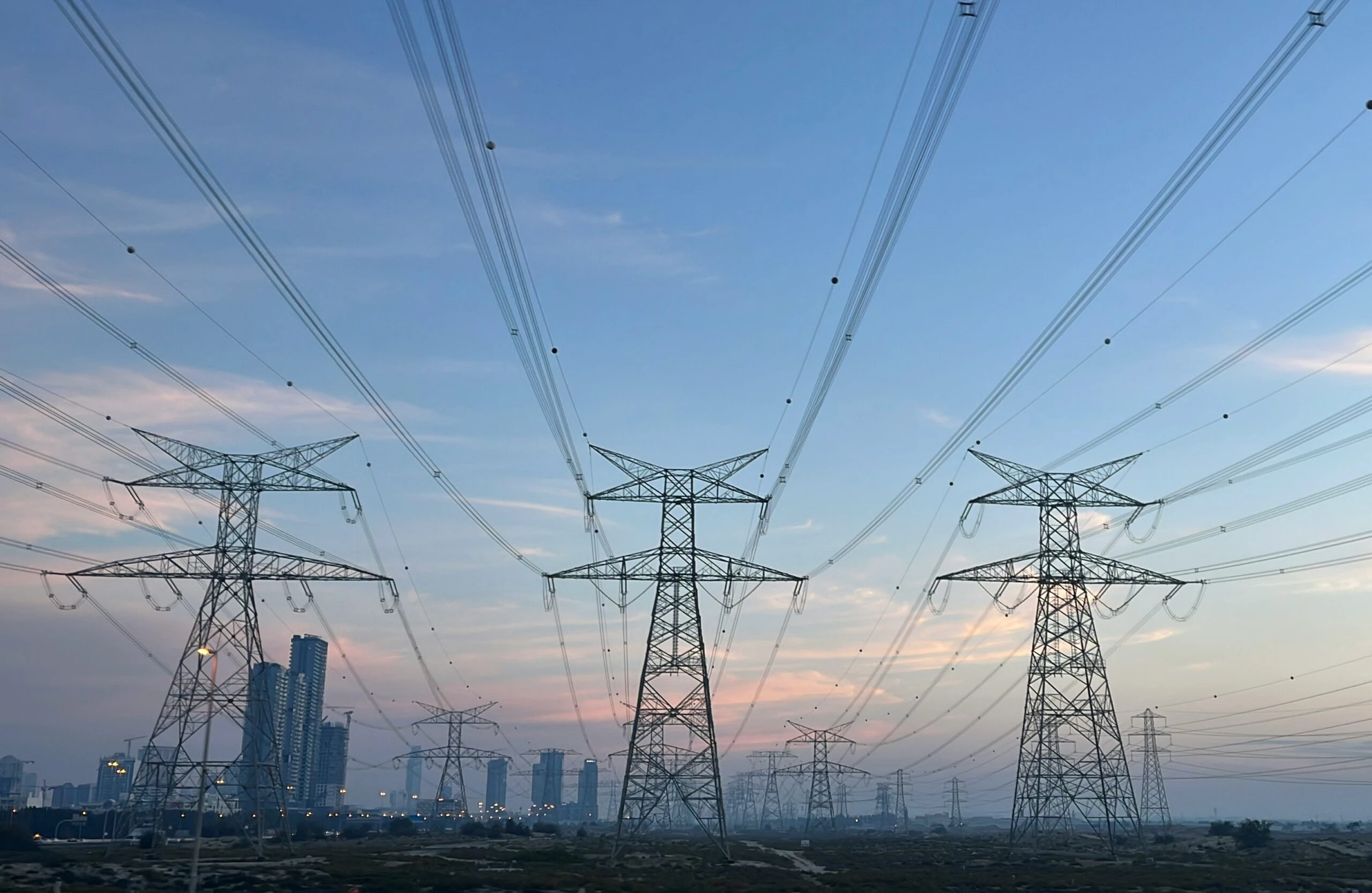
Energy infrastructure presents another vulnerability. Electricity substations, refineries, LNG terminals and power stations contain components whose disruption could produce cascading economic consequences. Some critical facilities are geographically large and difficult to protect continuously.
Defence factories represent another potential target. Europe is attempting to expand ammunition and weapons production. These facilities may become strategically valuable not only during war but during the period of military preparation preceding it.
Railway junctions and bridges are similarly important. As Europe strengthens military mobility toward NATO’s eastern flank, transport infrastructure increasingly becomes part of the continent’s deterrence architecture. A hostile actor seeking to slow reinforcement does not necessarily need to defeat European forces directly if logistics can be disrupted instead.
Drone defence must therefore be integrated into critical infrastructure protection rather than treated as a specialist aviation-security problem.
The Economics of Drone Warfare Favor the Attacker
Perhaps the most difficult aspect of the drone challenge is economic. Europe can build sophisticated detection systems and purchase advanced interceptors. But if every defensive response costs dramatically more than the drone being intercepted, an adversary can impose disproportionate financial costs simply by repeatedly testing the system.
This problem has already become central to modern warfare. Expensive missiles remain essential against sophisticated air threats, but they cannot provide the sole response to large numbers of inexpensive drones.
Europe therefore needs a different defensive economy. Electronic warfare, interceptor drones, directed-energy technologies and other lower-cost countermeasures will need to complement traditional air defence.
The objective should be to ensure that the cost of defeating a threat is reasonably proportionate to the cost of generating it.
Otherwise, drone defence risks becoming strategically unsustainable. This requires European governments to move beyond procurement of small numbers of expensive systems and toward scalable counter-drone architectures capable of protecting numerous locations simultaneously.
Industrial capacity matters here as much as technological sophistication. During a prolonged hybrid confrontation, systems will need maintenance, replacement and continuous software adaptation. Counter-drone defence therefore becomes another component of Europe’s broader defence industrial challenge