The European Centre for Strategic Studies and Policy (ECSAP)
Executive Summary
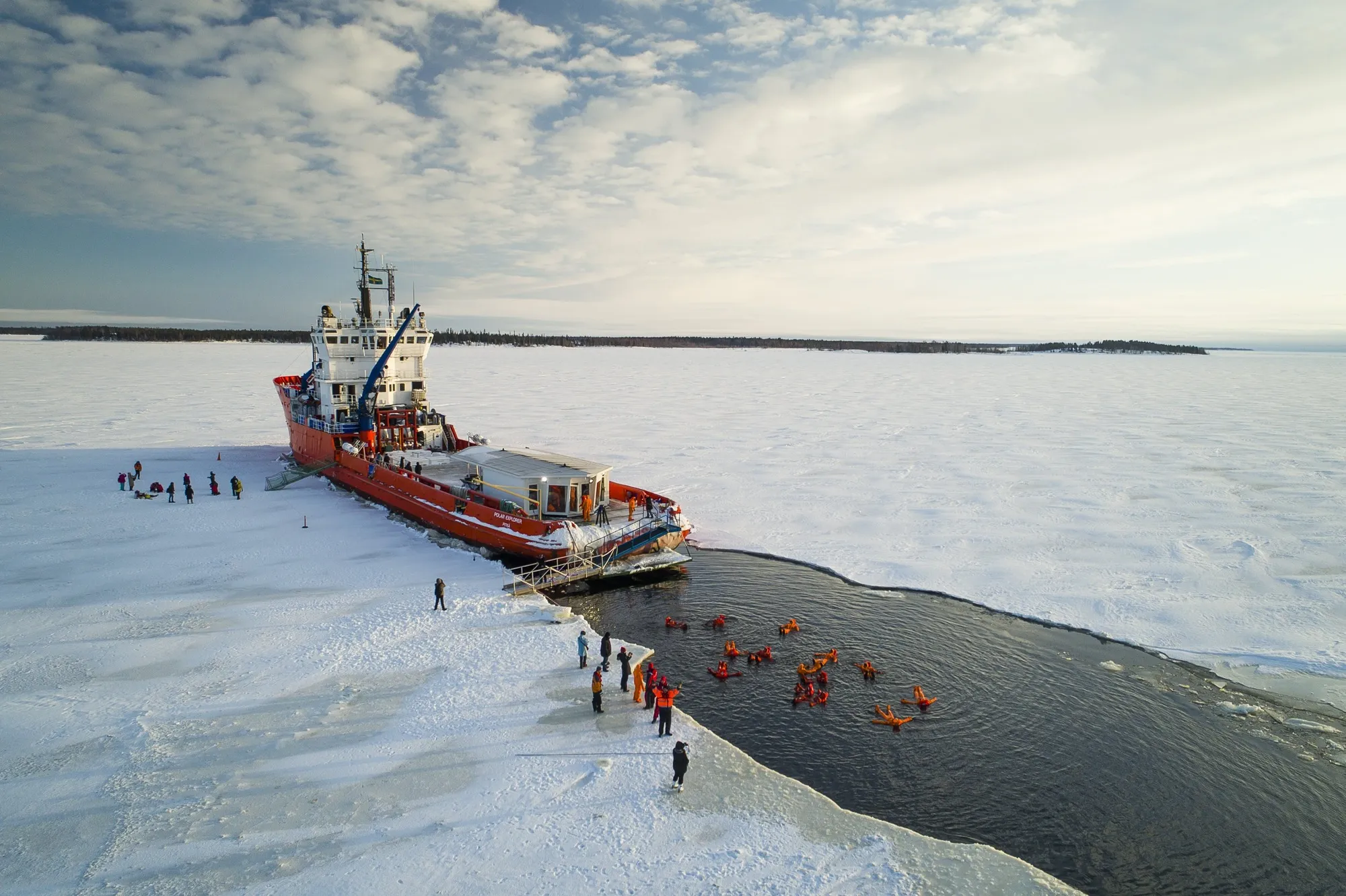
The Arctic is no longer a remote and frozen wilderness isolated from global politics. It has rapidly become one of the world’s most strategically significant regions, where military competition, economic interests, climate change, technological development, and great-power rivalry increasingly intersect. As Arctic ice continues to retreat due to rising global temperatures, previously inaccessible maritime routes, energy reserves, fisheries, and critical mineral deposits are becoming economically viable and strategically valuable.
For Europe, the Arctic has moved from the periphery of security planning to the center of strategic thinking. Russia has significantly expanded its military presence across its northern territories, NATO has strengthened its operational posture following the accession of Finland and Sweden, while China continues describing itself as a “near-Arctic state” and investing heavily in polar infrastructure and shipping routes.
This paper argues that the Arctic is evolving into the next major geopolitical arena where climate change is reshaping the global balance of power. Europe’s ability to respond effectively will influence not only regional security but also energy resilience, maritime trade, environmental governance, and NATO’s future deterrence strategy.
Introduction
For centuries, the Arctic remained largely beyond the reach of international politics.
Extreme weather, permanent ice cover, and limited accessibility prevented large-scale military deployments and commercial activity. Climate change has fundamentally altered that reality.
Satellite observations show a steady reduction in Arctic sea ice, extending navigation seasons and gradually opening maritime corridors that were previously inaccessible for much of the year. These environmental changes are transforming geography itself, creating entirely new strategic calculations for global powers.
The Arctic is no longer simply a scientific or environmental concern. It has become an emerging geopolitical frontier.
Climate Change Is Rewriting Geopolitics
Unlike most geopolitical transformations driven by political decisions, the Arctic’s transformation is being driven by environmental change.
As temperatures rise, the region is becoming increasingly accessible for shipping, energy exploration, and resource extraction.
The Northern Sea Route along Russia’s Arctic coastline offers significantly shorter shipping distances between Europe and Asia compared with traditional maritime routes through the Suez Canal.
For international shipping companies, this represents both an economic opportunity and a strategic challenge.
For governments, it introduces new questions regarding maritime governance, security, infrastructure, and sovereignty.
Climate change is therefore reshaping not only ecosystems but also international geopolitics.
Russia’s Expanding Military Presence
Russia possesses the world’s largest Arctic coastline and has invested heavily in strengthening its military presence across the region.
Over the past decade, Moscow has modernized Arctic airbases, expanded naval facilities, deployed advanced missile systems, and increased the operational capacity of its Northern Fleet.
These investments serve multiple strategic objectives.
They protect Russia’s nuclear deterrent based on submarine operations in the Arctic.
They secure access to energy infrastructure.
They strengthen control over Arctic maritime routes.
They also demonstrate Russia’s broader ambition to remain the dominant military actor across the High North.
For NATO planners, these developments have fundamentally altered regional security calculations.
NATO’s Northern Transformation
The accession of Finland and Sweden to NATO has transformed the Alliance’s strategic geography.
The Baltic Sea has effectively become a NATO maritime space, while the Alliance now possesses significantly greater operational access to northern Europe.
This expansion has strengthened NATO’s ability to coordinate Arctic surveillance, intelligence gathering, maritime security, and joint military exercises.
However, it has also increased the importance of the Arctic within NATO planning.
Future military deterrence is likely to rely increasingly upon integrated operations stretching from the Baltic region to the High North.
China’s Quiet Arctic Strategy
Although geographically distant from the Arctic, China has steadily expanded its presence within the region.
Beijing has invested in scientific research stations, shipping infrastructure, satellite systems, telecommunications, and partnerships with Arctic states.
China increasingly views the Arctic as part of its broader global connectivity strategy.
Access to shorter maritime routes could reduce transport costs while strengthening economic links with European markets.
China also recognizes the long-term strategic importance of Arctic minerals required for advanced technologies, renewable energy systems, and defense industries.
Rather than pursuing military dominance, Beijing appears focused on building long-term economic influence.
Europe’s Strategic Interests
For Europe, Arctic security extends far beyond military concerns.
The region increasingly influences energy security, climate resilience, fisheries management, telecommunications infrastructure, submarine cables, and supply chains for critical minerals.
The Arctic also affects Europe’s environmental security.
Rapid warming contributes to changing weather patterns across the continent, influencing agriculture, flooding, droughts, and extreme climate events.
Protecting Arctic stability therefore supports both environmental and geopolitical resilience.
The Emerging Competition for Resources
The Arctic contains significant reserves of oil, natural gas, rare earth elements, and strategic minerals.
As extraction technologies improve and ice retreats, competition for these resources is expected to intensify.
Critical minerals required for semiconductors, batteries, artificial intelligence, and defense manufacturing are becoming increasingly important within global industrial competition.
This raises complex governance questions.
How should resource extraction balance economic development with environmental protection?
Can international cooperation prevent resource competition from becoming military confrontation?
Will existing Arctic governance mechanisms remain sufficient as strategic competition accelerates?
Security Beyond Military Power
The Arctic demonstrates how modern security increasingly extends beyond traditional military threats.
Critical infrastructure, satellite communications, cyber resilience, undersea cables, energy networks, environmental monitoring, and scientific cooperation all contribute to regional stability.
Hybrid threats—including cyber operations, information campaigns, economic coercion, and infrastructure disruption—are likely to become increasingly significant.
European security planners must therefore adopt a comprehensive understanding of Arctic security that integrates military preparedness with economic resilience and environmental governance.
Policy Recommendations
European governments should strengthen coordinated Arctic strategies through closer cooperation between NATO and the European Union.
Investment should increase in Arctic surveillance, maritime infrastructure, search-and-rescue capabilities, and resilient communications networks.
Scientific cooperation must continue despite geopolitical tensions, particularly regarding climate monitoring and environmental protection.
Europe should also diversify supply chains for Arctic critical minerals while supporting sustainable resource governance.
Finally, diplomatic engagement should remain a priority to reduce the risk of military escalation in one of the world’s fastest-changing strategic regions.
Conclusion
The Arctic is no longer the world’s frozen frontier.
It has become one of the defining geopolitical theatres of the twenty-first century.
Climate change is opening new sea routes, exposing valuable natural resources, and transforming military geography at a pace few anticipated only a generation ago.
For Europe, the Arctic represents both an opportunity and a strategic vulnerability.
The decisions taken during the coming decade regarding Arctic security, environmental governance, infrastructure investment, and international cooperation will shape not only the future of the High North but also the broader balance of power between Europe, Russia, China, and the United States.
In an era of renewed geopolitical competition, the Arctic is no longer the edge of the map.
It is rapidly becoming one of its most important centres.