What happens in Iran doesn’t stay in Iran. The consequences of the US-Israeli military campaign launched on Saturday, which is aimed at regime change in Iran and immediately killed Supreme Leader Ali Khamenei, will radiate across the region and the world. So we turned to our regional network of experts to assess the conflict’s expanding impact.
Israel: Echoes of Purim in a diminishing threat
JERUSALEM—Purim, which will be celebrated later this week, is figuring prominently in Israeli renditions of Operation Roaring Lion. The annual festival—which commemorates the deliverance of the Jewish people from annihilation in fifth century BCE Persia—has been invoked by both Prime Minister Benjamin Netanyahu and Israel Defense Forces Chief of Staff Eyal Zamir as a backdrop to the contemporary US-Israeli campaign to precipitate the downfall of Iran’s Islamic regime. Now, as then, hope springs for a happy ending to the story.
All sides to this conflict were witness to an abundance of signals that a reprisal of the June 2025 twelve-day war was brewing. But a fundamental misreading of that landscape by an over-confident Iranian leadership—notorious for its “Death to America” and “Death to Israel” refrains—played directly into the hands of skeptics who believed that no deal would be forthcoming and that Iran’s malign influence could be extinguished only by force of arms.
Having been around this exact same block countless times before, Iranian negotiators approached their discussions with US presidential envoys Steve Witkoff and Jared Kushner as a familiar dance with Washington that would unfold, as in the past, through multiple rounds of talks in various international capitals over the minutiae of a bargain. That strategy was ill-suited to US President Donald Trump, however, who, after promising Iranian anti-regime protesters on January 13 that “help is on its way” and also assembling a “beautiful armada” to challenge Iran, could not fathom “why they haven’t capitulated.” Time ran out finally after the administration determined that its genuine offers were “met with games, tricks, [and] stall tactics.”
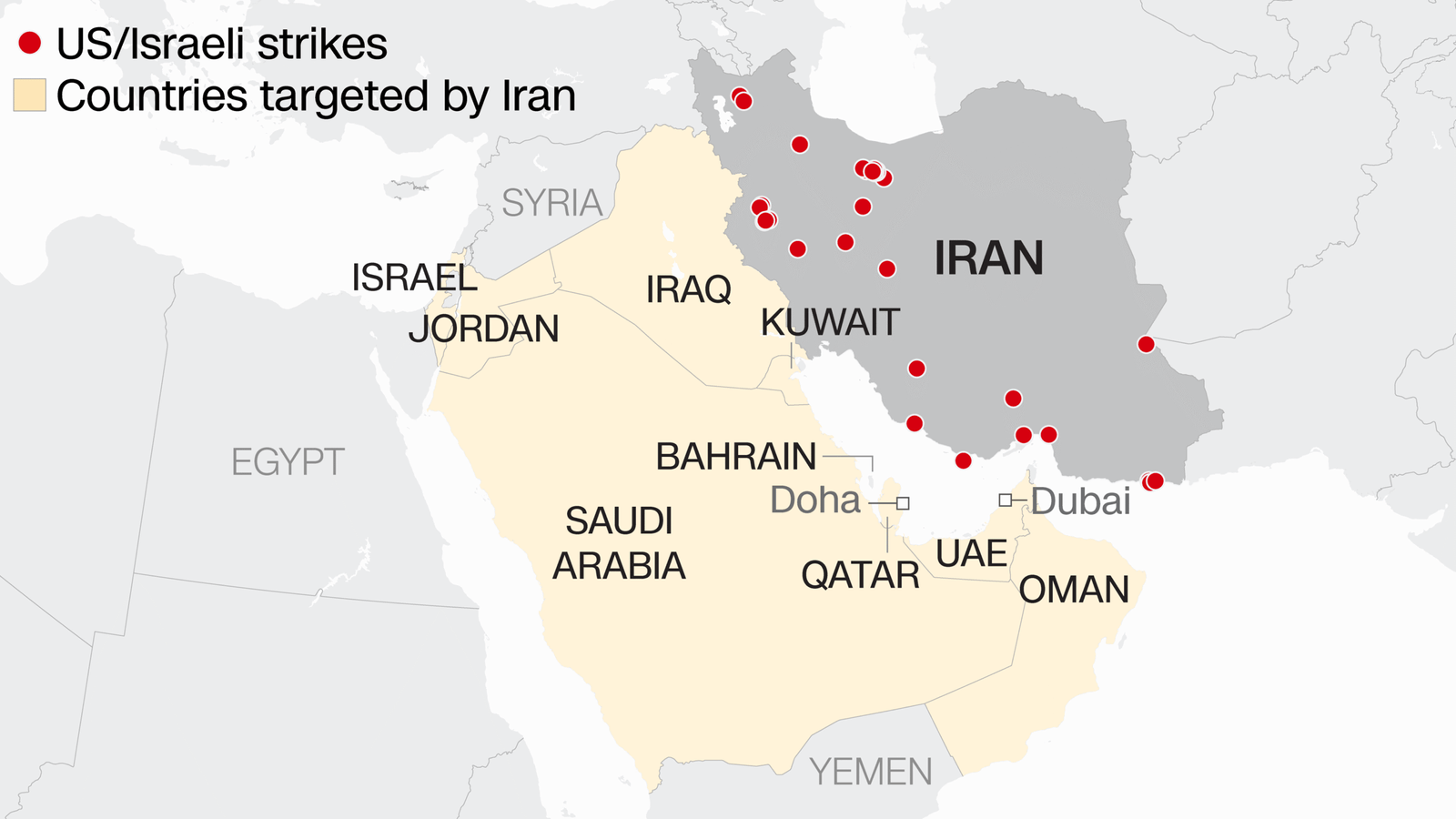
That same miscalculation led Iranian decision-makers to position their most senior echelon and deploy their resources with apparent complacency, effectively exposing them to a joint Israeli and US attack that had been planned meticulously in advance. (Israeli media reported that the Israel Air Force “eliminated 30 high-level officials in [the first] 30 seconds.”) Since the start of the fighting, Iran has expanded the circle of combatants, targeting infrastructure in Kuwait, Saudi Arabia, the United Arab Emirates, Bahrain, Qatar, and Oman—thus committing another blunder by antagonizing neighboring countries that otherwise may have been inclined to remain on the fence.
From Israel’s perspective, the stars have never been better aligned for impactful change in Iran. And yet, ultimately, as US and Israeli principals have asserted repeatedly, it will fall to the Iranian public to step up and chart their own future. “When we are finished, take over your government. It will be yours to take,” Trump said on Saturday. That process, however, could prove tortuous as the regime struggles to retain control and uncertainly prevails concerning the existence of viable (non-Islamic Revolutionary Guard Corps-affiliated) candidates who might mobilize to seize the reins of power. Despite the casualties that Iran is inflicting now on Israel’s home front, Israelis are hopeful, tentatively, that the demise of a belligerent Shia axis—and the ascent of a peaceful, collaborative Middle East—might be within reach.
—Shalom Lipner is a nonresident senior fellow at the Scowcroft Middle East Security Initiative, part of the Atlantic Council’s Middle East programs. He previously worked in foreign policy and public diplomacy during his time at the Prime Minister’s Office in Jerusalem, where he served in the administrations of seven consecutive Israeli premiers.

The United Arab Emirates: Closer to the US-Israeli position than it wants to be
ABU DHABI—Following the joint US and Israeli strikes on Iran, Iran launched retaliatory missile and drone attacks against US military bases hosted in the UAE such as Al Dhafra Air Base, resulting in direct impacts on UAE territory. The attacks soon expanded to civilian sites in Dubai and Abu Dhabi, with hotels, airports, and free zones (Jebel Ali) suffering attacks or damage from intercepted strikes.
The UAE’s air defense systems successfully intercepted several Iranian ballistic missiles and drones. However, debris from these intercepts and potential misses resulted in damage and casualties. At least one individual was killed in Abu Dhabi due to falling missile debris, and several others sustained injuries in locations like Dubai’s Palm Jumeirah.
The UAE has strongly condemned Iran’s missile strikes, calling them a direct violation of sovereignty and international law. The UAE also has condemned Iran’s efforts to regionalize the conflict and reiterated its stance against using regional countries’ territories to settle disputes or expand conflicts. Anwar Gargash, a diplomatic adviser to the UAE president, called Iran’s approach irrational and said that, in its unresponsiveness to Gulf Cooperation Council (GCC) diplomacy, Iran was isolating itself.
The confrontation is forcing the UAE much closer to the US and Israeli position than it wants to be. On the one hand, the UAE remains a security partner of the United States. It quietly aligns with Israel on many regional concerns, especially regarding Iran’s missile program and its network of regional militias. On the other hand, the UAE has heavily invested in building a more stable relationship with Tehran. Trade has grown, diplomatic ties have been renewed, and both sides have been working to prevent escalation in the Gulf.
The recent strikes are undoing these advances. UAE officials asserted the country’s “full right to respond” and take all necessary measures to protect its territory, people, and interests. This includes potential actions to deter further aggression, though no specific retaliatory steps have been announced.
UAE President Sheikh Mohamed bin Zayed Al Nahyan spoke with Saudi Crown Prince Mohammed bin Salman following the events, and both expressed solidarity, warned against further escalation, and called for restraint and diplomacy. This aligns with broader Gulf reactions; countries like Qatar, Bahrain, and Kuwait issued similar condemnations of Iran’s actions.
But with ongoing strikes on Sunday morning in the UAE, tensions remain elevated.
—Eric Alter is a nonresident senior fellow with the Scowcroft Middle East Security Initiative and the dean of the Anwar Gargash Diplomatic Academy in Abu Dhabi.

The Gulf: Iran is losing credibility with its attacks
DOHA—Iran has made a serious strategic miscalculation by widening its confrontation to include the GCC states, despite their clear and consistent rejection of war. These countries stated unequivocally that they would not allow their territory, airspace, or military bases to be used for operations against Tehran. They chose restraint and diplomacy over escalation, yet they still found themselves directly targeted.
In the recent escalation linked to US-Israeli strikes on Iran, Iranian missiles or projectiles hit Saudi Arabia, Qatar, the United Arab Emirates, Bahrain, Kuwait, and Jordan. None of these states launched attacks against Iran from their territory. Their involvement in the broader conflict was neither offensive nor direct. Nevertheless, they became part of a widening cycle of retaliation that they actively sought to avoid.
For Qatar, there is no indication that it has directly joined offensive actions against Iran so far, but by stating that it has the “right to respond,” Doha is leaving its options open—whether that involves diplomacy, defensive actions, or strikes coordinated with allies.
What makes this escalation particularly alarming is that the Iranian strikes were not limited to military installations, despite Tehran’s claims. They affected airports, critical infrastructure, hotels, and residential areas—spaces where civilians live, work, and travel. Such actions extend beyond conventional battlefield engagement. They amount to a serious violation of sovereignty and pose a direct threat to regional stability. The approach disregards international law and undermines the fundamental principles that govern peaceful relations between neighboring states.
Regardless of how the broader conflict unfolds, the impact on Iran’s regional credibility is already significant. Trust, once damaged, is difficult to restore. Gulf states have long supported mediation efforts, particularly those led by Oman and Qatar, to reduce tensions and sustain dialogue. Targeting countries that backed de-escalation weakens those initiatives.
If Tehran believes such actions create leverage, that assessment is flawed. Instead of acquiring more influence, Iran risks deeper isolation and stronger regional alignment against it. The international community must clearly condemn these attacks and affirm the right of affected states to defend their sovereignty and protect their people.
—Khalid Al-Jaber is the executive director of the Middle East Council on Global Affairs. He is a distinguished scholar and practitioner specializing in political communication and Middle East and North Africa affairs.
The Gulf: Mediation has become unappealing
RIYADH—Causalities are a tragic inevitability of war, and diplomacy in the region is now one of them. Despite the immense investment in rapprochement over the past years, this war and the unfolding events associated with it indicate that the region has entered a post-rapprochement era and is heading toward calculated militarization.
The Arab Gulf states have been restructuring their respective economies in the hopes of making them more diversified and attractive for tourism and investment. These states knew this could not happen in a turbulent region. Given US reluctance to provide security guarantees for Arab Gulf states, Gulf-Iran rapprochement was necessary.
This rapprochement was a laborious and taxing psychological approach, akin to a psychologist dealing with a traumatized patient with violent outbursts. But there was a genuine conviction that dialogue was the best way of achieving Gulf security. That approach is now upended.
What compounds this dilemma is that both Iran and Arab Gulf states, especially the mediators (Oman and Qatar), believe that mediation has caused more insecurity for them, whether in the form of Israeli strikes on Doha in September 2025 or the strikes on Oman on Sunday or Iran being struck twice as negotiations were taking place. Mediation—particularly involving Iran and Israel—has become unappealing.
A post-Khamenei Iran that will most likely be confrontational is emerging in tandem with the Arab Gulf states recalculating their approach toward Iran. As a result, the mode of diplomacy in Arab Gulf states will be far more proactive in building their deterrence via capabilities rather than alliances.
— Aziz Alghashian is a senior nonresident fellow at the Gulf International Forum.
Iraq: An opportunity to reestablish its sovereignty
A weakened Iran or the fall of the regime provides a dramatic opportunity to alter the course of Iraq, binding it more closely to the West and the region and reducing Iran’s influence. Iraq and Iran remain inextricably linked, with close political coordination between elites, significant economic linkages, and the continued presence of Iraqi militias supported and directed by Iran. An Iran that is less focused on meddling in Iraqi affairs could allow the Iraqi state to reestablish its sovereignty. But this will not necessarily mean that the Iraqi government will take decisions that align with US interests.
Iraq remains a venue for confrontation between the United States and Iran, with Iraq frequently pulled into conflict between the two rivals despite its attempts to navigate a foreign policy that maintains relations with both. In the short term, militia strikes against US or Israeli targets could start a cycle of retaliation that could lead to US strikes against senior Iraqi militia leaders. Thus far, there have been threats from hardline militias like Kataib Hezballah and several militia attacks by a Kataib Sayyid al-Shuhida-affiliated militia on the US base in Erbil. These attacks could increase in coming days following several US strikes in Iraq that killed militia members. At the same time, many Iraqi militias will decide to sit this out, protecting their political and economic interests in Iraq. Under pressure from the United States, a number of prominent militias, such as Asa’ib ahl al-Haq (AAH), have already announced their readiness to disarm—demonstrating the extent to which certain militias have become focused on their interests in Iraq rather than acting as a tool of Iran.
With the strikes on Iran as the new backdrop, Iraq’s Shia Coordination Framework is still paralyzed by the process to select the next prime minister after Trump’s sharp public message opposing former Prime Minister Nouri al-Maliki’s third term. US statements suggested that Iran’s support for Maliki’s candidacy was the overwhelming reason to oppose him. The deaths of the supreme leader and other senior Iranian leaders might break the gridlock. However, Maliki will remain a formidable force within Iraqi politics with or without Iranian backing.
—Victoria J. Taylor is the director of the Iraq Initiative in the Atlantic Council’s Middle East programs and a former deputy assistant secretary for Iraq and Iran in the US State Department.
Lebanon: Hezbollah’s aims remain uncertain
BEIRUT—By killing Khamenei and launching a massive air campaign against Iran, with the explicit goal of effecting regime change, the United States and Israel have smashed Hezbollah’s “red line.” However, there was no knee-jerk military retaliation by Hezbollah to the assassination of Khamenei, and even the statements released by Hezbollah leader Sheikh Naim Qassem mourning the loss of the group’s spiritual leader contained no threats of revenge.
Hezbollah is facing the biggest dilemma of its forty-five-year existence. If Hezbollah attacks Israel, on Iranian instructions, the Israelis would respond with overwhelming force, not only targeting the organization but also potentially striking Lebanese infrastructure such as Beirut airport, power stations, and bridges. In the aftermath, no Lebanese, including Shias, will thank Hezbollah for dragging Lebanon into another ruinous war for the sake of a country lying more than five hundred miles to the east for which few Lebanese have much sympathy.
The loss of Khamenei is significant, but theoretically a new supreme leader will eventually be elected—if the regime survives the current onslaught—and the chain of command will continue. The death in September 2024 of former Hezbollah leader Hassan Nasrallah carried far more emotional impact for Lebanese Shias than Khamenei’s demise. Therefore, Khamenei’s death alone may not require an overt military response from Hezbollah given that such a response could end up destroying the organization.
On the other hand, if Hezbollah’s leadership chooses to ignore an Iranian instruction to attack, the decision would risk rupturing the material and ideological linkage that binds the party to Iran’s clerical leadership. Qassem appears to be a pragmatist and has been restructuring Hezbollah with an eye on survival in the Lebanese domestic context, while his organization is under enormous pressure to disarm. To that end, he has focused on centralizing control, tightening security, reducing the size of the Islamic Resistance military wing, and promoting figures with more of a political background than religious or military one.
At this stage, it does not appear that Iran has asked for Hezbollah’s overt intervention. But if the order is given, it can no longer be assumed that Qassem would automatically comply. There are, however, many variables. There appears to be some dissatisfaction among military elements within the Islamic Resistance toward the current political leadership. While this scenario is unlikely, it cannot be ruled out that some commanders could conclude that loyalty to the slain Khamenei and the “Islamic revolution,” as well as frustration at not retaliating against Israel’s year-long, near-daily airstrikes against Hezbollah targets, requires action even without formal leadership approval. Furthermore, Iran itself could seek to pre-empt hesitation in Beirut by asserting more direct operational control and deploying the Islamic Revolutionary Guard Corps-Quds Force to directly command the Islamic Resistance, effectively sidelining party leaders from the decision-making cycle.
—Nicholas Blanford is a nonresident senior fellow with the Atlantic Council’s Middle East programs, covering the politics and security affairs of Lebanon and Syria.
Turkey: Bracing for impact in security, the economy, and diplomacy
Given its 330-mile shared border with Iran and its role as a regional mediator and NATO member, Ankara is currently navigating a high-stakes crisis. The following areas are where Turkey will feel the most impact:
1. Security and border control
- Refugee influx: Turkey’s primary fear is a mass migration wave. With over 3.5 million Syrian refugees already in the country, the prospect of hundreds of thousands of Iranians (and Afghans currently residing in Iran) fleeing toward the Turkish border is viewed as an existential threat to social stability.
- The Kurdish factor: Ankara is deeply concerned that a power vacuum in Tehran could embolden Kurdish separatist groups. Specifically, Turkish officials worry that the Kurdistan Free Life Party, or PJAK (the Iranian wing of the terrorist-designated Kurdistan Workers Party, or PKK) could gain autonomy in northwestern Iran, creating a new security vacuum similar to that in northern Syria.
- NATO positioning: As a NATO member hosting the Küreçik radar station and İncirlik Air Base, Turkey is in a delicate position. While it provides critical infrastructure for the Alliance, it has historically refused to allow its territory to be used for offensive strikes against its neighbors. The presidential office announced that Turkey is not allowing the bases to be utilized for the attacks.
2. Economic disruption
- Energy security: Iran currently provides approximately 15 percent of Turkey’s natural gas. Any damage to the Tabriz-Ankara pipeline or a halt in exports would cause immediate energy shortages, and spike heating and electricity prices during the remaining winter weeks.
- Inflationary pressure: Turkey is already battling significant inflation (roughly 31 percent as of early 2026). A regional war typically drives up global oil prices; as an energy importer, Turkey’s current account deficit could widen and the Lira could face further downward pressure.
3. Diplomatic standing
- The “non-aligned” stance: Turkish diplomatic sources have already stated that Ankara is not taking sides in this conflict. Foreign Minister Hakan Fidan is reportedly leading a “diplomatic push” to secure a cease-fire and prevent the total collapse of the Iranian state.
- Mediator role: President Recep Tayyip Erdoğan, who spoke with Trump on Saturday, has previously proposed a trilateral mediation framework between the United States and Iran. The escalation makes such a role nearly impossible in the short term, but Turkey will likely remain a back channel for any future de-escalation talks.
—Defne Arslan is the senior director and founder of Atlantic Council Turkey Program, leading the Council’s global work and programming on Turkey.

Palestinian territories: Losing the world’s attention yet again
Palestinians in the Gaza Strip and West Bank have long had to live on symbolic support. Especially since the Abraham Accords, many Palestinians have seen their cause weakened or abandoned even rhetorically by regional actors. Although many nations criticized Israel’s conduct of the war in the Gaza Strip after Hamas’s horrific assault on October 7, 2023, nothing stopped the killing of over seventy thousand Palestinians and the total destruction of Gaza’s infrastructure. Few effectively came to their defense in the face of US-backed Israeli military power during a war that lasted more than two years. From the perspective of Gazans, Iran and its proxies were the few actors who tried an armed response before meeting superior Israeli and US force and reaching cease-fires with Israel.
This current war represents further loss for Palestinians. They lose momentum for rebuilding their lives. They lose the world’s attention to their plight within the Gaza Strip and land confiscations in the West Bank. Iran may no longer be the vocal supporter of Palestinian self-determination that it has been.
Shortly after the attacks on Iran started, Israel closed all crossings into Gaza. While the Israeli government asserts that Gaza has provisions to last for an “extended period,” both the United Nations and Human Rights Watch flagged in mid-February that aid, medicine, and reconstruction materials were in short supply. Wounded and sick Palestinians are trapped as well. Now that the world’s attention is focused on the Iran war, improvements on any of these fronts is unlikely.
There’s an old saying popularized by blues singers: “If they didn’t have bad luck, they wouldn’t have any at all.”