The European Centre for Strategic Studies and Policy (ECSAP)
Europe is entering the autumn of 2026 facing an energy crisis fundamentally different from the shock that followed Russia’s invasion of Ukraine. The earlier crisis centred primarily on dependence on Russian pipeline gas. The current crisis is broader, more geographically dispersed and potentially more difficult to contain. The prolonged US-Iran conflict has severely disrupted flows through the Strait of Hormuz; Qatari LNG exports have collapsed; Gulf oil and refined-product exports remain constrained; Russian refining and fuel exports are being affected by intensified Ukrainian strikes; European natural-gas prices have climbed above €80 per megawatt-hour; and Brent crude was trading above $100 per barrel on September 29. Europe has succeeded in reducing one major strategic dependency only to discover that its energy security remains exposed to a network of maritime chokepoints, global commodity markets and geopolitical conflicts far beyond the continent.
The most important development is not simply that energy has become expensive again. It is that energy has returned to the centre of geopolitical power. Oil cargoes, LNG terminals, pipelines, refineries, strategic reserves, tanker routes and electricity grids increasingly function as instruments of national security. The ability to keep energy moving during conflict can influence inflation, industrial production, military logistics and domestic political stability. In this environment, energy infrastructure is no longer merely part of the economy supporting geopolitical competition. It is becoming part of the geopolitical battlespace itself.
The scale of the disruption is already extraordinary. The International Energy Agency’s September Oil Market Report estimates that total Gulf oil exports in August were approximately 13 million barrels per day, roughly half their pre-war level. Diesel and gasoil exports from Gulf producers were just over one quarter of pre-war levels, while disruptions to Russia’s refining system compounded the pressure on global refined-product markets. The IEA now projects world oil supply in 2026 to average 100.7 million barrels per day, 5.7 million barrels per day below 2025.
Europe nevertheless enters this crisis in a stronger position than it occupied in 2022. The European Commission says there is currently no immediate EU oil-supply emergency and that commercial and emergency stocks remain sufficient. Earlier this month it similarly judged the European gas system capable of coping with lower storage levels because of greater diversification, expanded LNG-import capacity and reduced demand. The distinction between physical availability and economic security, however, is becoming crucial. Europe may possess enough energy to avoid shortages while still suffering severe economic consequences from the price required to obtain it.
For The European Centre for Strategic Studies and Policy (ECSAP), this is the defining energy-security lesson of 2026. Europe’s problem is no longer simply dependence on Russia. It is exposure to a global energy system in which war in the Gulf, disruption of Hormuz, attacks on refineries, competition for LNG, pressure on shipping routes and geopolitical confrontation among major powers can transmit rapidly into European inflation, industrial competitiveness and political stability. Europe’s next energy strategy must therefore move beyond replacing one supplier with another. It must reduce the strategic power of external energy shocks over the European economy itself.
From the Russian Gas Crisis to the Global Energy War
The transformation becomes clearer when 2022 and 2026 are compared. Russia’s invasion of Ukraine exposed an extraordinary concentration of European energy dependence. Large parts of the continent had built industrial and household energy systems around relatively inexpensive Russian pipeline gas. When that relationship collapsed, Europe was forced to replace enormous volumes in a short period, expand LNG imports, reduce consumption, subsidise households and businesses and accelerate alternative infrastructure.
Europe learned from that crisis. Supplier diversification increased, LNG capacity expanded and Russian energy became far less important to the European market. But diversification altered the geography of vulnerability rather than eliminating vulnerability itself. Greater reliance on globally traded LNG made Europe more connected to maritime energy markets. Greater reliance on non-Russian crude and refined products increased the importance of shipping routes and global refining capacity. Europe gained protection against coercion by Moscow but became more exposed to disruptions elsewhere.
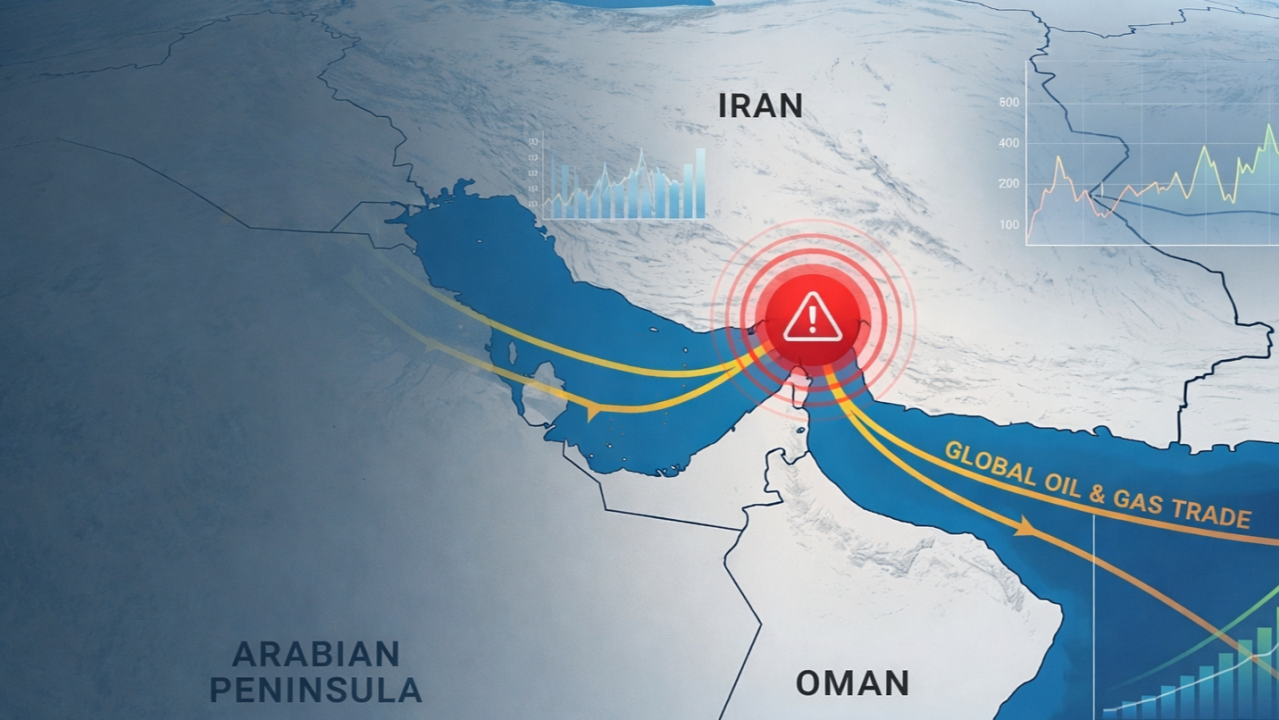
The Strait of Hormuz demonstrates the consequences. A crisis thousands of kilometres from European territory can now influence European gas prices, refinery economics, transport costs, industrial production and monetary policy. QatarEnergy has extended force-majeure notices affecting customers including Italy’s Edison because the Strait remains closed. Reuters reported on September 28 that Qatar had exported only 18 LNG cargoes through the end of August, compared with 509 during the same period in 2025. Edison has replaced many of its missing Qatari cargoes primarily with US supplies, illustrating both the flexibility and the geopolitical consequences of the global LNG market.
Europe escaped a pipeline dependency. It entered a shipping dependency.
That is safer in some respects because maritime markets provide more potential suppliers. But it also means that European energy security is increasingly connected to the stability of sea lanes stretching from the Persian Gulf and Red Sea to the Atlantic.
Hormuz Has Become an Economic Frontline for Europe
The Strait of Hormuz is geographically distant from Brussels, Berlin, Paris and Rome, yet economically it now functions almost like part of Europe’s extended energy infrastructure. Disruption there does not need to stop every tanker to produce strategic consequences. Higher insurance costs, delayed voyages, reduced LNG availability and uncertainty about future supplies can move commodity prices long before European consumers experience physical shortages.
The current oil market demonstrates this mechanism. On September 29, Brent crude for November delivery was trading around $107 per barrel as markets reacted to continued uncertainty surrounding the US-Iran confrontation and the possibility of further disruption. Middle Eastern crude exports have partially recovered through alternative arrangements, but these methods are less efficient and more expensive than normal maritime flows.
Gas presents an even more difficult problem because LNG is less flexible than crude oil. The infrastructure required to liquefy natural gas, transport it in specialised vessels and regasify it at destination constrains the number of alternative routes and suppliers. Qatar is therefore particularly important. When Qatari cargoes disappear from the market, European and Asian buyers compete for supplies from elsewhere.
That competition does not necessarily produce physical shortages. Prices perform part of the rationing process by directing flexible cargoes toward buyers willing to pay more.
For Europe, that creates a dangerous strategic distinction. Energy security can be maintained physically while deteriorating economically.
The New Crisis Is About Diesel as Much as Crude Oil
Public discussion of oil crises usually focuses on the price of crude. The 2026 shock demonstrates why refined products can be even more strategically important.
The IEA reported in September that the greatest market tightness had shifted toward products such as diesel and gasoil. Diesel prices in the United States exceeded $200 per barrel in early September, with Europe and Asia not far behind. Gulf net diesel and gasoil exports in August were approximately 390,000 barrels per day, just over one quarter of their pre-war level. At the same time, disruptions to Russian refining and exports removed additional volumes from international markets.
This matters because diesel is embedded throughout the physical economy. Trucks transporting food and manufactured products depend on it. Agricultural machinery depends on it. Construction equipment, emergency generators and parts of military logistics rely heavily on middle distillates. Jet fuel similarly connects the energy crisis to aviation and international transportation.
An economy can therefore possess adequate crude supplies while confronting serious problems in the products consumers and industries actually use.
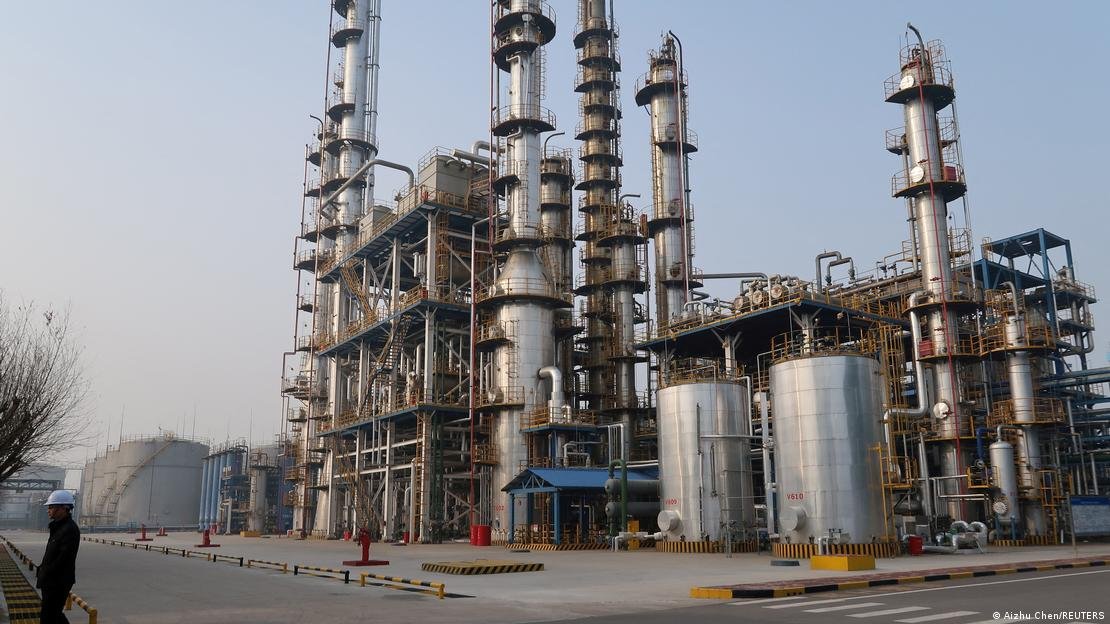
This is why refinery capacity has become strategically important. Europe’s energy security cannot be evaluated solely through crude inventories or import contracts. It also depends on whether global and European refineries can transform available crude into the right products at sufficient scale.
The 2026 crisis is revealing a wider principle: energy security depends not merely on resources, but on every industrial stage between the resource and the final consumer.
Russia Remains Inside the Global Energy Equation
Europe’s effort to eliminate Russian energy dependence does not mean Russia has disappeared from global energy markets. Moscow remains a major producer, and disruptions affecting Russian production or refining can influence international prices even when the affected fuel is not destined for the European Union.
The IEA’s September assessment illustrates this indirect relationship. Intensified Ukrainian attacks against Russian refining contributed to reduced Russian product exports at the same moment that Gulf supplies were already constrained. Combined Gulf and Russian diesel/gasoil exports in August were around 1.6 million barrels per day below February levels; before the current disruption, those two sources represented almost 45 percent of global seaborne trade in those products.
This creates one of the paradoxes of modern energy warfare. A country can stop purchasing fuel directly from a geopolitical opponent while remaining economically affected by what happens to that opponent’s production.
Oil is fungible.
When substantial Russian supply disappears from global markets, buyers elsewhere compete for remaining barrels. Prices can rise internationally. European consumers therefore remain indirectly exposed to developments affecting Russian energy infrastructure even as direct dependence declines.
Sanctions, military strikes, shipping restrictions and infrastructure damage can consequently influence the same global price system from different directions.
The European energy battlefield has become global.
Europe Could Be Secure in Supply and Insecure in Price
This distinction may become the most important political challenge of the winter.
The European Commission stated on September 8 that there was no immediate oil-supply problem in the EU. Commercial and emergency inventories remained sufficient, while increased European refinery production and alternative global suppliers were meeting demand for diesel and jet fuel. The Commission nevertheless warned that Middle Eastern instability and seasonal demand could tighten markets further.
Gas presents a similar picture. Earlier in September, the Commission said that lower storage levels did not create an immediate security-of-supply risk because Europe had increased diversification and LNG capacity and reduced demand since the previous crisis.
But those reassuring assessments concern whether energy is physically available.
Price is a different problem.
European benchmark gas prices have exceeded €80 per megawatt-hour, their highest level since 2022, as disruption of LNG flows through Hormuz tightened the market. High gas prices are already altering power-generation economics, making coal more competitive than gas for some European utilities. Analysts cited by Reuters expect coal-fired generation to rise over the coming six months while gas-fired output declines.
Europe can therefore survive the crisis without blackouts or empty fuel stations and still experience serious economic damage.
That is what makes the 2026 energy shock strategically dangerous.
Energy Is Once Again Europe’s Industrial Tax
High energy prices do not affect all economies equally. Europe competes with industrial powers that possess different energy structures, domestic resources and policy environments. When European electricity and gas costs remain elevated, energy-intensive industries face pressure that competitors elsewhere may not experience to the same degree.
Chemicals, fertilisers, steel, glass, aluminium, paper and other industrial sectors are particularly exposed. But the impact travels further through supply chains. Expensive energy increases transportation costs, construction expenses and manufacturing prices. It can reduce household purchasing power and force governments to subsidise consumers, placing additional pressure on public finances.
The strategic danger is therefore deindustrialisation through accumulated disadvantage rather than sudden collapse.
A factory does not need to close immediately for energy insecurity to matter. Investment can move elsewhere. Expansion plans can be postponed. New production capacity can be built in regions offering cheaper electricity or gas. Over time, temporary energy disadvantages can become permanent industrial geography.
This is why Europe cannot treat energy security solely as emergency management.
Energy policy has become industrial policy.
The Euro Is Now Feeling the Energy Shock
The crisis is beginning to extend into financial markets. Reuters reported on September 29 that the euro was trading near its lowest levels of 2026 against the dollar after falling approximately 2 percent during September. Analysts cited rising energy costs alongside European political uncertainty as important pressures on the currency.
The mechanism is straightforward. Europe is a major net energy importer. When oil and gas prices rise, more European income flows abroad to purchase essentially the same commodity. Businesses face higher costs, households lose purchasing power and inflationary pressure can constrain monetary policy.
The European Commission has already modelled the consequences of a prolonged Middle Eastern disruption. Its downside scenario assumed oil reaching approximately $180 per barrel and European gas around €80 per megawatt-hour in late 2026, with persistent disruption weakening economic activity, increasing inflation and reducing real income.
This does not mean oil will reach $180; the Commission presented it as a downside scenario rather than a forecast. But the exercise demonstrates how European policymakers now understand the transmission mechanism.
A war near Hormuz can become an inflation problem in Germany, an industrial problem in Italy, a household-income problem in France and eventually a monetary-policy problem for the European Central Bank.
Energy geography becomes macroeconomic geography.
Europe’s Climate and Energy-Security Strategies Are Colliding
The return of expensive gas has produced an uncomfortable consequence: coal has become economically attractive again in parts of Europe. Reuters reported on September 24 that high gas prices were expected to drive European coal-fired electricity generation upward by roughly a quarter over the following six months, reversing part of the decline that had pushed coal to a record-low 9.2 percent of EU electricity production in 2025.
The development demonstrates the difficulty of conducting an energy transition during geopolitical crisis.
European governments want simultaneously to reduce emissions, eliminate Russian fossil-fuel dependence, maintain affordable electricity, protect industrial competitiveness and guarantee security of supply. Under normal market conditions these objectives can reinforce one another. Renewable electricity reduces fossil-fuel imports, lowering both emissions and external dependency.
During rapid disruption, however, short-term priorities can conflict.
Coal plants that appeared increasingly unnecessary can suddenly provide dispatchable generation when gas becomes prohibitively expensive. Strategic reserves become more important. Governments may prioritise immediate affordability over longer-term decarbonisation trajectories.
This does not invalidate Europe’s energy transition.
It demonstrates that an energy transition without sufficient storage, grid capacity and dispatchable backup can remain vulnerable to geopolitical shocks during the transition period.
The Energy Transition Is Becoming a Security Strategy
The geopolitical case for renewable energy has consequently become stronger rather than weaker.
Solar and wind generation do not require continuous shipments through Hormuz. Once installed, they reduce the quantity of imported fuel required to generate electricity. Electrification can reduce exposure to internationally traded oil and gas, particularly when combined with domestic or diversified electricity generation.
But renewable capacity alone cannot create energy sovereignty.
Europe also needs transmission networks capable of moving electricity between regions, storage capable of balancing intermittent production, interconnectors between national markets and sufficient dispatchable generation to maintain system stability.
The energy-security objective should therefore not be defined narrowly as “more renewables.” It should be defined as reducing the quantity of external geopolitical risk embedded in every unit of European economic output.
Under that definition, grids become strategic infrastructure.
Storage becomes strategic infrastructure.
Nuclear generation, where national governments choose to use it, becomes part of the resilience equation.
Hydropower becomes strategically valuable.
Energy efficiency becomes a security measure because energy that does not need to be imported cannot be disrupted abroad.
The energy transition consequently becomes a project of strategic autonomy.
Europe Cannot Simply Replace Qatar with America
The loss of Qatari LNG has again demonstrated the importance of US gas to European energy security. Edison has replaced many missing Qatari cargoes primarily with American supplies.
In the immediate crisis, this is valuable. The global LNG market allows Europe to redirect supply and prevent physical shortages.
Strategically, however, replacing one concentrated dependency with another would repeat part of the mistake Europe is attempting to escape.
The United States is a reliable producer with enormous gas resources, but 2026 has also demonstrated how rapidly political relationships between allies can become more transactional. European strategic planning therefore cannot assume that any single external supplier should become permanently indispensable.
The appropriate objective is diversified dependence.
American LNG, Norwegian gas, North African pipelines, renewable generation, nuclear power, storage and demand flexibility can collectively produce a system in which disruption of one source remains manageable.
No individual supplier needs to be treated as an adversary for diversification to make strategic sense.
Resilience is valuable precisely because governments cannot know where the next disruption will originate.
Energy Chokepoints Are Becoming Strategic Terrain
The crisis around Hormuz also reveals a larger transformation in geopolitical geography. For industrial economies dependent on international trade, narrow maritime passages can become strategic infrastructure even when they lie thousands of kilometres outside national territory.
Hormuz is the most obvious example, but it is not unique. Bab el-Mandeb connects the Indian Ocean with the Red Sea and Suez route. The Turkish Straits influence Black Sea access. European ports and LNG terminals form the receiving end of these maritime networks.
Security of energy supply therefore increasingly depends on security of navigation.
This creates an unavoidable connection between energy policy and maritime power.
European states can invest heavily in LNG terminals and alternative suppliers, but those investments still depend on tankers reaching Europe. Maritime surveillance, naval protection, insurance markets and diplomatic arrangements with transit states consequently become components of energy security.
Europe’s energy system extends far beyond Europe’s territorial borders.
Strategic Reserves Need a New Logic
Traditional strategic petroleum reserves were designed largely to manage temporary supply disruptions. The 2026 environment raises a harder question: what happens when disruption becomes prolonged and geopolitical?
Stocks can absorb shocks, calm markets and provide governments with time.
They cannot manufacture new energy.
A reserve released today must eventually be replenished. If markets remain tight, replenishment can itself increase demand and prices.
Europe therefore needs to think about reserves not simply as emergency barrels but as one component of a wider resilience system. Strategic inventories of crude oil and refined products should be coordinated with refinery capacity, gas storage, electricity reserves and industrial demand-management plans.
The same principle may eventually extend beyond fuels.
Transformers, grid equipment, batteries and other components required to repair energy infrastructure can become strategically scarce during crises. Energy resilience therefore increasingly involves maintaining inventories of equipment as well as commodities.
Demand Reduction Is Becoming a Strategic Instrument
The EU’s response to the Russian gas crisis demonstrated that demand can adjust more rapidly than many policymakers previously assumed. Energy conservation, industrial changes and high prices contributed to significant reductions in European gas consumption.
The current crisis may require Europe to revisit demand management.
Reuters reported on September 25 that EU Energy Commissioner Dan Jørgensen warned member states of an energy “price crisis” and asked them to consider measures to reduce demand as oil and gas markets remained under pressure from the Iran war.
Demand reduction is politically sensitive because it can mean very different things.
Efficiency improvements can reduce consumption without reducing living standards. Industrial flexibility can shift electricity use away from peak periods. Smart grids can improve allocation. But forced industrial curtailment can damage production, while excessive household restrictions can become politically unpopular.
The strategic objective should therefore be flexibility rather than permanent austerity.
An energy system capable of temporarily reducing demand during extreme price spikes possesses another form of reserve.
The New Energy War Is Also a Political War
Energy shocks ultimately reach voters.
Fuel prices are among the most visible economic indicators citizens encounter. Electricity and heating bills directly affect household budgets. High energy costs contribute to food prices, transportation expenses and inflation.
This creates opportunities for political actors to connect energy policy with broader debates about climate policy, sanctions, immigration, taxation or European integration.
Governments therefore face a difficult balance. Subsidising prices can protect households but impose large fiscal costs and weaken incentives to reduce consumption. Allowing prices to pass fully through to consumers preserves market signals but can create social and political instability.
The distribution of costs becomes as important as the aggregate economic impact.
A wealthy household can absorb higher heating costs more easily than a low-income family. Large corporations may hedge energy exposure while small businesses cannot. Energy-intensive industrial regions may experience far greater disruption than service-based metropolitan economies.
European energy strategy therefore needs a social dimension.
Without it, geopolitical resilience can become politically unsustainable.
Energy Infrastructure Is Becoming a Security Asset
The next stage of European energy policy must also address physical protection.
Pipelines, LNG terminals, electricity interconnectors, offshore infrastructure, refineries and subsea cables increasingly exist in a security environment involving sabotage, cyber operations, drones and hybrid threats.
An energy system designed primarily for commercial efficiency may contain concentrated points of failure.
Resilience requires redundancy.
Multiple import terminals.
Interconnected national grids.
Alternative pipeline routes.
Distributed electricity generation.
Backup control systems.
Cybersecurity.
Repair capacity.
The objective is not to make infrastructure invulnerable. That is impossible.
It is to ensure that losing one facility does not create systemic failure.
This is the same principle militaries apply to survivability: dispersion reduces the value of any individual target.
Europe Needs an Energy Doctrine, Not Another Emergency Response
The EU has repeatedly demonstrated impressive capacity to respond once crises occur. The 2022 Russian gas shock accelerated LNG infrastructure, storage coordination and demand reduction. The current Middle Eastern crisis has again activated coordination mechanisms and emergency planning.
But repeated crisis management is not a substitute for strategic doctrine.
Europe needs a clear hierarchy of energy-security objectives.
First, no single external supplier should possess enough market share to create intolerable political leverage.
Second, no single maritime chokepoint should be capable of generating a continent-wide energy emergency without alternative supply mechanisms.
Third, European electricity generation should become progressively less dependent on globally traded fossil fuels.
Fourth, infrastructure must be interconnected sufficiently that energy can move rapidly between member states during regional shortages.
Fifth, Europe must preserve enough refining, storage and industrial capacity to withstand prolonged disruption.
Finally, emergency mechanisms must protect vulnerable households and strategically important industries without permanently insulating the entire economy from price signals.
This would transform energy policy from crisis response into strategic planning.
The World Is Entering an Era of Energy Fragmentation
The larger international trend extends beyond Europe.
The assumption that oil and gas would move primarily according to price is weakening as geopolitics increasingly determines trade routes. Sanctions have redirected Russian energy. Conflict has disrupted Gulf exports. Countries are building strategic reserves. Governments are subsidising domestic energy production and seeking long-term bilateral agreements.
Energy markets remain global, but political blocs increasingly influence how energy moves within them.
China has strong incentives to secure long-term supplies and expand strategic inventories. India is becoming increasingly important to global energy trade. The United States combines enormous domestic production with geopolitical influence over maritime security. Gulf producers are balancing relationships among Western and Asian customers.
Europe enters this competition as a large consumer but a relatively resource-poor geopolitical actor.
Its strategic advantage must therefore come from efficiency, diversification, market scale and technological transformation rather than control of enormous fossil-fuel reserves.
The Real European Energy Weapon Is Reduced Exposure
Europe cannot control the Persian Gulf.
It cannot guarantee political stability across every producing region.
It cannot determine the future of US-Iran relations.
It cannot prevent every attack on Russian refineries or every disruption to international shipping.
What it can control is the extent to which these events determine European prosperity.
That should become the central metric of energy sovereignty.
Every additional unit of domestic low-carbon electricity reduces exposure to imported fossil-fuel volatility. Every interconnector increases the ability to redistribute power during crisis. Every efficiency improvement reduces the quantity of imported energy required. Every diversified LNG contract reduces concentration risk. Every additional storage facility increases the time available for policymakers to respond.
Energy independence is unrealistic for much of Europe.
Energy resilience is not.
Conclusion: Europe Is Fighting the Second Energy War of the Decade
The energy crisis of 2022 taught Europe that dependence on a geopolitical rival could become a strategic weapon. The crisis of 2026 is teaching a more complicated lesson: even after dependence on one supplier is reduced, an economy built around imported energy remains exposed to geopolitical events across the international system.
The Strait of Hormuz has become an economic frontline for Europe. Qatari LNG disruption is increasing competition for global cargoes. Gulf oil flows remain below pre-war levels. Refined-product markets, particularly diesel, have become exceptionally tight. Russian refining disruptions interact with Middle Eastern shortages. European gas has returned above €80 per megawatt-hour, while oil above $100 is again transmitting geopolitical risk into inflation and economic growth.
Yet this is not a repetition of 2022. Europe is better prepared. Its gas system is more diversified, LNG-import capacity is larger, demand has adjusted and emergency oil stocks remain available. The European Commission continues to assess that there is no immediate physical supply emergency.
The danger is different.
Europe may be able to keep the lights on while losing industrial competitiveness.
It may have enough gas while paying prices that damage manufacturing.
It may have sufficient oil while diesel and aviation-fuel markets remain exceptionally tight.
It may diversify away from Russia while becoming increasingly dependent on maritime routes vulnerable to conflicts elsewhere.
This is why The European Centre for Strategic Studies and Policy (ECSAP) should understand the 2026 crisis not simply as another energy-price spike but as evidence of a fundamental shift in the nature of European security. Energy is becoming inseparable from foreign policy, industrial strategy, maritime security, monetary stability and defence.
The strategic objective for Europe cannot therefore be to predict where the next energy crisis will occur. The international system is too unstable for that. The objective must be to construct an economy in which the next crisis matters less.
That requires diversified suppliers, stronger strategic reserves, protected maritime routes, resilient refineries, interconnected electricity grids, more storage, accelerated electrification, greater efficiency and a generation system increasingly capable of operating without continuous exposure to imported fossil-fuel shocks. It also requires recognising that short-term energy affordability and long-term strategic transformation cannot be treated as competing agendas. Without affordability, political support for the transition weakens. Without transformation, Europe remains vulnerable to the next external shock.
The deepest lesson of 2026 is therefore not that Europe chose the wrong supplier after Russia.
It is that changing suppliers is not the same as changing the structure of dependency.
Europe’s first energy war was fought over Russian pipelines. Its second is being fought across Hormuz, LNG markets, refineries, tanker routes and global fuel prices. The third may begin somewhere entirely different.
Europe will achieve genuine energy security only when a war thousands of kilometres from its borders can no longer determine the price of European industrial power, the stability of its currency and the political choices of its governments.