Why Sabotage of Critical Infrastructure Could Become the Continent’s Next Security Crisis
The European Centre for Strategic Studies and Policy (ECSAP)
Executive Summary
Europe may be entering a more dangerous phase of hybrid confrontation, one in which the distinction between military conflict, covert operations and attacks on civilian infrastructure is becoming increasingly difficult to maintain. For much of the period following Russia’s full-scale invasion of Ukraine, European discussions of hybrid warfare concentrated on cyberattacks, disinformation, espionage, political interference and economic coercion. By 2026, however, the security debate has increasingly shifted toward the physical vulnerability of the systems that keep European societies functioning. Electricity networks, airports, railways, ports, telecommunications infrastructure, data centres and undersea cables are no longer peripheral security concerns. They are becoming strategic assets whose disruption could generate consequences extending from civilian life to military readiness.
The central vulnerability is structural. Europe has spent decades building highly interconnected infrastructure designed primarily around efficiency, commercial integration and cross-border connectivity. Electricity travels between national grids, communications depend on international cable networks, European industry relies on tightly integrated logistics chains, and NATO’s ability to reinforce its eastern flank depends heavily on civilian railways, ports, roads and energy networks. These characteristics have produced enormous economic advantages, but they also create strategic dependencies that can be exploited by hostile actors. A relatively limited disruption at the correct point in an interconnected system can produce effects far beyond the physical location of an attack.
The challenge is particularly difficult because hybrid operations thrive in the space between peace and conventional war. A missile strike on European territory would immediately generate questions about collective defence and military retaliation. A suspicious fire at an electricity facility, an unexplained telecommunications outage, a drone near an airport or damage to an undersea cable produces a much more complicated political environment. Authorities must determine whether they are dealing with an accident, criminal activity, domestic extremism or a foreign operation. Attribution can require weeks or months, while the political and economic consequences begin immediately. This ambiguity is not simply an obstacle to European decision-making; it can itself become an instrument of coercion.
Europe therefore needs to rethink deterrence. The objective can no longer be limited to preventing conventional military aggression against NATO territory. European security policy must increasingly ensure that hostile actors cannot achieve strategic objectives through disruption below the threshold of conventional warfare. This requires stronger infrastructure resilience, deeper intelligence cooperation, more effective counter-drone capabilities, better public-private coordination and clearer mechanisms for imposing costs when foreign responsibility for hostile operations can be established.
Europe Is Discovering a New Kind of Frontline
The geography of European security is changing. During the Cold War, the continent’s military frontier was geographically identifiable. Since 2022, strategic attention has concentrated heavily on NATO’s eastern flank, including Poland, the Baltic states, Finland and the wider Black Sea region. Hybrid warfare creates a fundamentally different strategic geography because the infrastructure supporting European defence extends deep into the continent. A port in the Netherlands, an airport in Germany, a railway junction in Central Europe or an electricity facility hundreds of kilometres from NATO’s eastern borders can possess direct strategic relevance to European defence.
This means the traditional distinction between the frontline and the rear is becoming increasingly obsolete. Modern military operations depend on enormous civilian logistical networks. Troops require railways and roads. Defence industries require reliable electricity. Command systems depend on telecommunications and data infrastructure. Reinforcements arriving from North America require European ports and airports. Equipment destined for Ukraine travels through civilian transportation networks. What appears to be ordinary commercial infrastructure during peacetime can therefore become strategically significant during crisis or conflict.
The war in Ukraine has demonstrated this relationship with exceptional clarity. Modern warfare is not sustained solely by soldiers and weapons positioned on the battlefield. It depends on electricity generation, industrial production, telecommunications, logistics, transportation and continuous access to information. Consequently, disrupting the systems behind military power can sometimes produce strategic effects without directly attacking military units. For European states supporting Ukraine and strengthening NATO’s eastern flank, the security of the logistical rear has therefore become inseparable from the credibility of deterrence itself.
Germany as a Test Case for European Vulnerability
Germany illustrates the emerging challenge particularly clearly. It is simultaneously Europe’s largest economy, a major NATO member, a central logistical hub and one of Ukraine’s most important European supporters. Its infrastructure connects western European ports with Central and Eastern Europe, while its industrial base plays an increasingly important role in European rearmament. These characteristics make the resilience of German infrastructure a European security issue rather than simply a domestic German concern.
The broader lesson from recent security concerns surrounding electricity infrastructure, airports and drone activity is that Europe cannot wait for definitive attribution before addressing vulnerability. Determining responsibility for suspected sabotage remains essential, and governments should avoid converting suspicion into political certainty before investigations produce credible evidence. Yet the vulnerability of a system exists independently of who attempts to exploit it. If an electricity installation, airport or communications network can be seriously disrupted by relatively inexpensive methods, the strategic problem already exists.
European security policy has often focused on the question of who conducted a suspicious operation. That question remains indispensable for deterrence, diplomacy and potential retaliation, but it should increasingly be accompanied by another: why was the infrastructure vulnerable enough for the incident to produce significant disruption? Attribution may take months. Resilience must function within minutes. Europe therefore needs an infrastructure strategy capable of operating under conditions in which the identity, motives and even nature of the attacker remain temporarily uncertain.
Why Hybrid Warfare Exploits European Decision-Making
The attraction of hybrid operations lies partly in their ability to exploit the legal and political characteristics of democratic societies. Conventional military attacks produce relatively clear categories. Sabotage, cyber operations and covert interference operate differently. A railway signalling system fails, an electricity facility catches fire, a communications cable is damaged or an unidentified drone appears over restricted infrastructure. Governments must first establish whether an intentional attack has occurred and only then determine who may have been responsible.
That delay can become strategically valuable to an adversary. Democratic governments require evidence before publicly accusing foreign states. Intelligence agencies may possess classified information that cannot immediately be disclosed. Prosecutors require evidence that can withstand judicial scrutiny, while political leaders must consider whether attribution could trigger diplomatic or military escalation. A sophisticated adversary can exploit these requirements by designing operations that generate disruption while preserving plausible deniability.
The strategic purpose of such activity does not necessarily have to be catastrophic destruction. Repeated incidents can force governments to spend heavily on protection, redirect police and intelligence resources, increase insurance and commercial costs and gradually undermine public confidence in the ability of authorities to guarantee essential services. Hybrid warfare can therefore target political psychology as effectively as physical infrastructure. The objective may be not to destroy European systems but to make Europeans uncertain about whether those systems can be trusted.
The Economics of Sabotage Favour the Attacker
Europe faces a fundamental asymmetry between the cost of disrupting infrastructure and the cost of protecting it. Modern states contain enormous numbers of potential targets. Electricity systems consist of generating facilities, substations, transformers, transmission lines and control centres spread across large territories. Railway networks contain bridges, tunnels, electrical systems and signalling equipment. Telecommunications depend on towers, fibre-optic cables, data centres, satellite links and undersea infrastructure. Ports and airports contain thousands of operational components whose disruption can affect wider logistics networks.
A hostile actor does not need to attack everything. It needs to identify a limited number of vulnerable nodes capable of producing disproportionate consequences. European governments, by contrast, cannot know in advance which nodes will be targeted and therefore face the vastly more expensive challenge of protecting entire networks. This imbalance gives sabotage an inherently asymmetric character.
The answer cannot be to transform every piece of infrastructure into a fortified installation. The financial and personnel requirements would be impossible to sustain. Europe instead needs to move from an ambition of complete protection toward a doctrine of strategic resilience. The relevant measure of security is not whether infrastructure can ever be disrupted but whether disruption can spread, persist and produce strategic paralysis. A resilient system assumes that some attacks will succeed physically while ensuring that they fail strategically.
Electricity Is Europe’s Critical Dependency
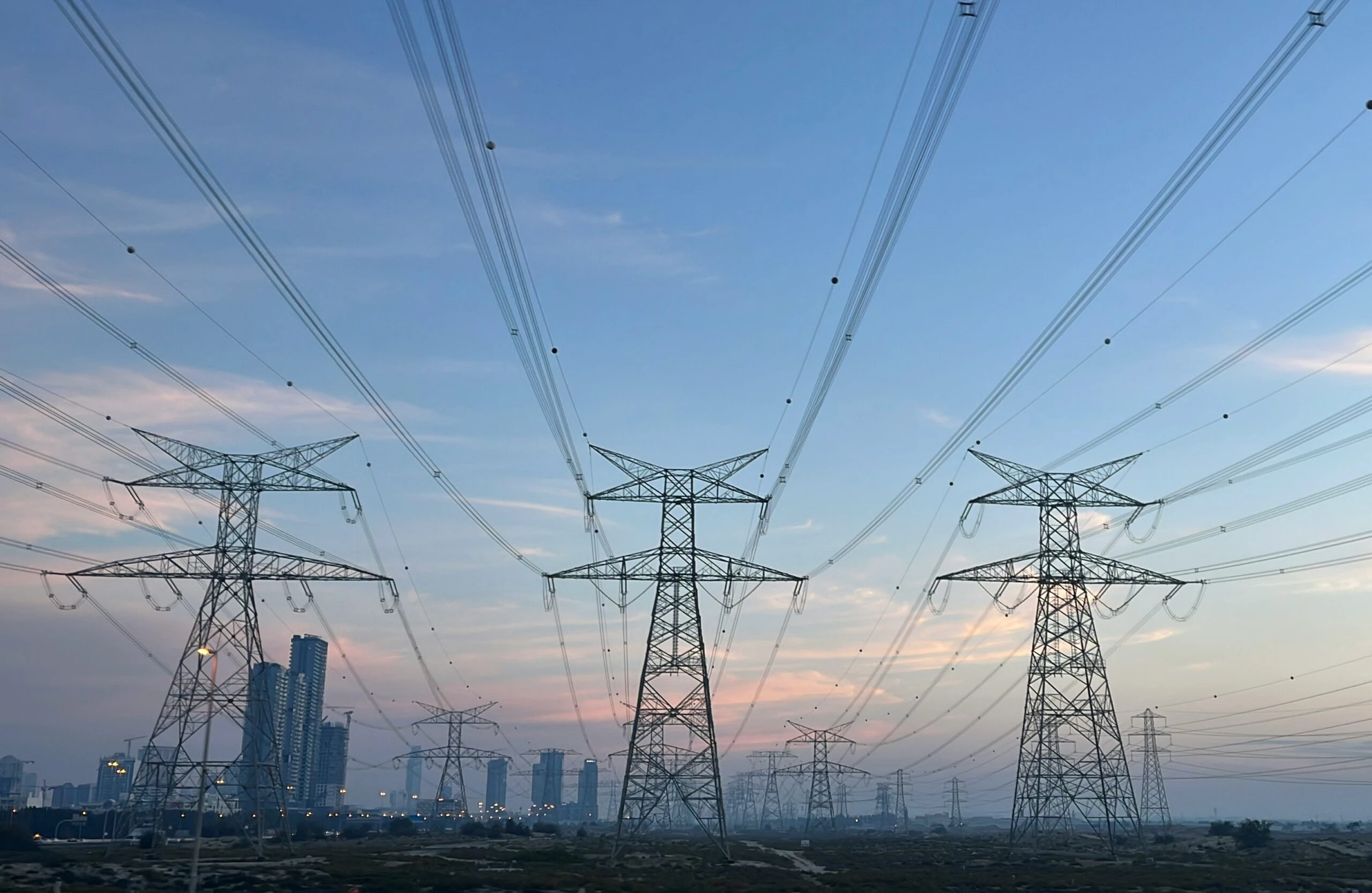
Electricity deserves particular attention because almost every other critical infrastructure sector depends upon it. Telecommunications require power. Digital financial systems require electricity. Railways increasingly depend on electrification. Hospitals, water systems, government facilities, military installations and defence factories all require reliable energy. Data centres and cloud infrastructure cannot operate for extended periods without electricity. A serious grid disruption can therefore migrate rapidly from the energy sector into transportation, communications, finance, healthcare, industrial production and national security.
This cascading potential makes electricity infrastructure particularly attractive to hostile actors. The strategic effect of an attack does not necessarily correspond to the physical scale of the initial damage. A small number of failures occurring at carefully selected points can force operators to rebalance networks, interrupt industrial production or impose emergency measures. The deeper Europe moves toward electrification, digitalisation and renewable-energy integration, the more important grid resilience will become.
Europe’s energy transition therefore possesses a security dimension that cannot be separated from climate or industrial policy. A more electrified European economy can reduce dependence on imported fossil fuels and strengthen strategic autonomy, but only if the underlying grid is resilient. Otherwise, Europe could replace one form of energy vulnerability with another. Energy security in the coming decade will consequently depend not only on where electricity is generated but on whether the networks carrying it can continue functioning under deliberate hostile pressure.
The Cyber and Physical Threats Are Converging
The distinction between cyberattacks and physical sabotage is also becoming increasingly artificial. Europe’s critical infrastructure is being digitalised at extraordinary speed. Smart grids, automated industrial systems, digitally managed railways and networked logistics platforms improve efficiency, but they simultaneously expand the number of potential points through which hostile actors can interfere with physical systems.
Artificial intelligence could intensify this competition. AI can assist defenders in detecting abnormal network behaviour, identifying suspicious activity and processing enormous volumes of security data. The same technologies can potentially help attackers conduct reconnaissance, automate vulnerability searches, create more sophisticated social-engineering operations and identify weaknesses across complex digital networks. Critical-infrastructure protection is consequently becoming a technological race in which both sides can use increasingly powerful tools.
Future hybrid operations may combine these methods. Cyber reconnaissance could identify vulnerable infrastructure before a physical operation. Drones could survey facilities or monitor security procedures. Physical access could facilitate penetration of digital systems. Disinformation could then amplify public fear after an outage or attack. Europe should therefore prepare for coordinated operations crossing several domains simultaneously rather than assuming that cyber, physical and information threats will arrive independently.
Drones Have Added Another Vulnerability
The rapid proliferation of inexpensive unmanned systems has further complicated European infrastructure security. Traditional European air defence was designed primarily to detect and engage military aircraft and missiles approaching from outside national territory. Small drones create a fundamentally different challenge. They can fly at low altitude, operate relatively slowly, exploit urban environments and potentially be launched from within the country being targeted.
Their strategic value extends beyond their ability to carry explosives. A drone can conduct reconnaissance over military facilities, electricity infrastructure, ports or airports. It can monitor security procedures, collect imagery or force civilian aviation authorities to suspend operations simply by entering restricted airspace. Even an unarmed drone can therefore generate significant economic costs.
The economics again favour the attacker. The price of a commercially available or modified drone can be negligible compared with the cost of closing a major European airport, mobilising police units or deploying sophisticated detection systems. Europe consequently needs counter-drone capabilities that are financially sustainable as well as technologically effective. Using extraordinarily expensive interception systems against inexpensive drones would reproduce the same asymmetric problem on a larger scale.
Europe Cannot Militarise Every Vulnerable Site
Calls for stronger physical protection are understandable, but Europe cannot place soldiers around every electricity substation, railway junction, telecommunications facility, port and industrial site. Nor would doing so necessarily produce effective security. Critical infrastructure is simply too geographically dispersed.
The more realistic approach is layered protection combined with redundancy. The most strategically important sites require stronger surveillance, access controls and counter-drone capabilities. Intelligence agencies need rapid mechanisms for sharing information about suspicious activities. Police forces need clear authorities and specialised capabilities for dealing with emerging threats. Infrastructure operators need emergency procedures allowing essential services to continue when individual components fail.
Redundancy should become a central concept in European infrastructure strategy. If one electricity connection is disrupted, alternative capacity should exist. If a communications cable is damaged, traffic should be rerouted. If a railway corridor becomes unavailable, military and civilian logistics should possess alternative routes. If digital management systems fail, essential operations should retain fallback capabilities. The purpose is to deny attackers the ability to transform tactical disruption into strategic paralysis.
Private Companies Are Becoming Part of European Security
A particularly difficult challenge is that much of the infrastructure Europe needs to protect is owned or operated by private companies. Telecommunications networks, energy installations, ports, logistics systems, data centres and industrial facilities frequently sit outside direct government control. Yet their continued operation can be essential to national defence and societal stability.
The private sector has therefore become part of Europe’s security architecture whether companies intended to assume that role or not. Governments need information from infrastructure operators about vulnerabilities and operational dependencies. Companies, in turn, require access to threat intelligence that was traditionally concentrated within state institutions. Security exercises increasingly need to include corporate operators alongside police, intelligence services, civil-protection authorities and armed forces.
This does not mean militarising private industry. It means recognising that commercial continuity has become a strategic capability. A logistics company capable of maintaining transportation during a crisis, an energy operator capable of rapidly restoring damaged infrastructure or a telecommunications provider capable of rerouting networks can contribute to national resilience almost as directly as some traditional security institutions.
Europe’s Institutional Fragmentation Remains a Weakness
The European Union has developed stronger rules for cybersecurity and critical-infrastructure resilience, but Europe continues to face the structural difficulty of protecting cross-border systems through largely national security institutions. Electricity networks cross borders. Telecommunications cables connect multiple jurisdictions. Railway corridors run through several countries. Supply chains connect ports in Western Europe to military and industrial centres hundreds or thousands of kilometres away.
Hybrid operations can exploit differences in national legislation, intelligence capabilities, policing structures and political threat perceptions. One country may interpret an incident as a national-security matter while another initially treats a similar event as ordinary criminal activity. Differences in authorities and procedures can slow cross-border responses precisely when speed is essential.
Europe therefore needs operational integration in addition to common regulations. Member states should develop mechanisms for rapidly exchanging threat information, forensic findings and infrastructure data during crises. Joint exercises should test how national institutions cooperate when several countries experience simultaneous disruption. The objective should be to prevent national borders from becoming institutional seams that hostile actors can exploit.
Attribution and Deterrence Must Improve
Resilience can reduce the consequences of attacks, but deterrence also requires credible attribution. If hostile actors believe sabotage can be conducted indefinitely without political consequences, the incentive to continue increases. Europe therefore needs stronger capabilities for identifying the networks behind hybrid operations through intelligence collection, cyber forensics, law-enforcement cooperation, financial investigation and surveillance.
Attribution must nevertheless remain evidence-based. Premature accusations can undermine credibility and create unnecessary escalation. The strategic requirement is not instantaneous attribution but faster and more coordinated attribution once sufficient evidence exists. European governments need common mechanisms for deciding when the evidentiary threshold for collective political action has been reached.
Once responsibility is established, consequences should be predictable. Not every act of sabotage warrants military retaliation, and treating every hybrid incident as an act of war could itself produce dangerous escalation. But avoiding military escalation should not mean accepting hostile activity without consequences. Diplomatic expulsions, sanctions, asset freezes, criminal indictments, cyber responses and restrictions on entities involved in hostile operations can all contribute to deterrence.
The purpose should be cumulative. An adversary contemplating repeated hybrid operations should understand that each incident will add economic, diplomatic and political costs. Europe’s deterrence strategy must therefore occupy the same grey zone in which hostile actors operate, providing proportionate responses without automatically escalating toward conventional conflict.
NATO and the European Union Need Complementary Roles
The scale of the challenge also requires a clearer division of labour between NATO and the European Union. NATO possesses military planning, collective-defence mechanisms and significant intelligence capabilities. The EU possesses regulatory authority and powerful instruments in energy, transportation, telecommunications, cybersecurity, industrial policy and economic sanctions. Critical-infrastructure security sits precisely at the intersection of these competencies.
Neither institution can address the threat alone. NATO needs to understand which civilian infrastructure is indispensable for reinforcement and military mobility. The EU needs to ensure that infrastructure operators meet resilience standards and that member states develop adequate emergency capabilities. National governments remain responsible for policing and domestic security, while private companies operate much of the infrastructure itself.
The challenge is therefore one of integration rather than institutional competition. European resilience will depend on whether these actors can operate as a coherent system before a major crisis occurs.
The Rear Area No Longer Exists
The most important conceptual adjustment may be abandoning the assumption that European security contains a clearly protected rear area. A port on the North Sea can be essential to NATO reinforcement. A German railway junction can become strategically important because military equipment travels through it. A Scandinavian data centre can support communications across the alliance. An electricity network far from NATO’s eastern frontier can sustain defence industries supplying weapons and ammunition.
The strategic geography of Europe has therefore expanded. Defending European territory no longer means protecting borders alone. It means protecting the networks connecting the continent.
This has significant implications for defence planning. Europe’s rearmament programmes will produce limited strategic benefit if factories cannot obtain electricity, military equipment cannot reach eastern Europe or communications systems cannot operate during a crisis. Infrastructure resilience should consequently be treated as part of defence investment rather than as a separate civilian policy problem.
From Infrastructure Protection to Societal Resilience
The final dimension is societal. Hybrid warfare frequently seeks to transform limited physical disruption into wider psychological and political effects. A blackout accompanied by coordinated misinformation can generate more fear than the blackout alone. An unexplained drone incident can create rumours about foreign attacks before authorities have established basic facts. Social media allows speculation to spread almost instantly.
Governments therefore need communication strategies capable of operating during uncertainty. They should provide information quickly without claiming facts that have not been established. Public trust becomes a security asset because societies that trust institutions are more difficult to destabilise through rumours and manipulated information.
Resilience also requires preparation beyond central governments. Municipalities need emergency plans, hospitals require backup systems, companies need business-continuity procedures and essential public services must be capable of functioning temporarily under degraded conditions. European societies cannot be made invulnerable, but they can become substantially harder to destabilise.
Europe has spent the years since Russia’s full-scale invasion of Ukraine rebuilding conventional military power. Defence spending has increased, ammunition production is expanding and NATO’s eastern flank has been strengthened. These developments remain indispensable. Yet Europe’s adversaries do not necessarily need to challenge the continent where its military strength is greatest. They can search for vulnerabilities in the civilian systems on which that military power depends.
Electricity grids, telecommunications networks, railways, ports, airports, data centres and undersea cables now constitute an interconnected strategic architecture. Disrupting selected elements can impose economic costs, complicate military logistics, generate political pressure and weaken public confidence without requiring a conventional invasion. This makes critical infrastructure one of the central security challenges facing Europe during the remainder of the decade.
For The European Centre for Strategic Studies and Policy (ECSAP), the strategic conclusion is that European deterrence must evolve from the defence of territory toward the defence of functionality. Military power remains essential, but deterrence will increasingly depend on whether European societies can continue operating when infrastructure is attacked, communications are disrupted and attribution remains uncertain. Europe needs stronger redundancy, counter-drone capabilities, cyber defence, intelligence cooperation, public-private coordination and mechanisms for imposing credible costs on actors responsible for hostile operations.
The next major test of European security may therefore look very different from the scenarios for which the continent prepared during the Cold War. It may arrive without an invasion, without a declaration of war and initially without certainty about who is responsible. The decisive question will not simply be whether Europe can prevent every attack. No modern society can. The decisive question will be whether an adversary can disrupt essential European systems sufficiently to alter political decisions or weaken collective defence.
If Europe can absorb attacks, restore essential services rapidly and impose consequences on those responsible, hybrid operations will lose much of their strategic value. If it cannot, the continent may discover that its most important security vulnerabilities are not located at its borders at all, but inside the infrastructure networks that make European power possible.