The European Centre for Strategic Studies and Policy (ECSAP)
Executive Summary
Europe’s security debate has entered a fundamentally new phase in 2026. The central question is no longer whether European governments should spend more on defence. That political argument has largely been overtaken by events. The more difficult question is whether increased expenditure can be transformed rapidly enough into military forces, weapons production, air defence, logistical infrastructure and technological capabilities capable of sustaining a major security crisis.
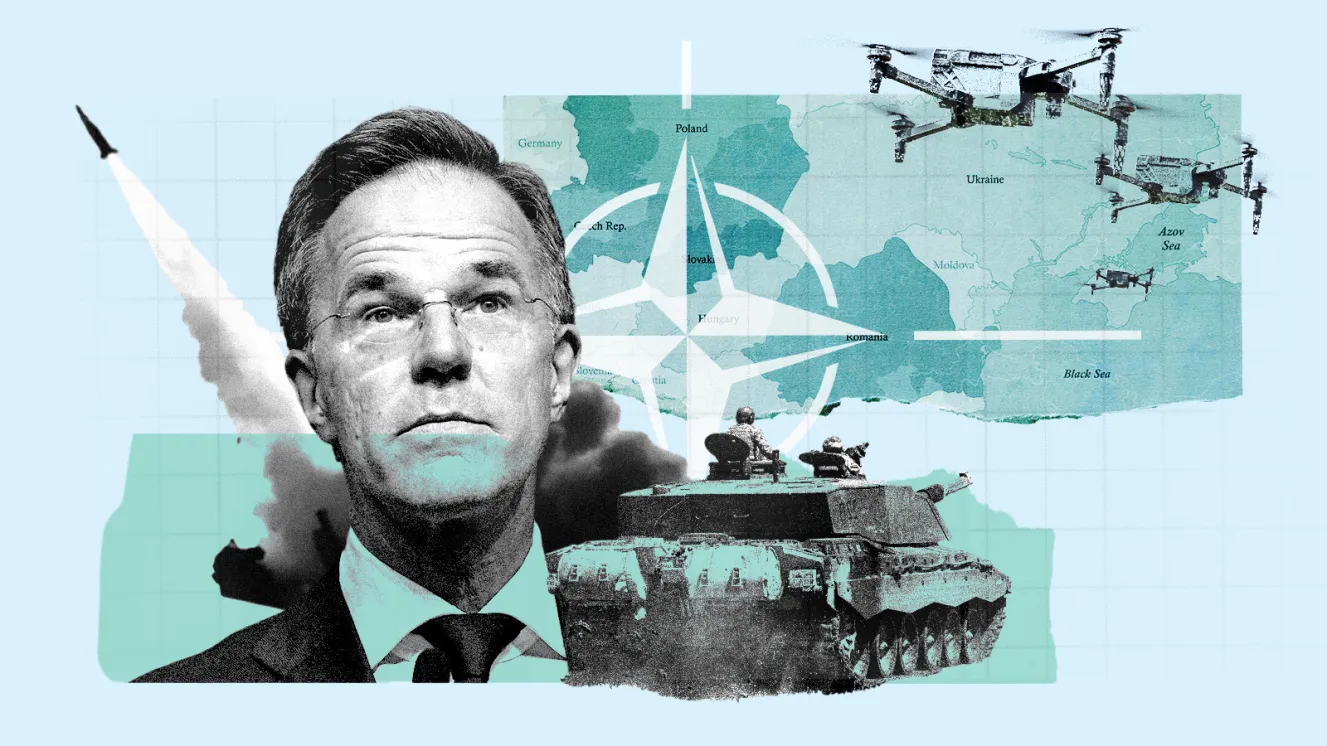
Russia’s continuing war against Ukraine remains the immediate driver of this transformation, but European strategic concerns now extend beyond the Ukrainian battlefield. Hybrid operations, drone incursions, cyber threats, sabotage risks and growing pressure on critical infrastructure have reinforced fears that the distinction between peace and conflict is becoming increasingly blurred. European security planners must therefore prepare simultaneously for conventional military confrontation and persistent grey-zone pressure below the threshold of war.
The European Union’s Defence Readiness Roadmap 2030 reflects the scale of this shift. It identifies major capability gaps and establishes flagship projects including the European Drone Defence Initiative, Eastern Flank Watch, European Air Shield and European Space Shield. The roadmap also seeks to increase joint procurement, strengthen Europe’s defence industrial base and establish an EU-wide military mobility area capable of moving troops and heavy equipment rapidly across the continent.
Yet Europe’s greatest strategic problem is increasingly implementation rather than ambition.
Money must become production capacity. Procurement contracts must become deployable weapons. Roads, bridges, ports and railways must become military corridors. National armed forces must become interoperable formations. Civilian infrastructure must become resilient enough to continue operating during sustained disruption.
This paper argues that the period between 2026 and 2030 will represent a critical test of European strategic credibility. Europe possesses the financial resources, technological capabilities and industrial foundations required to strengthen its defence significantly. What remains uncertain is whether fragmented national decision-making and slow procurement systems can deliver capabilities at the speed demanded by the changing security environment.
Europe’s next security challenge is therefore not simply rearmament.
Introduction
For most of the post-Cold War period, European defence policy was built around an assumption that major interstate war on the continent had become increasingly unlikely. Armed forces became smaller, ammunition inventories declined and defence industries adjusted to relatively limited peacetime demand. Many governments prioritised expeditionary operations, crisis management and counterterrorism rather than preparing for prolonged high-intensity warfare in Europe.
Russia’s full-scale invasion of Ukraine shattered that assumption. The war demonstrated the extraordinary consumption rates associated with modern industrial warfare. Artillery ammunition, air-defence missiles, drones, armoured vehicles, electronic warfare equipment and spare parts are required in quantities that many European defence industries were not configured to produce rapidly.
Four years later, the implications extend considerably beyond Ukraine. Europe is confronting the possibility that the continent may need to assume substantially greater responsibility for its own defence while simultaneously maintaining long-term support for Kyiv. This requires a transformation extending beyond defence budgets.
The challenge begins with military production. European governments can announce higher defence expenditure relatively quickly. Expanding factories, recruiting skilled workers, establishing supply chains and manufacturing sophisticated weapons at scale takes considerably longer. The strategic value of defence spending therefore depends upon whether financial commitments can generate actual industrial output.
Air and missile defence has become particularly urgent. Ukraine has demonstrated how drones, cruise missiles and ballistic missiles can place continuous pressure on civilian infrastructure and military installations. European cities, ports, military bases, energy facilities and logistics centres could face similar threats during a future confrontation.
This explains the increasing emphasis on a European Air Shield and drone-defence capabilities. Europe’s security can no longer rely primarily on defending conventional borders. It must protect the infrastructure located hundreds of kilometres behind those borders.
The rise of inexpensive drones further complicates the calculation. A relatively cheap unmanned aircraft can force defenders to deploy surveillance systems, electronic warfare or considerably more expensive interceptors. Defence economics therefore becomes central to military readiness. Europe needs not merely more air defence but systems capable of defeating large numbers of inexpensive threats without exhausting limited stocks of sophisticated missiles.
The eastern flank represents another major challenge. Countries bordering Russia and Belarus occupy the most exposed geographical position, but their defence cannot be treated as an exclusively regional responsibility. Reinforcing the eastern frontier during a crisis would require moving forces and equipment from across Europe.
That makes transportation infrastructure part of deterrence. Railways capable of carrying heavy military vehicles, bridges able to support armoured formations, ports capable of receiving equipment and harmonised border procedures all influence how quickly Europe could respond to a crisis.
The European Union’s effort to establish a military mobility area by the end of 2027 reflects recognition of this problem. The objective is effectively to reduce the administrative and infrastructure barriers preventing military forces from moving rapidly across the Union.
But military mobility exposes a broader weakness. Europe possesses powerful national armed forces, yet geography, bureaucracy and different procurement systems can limit their collective effectiveness. A tank stationed in Western Europe contributes little to deterrence on the eastern flank if transporting it requires excessive administrative procedures or infrastructure cannot support its movement.
Readiness therefore depends upon integration. The same principle applies to defence manufacturing. European countries continue to operate numerous weapons platforms and procurement systems. This fragmentation can increase costs, complicate maintenance and prevent manufacturers from achieving the production scale available to larger integrated defence markets.
Joint procurement is therefore becoming a strategic objective rather than simply an economic preference.
The Defence Readiness Roadmap seeks greater collaborative procurement and increased reliance on Europe’s own defence technological and industrial base. The underlying objective is straightforward: European defence spending should generate European production capacity capable of supporting sustained military operations.
The challenge is not protectionism for its own sake. Europe will continue relying on defence cooperation with the United States and other allies. The strategic objective is ensuring that European forces are not excessively dependent on external production for capabilities that could become difficult to obtain during a major international crisis.
Space has simultaneously become another dimension of European readiness. Military communications, navigation, intelligence and surveillance increasingly depend upon satellites. Protecting space infrastructure and ensuring access to secure communications have consequently become essential to modern defence. Europe’s development of the IRIS² secure connectivity constellation and the planned European Space Shield demonstrate how rapidly the boundary between civilian technological infrastructure and military security is disappearing.
Hybrid threats complicate this picture further. A confrontation with Europe would not necessarily begin with a conventional invasion. Cyberattacks could target government institutions or energy infrastructure. Sabotage could disrupt transport networks. Drones could test airspace defences. Undersea cables could face interference. Disinformation campaigns could attempt to undermine public confidence and political cohesion.
The objective of such operations may be less about physical destruction than political uncertainty. An adversary capable of forcing European governments to debate whether an incident constitutes an accident, criminal act or hostile state operation gains strategic space without crossing the threshold that would automatically trigger a conventional response.\
Military readiness cannot exist independently of civilian resilience. Modern armed forces depend upon commercial telecommunications, transportation networks, electricity grids, digital infrastructure and industrial supply chains. A society unable to maintain these systems during crisis will struggle to sustain military operations regardless of defence spending.
Europe’s emerging defence strategy therefore increasingly connects civilian preparedness with conventional deterrence.
The transformation underway should not be interpreted as preparation for inevitable war. The purpose of stronger readiness is precisely the opposite.
Credible defence capacity raises the potential cost of aggression and reduces the possibility that an adversary believes Europe can be intimidated through military or hybrid pressure.
Deterrence works most effectively when military capability is sufficiently visible and credible that it does not need to be used.
This is why 2030 has become such an important horizon. European institutions have established ambitious milestones for closing capability gaps, expanding joint procurement and creating new air, drone, space and eastern-flank defence systems. Whether these objectives are achieved will influence the credibility of European deterrence for years beyond the current Ukraine war.
Europe’s Drone Defence Problem: Why Cheap Weapons Are Challenging Billion-Euro Defence Systems
Europe’s effort to achieve genuine defence readiness by 2030 is confronting a technological problem that would have seemed secondary only a few years ago: the rapid proliferation of inexpensive drones. The war in Ukraine has demonstrated that relatively cheap unmanned systems can conduct reconnaissance, attack military positions, threaten infrastructure and force an opponent to devote significant resources to air defence. For European security planners, the implications extend well beyond the Ukrainian battlefield. The European Commission’s 2026 counter-drone plan explicitly identifies hostile overflights, airspace violations, airport disruption and threats to critical infrastructure and external borders as growing security challenges.
The fundamental problem is economic as much as military. Traditional European air-defence systems were largely developed to confront aircraft, helicopters, cruise missiles and ballistic missiles—threats sufficiently valuable and sophisticated to justify the use of expensive interceptors. Mass-produced drones change that equation. When an inexpensive unmanned aircraft can threaten a strategically valuable target, using a sophisticated missile to destroy every incoming drone may be tactically effective but economically unsustainable during a prolonged confrontation. Europe therefore faces what could become one of the defining defence challenges of the decade: how to build an interception architecture in which the cost of defence does not dramatically exceed the cost of attack.
Ukraine has provided Europe with a powerful demonstration of how quickly drone warfare evolves. Unmanned systems are increasingly integrated with electronic warfare, battlefield surveillance, targeting networks and conventional weapons. Technologies that appear effective for several months can rapidly lose their advantage once countermeasures are developed. This cycle of innovation and counter-innovation means that Europe’s traditional procurement model—where military platforms can require many years between requirement, development, acquisition and deployment—may be poorly suited to a technology environment evolving on a much shorter timeline.
European institutions have begun adapting to this reality. In June 2026, the European Defence Agency organised its first EU-wide advanced military drone pilot course in Latvia, involving personnel from 14 member states and focusing on strike and interception operations. The Agency said the initiative was intended to develop into a broader European training network and explicitly drew lessons from Ukraine’s battlefield experience. The significance is greater than the training exercise itself: European defence institutions are beginning to treat drone operations as a basic military capability rather than a specialised technological niche.
Counter-drone defence is undergoing a similar transformation. In April 2026, the European Defence Agency sought information from industry on technologies capable of detecting, tracking, classifying, identifying and neutralising unmanned aircraft, including command-and-control systems for both military and civilian missions. The European Commission’s broader counter-drone plan also emphasises AI-assisted detection, technological development, faster industrial production and coordinated European response mechanisms. These initiatives suggest that Europe increasingly understands that no single interceptor or sensor will solve the drone problem.
Instead, effective defence will require multiple layers. Radar may detect some threats, but smaller drones can require different sensors. Electronic warfare can interfere with communications or navigation in some circumstances, while other systems may require physical interception. Artificial intelligence can help classify large numbers of objects and distinguish potential threats from legitimate civilian activity. Conventional air-defence missiles will remain necessary against sophisticated targets, but relying exclusively on them would create enormous financial and logistical pressure. Europe’s future counter-drone architecture will therefore need to combine detection, electronic warfare, inexpensive interceptors, conventional air defence and increasingly autonomous technologies.
This requirement has profound industrial consequences. Europe does not merely need advanced counter-drone prototypes; it needs systems that can be manufactured in large quantities and replaced rapidly. The distinction is critical. A military can possess some of the world’s most sophisticated equipment and still face vulnerability if that equipment exists only in limited numbers. The Ukraine war has repeatedly reinforced the importance of quantity alongside technological sophistication. In a prolonged confrontation, production capacity becomes part of operational capability.
This is precisely why the European Commission has incorporated a European Drone Defence Initiative into its Defence Readiness Roadmap 2030, alongside Eastern Flank Watch, a European Air Shield and a European Space Shield. The roadmap’s broader objective is to close capability gaps and prepare European forces for crises including high-intensity conflict. Counter-drone capability is therefore being embedded within Europe’s wider defence architecture rather than treated as an isolated response to recent incidents.
Yet defending Europe against drones presents a challenge that is fundamentally different from defending a battlefield. The continent contains thousands of potential targets: military bases, nuclear facilities, electricity substations, airports, ports, government buildings, telecommunications infrastructure, ammunition facilities and defence factories. Providing permanent military-grade protection to every critical site would be prohibitively expensive. European governments will therefore have to decide which infrastructure requires continuous protection, which can rely on rapidly deployable systems and which risks can be mitigated through redundancy and resilience rather than interception alone.
Civilian airspace makes the challenge even more complicated. Europe’s skies contain dense commercial aviation networks, general aviation and legitimate drone operations. Counter-drone technologies deployed around airports and cities must therefore identify hostile systems without creating unacceptable risks to civilian activity. Technologies developed for frontline conditions cannot simply be transferred unchanged into densely populated European environments. Regulation, policing, intelligence and military defence will need to operate within the same counter-drone architecture.
The threat also extends far beyond NATO’s eastern frontier. A hostile drone does not need to carry explosives to produce strategic disruption. Repeated unidentified flights near airports, military installations or energy infrastructure can force temporary closures, generate public anxiety and require expensive security responses. An adversary could therefore exploit drones as instruments of hybrid pressure, deliberately remaining below the threshold of conventional military confrontation. The objective might be less to destroy infrastructure than to demonstrate vulnerability and impose continuous security costs.
This creates an attribution problem. A missile launch can often provide relatively clear indicators of state responsibility. A small drone appearing near critical infrastructure may be much harder to attribute quickly. It could involve espionage, criminal activity, political disruption or a state-directed hybrid operation. European authorities may therefore face situations in which they must respond immediately to a physical threat while remaining uncertain about who is responsible. This ambiguity is itself strategically valuable to hostile actors.
Europe’s response will consequently require cooperation extending beyond defence ministries. Police agencies, intelligence services, border authorities, airport operators, energy companies and military organisations will increasingly need mechanisms for sharing information and coordinating responses. The Commission’s 2026 plan reflects this dual civilian-military character by focusing on internal security while complementing defence initiatives.
There is also a larger technological competition underway. Autonomous systems are becoming increasingly important across land, air and maritime warfare. The European Defence Agency’s Action Plan on Autonomous Systems seeks to accelerate capabilities including cooperative autonomous systems and manned-unmanned teaming, drawing partly on lessons from Ukraine. Europe therefore faces two simultaneous requirements: it must protect itself against hostile unmanned systems while ensuring that its own armed forces do not fall behind in the same technological revolution.
The strategic challenge is ultimately one of adaptation speed. Europe’s defence institutions were designed largely around acquiring complex platforms expected to remain operational for decades. Drone warfare increasingly rewards rapid experimentation, short development cycles and continuous modification. A successful European model will have to combine the reliability and accountability expected from traditional defence procurement with an innovation culture capable of fielding improvements in months rather than years.
Europe’s drone problem therefore represents something larger than a new category of air threat. It exposes a fundamental question about whether European defence institutions can adapt quickly enough to the changing economics of warfare. The continent is preparing to mobilise enormous financial resources for defence, including mechanisms under the broader Readiness 2030 agenda. But additional money will provide limited strategic advantage if Europe continues purchasing expensive systems faster than adversaries can produce inexpensive methods of challenging them.
The lesson emerging from Ukraine is that technological superiority alone is insufficient. Modern defence increasingly requires a combination of sophistication, affordability, production scale and speed of adaptation. Europe’s ability to build that combination will determine whether its future air-defence architecture can withstand not merely individual attacks but sustained campaigns involving hundreds or thousands of unmanned systems.
The drone revolution is therefore becoming an early test of Europe’s wider readiness ambitions. If Europe can develop scalable detection networks, affordable countermeasures, rapid industrial production and common operational standards, it will have taken an important step toward credible defence by 2030. If it cannot, relatively inexpensive weapons may continue exposing vulnerabilities in some of the world’s most expensive defence systems.
And that leads directly to Europe’s next readiness problem: even if the weapons and forces exist, can Europe move them rapidly enough to the eastern frontier when a crisis begins? The next section should therefore examine “Europe’s Military Mobility Gap: Why Roads, Railways, Bridges and Ports Have Become Part of Deterrence.”
Europe’s Military Mobility Gap: Why Roads, Railways, Bridges and Ports Have Become Part of Deterrence
Europe can purchase more tanks, expand ammunition production and deploy sophisticated air-defence systems, but these capabilities have limited strategic value if they cannot reach the location of a crisis quickly enough. This reality has pushed an issue once regarded largely as military logistics to the centre of Europe’s security debate: military mobility. The European Union is now seeking to establish an EU-wide military mobility area by 2027, designed to allow troops, weapons and heavy equipment to move across borders with fewer administrative and physical obstacles. The objective has increasingly been described as creating a form of “Military Schengen.”
The problem appears simple but is strategically profound. Europe possesses extensive transport infrastructure, yet civilian connectivity does not automatically translate into military mobility. Heavy armoured vehicles impose very different requirements on bridges, railway platforms, tunnels and roads than civilian traffic. Military convoys require secure routes, specialised loading facilities, fuel supplies and coordination between multiple authorities. A railway network capable of transporting millions of passengers efficiently may still lack sufficient rolling stock or infrastructure for the rapid movement of large quantities of heavy military equipment.
The European Defence Agency’s March 2026 assessment of EU rail capacity illustrates the problem. It identified gaps involving infrastructure capacity, interoperability, available rolling stock, regulatory harmonisation and crisis-response planning. The finding carries significant strategic implications: Europe’s military mobility challenge is not simply a matter of building additional infrastructure but of ensuring that transport networks can operate as an integrated system under crisis conditions.
Geography makes this particularly important on Europe’s eastern flank. In a serious confrontation, forces stationed in Western and Central Europe could need to move rapidly toward Poland, the Baltic region or other exposed areas. The credibility of reinforcement therefore depends partly upon the speed at which equipment can cross the continent. Deterrence is weakened if an adversary believes political or logistical obstacles could delay European reinforcement during the critical opening period of a crisis.
The Baltic region illustrates this vulnerability particularly clearly. The European Defence Agency has previously noted that the Baltic states have limited major road connectivity with the rest of the EU through Poland, while the strategic Rail Baltica connection remains under development. Such geographic bottlenecks mean that a relatively small number of transport corridors can acquire enormous military importance.
This changes how Europe must think about infrastructure. A bridge is no longer simply part of transportation policy. A railway terminal may also be part of defence planning. Ports handling commercial cargo during peacetime could become essential entry points for military reinforcement during a crisis. Airports, inland waterways, tunnels and highways increasingly possess dual civilian and military significance.
Infrastructure investment therefore becomes an element of deterrence.
An adversary calculating Europe’s military strength does not evaluate only the number of brigades or aircraft available. It must also consider how rapidly those forces can be concentrated. If Europe demonstrates that reinforcements can move efficiently from ports and bases in Western Europe toward the eastern flank, the credibility of collective defence increases without a shot being fired.
Yet infrastructure represents only one part of the problem. European borders remain administrative borders even inside an integrated political and economic union. Moving civilian goods across the Single Market is relatively straightforward; moving military equipment can involve different national authorisations, customs procedures and regulatory requirements. These delays may appear manageable during exercises or peacetime deployments but could become strategically dangerous during a rapidly developing crisis.
The European Commission’s military mobility measures seek to address precisely this weakness. The proposed framework includes a single permission procedure for military movements across all 27 EU countries, emergency fast-track mechanisms, priority access to strategic infrastructure and greater pooling of transportation and logistics capabilities. It also calls for closer EU-NATO coordination.
Digitalisation will be another important component. The European Defence Agency has been working on digital systems for diplomatic clearances and customs procedures, including platforms designed to simplify military transport permissions. The objective is to replace fragmented administrative processes with systems capable of processing movements more rapidly across land, air and sea.
But bureaucracy is only part of the challenge. Military mobility requires physical transport capacity that cannot be created instantly during an emergency. Heavy equipment requires specialised railway wagons. Large deployments require sufficient locomotives, trucks, transport aircraft and ships. Ports require loading capacity. Fuel must be available along reinforcement routes. Maintenance facilities must support vehicles travelling long distances.
This creates an important distinction between infrastructure existing on paper and infrastructure available during crisis.
Europe’s civilian transportation networks are already heavily utilised by commercial activity. During a major security emergency, governments could face difficult decisions over priority access to railways, ports and highways. Military movements might compete with civilian freight, passenger transport and emergency evacuation requirements. Planning for military mobility must therefore address how civilian and military needs will be prioritised before a crisis occurs.
The problem becomes even more complex when infrastructure itself is considered a potential target.
Rail junctions, bridges, ports and logistics hubs are attractive targets for sabotage, cyberattack and hybrid operations precisely because of their importance to reinforcement. An adversary does not necessarily need to destroy an entire transportation network. Disrupting several strategically important nodes could generate disproportionate delays.
Military mobility must therefore be accompanied by infrastructure resilience.
Europe needs alternative routes capable of absorbing traffic if primary corridors are damaged. Ports require backup facilities. Railway networks need redundancy. Bridges and tunnels with exceptional strategic importance require appropriate protection and monitoring. Cybersecurity must protect the digital systems controlling transportation networks.
The war in Ukraine has made these considerations far more urgent. It has demonstrated that logistics is not merely a supporting function of warfare but one of its central determinants. Weapons have little battlefield value without ammunition, fuel, maintenance and replacement parts. Modern armed forces therefore depend upon enormous logistical networks extending hundreds or thousands of kilometres behind the frontline.
For Europe, this means that NATO’s eastern frontier cannot be defended solely at the eastern frontier. Its logistical depth begins much farther west.
A port in the Netherlands, a railway junction in Germany, a bridge in Poland and a logistics facility in the Baltic region may all form part of the same reinforcement chain. European defence consequently requires governments to think about the continent as a single strategic space rather than a collection of separate national transportation systems.
This is also where cooperation between the European Union and NATO becomes especially important. NATO provides the core military framework for collective defence, while the European Union possesses regulatory, infrastructure and financing instruments that can remove many of the obstacles affecting military movement. The Commission’s current military mobility initiative has accordingly been developed in close coordination with NATO.
The broader strategic lesson is that Europe’s rearmament cannot be measured exclusively through defence budgets or weapons procurement. A country can purchase advanced military equipment while remaining operationally constrained if the infrastructure required to deploy that equipment is inadequate. Europe’s defence readiness must therefore be evaluated as a system in which military forces, transportation networks, industrial capacity and civilian infrastructure operate together.
By 2027, Europe aims to establish a more integrated military mobility area. By 2030, the broader Readiness agenda seeks substantially stronger European defence capability. Whether those objectives become credible will depend partly upon developments far removed from traditional images of military power.
Europe’s Defence Industrial Test: Can the Continent Sustain a Long War?
Europe’s final and perhaps most difficult readiness challenge lies behind the battlefield. Even if European governments succeed in strengthening air defence, developing counter-drone capabilities and improving military mobility, those achievements will have limited value unless the continent can continuously produce the weapons, ammunition and equipment required for prolonged conflict. The war in Ukraine has demonstrated that modern high-intensity warfare is not simply a contest between armies. It is also a contest between industrial systems. The ability to replace losses, replenish ammunition and continuously introduce new technologies can determine military endurance as decisively as the number of forces available when a conflict begins.
For decades, much of Europe’s defence industry operated according to peacetime assumptions. Governments purchased relatively limited quantities of sophisticated weapons through long procurement cycles, while manufacturers maintained production capacity aligned with predictable demand. Large stockpiles and extensive reserve manufacturing capacity appeared increasingly unnecessary after the Cold War. Ukraine exposed the vulnerability of that model. A prolonged conventional war consumes artillery shells, drones, missiles, spare parts and air-defence interceptors at rates dramatically different from normal peacetime procurement.
The resulting challenge is not solved simply by increasing defence budgets. Governments can allocate additional billions relatively quickly, but factories cannot expand at the same speed. New production lines require machinery, specialised components, secure supply chains and trained workers. Missile production may depend on propulsion systems, electronics and explosives sourced through complicated industrial networks. Even when political demand exists, physical production capacity imposes limits on how quickly additional military equipment can be delivered.
This creates a dangerous gap between financial rearmament and physical rearmament. Europe may become wealthier in defence commitments before it becomes substantially stronger in deployable capability. The central measure of readiness must therefore shift from how much governments spend to how rapidly European industry can convert expenditure into operational capacity.
Fragmentation remains another structural weakness. European armed forces operate numerous different weapons platforms, ammunition types and national procurement systems. Diversity can provide technological advantages, but excessive fragmentation limits economies of scale and complicates maintenance and logistics. During prolonged conflict, standardisation becomes strategically valuable because equipment, ammunition and spare parts must move efficiently between countries and military formations.
Joint European procurement therefore carries strategic importance beyond reducing costs. Larger common orders provide manufacturers with the certainty required to invest in additional production capacity. A defence company is more likely to construct a new factory or expand a production line when governments provide predictable multi-year contracts rather than short-term orders that may disappear after a political or security crisis passes.
The defence industrial challenge also extends deep into civilian supply chains. Modern military equipment depends heavily on semiconductors, advanced electronics, specialised metals, chemicals, machine tools and software. Some of these inputs originate outside Europe or depend on globally concentrated suppliers. A major geopolitical crisis could therefore disrupt defence production precisely when demand becomes most urgent.
Economic security and military security are consequently converging. Europe cannot claim genuine defence readiness if strategically important weapons depend on components that could become unavailable during confrontation. This does not mean Europe must produce every component domestically. Complete self-sufficiency would be unrealistic and economically inefficient. It does mean identifying critical dependencies and ensuring that alternative suppliers, strategic reserves or European production capacity exist where disruption would create unacceptable military risk.
The drone revolution adds another dimension. Traditional European defence industries have often specialised in highly sophisticated platforms produced in relatively small quantities. Modern warfare increasingly demands a second industrial model capable of manufacturing large numbers of inexpensive and rapidly evolving systems. Europe therefore needs both technological excellence and mass production. A handful of advanced platforms cannot substitute for thousands of expendable systems when the battlefield consumes equipment continuously.
Ukraine has demonstrated how quickly this innovation cycle can move. Drone designs can be modified in response to electronic warfare or battlefield experience within months or even weeks. This creates tension with European procurement processes designed around extensive testing, certification and long-term acquisition programmes. Europe will need to preserve safety and accountability while creating faster pathways for technologies whose operational relevance may change before traditional procurement procedures are completed.
Workforce capacity represents another constraint. Defence manufacturing requires engineers, technicians, software specialists, welders, explosives experts and highly trained industrial workers. Expanding production therefore depends not only on financial investment but also on Europe’s ability to develop and retain specialised human capital. Defence readiness ultimately begins in universities, technical schools and industrial apprenticeships long before equipment reaches military units.
Energy security is similarly important. Defence factories, semiconductor facilities, data centres and advanced manufacturing plants depend upon reliable electricity. Europe’s industrial defence strategy therefore intersects directly with its broader infrastructure-security agenda. A military industrial base vulnerable to prolonged power disruption or cyberattack cannot provide reliable wartime production. Protecting factories and their supporting infrastructure must consequently become part of defence planning.
The strategic objective should be industrial resilience rather than permanent wartime production. Maintaining maximum output indefinitely would impose enormous economic costs. Europe instead requires sufficient standing capacity, stockpiles and industrial flexibility to increase production rapidly when security conditions deteriorate. This requires governments and companies to determine in advance which factories can expand, where additional workers will come from, which components require strategic reserves and how civilian production could support defence requirements during emergencies.
Such planning represents a broader cultural change. For much of the past generation, defence procurement was treated largely as a specialised government activity. The emerging security environment requires policymakers to recognise that military power is embedded within the wider economy. Transportation, energy, technology, finance, manufacturing and education all contribute to the ability of a state to sustain defence.
Europe’s readiness challenge is therefore systemic.
A missile battery without replacement interceptors eventually becomes ineffective. A tank without spare parts becomes unusable. A drone force without electronics cannot regenerate. An army without functioning railways cannot deploy quickly. And a defence factory without secure electricity and supply chains cannot maintain production.
This interconnected reality explains why Europe’s rearmament must become something broader than a procurement programme. It requires an industrial strategy capable of linking defence requirements with infrastructure, technology and economic security.
Conclusion: Europe’s Race Against Time
Europe has entered one of the most consequential security transformations since the end of the Cold War. The continent is spending more on defence, expanding industrial production, strengthening its eastern flank and developing new approaches to drones, air defence, space and military mobility. Yet the decisive test will not be the number of strategies announced or budgets approved.
It will be whether Europe can transform those commitments into operational readiness before the security environment deteriorates further.
Three challenges stand at the centre of that test.
The first is technological. Europe must develop affordable and scalable methods of defending its territory and critical infrastructure against drones, missiles, cyberattacks and other emerging threats.
The second is logistical. European forces must be capable of moving rapidly across the continent, turning roads, railways, bridges and ports into an integrated reinforcement network.
The third is industrial. Europe must possess sufficient production capacity to replace losses and sustain military operations over time rather than relying primarily on stockpiles accumulated during peace.
These challenges are deeply interconnected. More weapons mean little if they cannot reach the battlefield. Faster mobility means little if ammunition runs out. Sophisticated air-defence systems provide limited protection if replacement interceptors cannot be manufactured quickly enough.
The broader lesson from Ukraine is that deterrence depends upon endurance. A credible European defence architecture must convince any potential adversary not only that Europe can respond to an initial attack, but that it can continue responding after weeks, months and potentially years of confrontation.
That requires a different definition of military power.
Europe’s strength will not be measured solely by the number of aircraft, ships or armoured vehicles in national inventories. It will also be measured by factory capacity, ammunition reserves, transportation corridors, energy resilience, technological innovation and political cohesion.
This is why the period leading to 2030 matters so greatly. Europe has the economic resources, technological capabilities and industrial foundations necessary to build a considerably stronger defence posture. What it does not possess is unlimited time. Industrial expansion takes years. Infrastructure projects take years. Military training takes years. Strategic stockpiles take years to rebuild.
The central challenge facing Europe in 2026 is therefore no longer recognising the threat. That phase has largely passed.
The challenge is execution.If Europe succeeds in transforming higher defence spending into production capacity, integrated logistics, resilient infrastructure and deployable military power, the current security crisis could ultimately produce a stronger and more credible European pillar within the transatlantic alliance.
If it fails, Europe risks reaching the end of the decade with larger defence budgets but many of the same structural vulnerabilities.
The real European rearmament revolution will therefore not be defined by how much the continent spends. It will be defined by whether Europe can fight, reinforce, produce and endure when it matters most.