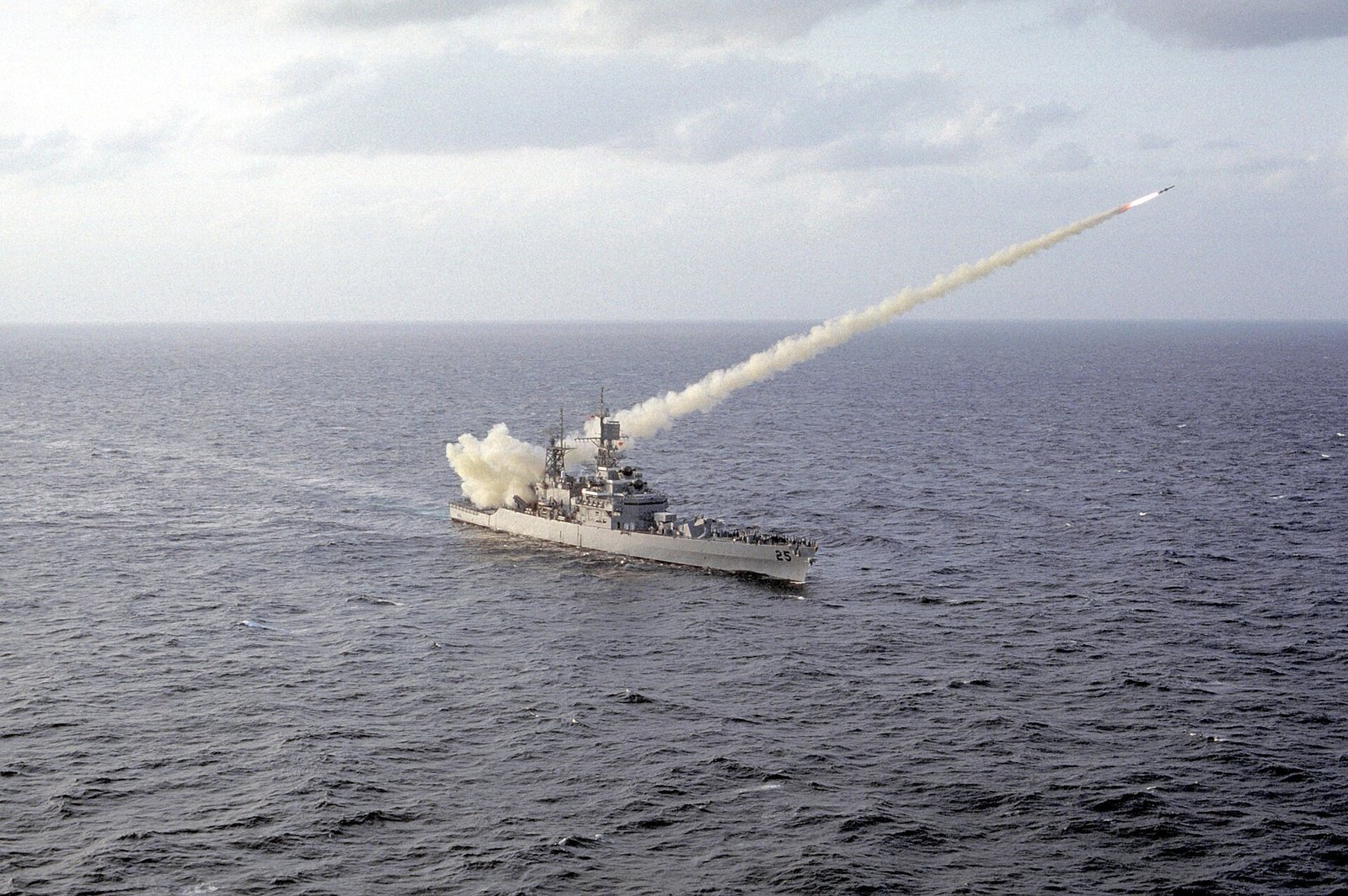
The expansion of Houthi operations during the Iran conflict has transformed the Red Sea from a regional maritime corridor into a strategic theatre with direct implications for European security, energy resilience, and global trade.
The European Centre for Strategic Studies and Policy (ECSAP)
The expansion of the Iran conflict into the Red Sea has elevated Yemen’s Houthi movement from a regional armed actor into a central instrument of maritime coercion with direct implications for Europe. Houthi attacks on Saudi energy infrastructure and shipping near the Bab el-Mandeb Strait in July 2026 demonstrated that escalation involving Iran can rapidly spread across several interconnected maritime theatres. Disruption in the Strait of Hormuz can no longer be analysed separately from instability in the Red Sea, because pressure on both routes simultaneously threatens energy supplies, commercial shipping, insurance markets, European industrial production, and the credibility of Western deterrence.
This paper argues that the Houthi role in the Iran war represents a structural transformation in modern conflict. Armed groups equipped with relatively inexpensive missiles, drones, unmanned vessels, and external intelligence support can impose strategic costs on states far beyond their immediate theatre of operations. By threatening commercial navigation rather than defeating conventional naval forces, the Houthis can influence global energy prices, redirect shipping around Africa, strain European naval resources, and create political pressure inside countries that are not direct participants in the conflict.
For Europe, the central policy challenge is therefore not simply how to intercept individual missiles or escort selected vessels. It is how to build a durable system of maritime resilience capable of functioning during prolonged regional confrontation. The European Union’s decision in February 2026 to extend Operation ASPIDES until February 2027 confirms that Red Sea security is no longer viewed as a temporary crisis-management mission. Yet the defensive mandate of the operation, while important, must be integrated into a broader strategy combining naval protection, intelligence sharing, economic contingency planning, commercial shipping coordination, regional diplomacy, and the protection of critical maritime infrastructure.
From Yemeni Insurgency to Regional Maritime Power
The Houthis emerged from a distinctly Yemeni political and social environment, but their contemporary strategic importance can no longer be understood through the domestic conflict in Yemen alone. Over time, the movement developed from a locally rooted insurgency into an armed authority controlling substantial territory, state institutions, ports, military infrastructure, and a population base from which it can sustain prolonged confrontation. This evolution has given the group attributes rarely associated with conventional non-state actors. It possesses territorial depth, administrative structures, access to revenue, a political narrative capable of mobilising supporters, and an increasingly diversified arsenal of ballistic missiles, cruise missiles, drones, and maritime attack systems. The combination of these elements has allowed the Houthis to operate simultaneously as an insurgent movement, a de facto governing authority, a regional military actor, and a strategic partner within Iran’s wider security network.
The significance of this transformation lies not only in the sophistication of Houthi weapons but in the geography from which they are employed. Yemen overlooks the Bab el-Mandeb Strait, the narrow maritime gateway connecting the Red Sea to the Gulf of Aden and the Indian Ocean. Control over territory near this chokepoint enables the Houthis to threaten shipping routes linking Asia, the Middle East, Europe, and the Mediterranean. A group that does not possess a conventional blue-water navy can therefore exert influence over one of the world’s most important commercial corridors. Its strategic power derives from the ability to create uncertainty, not from the ability to impose complete physical control over the sea.
This distinction is essential. Maritime coercion does not require the permanent closure of a strait. Shipping companies make decisions on the basis of risk, insurance exposure, crew safety, contractual liability, and the possibility of costly delays. A limited number of successful or attempted attacks may therefore produce effects disproportionate to the physical damage inflicted. Vessels can be diverted, ports can experience unpredictable arrival patterns, insurers can raise premiums, and companies can avoid the region even when naval forces remain present. The strategic objective is consequently achieved when commercial actors conclude that transit has become financially or operationally unacceptable.
The July 2026 escalation illustrates this logic. Houthi attacks on Saudi oil facilities along the Red Sea coast contributed to a sharp reduction in traffic through Bab el-Mandeb. Shipping data indicated that only eleven commodity vessels crossed the strait on one day following the attacks, the lowest daily level in months. The Houthis also declared a maritime embargo against Saudi Arabia, presenting their campaign as part of the wider confrontation surrounding the United States and Iran.
These developments marked a significant widening of the conflict. Saudi oil infrastructure at Jizan and Yanbu represented more than regional military targets. Such facilities form part of the global energy system and provide export capacity on the Red Sea that can reduce dependence on routes through the Strait of Hormuz. Attacking them therefore created pressure not only on Saudi Arabia but on an alternative energy corridor of global importance. The strategic message was clear: disruption could be extended from the Gulf to the Red Sea, narrowing the options available to energy exporters and commercial shipping simultaneously.
The Houthis’ value to Iran emerges precisely from this capacity to widen the geographical costs of confrontation. Tehran does not need to direct every tactical decision for the movement to serve Iranian strategic interests. The relationship is better understood as one of aligned objectives, capability transfer, political coordination, and mutual strategic utility rather than simple command and control. Iran benefits when adversaries must divide military resources across several theatres, defend more infrastructure, escort more vessels, and calculate the risk of escalation from Yemen to Saudi Arabia and beyond. The Houthis, meanwhile, gain access to technologies, expertise, political support, and a regional narrative that elevates their status beyond Yemen.
Reports in July 2026 that Iran had urged the Houthis to close the Red Sea gateway if the United States attacked Iranian power infrastructure further demonstrated the potential role of the movement within a coordinated escalation strategy. Such a scenario would connect attacks on Iranian territory directly to pressure on global maritime commerce, allowing Tehran to threaten broader economic consequences without relying exclusively on operations in the Gulf.
The result is a form of distributed deterrence. Iran’s regional partners expand the number of locations from which retaliation can occur and complicate the attribution, calibration, and containment of military responses. An adversary considering strikes against Iran must account not only for direct Iranian retaliation but also for possible attacks from Yemen, Lebanon, Iraq, or other theatres. This dispersal of coercive capacity creates uncertainty and raises the potential economic cost of military action even when Iran’s conventional forces are under pressure.
However, describing the Houthis solely as an Iranian proxy risks obscuring their own political agency. The movement has domestic objectives, ideological ambitions, institutional interests, and a desire to consolidate its authority in Yemen. Participation in a wider regional conflict can strengthen its legitimacy among supporters, demonstrate military relevance, and improve its bargaining position in future Yemeni negotiations. Its alignment with Iran is therefore strategic but not necessarily absolute. This autonomy matters for European policymakers because pressure on Tehran may not automatically end Houthi operations, particularly once maritime confrontation has become useful to the movement’s own domestic and regional ambitions.
The Houthis have also learned that maritime attacks provide global political visibility at comparatively low cost. A missile intercepted over the Red Sea may generate international attention far beyond the significance of a battlefield engagement inside Yemen. Each incident forces governments, naval commanders, shipping companies, insurers, and energy traders to respond. The movement thus converts tactical actions into strategic communication. It can frame itself as a participant in major regional conflicts, impose costs on stronger powers, and remain central to international diplomacy without possessing the conventional capabilities of a state.
This asymmetric model challenges the traditional European understanding of maritime security. European naval strategy has historically concentrated on state fleets, piracy, terrorism, and the protection of sea lanes during identifiable crises. The Houthi threat combines elements of all these categories while fitting none of them completely. It is territorially based but transnational in impact, state-supported but operationally autonomous, politically motivated but economically coercive, and militarily limited yet strategically disruptive. The movement’s arsenal can threaten civilian shipping, energy infrastructure, naval vessels, ports, and potentially undersea systems, creating a threat environment in which the distinction between military and commercial targets becomes increasingly blurred.
The cost imbalance is particularly difficult. Modern air-defence interceptors and naval deployments are expensive, limited in number, and difficult to sustain indefinitely. By contrast, the attacking side may launch lower-cost drones or missiles in sufficient numbers to generate constant operational pressure. Even where interception rates are high, the defender can face an unfavourable economic exchange and gradual depletion of munitions. Success cannot therefore be measured solely by the number of attacks defeated. A defensive operation that protects ships but consumes scarce weapons faster than they can be replaced may remain tactically effective while becoming strategically unsustainable.
Europe consequently faces a conflict in which distance provides little protection. A missile launched from Yemen can affect factory schedules in Germany, consumer prices in France, port operations in the Netherlands, energy costs in Italy, and insurance decisions in London. The connection is transmitted through logistics rather than territorial proximity. The Houthis do not need to strike Europe directly to generate European consequences. By targeting the infrastructure of globalisation, they can reach European economies through the supply chains on which those economies depend.
This is why the Houthi role in the Iran war should be interpreted as more than another episode in Middle Eastern escalation. It demonstrates how a regional armed movement can acquire strategic leverage over global systems by combining geography, inexpensive technology, political messaging, and external support. The Red Sea has become a theatre in which local conflict, great-power rivalry, commercial risk, and European economic security converge. Europe’s response must begin with recognition that the Houthis are no longer simply a Yemeni insurgent organisation. They have become a durable maritime-security actor capable of shaping the choices of states, markets, and military coalitions far beyond Yemen.
The Red Sea as Europe’s Economic and Security Frontline
Europe’s exposure to the Houthi threat begins with geography but extends deeply into the structure of its economic model. The Suez Canal and Red Sea corridor provides the most direct maritime connection between European markets and Asian production centres. When vessels avoid this route and travel around the Cape of Good Hope, the consequences include longer voyages, higher fuel consumption, increased freight and insurance costs, delayed deliveries, reduced vessel availability, and more volatile port schedules. The impact does not remain confined to the maritime sector. It is distributed across manufacturing, retail, energy, food supply, and ultimately consumer prices.
The latest escalation has shown how quickly those costs can increase. Reuters calculated that rerouting some cargoes could add approximately 10,000 nautical miles and thirty-four days to a voyage, while generating more than $5 million in additional freight costs before fuel and insurance were included. The numbers vary by vessel, cargo, route, and market conditions, but the strategic implication is consistent: maritime insecurity functions as a tax on European trade.
That tax is especially damaging because it arrives at a time when Europe is attempting to strengthen industrial competitiveness, reduce inflationary pressures, secure energy supplies, and decrease strategic dependencies. Persistent disruption in the Red Sea can weaken each of these objectives simultaneously. European firms operating with time-sensitive inventories face uncertainty; exporters become less competitive; importers must hold more stock; and supply chains become slower and more capital-intensive. Smaller companies are particularly vulnerable because they lack the negotiating power and financial reserves available to major multinational corporations.
The Iran war has made this vulnerability more severe by linking two major maritime chokepoints. When shipping through Hormuz and Bab el-Mandeb is threatened at the same time, the global economy loses both a principal energy route and one of the most important alternative corridors connecting Gulf exports to the Red Sea. During the July confrontation, flows through Hormuz reportedly fell to a fraction of pre-war levels, while Houthi activity simultaneously reduced confidence in Red Sea navigation. Europe therefore confronts not an isolated shipping problem but the possibility of compound maritime disruption.
This creates a direct connection between the Red Sea and European national security. Economic resilience depends on the continuous movement of energy, components, raw materials, food, pharmaceuticals, and manufactured goods. When hostile actors can interrupt these flows, commercial dependence becomes a strategic vulnerability. Maritime security must consequently be integrated into Europe’s emerging economic-security agenda alongside critical minerals, semiconductors, energy infrastructure, foreign investment screening, and supply-chain diversification.
The European Union has already acknowledged the strategic significance of the corridor through Operation ASPIDES. Its extended mandate covers the main sea lines of communication around Bab el-Mandeb and includes monitoring across a much wider maritime area encompassing the Red Sea, Gulf of Aden, Arabian Sea, Gulf of Oman, the Gulf, and the Strait of Hormuz. This broad geographical scope reflects the interconnected nature of the threat. Nevertheless, a naval mission alone cannot eliminate the underlying political drivers of escalation or guarantee the uninterrupted movement of all commercial shipping.
A credible European strategy must therefore move beyond crisis escort operations. It must combine military protection with maritime-domain awareness, intelligence fusion, port resilience, emergency logistics planning, engagement with shipping companies, and diplomatic measures aimed at preventing escalation. It must also recognise that the protection of navigation is a long-term public good requiring sustained investment rather than an exceptional mission that can be terminated once attack levels temporarily decline.
The United Nations Security Council’s decision in July 2026 to continue reporting on Houthi attacks for another six months also demonstrates that the threat has become institutionalised within international security deliberations. Yet reporting and condemnation cannot by themselves change the operational calculus of a movement that derives political value from sustaining pressure. The central challenge for Europe is to deny the Houthis strategic returns while avoiding uncontrolled escalation, mission exhaustion, or dependence on temporary American military intervention.
Europe must ultimately treat the Red Sea as an extension of its own strategic perimeter. This does not mean militarising all European engagement with the region. It means recognising that events in Yemen and the Bab el-Mandeb Strait have direct consequences for European prosperity, energy security, strategic autonomy, and political stability. The security of the Red Sea is no longer external to Europe. It is embedded within the functioning of Europe’s economy and therefore within the foundations of European power.