How books presented as religious or educational material at a major Islamic exhibition in France can carry exclusionary narratives linked to what experts describe as “soft extremism.” While not always openly violent, such content may gradually shape beliefs that normalize division and challenge European values, raising questions about the limits of free expression and the risks of unchecked ideological influence.
The European Centre for Strategic Studies and Policy (ECSAP)
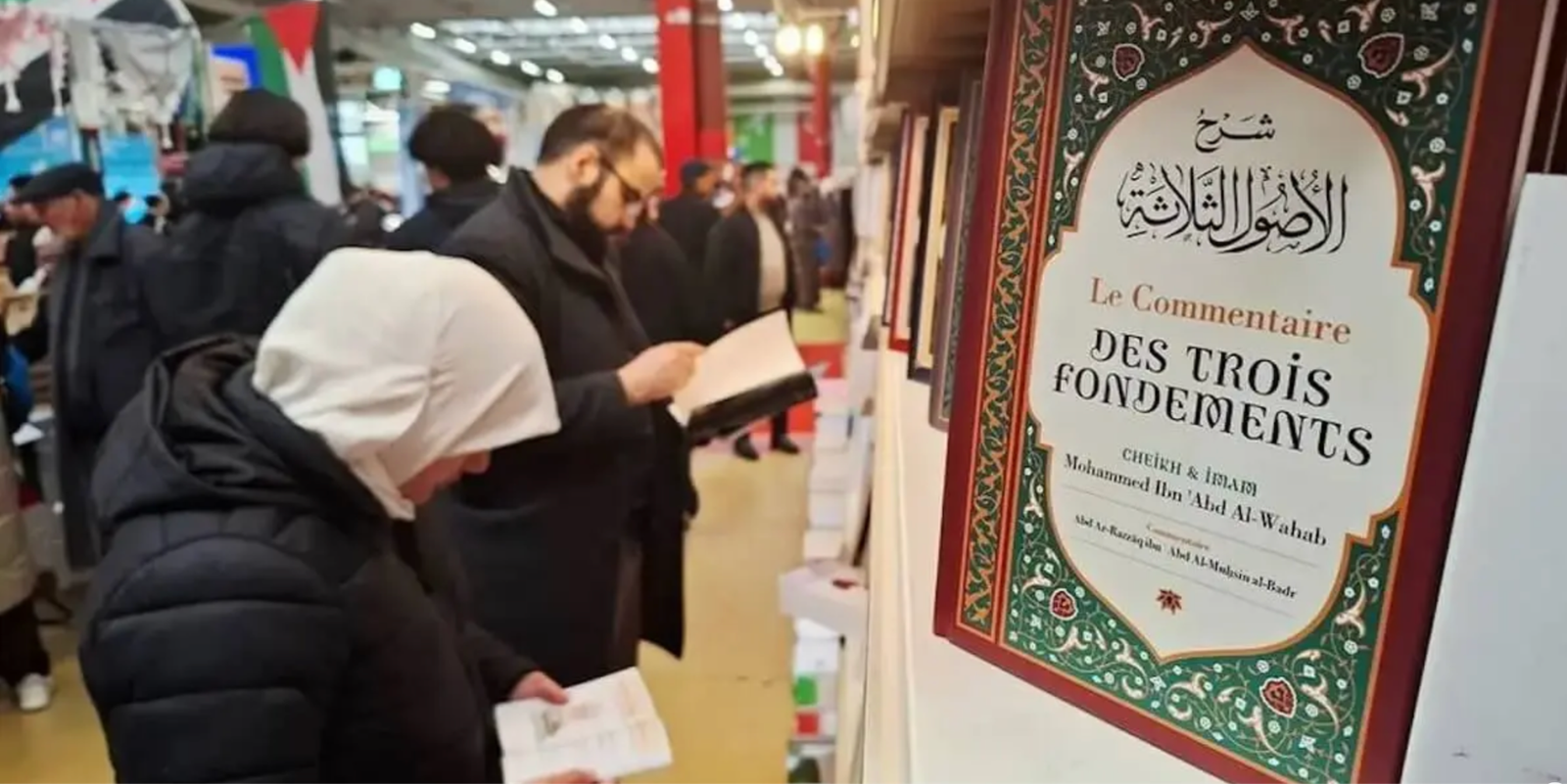
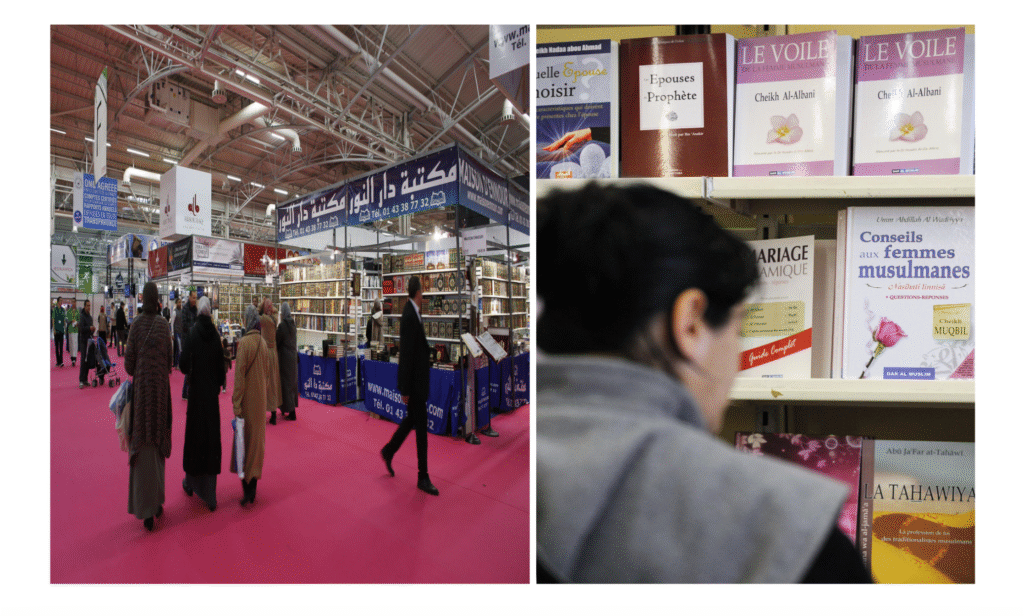
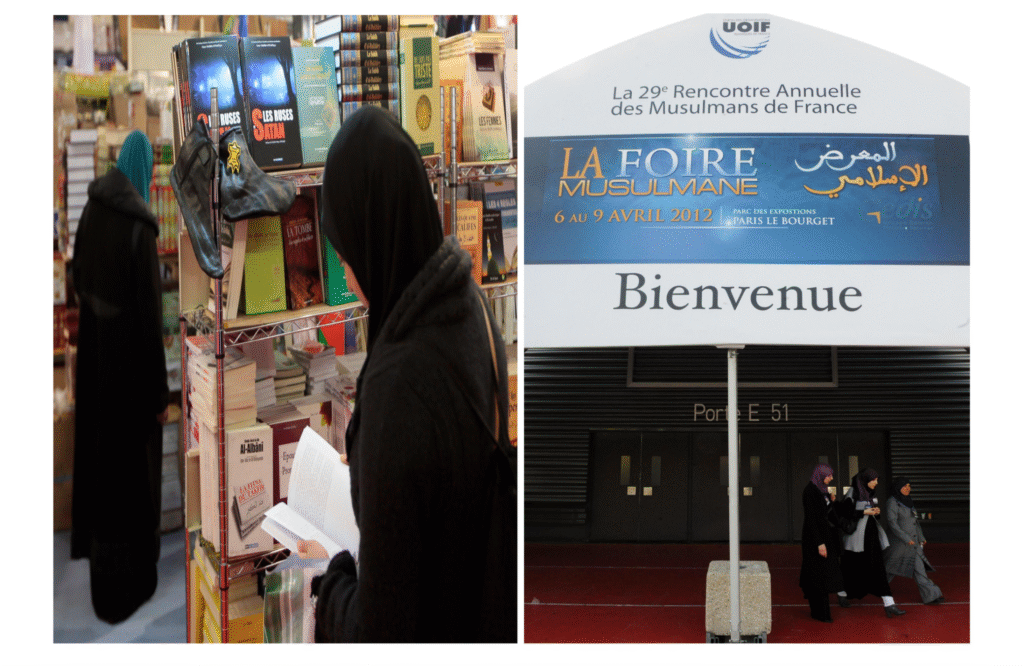
Inside a crowded hall in Le Bourget, just north of Paris, where an annual conference linked to circles associated with the Muslim Brotherhood in France is held, the event appears at first glance to be a conventional space for religious discussions and cultural activities. Families, young people, and children move between stands, while banners highlight themes of identity, education, and faith.
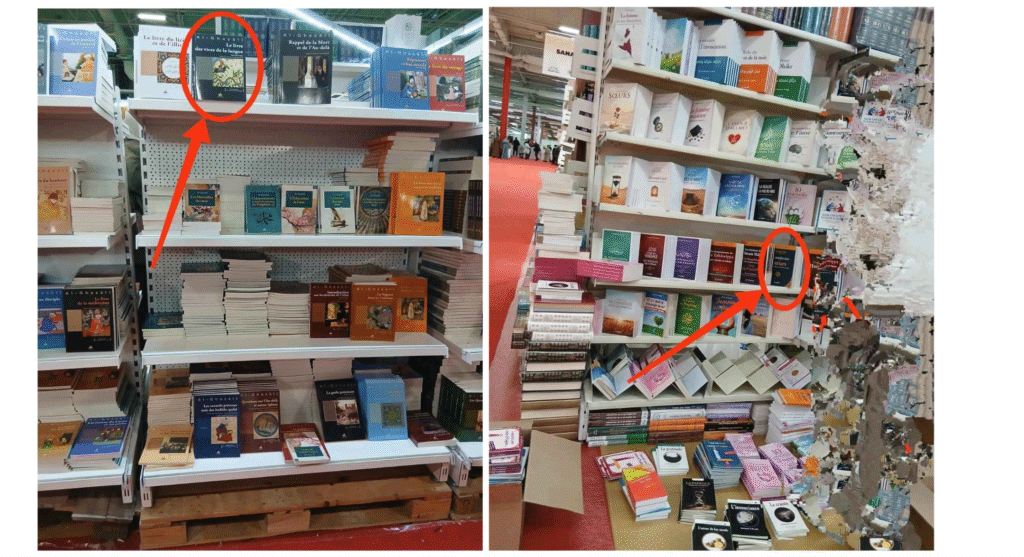
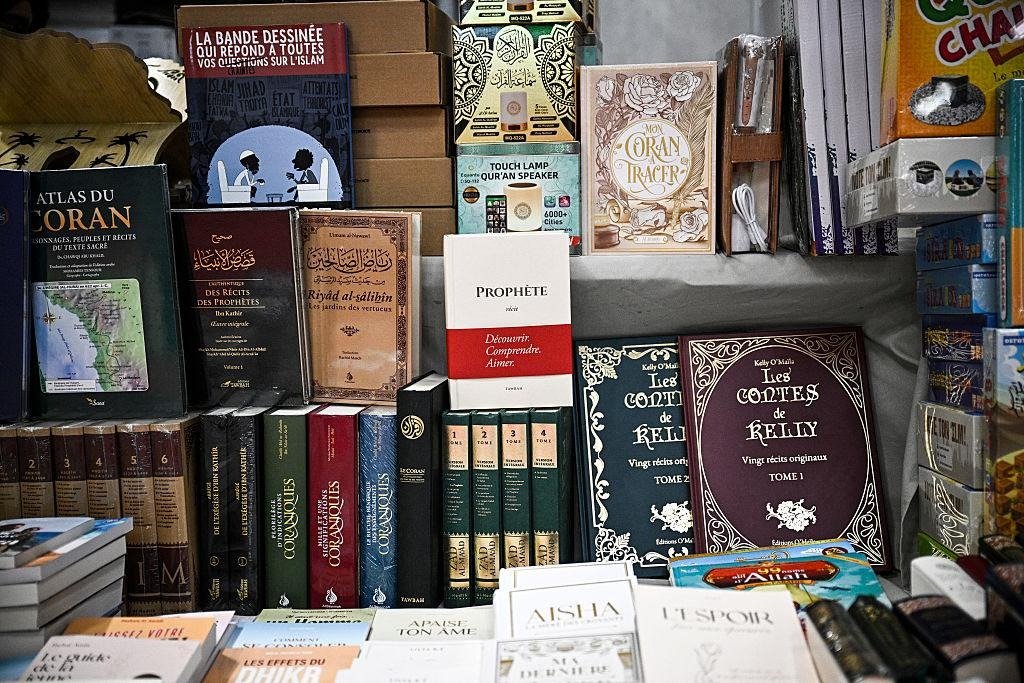
Yet behind this seemingly ordinary scene lies a less visible dimension: a large marketplace for books, featuring dozens of publishers and titles presented as educational or intellectual material.
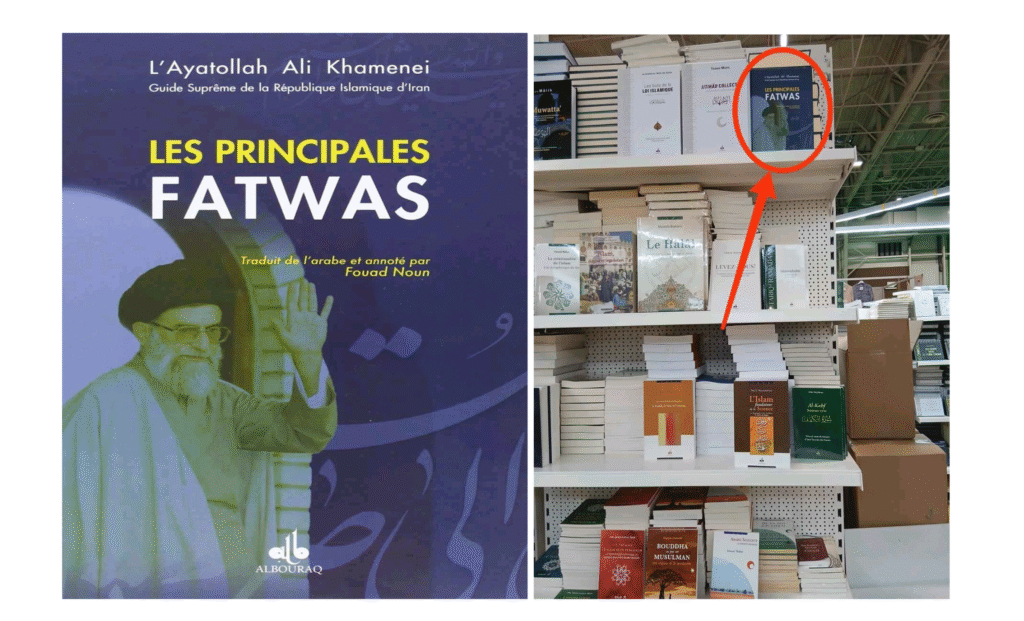
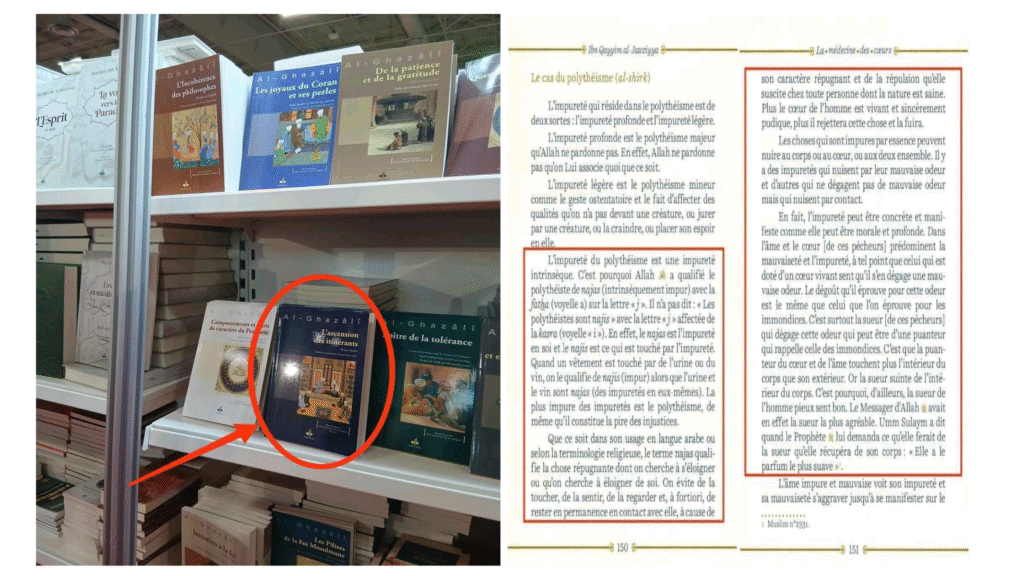
A closer look at the content of some of these books reveals a different layer of discourse. Rather than remaining within the boundaries of religious or philosophical discussion, certain publications appear to extend into more sensitive areas — touching on issues that intersect with the foundations of European societies and their core values.
According to an initial review, some of these materials include ideas that justify violence against certain social groups, promote exclusionary views rooted in religious or cultural identity, or reproduce narratives that dehumanize “the other.” Others attempt to redefine the relationship between the individual and society along confrontational lines.
What stands out is not only the nature of these ideas, but the context in which they are presented. They are not framed as fringe or overtly extremist content, but rather embedded within a broader cultural and educational environment, openly marketed to the public, a setting that can lend them a degree of normalization or, at the very least, reduce their perceived sensitivity.
This overlap between cultural presentation and problematic content raises critical questions about the boundaries between what can be considered “religious expression” or “intellectual diversity,” and what may cross into discourse that risks undermining social cohesion.
Within this context, this investigation examines the nature of these materials and analyzes the messages they convey, placing them within a broader framework often described as “soft extremism”, a form of discourse that does not rely on direct incitement to violence, but instead gradually shapes the intellectual and psychological environment in which such violence can later emerge.
Between what is displayed on bookstore shelves and what may take root in public consciousness over time, the issue extends beyond a single exhibition or conference. It becomes part of a wider debate about how ideas are formed within European societies, who has the power to influence them, and where the line lies between freedom of expression and harmful influence.
A Book Market… or an Ideological Platform?
Within the exhibition halls, the book section does not appear as a conventional retail space. Instead, it stands out as one of the most active and crowded areas of the event. Tables lined with titles stretch in parallel rows, offering a wide range of publications, from religious and educational books to intellectual works, as well as materials targeting youth and children.
On the surface, this diversity reflects a familiar cultural scene, where books on identity and religion sit alongside titles on family life and education. But a closer examination of the content reveals a more complex picture.
Some of these books go beyond offering religious interpretation or moral guidance. They present ideological frameworks that seek to redefine the relationship between the individual and society, often drawing sharp boundaries between “us” and “them.”
This binary framing, which appears across multiple titles, is not always expressed in overtly confrontational terms. Instead, it is embedded within religious or ethical narratives, making it less visible to non-specialist readers and more easily diffused across broader audiences.
François Burgat, a researcher specializing in Islamist movements in Europe, explains: “The books presented at such events do not function merely as tools for transmitting knowledge, but as instruments for reshaping consciousness. They are part of a broader system that seeks to construct a specific worldview, one based on separating the surrounding society from a distinct identity.”
He adds: “The risk lies in the fact that these materials are not presented as extremist ideas, but as religious or educational references. This gives them a form of legitimacy and makes them more difficult to critically challenge.”
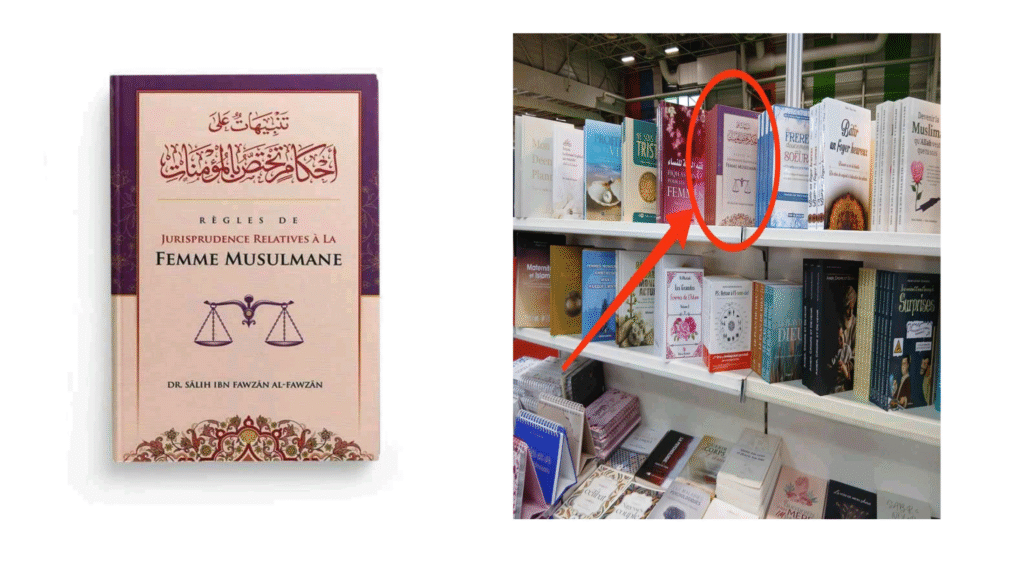
In some cases, this orientation becomes more explicit through content addressing sensitive issues such as relations with non-Muslims, the role of women, or approaches to upbringing.
While the intensity of these perspectives varies from one book to another, a common thread emerges: the promotion of a closed intellectual model, one that leans toward isolation and rejects the liberal and pluralistic values upon which European societies are built.
This ideological dimension does not necessarily imply the presence of direct calls to violence in every book. However, it contributes to shaping an intellectual environment that redefines core concepts such as justice, freedom, and rights according to a framework that differs from prevailing European norms.
In this context, Lorenzo Vidino, an expert on the Muslim Brotherhood in Europe, argues that such platforms go beyond mere publishing or distribution. Instead, they function as part of a broader ecosystem for the production and circulation of ideas, where publishing houses, religious discourse, and community activity intersect within a single space.
Vidino explains: “When these books are presented in open and crowded environments, they do not target a specific audience alone. They become accessible to a new generation that may adopt them as primary references for understanding religion and the world.”
Between the shelves and the diversity of titles, the issue is not simply the presence of conservative or religious ideas in itself. Rather, it lies in the nature of the discourse being conveyed, the context in which it is presented, and the cumulative impact it may have over time.
A Discourse at Odds with European Values
The content found in some of the books displayed at the conference cannot be separated from the legal and normative framework upon which European societies are built. Advocacy of violence, the dehumanization of religious or social groups, or the justification of practices such as child marriage or violence against children do not fall under the protection of freedom of expression or cultural diversity. Rather, they enter the realm of discourse that directly conflicts with European law and human rights standards.
In this context, Thomas Heggh, a researcher specializing in Islamist movements in Europe, argues that one of the most concerning aspects of such ideological currents lies not in explicit rhetoric, but in their “ability to transmit hardline ideas through channels that appear legal or cultural,”
making them more difficult to address than overt violent extremism.
This tension is not limited to security concerns. It extends to the core values underpinning the French Republic, including equality, freedom of belief, and the protection of human dignity. Content that justifies the killing of apostates or homosexuals, or that portrays non-Muslims in dehumanizing terms, stands in clear contradiction to the European Convention on Human Rights, which guarantees the right to life and prohibits discrimination.
From another perspective, Gilles Kepel, a leading scholar of political Islam, notes that: “The challenge in Europe today is not limited to confronting violent extremism, but also includes addressing the intellectual environments that produce and gradually legitimize it.”
This makes such materials, even when presented within religious or cultural frameworks, part of a broader ecosystem that can, over time, contribute to the normalization of exclusionary or harmful narratives.
Similarly, content relating to child marriage or the subordination of women directly conflicts with European laws that criminalize underage marriage and protect women’s rights. As Marit Lonsen, a researcher in gender and extremism, explains: “Certain ideologically driven religious discourses reproduce social patterns that contradict principles of equality, yet are presented in ways that make them appear acceptable within specific communities.”
At the level of child protection, any material that justifies physical punishment or promotes extreme forms of control over educational environments clashes with a comprehensive legal framework in Europe designed to safeguard children from all forms of violence and abuse. As such, the promotion of these ideas moves beyond cultural debate into the realm of potential legal accountability.
Ultimately, the issue is not merely the existence of such books, but the context in which they are presented: a public, open space framed as cultural or religious expression. This setting can confer a degree of social legitimacy on content that fundamentally contradicts the core values of European societies.
Soft Extremism: How Ideas Take Root Before They Become a Threat
Beyond the familiar images associated with violent extremism, a growing body of research suggests that the most dangerous forms of radicalization do not begin with weapons but with ideas. Ideas introduced quietly, framed within religious or cultural contexts, gradually evolve into beliefs, and eventually shape behaviors that may become exclusionary or even violent.
In this sense, extremism in Europe is no longer constructed solely through organized groups, but through intellectual and social environments that reshape how individuals perceive the world and others. What may appear as non-violent discourse on the surface can, in reality, be part of a deeper and more gradual process.
The books displayed at the Le Bourget conference, as documented in this investigation, do not always explicitly call for violence. However, they often promote a worldview structured around a rigid division between “us” and “them,” while redefining key concepts such as society, gender roles, authority, and difference. This type of discourse may not produce immediate violence, but it creates the psychological and ideological conditions that can later justify it.
Researcher Pera Blakely notes that what is often referred to as “soft extremism” relies on “gradually reshaping consciousness, particularly among young people, through content that appears religious or moral, but carries within it rigid and exclusionary views of society and identity.”
This influence becomes particularly sensitive when it targets younger or student audiences. In such contexts, these materials can become alternative intellectual references especially for individuals experiencing marginalization or searching for identity. At that point, the issue is no longer about a single book or idea, but about a long-term trajectory of influence.
Equally important is the environment in which these materials are presented. A large-scale conference, a diverse audience, and a religious-cultural framing all contribute to granting the content a form of “implicit legitimacy.” Even when not officially endorsed, this legitimacy plays a critical role in normalizing such ideas and integrating them into broader public discourse.
Ultimately, the real risk lies in the fact that these materials are not presented as overtly extremist, but as part of a cultural or religious identity. This makes them harder to detect and more complex to confront. Extremism here is not imposed by force, it is built gradually, idea by idea.
From Text to Action: When Do Ideas Become a Threat?
Some of the content found in these books may appear to be nothing more than religious opinions or intellectual interpretations. However, European experiences over recent years suggest that the distance between ideas and behavior can be shorter than it seems.
In a number of extremism-related cases across Europe, the trajectory did not begin with direct involvement in armed groups. Instead, it often started with the gradual adoption of exclusionary ideas: rejecting society, questioning its values, dividing it into “believers” and “others,” and eventually justifying or at least normalizing violence.
In this context, Gilles Kepel, a leading researcher on security and extremism, notes that: “An intellectual environment that normalizes hate speech or justifies violence creates fertile ground for different forms of extremism, even if that is not its direct intention.”
This does not mean that everyone exposed to such material will become violent. The concern lies in the cumulative effect particularly when this content is reinforced by social or religious networks that reproduce the same narratives and grant them additional legitimacy.
From another perspective, researcher Olivier Ledroit explains that: “The transition from thought to behavior does not occur suddenly, but through stages: the normalization of an idea, its adoption, its justification, and in some cases, its defense or translation into action.”
According to Vidino, it is precisely this gradual trajectory that makes addressing “soft extremism” a complex challenge for security agencies and policymakers.
Some of the content identified in this investigation such as justifying violence against certain groups, dehumanizing others, or promoting coercive social norms does not always remain confined to theory. It can manifest in everyday behaviors: discrimination, social isolation, rejection of integration, or even indirect support for extremist ideas.
Experts warn that the risk intensifies when such material is consumed within a collective environment, such as conferences or cultural centers. In these settings, ideas move beyond individual interpretation and become part of a shared narrative, amplifying both their influence and their reach.
In this context, the debate extends beyond the question of freedom to publish books. It raises a broader issue: where should the boundaries lie when content intersects with incitement, dehumanization, or the justification of violence?
Between Freedom of Expression and Legal Limits: Where Does the State Stand?
At the heart of this debate lies a fundamental question facing both French and European authorities: where does freedom of expression end, and where does the state’s responsibility begin in protecting society from discourse that may carry elements of incitement or long-term risk?
In France, as in most European countries, freedom of expression is a core legal principle. However, it is not absolute. Legal frameworks set clear boundaries when it comes to incitement to hatred, calls for violence, or discrimination against individuals or groups based on religion, ethnicity, or identity.
In this context, Jean-Philippe Derosche, Professor of Public Law at Sorbonne University, explains: “Freedom of expression in the French legal system is protected, but it ends when it becomes a tool for spreading discourse that threatens public order or the rights of others.”
This means that publishing materials containing explicit calls to violence or dehumanization may fall within the scope of legal accountability.
However, as experts note, the challenge lies not only in the existence of legal provisions, but in their application. Much of this content is not presented in direct or explicit terms, but framed in religious or interpretative language making it significantly more difficult to legally establish its inciting nature.
Lorenzo Vidino highlights that: “Some actors have successfully operated within the legal framework, exploiting grey areas between freedom of expression and hate speech,”
which requires authorities to develop more precise tools to understand and address this type of discourse.
At the same time, human rights organizations warn that excessive intervention risks being perceived as an infringement on freedom of religion or expression, creating a delicate balance between protecting individual freedoms and preventing the spread of narratives that may ultimately undermine those very freedoms.
Between these boundaries, responsibility becomes dual: legal on one hand, and societal on the other. Addressing this type of content cannot rely solely on prohibition or censorship, but must also include raising awareness, promoting alternative narratives, and strengthening intellectual environments capable of critically engaging with and deconstructing such discourse.
Ultimately, the issue extends beyond books displayed at a single exhibition. It raises a broader question about the ability of European societies to distinguish between legitimate cultural diversity and discourse that may, quietly, work to undermine that diversity from within.
The challenge is no longer limited to preventing violent extremism, but to understanding and confronting its more complex forms — those that operate within legal frameworks and are presented through cultural or religious narratives that are difficult to regulate using conventional tools.
For policymakers in Europe, these findings raise urgent questions that can no longer be deferred. The issue is not only about freedom of expression, but about the capacity of institutions to distinguish between legitimate expression and discourse that may legitimize violence, dehumanize others, or erode the system of rights from within.
In this context, several pathways are increasingly seen by experts as necessary:
- Strengthening institutional oversight of public events, including book fairs, to ensure that materials promoting violence or hate speech are not marketed even when presented within religious or cultural frameworks.
- Updating legal frameworks to address what is often referred to as “indirect extremism,” where narratives are embedded within educational or interpretative texts that evade traditional legal classification.
- Imposing transparency standards on organizers and publishers, requiring disclosure of the nature of the content, its sources, and any supporting entities.
- Empowering child protection and educational bodies to monitor materials that promote practices harmful to children or justify violence against them.
- Supporting independent review mechanisms involving legal and academic experts to ensure rigorous and consistent content assessment.
In parallel, educational and media institutions play a crucial role in developing alternative narratives that reinforce pluralism, equality, and human rights and in limiting the influence of exclusionary ideologies.