This investigation shows how Sudan’s war has become a space for an undeclared convergence between Egypt and Turkey, combining drone technology and geographic advantage to project influence. It highlights how military coordination intersects with economic interests, while warning of the risks of technology spread in a fragmented conflict. Sudan thus emerges as a testing ground for new regional power dynamics
European Centre for Strategic Studies and Policy (ECSAP)
At the heart of Sudan’s war, an unusual regional dynamic is taking shape, one defined by a convergence of interests between two former rivals, Egypt and Turkey, operating within the same theatre. This alignment is neither officially declared nor managed through joint statements; rather, it manifests on the ground, where geography becomes a military asset, desert bases turn into operational platforms, and drones emerge as tools for reshaping the balance of power.
This interaction is no longer confined to traditional political coordination. It has evolved into a more complex level, where relations between states are tested through field operations. Instead of formal alliances, a new model of indirect cooperation is emerging, one based on a division of roles: geographic positioning on one side, advanced technology on the other, and an active conflict zone bringing them together.
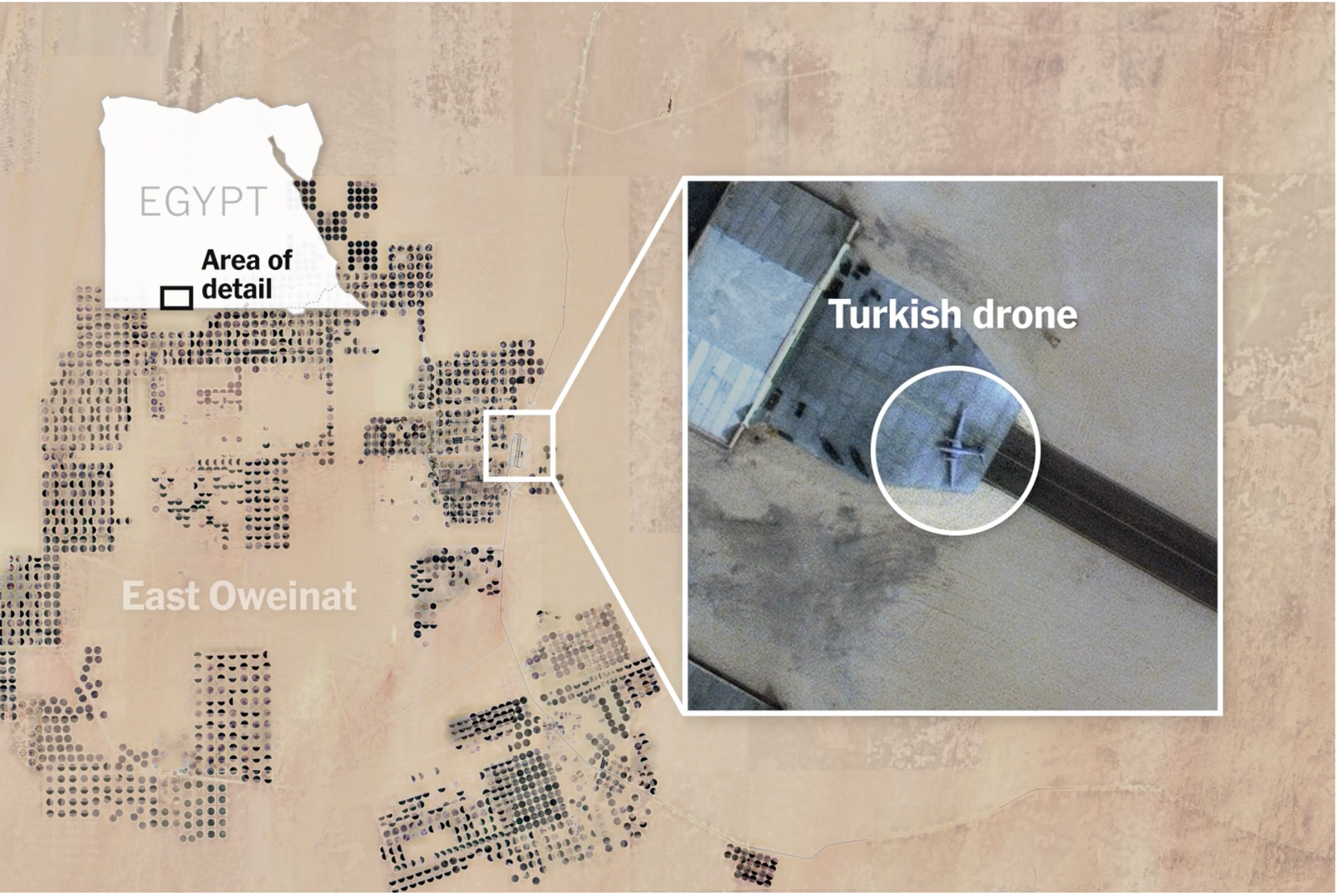
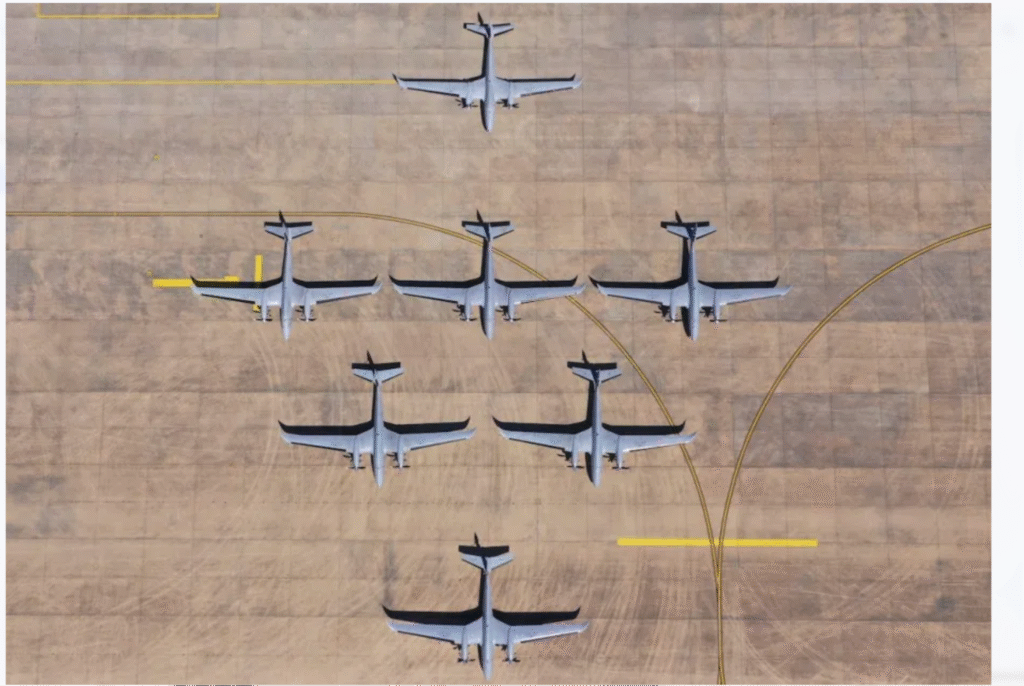
Since 2025, the contours of this convergence have become increasingly visible, particularly following international reports pointing to the role of Egypt’s East Oweinat air base, located near the Sudanese border, as an operational hub for advanced Turkish drones. These findings also suggest the presence of joint technical oversight involving Turkish, Egyptian, and Sudanese personnel indicating a level of coordination that goes beyond mere political alignment.
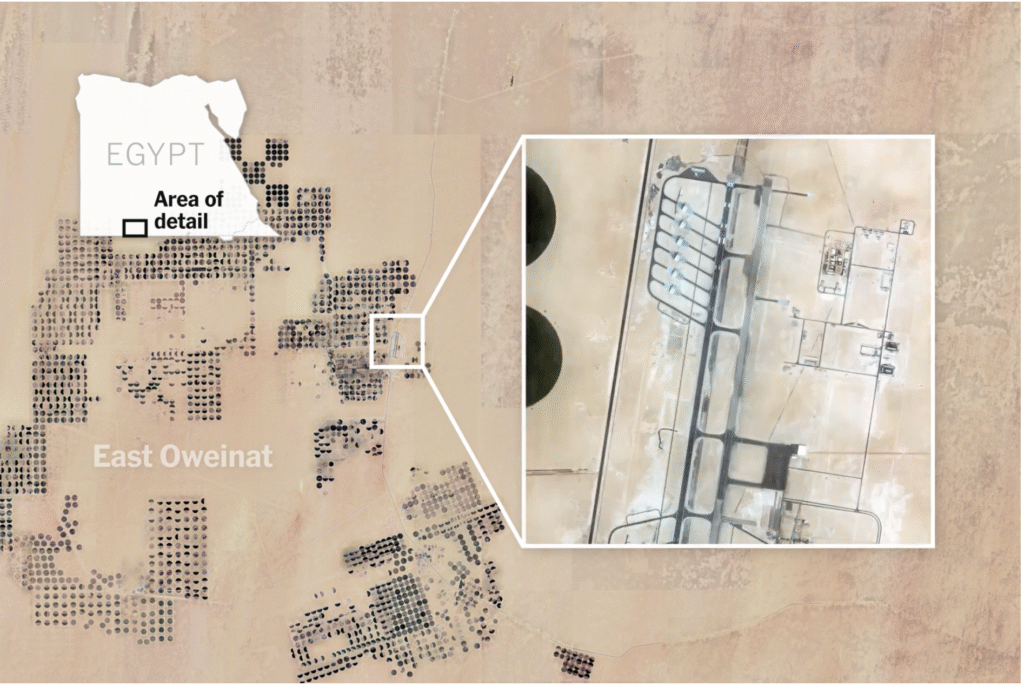
A recently captured image shows Bayraktar Akıncı drones stationed at East Oweinat Air Base in southern Egypt, near the Sudanese border. The base is reportedly being used as an operational hub for drone activity linked to the war in Sudan, with Turkish personnel present to operate and support the systems.
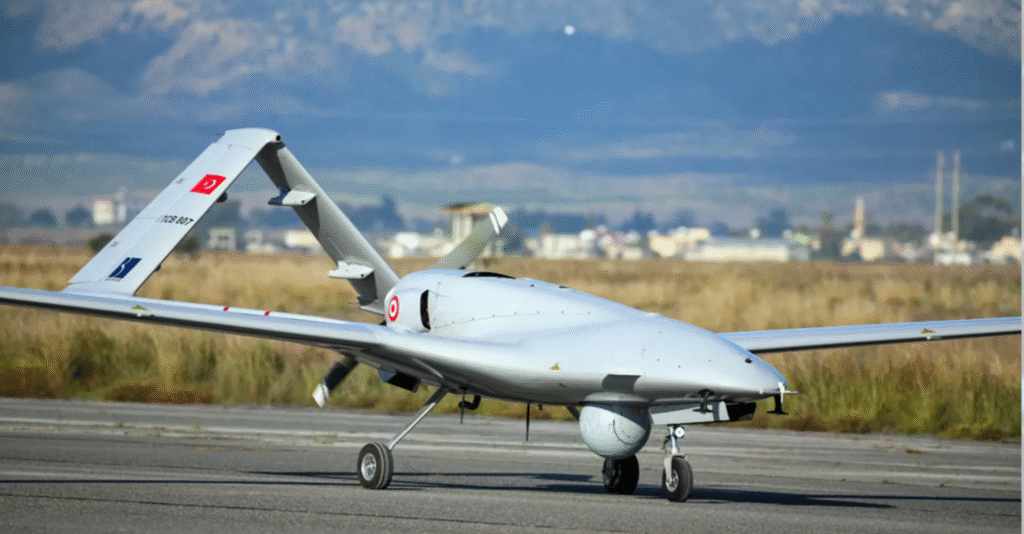
In February 2026, Reuters published an investigation revealing the presence of Bayraktar Akıncı drones at the base. Experts confirmed that the observed characteristics match this heavy UAV platform, which is capable of remaining airborne for more than 24 hours and carrying out precise long-range strikes.
These findings point to a more complex operational model: Turkey provides the military technology, Egypt offers the geographic location and infrastructure, and Sudan becomes the effective theatre of execution where the agendas of both states intersect.
From Political Normalization to Military Coordination
A report by The New York Times indicates that drones have been carrying out strikes inside Sudan from an Egyptian base for at least six months, reflecting a qualitative shift in the nature of the conflict. Sudan’s war is no longer merely an internal confrontation; it has evolved into a theatre for regional drone warfare driven by calculations of influence and geopolitical balance, rather than purely local dynamics. This transformation has contributed to deepening the crisis and undermining prospects for resolution through domestic or even conventional diplomatic frameworks.
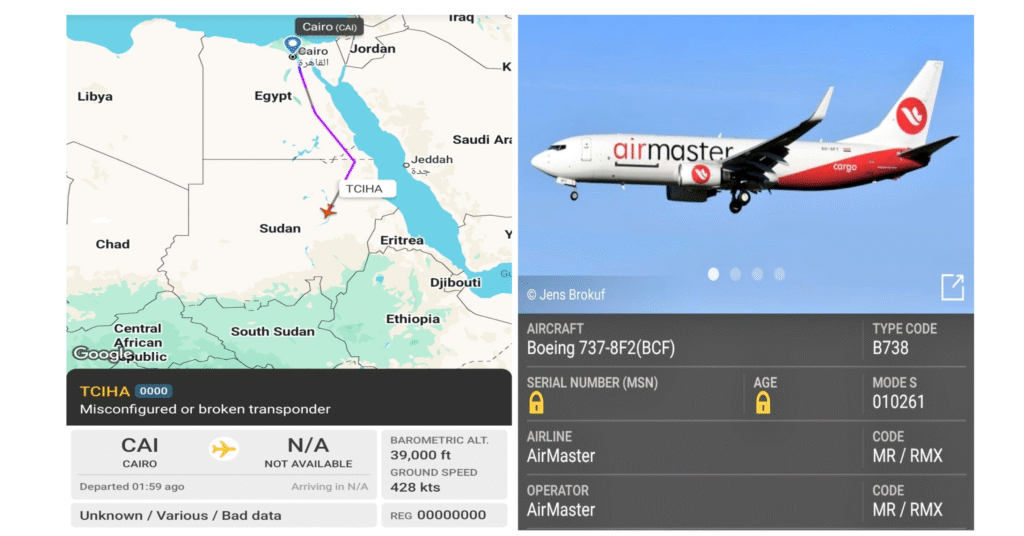
Flight tracking data shows the route of an Air Master Boeing B737-8F2 freighter (registration: SU-SFY, callsign: MR7724), which conducted repeated flights from Cairo International Airport to Port Sudan, reportedly transporting military equipment and supplies to the Sudanese army.
This dynamic did not emerge suddenly, but rather as the result of a gradual reshaping of relations between Cairo and Ankara. After a decade of sharp tensions that began in 2013, ties between the two countries have undergone a notable transformation in recent years. In 2024, Presidents Recep Tayyip Erdoğan and Abdel Fattah el-Sisi exchanged official visits, marking the beginning of a new phase of political normalization.
However, this normalization did not remain confined to the diplomatic sphere; it began to extend into deeper levels of interaction. Reuters reported, citing Turkish officials, that Ankara had agreed to supply Egypt with drones, an indication that the relationship had moved beyond political de-escalation toward a level of tangible military cooperation, even if not openly declared.
Within this context, Sudan emerges as a natural convergence point for the interests of both sides not only because of its geographic position, but also due to its internal fragility, which makes it a conducive environment for overlapping spheres of influence.
For Egypt, Sudan represents a direct extension of its national security. Any shift in the balance of power within Sudan, or the rise of armed actors not aligned with Egyptian interests, is viewed as a potential threat to its southern border. This perspective is also tied to sensitive issues, including the disputed Halaib and Shalateen region, as well as concerns over refugee flows, smuggling networks, and implications for the Nile water issue. Within this framework, Cairo sees the Sudanese army as the actor most capable of ensuring a level of stability aligned with its interests.
Turkey, meanwhile, approaches Sudan from a different angle, but ultimately converges with Egyptian calculations at the level of shared strategic interests.
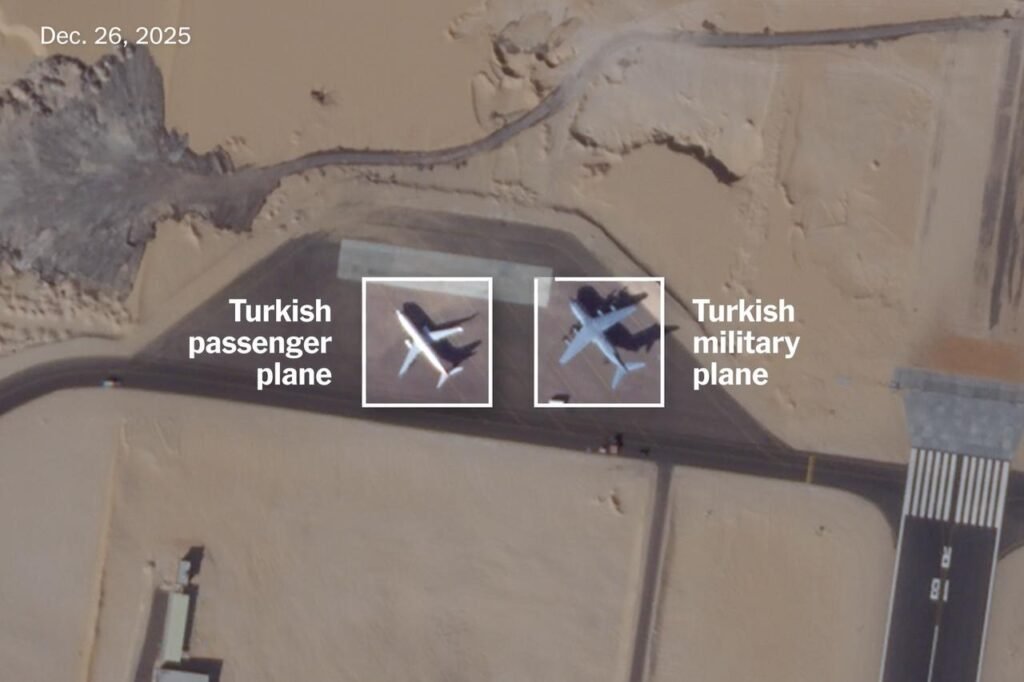
Estimates indicate that the deal between the Turkish company Baykar and the Sudanese army exceeded $120 million, including Bayraktar TB2 drones, munitions, and technical training. Meanwhile, Akinci drones are classified as heavy unmanned aerial vehicles (UAVs), capable of remaining airborne for more than 24 hours, with an operational range extending hundreds of kilometers allowing them to carry out deep strikes within Sudanese territory.
This development comes within a broader context marked by a significant rise in the use of drones in modern warfare. Estimates suggest that global deployment of UAVs has increased by more than 300% over the past decade. In Sudan’s case, the introduction of this technology has reshaped the nature of the conflict, enhancing strike precision and expanding the scope of operations, ultimately contributing to greater complexity and prolonging the duration of the war.
From Arms Deals to an Economy of Influence
An investigation by The Washington Post revealed that the Turkish company Baykar supplied the Sudanese army with military equipment worth at least $120 million, including Bayraktar TB2 drones and associated munitions, as part of a deal that also included training and technical support. However, the significance of this arrangement lies not only in the weapons themselves, but in the broader strategic framework surrounding it.
The same reports indicate that Sudan offered Turkey investment opportunities in key sectors, particularly in mining, including gold and copper, in addition to projects related to the development of Abu Amama Port on the Red Sea, along with other strategic offers linked to port infrastructure. This underscores that the relationship is not built solely on military support, but on a broader exchange of interests where security and economic considerations intersect.
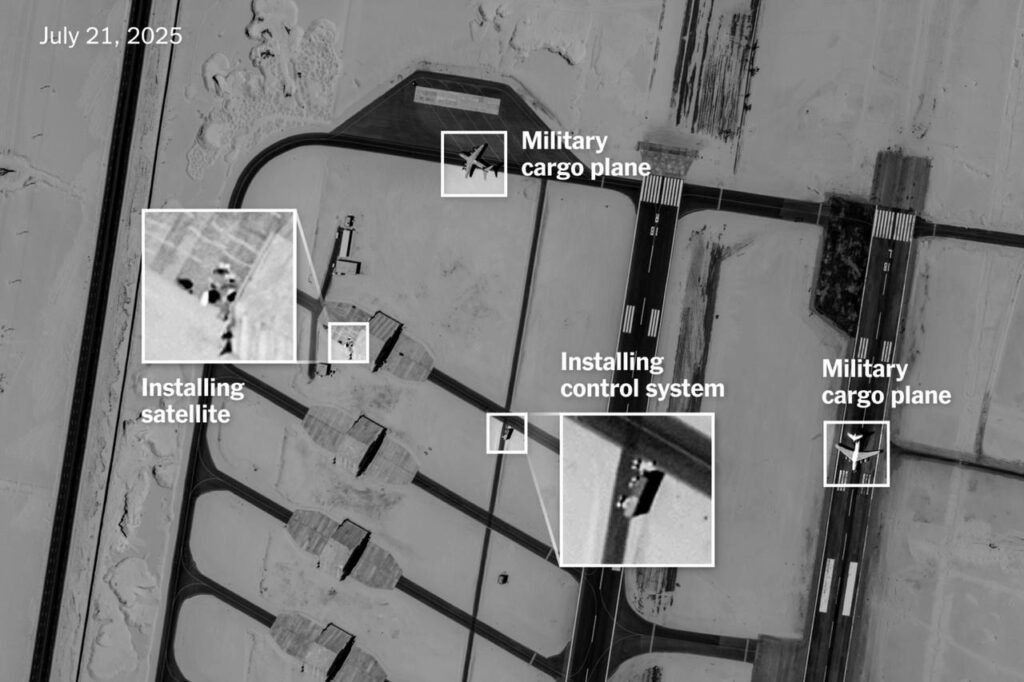
Satellite imagery shows an Egyptian military air base in the East Oweinat area in southern Egypt being used as a platform for conducting operations and strikes inside Sudan. The base’s proximity to the border provides a strategic advantage, enabling rapid cross-border operations while minimizing the need for direct deployment within Sudanese territory. This model reflects a shift in the management of military operations, where geography itself becomes a substitute for direct on-the-ground presence.
In this context, Sudan no longer appears merely as a battlefield, but as a strategic anchor in a broader contest over the Red Sea and the Horn of Africa. For Turkey, this presence represents an opportunity to expand its maritime, economic, and military influence, while strengthening its position within critical global shipping routes. For Egypt, meanwhile, any Turkish presence in Sudan becomes manageable and potentially acceptable so long as it does not threaten its core interests, and may even be leveraged within a broader balance that serves its long-term regional calculations.
Flight tracking data further indicates a pattern of rapid military cargo flights between Cairo and Port Sudan, with durations of no more than two hours and near-immediate return trips. Such patterns are typically associated with high-sensitivity logistical operations. These flights are often used to transport military equipment, technical components, or urgent logistical support.
Amid this dynamic, the issue of Halaib and Shalateen remains a sensitive backdrop, particularly as reports circulate about the possibility of undisclosed Sudanese concessions in exchange for Egyptian support for the army and assistance in consolidating its hold on power. While there is no official confirmation of such claims, their circulation reflects the depth of overlap between military support and political calculations.
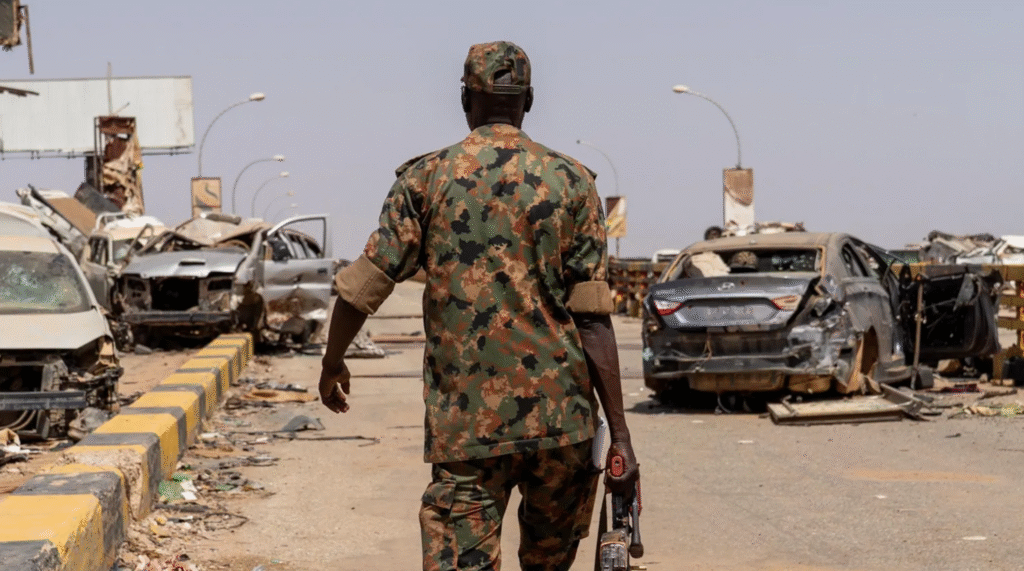
However, the most critical risk in this convergence lies not only in the role of states, but in the nature of the environment in which this support is being deployed. The Sudanese army does not operate in isolation; rather, it is aligned with a network of parallel armed formations, some of which carry an ideologically extremist character.
Reports and analyses supported by official statements from the U.S. State Department point to the presence of factions such as the Al-Baraa bin Malik Brigade, whose membership is estimated in the tens of thousands. These statements also highlight potential links between some of these groups and external support networks, including possible connections to Iran’s Islamic Revolutionary Guard Corps (IRGC). As a result, Washington has imposed sanctions on the brigade as well as on figures within the Sudanese military leadership.
In such an environment, weapons do not remain confined within formal military institutions, nor does operational knowledge remain exclusive to the army. This is where the real danger lies: the transfer of military expertise, not just equipment. Technology and operational capabilities can gradually spread through battlefield interaction or informal cooperation, opening the door to the reproduction of these capabilities outside traditional state structures.
Sudan: A Laboratory of New Power Alignments
Ultimately, what is unfolding in Sudan reflects an evolving model of international relations, where alliances are no longer built on political alignment as much as on converging interests. Former rivals can become situational partners when geography and strategic calculations impose a new reality.
Egypt and Turkey, despite a history of deep disagreements, have not necessarily resolved their differences. Instead, they have found in Sudan a practical arena to recalibrate their priorities. In a country marked by political fragility and institutional fragmentation, such forms of convergence become easier to sustain and less costly in terms of formal political commitments.
However, this model is not without long-term consequences. While it may deliver short-term tactical gains for both sides, it also opens the door to significant strategic risks most notably the proliferation of military technology in an unstable environment, and its transformation into an additional factor complicating the dynamics of violence, not only within Sudan but across the broader region.
In this context, Sudan is no longer merely a site of civil war; it has become a testing ground for emerging regional power balances. It is a space where the limits of undeclared cooperation are being explored, and where military tools of influence increasingly intersect with economic interests. These evolving dynamics are unlikely to remain confined to the present moment, and may instead shape the contours of regional conflicts for decades to come.