Russia’s full-scale invasion of Ukraine is now entering its fifth year, making it one of the longest and most consequential military confrontations in contemporary European history. The duration of the war has already exceeded many initial expectations and underscores the scale of Moscow’s strategic miscalculations at the outset of the conflict.
When the invasion was launched in February 2022, Russian leadership appeared to anticipate a rapid campaign aimed at neutralizing the Ukrainian state. Early operational designs suggested assumptions of limited resistance, with large armored formations advancing along major axes toward key urban centers. These plans reflected a high degree of confidence in Russia’s ability to achieve swift political and military objectives without the need for broad mobilization.
Initial force allocations further illustrated this expectation. Rather than preparing for a protracted conflict, Moscow relied on a comparatively limited invasion force composed largely of professional soldiers. Subsequent developments, however, revealed that these assumptions significantly underestimated Ukraine’s capacity for national mobilization and sustained defense.
The failure of Russia’s early campaign can be traced to a combination of flawed political and military assessments. Prior to the invasion, Russian narratives frequently portrayed Ukraine as a fragmented state lacking cohesive national identity. Contrary to these expectations, Ukraine demonstrated substantial societal resilience, with widespread civilian and military resistance emerging during the first months of the war.
Military factors were equally decisive. The opening phase of hostilities exposed structural and operational limitations within Russian forces, particularly in conducting complex combined arms operations. Russia’s inability to secure rapid air superiority further constrained its operational flexibility and contributed to the breakdown of initial plans.
These developments highlighted a broader pattern of underestimation. Russian decision-makers appear to have discounted Ukraine’s post-2014 military reforms, institutional adaptation, and evolving warfighting capabilities. The resilience of Ukrainian defenses, most visibly demonstrated during the Battle of Kyiv, reshaped early perceptions of the conflict and altered strategic calculations across Europe and beyond.
Notably, misjudgments regarding Ukraine’s prospects were not confined to Moscow. In the period immediately preceding the invasion, many Western assessments projected a rapid Russian victory. Ukraine’s ability to withstand the initial offensive and subsequently regain significant territory during 2022 challenged these forecasts and redefined expectations regarding the balance of capabilities.
As the conflict evolved, Ukraine’s operational adaptation became increasingly evident. By late 2022, Ukrainian forces had reclaimed substantial portions of previously occupied territory. In parallel, Ukraine achieved notable successes in the maritime domain, degrading Russia’s Black Sea Fleet presence and contesting Moscow’s control of the Black Sea operating environment.
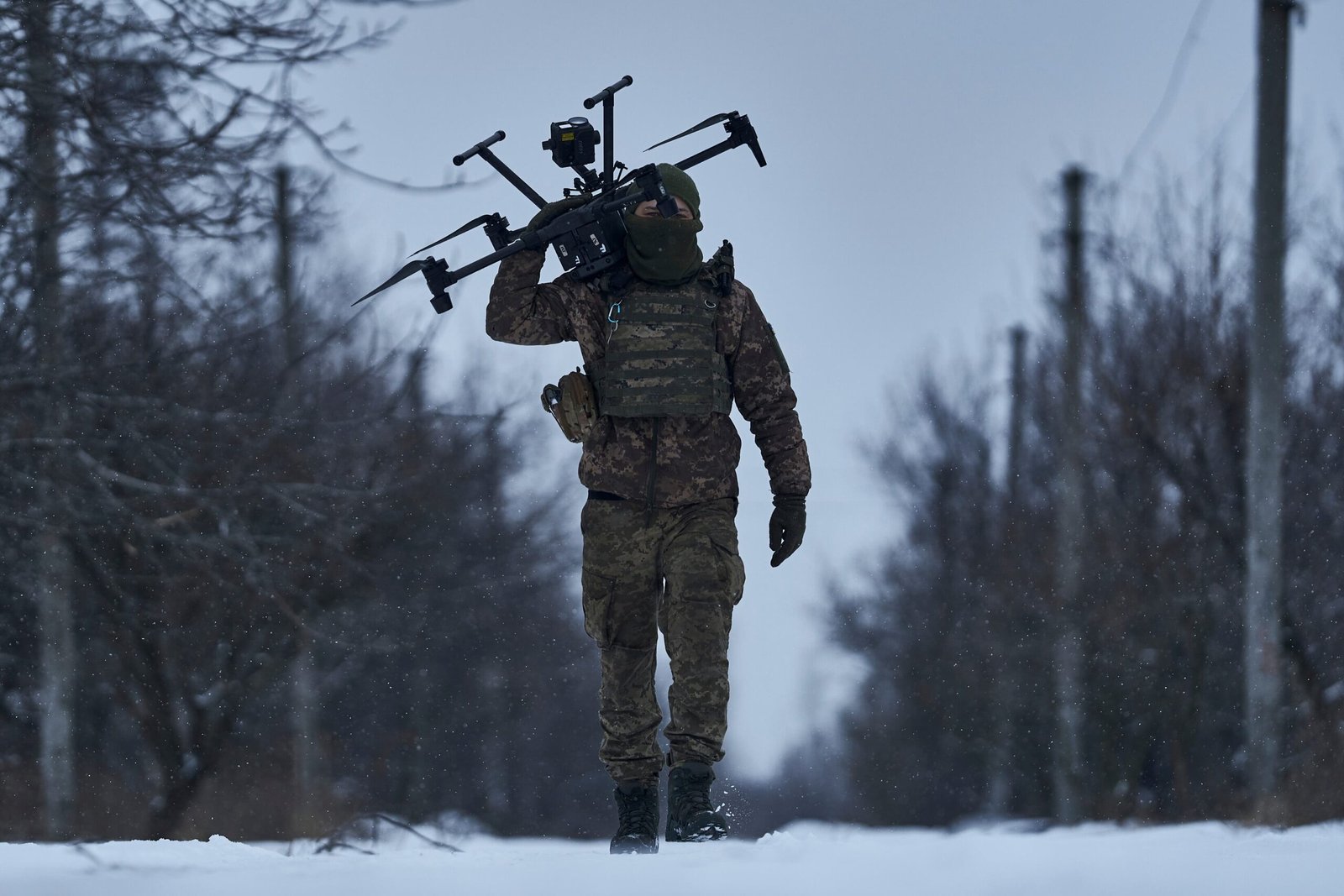
Technological innovation has emerged as a defining characteristic of the war. While early stages of the conflict resembled conventional industrial-era warfare dominated by artillery and armored formations, subsequent phases have seen the rapid proliferation of unmanned systems. Drones, loitering munitions, and robotic platforms now play a central role in shaping battlefield dynamics.
This technological shift has transformed the character of operations. Large-scale maneuver warfare has increasingly given way to dispersed engagements, attritional strategies, and contested kill zones extending deep beyond front-line positions. Both sides have integrated unmanned systems across strike, reconnaissance, logistics, and force protection roles.
Ukraine has demonstrated particular effectiveness in leveraging these technologies. Faced with Russia’s advantages in manpower and conventional firepower, Kyiv has prioritized asymmetric innovation and domestic defense production. The expansion of Ukraine’s indigenous drone sector reflects both operational necessity and long-term strategic adaptation.
These developments carry broader implications for European security. The war has accelerated doctrinal change, influenced procurement priorities, and reshaped threat perceptions among NATO and EU member states. Ukraine’s armed forces are increasingly regarded as a significant contributor to regional security knowledge, particularly in drone warfare and adaptive military practices.
Despite sustained combat operations and considerable losses, Russia has achieved only limited territorial gains since late 2023. This outcome highlights the enduring constraints imposed by attritional warfare, defensive adaptation, and technological parity. Claims of decisive breakthroughs have frequently contrasted with the incremental nature of battlefield changes.
The persistence of the conflict also reflects divergent strategic expectations. Russian leadership continues to signal long-term commitment to military objectives, while debates within Western capitals emphasize the challenges of sustaining support and managing escalation risks. These dynamics reinforce the war’s centrality to Europe’s evolving security architecture.
Ultimately, the conflict underscores the enduring importance of human, institutional, and societal factors in warfare. Technological advances have reshaped tactics and operational methods, but national resilience, organizational learning, and morale remain critical determinants of military effectiveness.
As the war enters its fifth year, Ukraine’s trajectory illustrates how sustained adaptation, innovation, and societal mobilization can offset structural asymmetries. The conflict also serves as a cautionary case study in the risks of strategic miscalculation and the long-term consequences of underestimating adversary capacity.