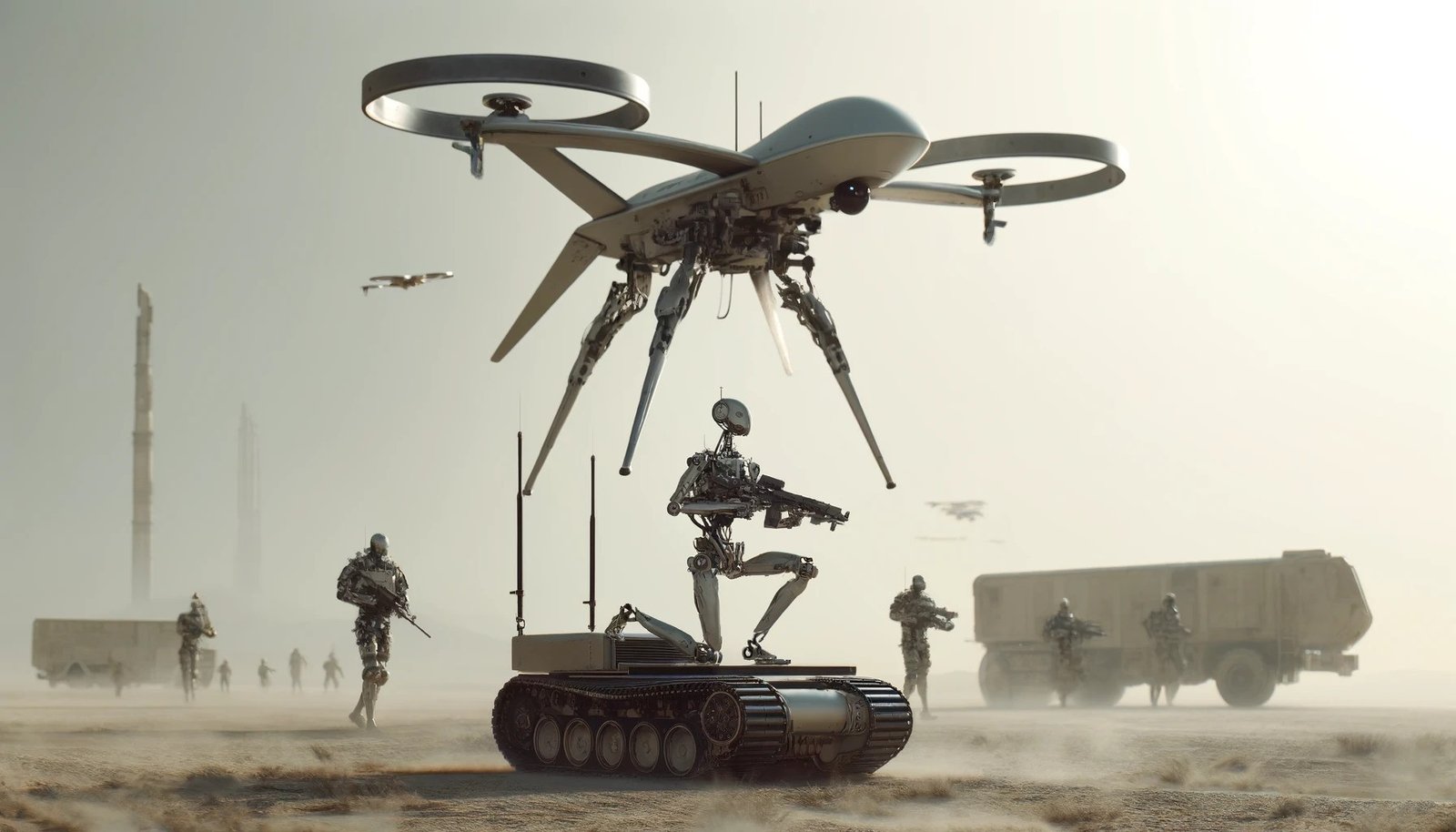
Artificial intelligence is poised to transform warfare in ways that are only beginning to be understood. Autonomous weapons systems, drone swarms, and AI-driven command networks could dramatically increase the speed and scale of military operations.
Artificial intelligence is rapidly transforming the nature of warfare. Over the past decade, advances in machine learning, autonomous systems, robotics, and data-driven decision-making have begun to reshape how militaries plan, execute, and evaluate operations. While drones marked the first major step toward automation on the battlefield, the integration of artificial intelligence into military platforms represents a far more profound transformation. In what many analysts now describe as the emergence of AI warfare, machines are increasingly capable of identifying targets, navigating complex environments, and coordinating military actions with minimal human input.
This technological shift is occurring at a time of intensifying geopolitical competition among major powers. Governments across the world are investing heavily in artificial intelligence for defense applications, recognizing that AI-enabled systems could determine future military superiority. According to the U.S. National Security Commission on Artificial Intelligence, “artificial intelligence will fundamentally transform warfare, much as nuclear weapons did in the twentieth century.” (NSCAI Final Report, 2021).
The coming autonomous battlefield will likely involve networks of intelligent machines operating in air, land, sea, space, and cyberspace. These systems may function independently or in coordination with human operators, dramatically increasing the speed and complexity of military decision-making. While AI promises operational advantages, it also raises serious ethical, legal, and strategic concerns that could reshape global security.
The Technological Foundations of AI Warfare
Artificial intelligence in warfare is built on several key technological developments, including machine learning, computer vision, sensor fusion, and autonomous navigation. Machine learning algorithms enable systems to analyze vast amounts of data and identify patterns that would be difficult for human operators to detect. Computer vision allows machines to interpret visual information from cameras and sensors, enabling automated target recognition and surveillance capabilities.
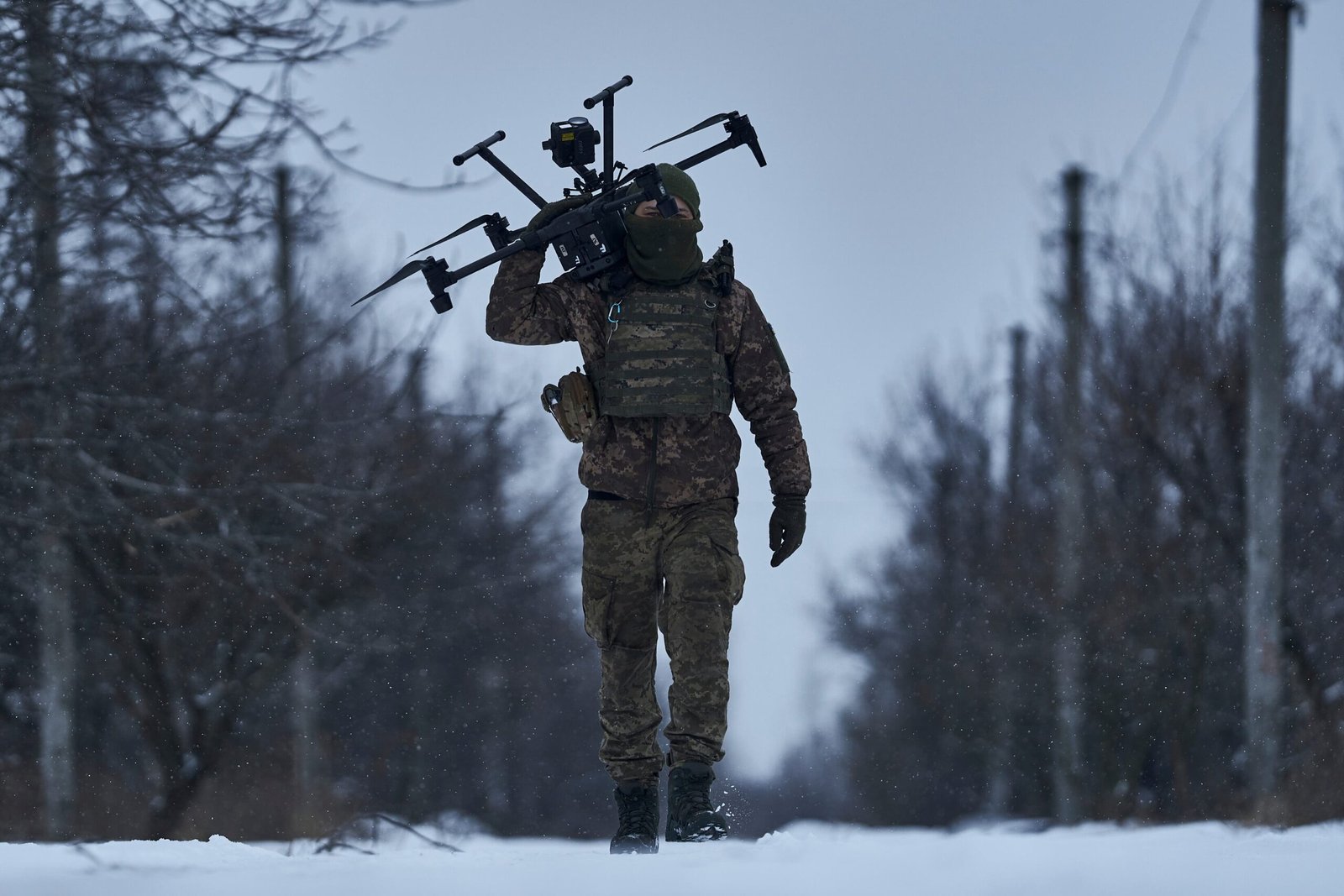
These technologies are increasingly integrated into autonomous military platforms. Unmanned aerial vehicles can now navigate without direct human control, analyze sensor data in real time, and coordinate with other drones to complete missions. Similarly, autonomous ground vehicles are being developed to conduct reconnaissance, transport supplies, or support combat operations.
The scale of military investment in AI technologies has grown dramatically. According to the Stockholm International Peace Research Institute (SIPRI), global military spending on artificial intelligence and autonomous systems is expected to exceed tens of billions of dollars in the coming decade. Major powers including the United States, China, Russia, and several European states have identified AI as a critical component of future defense capabilities.
China, for example, has explicitly linked artificial intelligence to its military modernization strategy. Chinese defense policy documents emphasize the development of “intelligentized warfare,” in which AI systems enhance command, control, and battlefield coordination.
Autonomous Weapons Systems
At the center of the AI warfare debate are autonomous weapons systems (AWS)—weapons capable of selecting and engaging targets without direct human intervention. While many current systems still require human authorization before firing, advances in AI are steadily reducing the need for human control.
Autonomous weapons differ from remotely piloted drones because they can make certain decisions independently. Once activated, these systems may identify targets based on sensor inputs and execute attacks according to pre-programmed rules or machine learning algorithms.
The United Nations Institute for Disarmament Research (UNIDIR) describes autonomous weapons as systems that can operate “without direct human supervision after activation.” (UNIDIR Autonomous Weapons Report, 2023). Such capabilities raise fundamental questions about accountability, legality, and the role of human judgment in warfare.
Supporters argue that autonomous weapons could improve precision and reduce civilian casualties by minimizing human error. Critics warn that delegating lethal decision-making to machines risks undermining international humanitarian law and ethical norms.
Military Advantages of Artificial Intelligence
Artificial intelligence offers several strategic advantages that explain the intense global competition to develop AI-enabled weapons systems. One of the most significant advantages is speed. AI systems can process enormous amounts of data in real time, allowing militaries to detect threats, coordinate responses, and make decisions faster than human operators.
In modern warfare, speed often determines the outcome of engagements. AI-enabled command systems could allow militaries to respond to threats within seconds rather than minutes or hours.
Another advantage lies in scalability. Autonomous systems can operate in large numbers, enabling militaries to deploy swarms of drones or robotic vehicles that coordinate their movements and actions.
According to a report by the Center for Strategic and International Studies (CSIS), “AI-enabled systems will allow militaries to operate at a scale and speed that human-controlled forces cannot match.” (CSIS Emerging Military Technologies Report, 2023).
This ability to coordinate large numbers of autonomous systems may significantly alter the balance between offensive and defensive capabilities.
Drone Swarms and Autonomous Coordination
One of the most visible manifestations of AI warfare is the development of drone swarm technology. Instead of relying on individual high-value platforms, swarm systems involve dozens or even hundreds of drones operating together as a coordinated unit.
These drones communicate with one another using wireless networks and distributed algorithms. By sharing information about targets and environmental conditions, the swarm can adapt its movements and tactics dynamically.
Drone swarms present significant challenges for traditional defense systems. Missile defense systems designed to intercept a limited number of incoming threats may struggle to cope with hundreds of small drones approaching simultaneously.
Researchers at the RAND Corporation warn that swarm technologies could “overwhelm conventional air defense systems and dramatically alter battlefield dynamics.” (RAND Autonomous Systems Study, 2022).
In future conflicts, autonomous swarms may be used to conduct reconnaissance missions, disrupt communications, or attack critical infrastructure.
AI in Command and Control
Artificial intelligence is also transforming military command and control systems. Modern militaries generate vast amounts of data from satellites, sensors, surveillance drones, and intelligence networks. Processing this information effectively is increasingly beyond human capacity.
AI-enabled command systems can analyze large datasets and provide real-time recommendations to military commanders. These systems may identify patterns in enemy behavior, predict potential threats, and suggest optimal responses.
The U.S. Department of Defense has launched several programs designed to integrate AI into military decision-making processes. One of the most prominent initiatives is the Joint Artificial Intelligence Center (JAIC), which aims to accelerate the adoption of AI across defense operations.
Such systems could significantly reduce the time required to plan and execute military operations.
Ethical and Legal Challenges
Despite its potential advantages, AI warfare raises profound ethical and legal concerns. One of the most controversial issues involves the role of human judgment in lethal decision-making. International humanitarian law requires combatants to distinguish between military targets and civilians and to ensure that attacks are proportionate.
Critics argue that autonomous systems may struggle to make such complex judgments in chaotic battlefield environments.
Human Rights Watch and other organizations have called for international restrictions on fully autonomous weapons systems. In a widely cited report, Human Rights Watch warned that “allowing machines to decide when to take human life would cross a fundamental moral line.” (Human Rights Watch, Stop Killer Robots Campaign, 2023).
In response, some governments have advocated for maintaining “meaningful human control” over all lethal weapons systems.
The Risk of Escalation
Another major concern surrounding AI warfare involves the potential for rapid escalation. Autonomous systems may operate at speeds that exceed human decision-making capabilities. In such environments, automated responses to perceived threats could trigger unintended escalation.
For example, an autonomous defense system detecting a perceived attack might launch a counterstrike before human operators have time to assess the situation. Such scenarios raise fears that AI-driven conflicts could spiral out of control.
Security analysts have compared this risk to the challenges posed by automated nuclear command systems during the Cold War.
As former U.S. Secretary of State Henry Kissinger once observed, “when decision-making is accelerated beyond human comprehension, the potential for catastrophic miscalculation increases.”
The Global AI Arms Race
The development of AI-enabled military systems has sparked intense competition among major powers. The United States, China, and Russia are all investing heavily in artificial intelligence research for defense applications.
China has announced ambitious plans to become the global leader in artificial intelligence by 2030. Chinese military strategists have emphasized the importance of AI for achieving technological superiority in future conflicts.
Meanwhile, Russia has prioritized autonomous weapons and robotics as part of its military modernization strategy. Russian President Vladimir Putin famously stated that “whoever becomes the leader in artificial intelligence will become the ruler of the world.”
This competition has led some analysts to warn that the world may be entering a new technological arms race similar to the nuclear arms race of the twentieth century.
The Future Autonomous Battlefield
The battlefield of the future will likely involve complex networks of autonomous systems operating across multiple domains. AI-enabled drones, robotic vehicles, and intelligent command systems may work together to conduct military operations with unprecedented speed and coordination.
These systems could be deployed in large numbers, creating highly dynamic battlefields where human soldiers play a smaller role.
At the same time, advances in cybersecurity and electronic warfare will be essential to protecting autonomous systems from hacking or manipulation.
The integration of AI into warfare will therefore require new doctrines, new defensive strategies, and new international norms governing the use of autonomous weapons.
Artificial intelligence is poised to transform warfare in ways that are only beginning to be understood. Autonomous weapons systems, drone swarms, and AI-driven command networks could dramatically increase the speed and scale of military operations.
While these technologies promise significant operational advantages, they also introduce new risks related to escalation, accountability, and ethical governance.
As governments continue to invest in AI-enabled military systems, the international community will face growing pressure to establish frameworks that balance technological innovation with the need to maintain global security and stability.
The coming autonomous battlefield will not simply be defined by machines—it will also be shaped by the political, legal, and ethical choices that governments make today.