European Centre for Strategic Studies and Policy (ECSAP)
Executive Summary
Since April 2023, Sudan has witnessed a large-scale war between the Sudanese Armed Forces (SAF) and the Rapid Support Forces (RSF). What began as a struggle for power within the state’s security apparatus quickly evolved into a multi-layered conflict spanning cities and regions, sustained by cross-border support networks.
This transformation led to the collapse of civilian state institutions, widespread destruction of infrastructure, and the displacement of over 9 million people, making it one of the largest displacement crises in the modern world.
Documents and analysis of military supply chains reveal that external support for the SAF has played a decisive role in reshaping the trajectory of the war. The army has acquired Turkish-made combat drones (Bayraktar TB2), as well as Iranian reconnaissance and attack drones (such as the Mohajer-6). It has also benefited from secure logistical corridors through Egypt and the Red Sea, and training facilities for restructuring combat units in Eritrea.
In addition, non-state actors—including the Houthis, al-Qassam Brigades, the Islamic Revolutionary Guard Corps (IRGC), and trafficking networks linked to al-Shabaab—have contributed operational expertise, transportation routes, and weapons technology.
These networks directly sustained and prolonged the conflict, enhanced the SAF’s offensive air capabilities, and enabled indiscriminate and disproportionate airstrikes on civilian areas. The escalation has also expanded forced displacement and systematic violations amounting to war crimes.
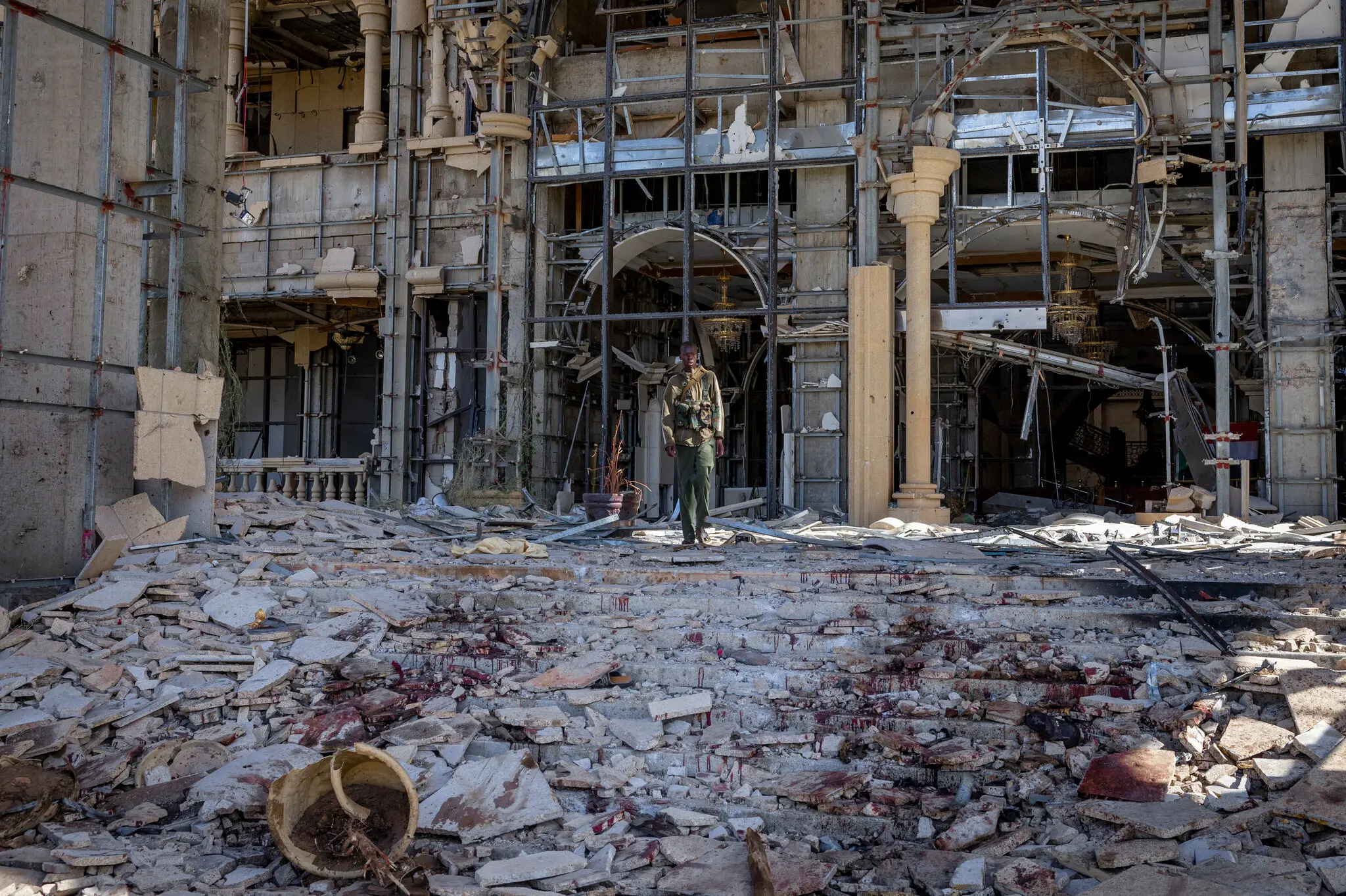
The consequences of this escalation are evident in airstrikes on densely populated urban areas, such as the Kabkabiya market bombing (9 December 2024) and the aerial bombardment of neighborhoods in Nyala (2025), which resulted in mass civilian casualties, including women and children, and the destruction of key markets, hospitals, and entire residential districts.
The research concludes that foreign involvement was neither technical nor neutral, but rather a decisive factor in escalating violence and sustaining the war. The nature of the air operations demonstrates a clear absence of distinction and proportionality, making many of these attacks potentially prosecutable as war crimes or crimes against humanity.
Furthermore, the study shows that cross-border supply networks represent a crucial element for legal accountability on two levels:
- International, through the International Criminal Court (ICC) and universal jurisdiction;
- Transitional, through truth-seeking and accountability mechanisms in post-conflict state reconstruction.
The research emphasizes that any future political settlement in Sudan will remain fragile without:
- Dismantling external military supply networks;
- Systematic and comprehensive documentation of violations;
- A transitional justice process that ensures accountability for commanders, intermediaries, and financiers;
- Restructuring the military institution into a unified national army free from parallel forces.
Without rigorous accountability, the risk of reproducing the cycle of war will persist long after the fighting stops.
1. Introduction:
Since April 2023, Sudan has witnessed one of the most bloody and complex wars in its modern history, following the outbreak of conflict between the Sudanese Armed Forces (SAF) and the Rapid Support Forces (RSF). The confrontation emerged from long-standing disputes over the restructuring and integration of the RSF into the national army, as part of the transitional political process that followed the fall of Omar al-Bashir’s regime.
However, what initially began as an administrative and military disagreement quickly escalated into a full-scale armed conflict—urban in nature and unprecedented in scale—spreading across densely populated cities such as Khartoum, Omdurman, Nyala, and El Fasher. The war led to widespread infrastructure destruction, collapse of basic services, and the displacement of more than 9 million civilians in less than two years, making it one of the largest displacement crises in the world today.
As the conflict expanded, it evolved from an internal power struggle into a multi-party regional war, in which foreign states and transnational arms-trafficking networks played a central role in prolonging the fighting and altering the balance of power.
For instance, the Sudanese Armed Forces rebuilt their air and operational capacity by acquiring Bayraktar TB2 armed drones under an official contract with the Turkish company Baykar in November 2023, accompanied by shipments of weapons, ammunition, and technical systems arriving via Port Sudan. The agreement also included the deployment of Turkish technical teams inside Sudan to support field operations.
The introduction of these drones significantly improved the army’s aerial reconnaissance and targeting capabilities, allowing for sustained strike cycles on areas suspected of harboring RSF units. However, these strikes also hit crowded civilian markets and neighborhoods, causing a sharp rise in civilian casualties, as documented by international organizations.
Furthermore, an extensive study obtained by the research team indicates the involvement of other states, including Iran, Egypt, and Eritrea, in supplying the Sudanese army with weapons, field support, or intelligence data. These contributions operated through multiple supply routes, encompassing military airports, land corridors, and seaports, in addition to training facilities and rear bases for regrouping military units.
This multi-source foreign support has empowered the SAF to conduct widespread aerial bombardments in Darfur, Kordofan, and Khartoum, including repeated attacks on urban centers, markets, and residential areas—such as the Kabkabiya market bombing in December 2024, which killed over 100 civilians within hours. Human rights organizations have classified such incidents as potential war crimes, citing indiscriminate and disproportionate targeting.
Accordingly, this analytical study aims to:
- Examine the dynamics of regional and international support for the Sudanese Armed Forces.
- Analyze the impact of such support on the course of military operations.
- Evaluate the humanitarian consequences of this support and its compliance with international humanitarian law.
- Identify the legal accountability mechanisms applicable to the actors providing such support.
2. From Revolution to War: The Trajectory of State Fragmentation and the Struggle for Legitimacy
In December 2018, Sudan witnessed a wide-scale popular uprising that ended three decades of Omar al-Bashir’s rule, ushering in a transitional phase that was meant to pave the way for a gradual shift toward civilian governance. During this period, a fragile power arrangement emerged, bringing together both the military establishment and the Forces of Freedom and Change (FFC). However, the relationship between these two pillars of the transition was marked by constant competition over state institutions, particularly the security apparatus, the armed forces, and the parallel economy.
Within this context, the Rapid Support Forces (RSF) rose as an almost autonomous military and political actor, distinct from the conventional army. Originating from tribal militias in Darfur, the RSF evolved into a parallel armywith independent sources of funding, including:
- Cross-border trade,
- Control of gold mines in Darfur and Jebel Amer, and
- Regional financial and logistical networks.
This evolution created a structural imbalance of power within the state itself. While the Sudanese Armed Forces (SAF) continued to represent the traditional institution, the RSF transformed into a force with significant economic, political, and social influence.
In November 2023, the Sudanese Armed Forces acquired Bayraktar TB2 combat drones under an official military agreement with the Turkish company Baykar, with shipments arriving through Port Sudan between August and November 2023. The deliveries included drones, control stations, ammunition, and accompanying technical teams. International media reports later highlighted the critical role these drones played in rebuilding the Sudanese army’s reconnaissance and strike capabilities, after its conventional air force had largely collapsed in the early stages of the war.
As the deadline for integrating the RSF into the national army—a process overseen by the international community—approached, disputes intensified over the pace, structure, and command hierarchy of the merger. The army leadershipsought a rapid integration under its full authority, while Lieutenant General Mohamed Hamdan Dagalo (“Hemedti”), born in 1975 and hailing from the Rizeigat tribe, insisted on a gradual process that would preserve his influence and autonomy.
This divergence was not merely organizational—it was a struggle over who would ultimately control the state after the transitional phase.
In April 2023, the dispute escalated into open military confrontation in Khartoum, quickly transforming into a full-scale urban war. As civilian state institutions collapsed, access to basic services—such as:
- Healthcare,
- Education,
- Food supply, and
- Public safety—became directly dependent on which side controlled each area.
By early 2024, the Sudanese Armed Forces began to rebuild their air power through foreign military support, notably by acquiring Bayraktar TB2 drones and associated targeting and reconnaissance systems. This development shifted the balance of power on the ground in favor of the army across several fronts.
However, this technological advantage also had a devastating humanitarian impact. Human rights organizations documented indiscriminate and disproportionate airstrikes on civilian areas in Darfur, Kordofan, and Khartoum—including the Kabkabiya market bombing in December 2024, which killed over 100 civilians in a single day.
These incidents highlight the transformation of Sudan’s post-revolution trajectory—from a fragile democratic transition to a regionalized, militarized conflict driven by power struggles, economic interests, and external support networks.
3. Nature of the War: The Shift to Large-Scale Urban Combat and the Collapse of Civil Order
The ongoing war in Sudan differs fundamentally from previous armed conflicts, which were often rural in nature or confined to peripheral regions of the country. In this war, the fighting has moved into the heart of major cities, including Khartoum and key urban centers in Darfur and Kordofan, transforming civilians into direct victims of a series of aerial and ground assaults that frequently disregard the principles of distinction and proportionality under international humanitarian law.
3.1 Urban Warfare: Dense Urban Fabric and Overlapping Civilian Zones
Fighting within cities—particularly in Khartoum—has pushed the Sudanese Armed Forces (SAF) to rely heavily on air power as the fastest means of regaining control over neighborhoods held by the Rapid Support Forces (RSF). However, conducting such operations in densely populated areas with interconnected urban structures inherently results in high civilian casualties.
According to verified documentation, the Sudanese army has conducted repetitive airstrike cycles using armed dronesto target suspected RSF positions. Yet, many of these strikes occurred near markets, service centers, and hospitals, leading to significant civilian deaths and injuries.
3.2 Restricted Movement and the Breakdown of Civilian Supply Chains
As the war expanded, critical civilian networks began to collapse, including:
- Internal transportation,
- Food supply chains,
- Healthcare systems, and
- Water and electricity networks.
Field reports indicate that civilians in Khartoum, Nyala, and El Fasher found themselves trapped between frontlines, unable to evacuate safely or access food and medicine. The situation worsened as major hospitals shut down due to bombing, staff shortages, and lack of medical equipment, further deepening the humanitarian crisis.
3.3 Airstrike Patterns: From Military Targeting to Civilian Bombardment
Documents and field evidence indicate that the pattern of aerial bombardment in Sudan was not consistently limited to military targets, but increasingly encompassed major markets and densely populated residential areas.
Notable examples include:
- Kabkabiya Market Bombing – North Darfur (9 December 2024):
- Eight consecutive airstrikes hit a crowded commercial district.
- Over 100 civilians were killed within a few hours.
- No evidence was found of any legitimate military targets in the vicinity of the market at the time of the attack.
- Civilian Areas Bombed in Nyala – Early 2025:
- Use of unguided OFAB-250 aerial bombs.
- Strikes targeted residential neighborhoods and civilian infrastructure, including sensitive facilities.
- Human Rights Watch classified these attacks as disproportionate and in violation of international humanitarian law.
These incidents illustrate a systematic shift in the conduct of hostilities—from tactical military engagements to indiscriminate aerial operations that disregard civilian protection principles. Such actions not only exacerbate humanitarian suffering but also raise serious legal concerns regarding potential war crimes and command responsibility.
3.4 Consequences of This Pattern of Warfare
The shift toward urban combat and intensive aerial bombardment has produced catastrophic consequences for both civilians and infrastructure. The targeting of populated areas and the failure to distinguish between military and civilian objectives have led to a sharp increase in civilian casualties, while widespread destruction has resulted in the collapse of essential state services.
2. From Revolution to War: The Trajectory of State Fragmentation and the Struggle for Legitimacy
In December 2018, Sudan witnessed a wide-scale popular uprising that ended three decades of Omar al-Bashir’s rule, ushering in a transitional phase that was meant to pave the way for a gradual shift toward civilian governance. During this period, a fragile power arrangement emerged, bringing together both the military establishment and the Forces of Freedom and Change (FFC). However, the relationship between these two pillars of the transition was marked by constant competition over state institutions, particularly the security apparatus, the armed forces, and the parallel economy.
Within this context, the Rapid Support Forces (RSF) rose as an almost autonomous military and political actor, distinct from the conventional army. Originating from tribal militias in Darfur, the RSF evolved into a parallel armywith independent sources of funding, including:
- Cross-border trade,
- Control of gold mines in Darfur and Jebel Amer, and
- Regional financial and logistical networks.
This evolution created a structural imbalance of power within the state itself. While the Sudanese Armed Forces (SAF) continued to represent the traditional institution, the RSF transformed into a force with significant economic, political, and social influence.
In November 2023, the Sudanese Armed Forces acquired Bayraktar TB2 combat drones under an official military agreement with the Turkish company Baykar, with shipments arriving through Port Sudan between August and November 2023. The deliveries included drones, control stations, ammunition, and accompanying technical teams. International media reports later highlighted the critical role these drones played in rebuilding the Sudanese army’s reconnaissance and strike capabilities, after its conventional air force had largely collapsed in the early stages of the war.
As the deadline for integrating the RSF into the national army—a process overseen by the international community—approached, disputes intensified over the pace, structure, and command hierarchy of the merger. The army leadershipsought a rapid integration under its full authority, while Lieutenant General Mohamed Hamdan Dagalo (“Hemedti”), born in 1975 and hailing from the Rizeigat tribe, insisted on a gradual process that would preserve his influence and autonomy.
This divergence was not merely organizational—it was a struggle over who would ultimately control the state after the transitional phase.
In April 2023, the dispute escalated into open military confrontation in Khartoum, quickly transforming into a full-scale urban war. As civilian state institutions collapsed, access to basic services—such as:
- Healthcare,
- Education,
- Food supply, and
- Public safety—became directly dependent on which side controlled each area.
By early 2024, the Sudanese Armed Forces began to rebuild their air power through foreign military support, notably by acquiring Bayraktar TB2 drones and associated targeting and reconnaissance systems. This development shifted the balance of power on the ground in favor of the army across several fronts.
However, this technological advantage also had a devastating humanitarian impact. Human rights organizations documented indiscriminate and disproportionate airstrikes on civilian areas in Darfur, Kordofan, and Khartoum—including the Kabkabiya market bombing in December 2024, which killed over 100 civilians in a single day.
These incidents highlight the transformation of Sudan’s post-revolution trajectory—from a fragile democratic transition to a regionalized, militarized conflict driven by power struggles, economic interests, and external support networks.
3. Nature of the War: The Shift to Large-Scale Urban Combat and the Collapse of Civil Order
The ongoing war in Sudan differs fundamentally from previous armed conflicts, which were often rural in nature or confined to peripheral regions of the country. In this war, the fighting has moved into the heart of major cities, including Khartoum and key urban centers in Darfur and Kordofan, transforming civilians into direct victims of a series of aerial and ground assaults that frequently disregard the principles of distinction and proportionality under international humanitarian law.
3.1 Urban Warfare: Dense Urban Fabric and Overlapping Civilian Zones
Fighting within cities—particularly in Khartoum—has pushed the Sudanese Armed Forces (SAF) to rely heavily on air power as the fastest means of regaining control over neighborhoods held by the Rapid Support Forces (RSF). However, conducting such operations in densely populated areas with interconnected urban structures inherently results in high civilian casualties.
According to verified documentation, the Sudanese army has conducted repetitive airstrike cycles using armed dronesto target suspected RSF positions. Yet, many of these strikes occurred near markets, service centers, and hospitals, leading to significant civilian deaths and injuries.
3.2 Restricted Movement and the Breakdown of Civilian Supply Chains
As the war expanded, critical civilian networks began to collapse, including:
- Internal transportation,
- Food supply chains,
- Healthcare systems, and
- Water and electricity networks.
Field reports indicate that civilians in Khartoum, Nyala, and El Fasher found themselves trapped between frontlines, unable to evacuate safely or access food and medicine. The situation worsened as major hospitals shut down due to bombing, staff shortages, and lack of medical equipment, further deepening the humanitarian crisis.
3.3 Airstrike Patterns: From Military Targeting to Civilian Bombardment
Documents and field evidence indicate that the pattern of aerial bombardment in Sudan was not consistently limited to military targets, but increasingly encompassed major markets and densely populated residential areas.
Notable examples include:
- Kabkabiya Market Bombing – North Darfur (9 December 2024):
- Eight consecutive airstrikes hit a crowded commercial district.
- Over 100 civilians were killed within a few hours.
- No evidence was found of any legitimate military targets in the vicinity of the market at the time of the attack.
- Civilian Areas Bombed in Nyala – Early 2025:
- Use of unguided OFAB-250 aerial bombs.
- Strikes targeted residential neighborhoods and civilian infrastructure, including sensitive facilities.
- Human Rights Watch classified these attacks as disproportionate and in violation of international humanitarian law.
These incidents illustrate a systematic shift in the conduct of hostilities—from tactical military engagements to indiscriminate aerial operations that disregard civilian protection principles. Such actions not only exacerbate humanitarian suffering but also raise serious legal concerns regarding potential war crimes and command responsibility.
3.4 Consequences of This Pattern of Warfare
The shift toward urban combat and intensive aerial bombardment has produced catastrophic consequences for both civilians and infrastructure. The targeting of populated areas and the failure to distinguish between military and civilian objectives have led to a sharp increase in civilian casualties, while widespread destruction has resulted in the collapse of essential state services.
Hospitals, schools, and water and electricity facilities have been rendered inoperative, leaving millions without access to basic needs. The absence of safe zones within cities triggered mass displacement, forcing civilians to choose between the risk of bombing or the uncertainty of flight.
Under these conditions, civilians are now living under siege-like pressure, as basic services have become instruments of military control, used to subjugate local communities and consolidate territorial and political dominance.
The war in Sudan has thus evolved beyond a confrontation between two armed forces—it has become a battle waged within the civilian fabric itself.
In this new paradigm, “reclaiming territory” no longer signifies defeating an enemy militarily, but rather the total destruction of both place and population, marking a profound breakdown of the distinction between combat zone and civilian life.
4. External Support Networks for the Sudanese Armed Forces and Their Role in Shifting the Balance of Power
The shift in the balance of power observed in Sudan’s war during 2024–2025 was not solely the result of internal military developments. It stemmed from a complex web of external support that directly contributed to reshaping the military capabilities of the Sudanese Armed Forces (SAF). This support included the provision of weapons, drones, and reconnaissance systems, the securing of logistical corridors across the Red Sea and border regions, exchange of combat expertise, and the formation of training and redeployment networks.
These cross-border linkages transformed the conflict from a domestic struggle into an interconnected regional war.
A clear turning point occurred when the SAF acquired Bayraktar TB2 armed drones under an official agreement with the Turkish company Baykar in November 2023.
According to the documented evidence, the deal involved not only the delivery of drones but also ground control systems, guided munitions, and accompanying operational and maintenance teams working inside Sudan to train specialized units in drone operation for battlefield use. Continuous shipments arrived through Port Sudan during the second half of 2023.
This development restored the SAF’s aerial reconnaissance and strike capabilities, which had been largely lost during the early stages of the war.
However, the use of drones in densely populated urban areas often led to significant civilian casualties.
In addition, Egypt played a central role in sustaining the Sudanese army’s operational capacity—not only through direct arms transfers but also by providing logistical corridors, fuel and ammunition supplies across the northern border, and by facilitating the delivery and deployment of Turkish drones through a coordinated air and logistical bridge.
According to the report, this support was crucial to the army’s ability to maintain prolonged combat operations amid dwindling domestic resources.
Egypt thus became a key hub for the transfer and coordination of foreign supplies with field operations inside Sudan.
Reports from the European Union Agency for Asylum (EUAA) and international media confirm that Egypt provided logistical and military support that included:
- Fuel and ammunition,
- Aircraft spare parts,
- Transfer of TB2 drones across the border, and
- Joint training at air bases such as Merowe.
As for Iran, the report documents the resumption of military contacts between Tehran and Khartoum by the end of 2023, including the supply of Mohajer-6 drones, reconnaissance, guidance, and field intelligence systems, and the dispatch of military advisers at various times to train Sudanese teams in operating these systems.
This cooperation strengthened the army’s ability to monitor RSF movements across open and rugged terrains in Darfur and Kordofan, enabling more intelligence-based strikes, even though their civilian impact remained alarming.
The report also shows that Eritrea served as a rear base for reorganizing and training ground troops affiliated with the SAF. Eritrea provided training camp areas and allowed cross-border movement of fighters toward Darfur and Kordofan, supplying the army with new manpower after heavy losses during the first year of the war.
Beyond state actors, the report highlights the involvement of non-state armed groups in supporting the SAF:
- The Houthis shared technical expertise in operating certain types of drones and helped facilitate arms shipments through the Red Sea.
- Hamas provided expertise in urban warfare and field reconnaissance in complex civilian environments.
- The al-Shabaab movement in Somalia assisted in facilitating arms and resource smuggling networks along the Red Sea coast, networks that are difficult for formal institutions to track or control.
In sum, this network of external support has not only strengthened the Sudanese Armed Forces militarily but also prolonged the war and intensified the humanitarian toll.
The introduction of drones and reconnaissance systems increased the frequency and lethality of airstrikes on civilian areas, while logistical and training corridors helped sustain the cycle of violence instead of diminishing it.
The impact of foreign support to the Sudanese Armed Forces (SAF) extended far beyond strengthening their military capabilities or enabling territorial gains—it directly influenced the nature of field operations and the level of violence against civilians. With the introduction of drones and reconnaissance systems, the frequency of airstrikes and the targeting of urban areas—particularly in Darfur and Kordofan—increased significantly. Reports and field testimonies have documented several large-scale attacks that caused massive civilian casualties and widespread destruction of markets, service centers, and residential areas.
5.1 The Kabkabiya Market Bombing – North Darfur (9 December 2024)
The bombing of Kabkabiya’s central market stands as one of the clearest examples of how the Sudanese Armed Forces’ newly acquired aerial capabilities reshaped the conduct of the war.
According to the documented sources, the Sudanese Air Force carried out eight consecutive airstrikes on the market during peak hours, killing over 100 civilians, including women and children, and injuring hundreds more. The strikes caused extensive damage to commercial infrastructure and residential neighborhoods, triggering mass displacementfrom the city.
No clear evidence indicated the presence of direct military targets or RSF positions in or around the market at the time of the attack, making it a disproportionate strike under international humanitarian law.
The repeated strike pattern suggests the use of combat drones or attack aircraft guided by prior reconnaissance data—consistent with the capabilities introduced by Turkish and Iranian drones that entered service during the same period.
5.2 The Aerial Bombardment of Nyala – South Darfur (January–February 2025)
In the early months of 2025, Nyala experienced a series of wide-scale airstrikes targeting densely populated residential areas and sensitive civilian sites, including the al-Sikka al-Hadid neighborhood and Makkah Eye Hospital.
The attacks involved the use of unguided OFAB-250 aerial bombs, known for their wide blast radius, making their deployment in urban areas inherently prone to high civilian casualties.
Local and international organizations documented a wave of air raids on Nyala between December 2024 and February 2025, using unguided OFAB-250 and FAB-series bombs that struck markets and residential districts, resulting in dozens of civilian deaths.
Among the confirmed strikes were those on al-Sikka al-Hadid and Makkah Eye Hospital.
Human Rights Watch classified these attacks as “indiscriminate and disproportionate” within the context of an armed conflict, thereby constituting a clear violation of Article 51 of Additional Protocol I to the Geneva Conventions, which prohibits attacks against civilians and operations causing excessive civilian harm relative to anticipated military advantage.
5.3 The Link Between Foreign Air Support and Escalating Violations
These incidents reveal a consistent pattern:
- The more the army’s capacity for sustained or precision airstrikes increased,
- The more military operations lacked adequate distinction between combatants and civilians,
- Leading to higher civilian casualties and greater material destruction.
The military technologies supplied by Turkey and Iran, the logistical corridors facilitated by Egypt, and the training infrastructure supported by Eritrea were not always employed for legitimate military purposes. In many instances, they were used to strike areas populated with civilians.
A UN Security Council report and flight-tracking data confirmed the resumption of Iranian military flights to Port Sudan in late 2023, delivering shipments of Mohajer-6 drones, targeting systems, and field intelligence equipment—all of which enhanced the army’s ability to conduct precision drone strikes.
Thus, foreign military assistance transforms from a factor of strength into one of potential legal liability, particularly if states or suppliers were aware that the weapons might be used in unlawful attacks and failed to take preventive measures to stop such misuse.
6. International Legal Classification of Responsibility for Assistance and Participation in Violations
The widespread violations documented by human rights organizations in Darfur, Kordofan, and Khartoum raise fundamental questions regarding the legal responsibility of the Sudanese Armed Forces (SAF) as well as the regional and international actors that have provided them with arms, training, or intelligence support.
Under International Humanitarian Law (IHL), both the SAF and the Rapid Support Forces (RSF) are recognized as parties to a non-international armed conflict, which obliges them to adhere to the following key principles:
- The principle of distinction between civilians and combatants,
- The principle of proportionality in the use of force, and
- The prohibition of indiscriminate or wide-scale attacks against civilian populations.
Aerial bombardments of markets, hospitals, and residential areas represent clear violations of these principles, as such attacks cannot be justified as incidental damage proportionate to any legitimate military objective.
The evidence further indicates that the attacks on Kabkabiya and Nyala were not the result of direct clashes, but rather deliberate strikes planned to coincide with peak civilian activity—a factor that reinforces their illegality under international law.
6.1 Responsibility of the Sudanese Armed Forces
These attacks fall under the definitions of:
- War Crimes, pursuant to Article 8 of the Rome Statute, and
- Crimes Against Humanity, under Article 7, if they are proven to be part of a systematic or widespread policy.
Commanders of the Sudanese Armed Forces may be held criminally responsible if they:
- Ordered or approved the attacks,
- Knew of such actions but failed to prevent them, or
- Did not punish the perpetrators afterward.
This framework is encapsulated in the doctrine of Command Responsibility, which establishes liability for superiors who exercise effective control over forces committing violations.
6.2 Responsibility of Supporting States and Entities
Accountability extends beyond those who physically carry out attacks.
Under Article 16 of the International Law Commission’s Articles on State Responsibility for Internationally Wrongful Acts, a state is considered responsible if it: “Provides aid or assistance in the commission of an internationally wrongful act by another state, knowing the circumstances of the act.”
In practical terms: If Turkey, Iran, Egypt, or any other state knew or should have known that the drones, munitions, or reconnaissance systems supplied to Sudan would likely be used in indiscriminate or disproportionate attacks, they may bear international legal responsibility for aiding and abetting war crimes.
This also applies to:
- Drone manufacturers,
- Technology providers supplying advanced reconnaissance or targeting systems, and
- Entities facilitating training or logistical routes used in the commission of unlawful attacks.
6.3 Universal Jurisdiction
Several European countries recognize universal jurisdiction, allowing the prosecution of individuals or entities involved in international crimes, even if such crimes were committed outside their territory.
This mechanism has previously been invoked in:
- Syria-related cases → Germany,
- Rwanda genocide cases → France,
- Bosnia war crimes → Austria.
Accordingly, documenting the full chain of supply, command decisions, and operational planning is essential to ensure future accountability of both domestic perpetrators and foreign enablers.
Such documentation not only supports international criminal proceedings, but also contributes to the establishment of truth and justice mechanisms within future transitional justice frameworks for Sudan.
7. Pathways for Accountability and Transitional Justice
Despite the complexity of the Sudanese conflict and the entanglement of local and regional actors, legal accountabilityfor war crimes and violations is neither impossible nor indefinitely deferred.
There exist several legal and political avenues that can be gradually developed to ensure accountability for those responsible, prevent the recurrence of violence, and pave the way toward a stable political settlement.
7.1 The International Criminal Court (ICC) and Expanding Jurisdiction Beyond Darfur
The International Criminal Court (ICC) maintains ongoing jurisdiction over war crimes and crimes against humanity committed in Darfur, pursuant to UN Security Council Resolution 1593 (2005).
However, the documented evidence indicates that most violations committed during 2024–2025 extended beyond Darfur, reaching:
- Khartoum,
- Nyala, and
- Kordofan.
This geographic expansion necessitates either a broadening or interpretative extension of the ICC’s existing jurisdiction to include crimes arising from the same pattern of conflict, even if they occurred outside the original territorial scope.
Such an expansion could be achieved through one of two mechanisms:
- A request from the ICC Prosecutor, arguing that the new crimes constitute a continuation of the same policy of systematic violence and repression originally covered by the Darfur mandate; or
- A new UN Security Council resolution, explicitly extending the ICC’s jurisdiction—an outcome that is politically complex but not impossible given the evolving humanitarian situation and international concern.
7.2 Universal Jurisdiction
Several countries — including Germany, the Netherlands, Sweden, and France — recognize universal jurisdiction, which allows for the prosecution of perpetrators of international crimes regardless of where the crimes occurred, provided that:
- Reliable evidence is available, and
- A clear link exists between the perpetrators and the acts committed.
This mechanism has already been effectively applied in:
- The prosecution of Syrian intelligence officers in Germany, and
- Trials of individuals involved in the Rwandan genocide in France.
This path appears highly promising in the Sudanese context, particularly if investigators can establish:
- Clear military command chains,
- Documented routes of weapon and drone transfers, and
- Records of targeting orders or bombing authorizations.
7.3 Targeted Sanctions
The international community can impose targeted sanctions, such as:
- Asset freezes,
- Travel bans, and
- Restrictions on financial or commercial transactions,
not only against military leaders, but also against:
- Traders, intermediaries, and arms-smuggling networks, and
- Manufacturing, transport, or financing companies involved in sustaining the conflict.
The document indicates that the supply chains are not entirely official, relying instead on:
- Arms brokers,
- Private shipping fleets, and
- Routes through the Red Sea.
This means that targeted sanctions could be highly effective if they focus on intermediaries rather than states alone.
7.4 Transitional Justice Mechanisms Within Sudan
Even though implementing justice during wartime is challenging, the post-conflict phase in Sudan will require the establishment of:
- Truth commissions to investigate events,
- Systematic documentation of violations through interviews, mapping, and command-chain tracing,
- Security and military sector reforms, and
- Compensation and reparations programs for victims.
However, these mechanisms cannot succeed without:
- Official acknowledgment of the violations,
- Genuine political will, and
- Protection for documenters and witnesses who contribute to the accountability process.
8. Conclusion
The ongoing war in Sudan since April 2023 reveals a conflict that has long transcended the borders of the Sudanese state — and is no longer merely a confrontation between the Sudanese Armed Forces (SAF) and the Rapid Support Forces (RSF).
As the evidence shows, the course of the war is the direct outcome of three interwoven layers:
- The collapse of the state and its institutions following the fall of Omar al-Bashir and the failure of the transitional phase.
- The existence of two parallel armed entities, each possessing independent financial resources and cross-institutional networks of influence.
- The influx of external military and intelligence support, which has reshaped the balance of power and escalated the cost and scale of the conflict.
External assistance to the Sudanese Armed Forces played a decisive role in rebuilding its air power through the supply of combat drones, reconnaissance systems, training programs, and logistical corridors.
However, this development did not lead to a reduction in violence or a narrowing of the battlefield. Instead, it expanded the targeting of civilians, resulting in increased casualties and the destruction of markets, hospitals, and residential neighborhoods — as witnessed in Kabkabiya and Nyala.
Consequently, the imported military technology did not merely alter the balance of power; it transformed the very nature of the war — shifting it from direct clashes to long-range aerial assaults with disproportionate and devastating consequences.
This reality makes legal accountability an indispensable element of any political solution.
A war left without accountability will inevitably reproduce itself, embedding cycles of violence within society, the military, and the state apparatus.
Conversely, holding perpetrators accountable, investigating the networks of financing, arms transfers, and smuggling, and ensuring justice for victims represent the essential foundation for rebuilding public trust and opening the path toward sustainable stability.
Accordingly, no political settlement in Sudan can be viable or lasting unless it is accompanied by:
- The effective dismantling of military and arms-supply networks,
- The establishment of transparent investigative and accountability mechanisms,
- The gradual and responsible integration of armed forces under a unified national framework, and
- Reparations and recognition for victims and affected communities.
The future of Sudan will not be determined solely on the battlefield, but at the table of truth, justice, and political reconciliation.
Without this foundation, the war may pause — but it will remain ready to ignite again.
With genuine accountability and acknowledgment of violence, however, Sudan can be rebuilt as a civilian, lawful, and demilitarized state, free from the dominance of armed power.
4. External Support Networks for the Sudanese Armed Forces and Their Role in Shifting the Balance of Power
The shift in the balance of power observed in Sudan’s war during 2024–2025 was not solely the result of internal military developments. It stemmed from a complex web of external support that directly contributed to reshaping the military capabilities of the Sudanese Armed Forces (SAF). This support included the provision of weapons, drones, and reconnaissance systems, the securing of logistical corridors across the Red Sea and border regions, exchange of combat expertise, and the formation of training and redeployment networks.
These cross-border linkages transformed the conflict from a domestic struggle into an interconnected regional war.
A clear turning point occurred when the SAF acquired Bayraktar TB2 armed drones under an official agreement with the Turkish company Baykar in November 2023.
According to the documented evidence, the deal involved not only the delivery of drones but also ground control systems, guided munitions, and accompanying operational and maintenance teams working inside Sudan to train specialized units in drone operation for battlefield use. Continuous shipments arrived through Port Sudan during the second half of 2023.
This development restored the SAF’s aerial reconnaissance and strike capabilities, which had been largely lost during the early stages of the war.
However, the use of drones in densely populated urban areas often led to significant civilian casualties.
In addition, Egypt played a central role in sustaining the Sudanese army’s operational capacity—not only through direct arms transfers but also by providing logistical corridors, fuel and ammunition supplies across the northern border, and by facilitating the delivery and deployment of Turkish drones through a coordinated air and logistical bridge.
According to the report, this support was crucial to the army’s ability to maintain prolonged combat operations amid dwindling domestic resources.
Egypt thus became a key hub for the transfer and coordination of foreign supplies with field operations inside Sudan.
Reports from the European Union Agency for Asylum (EUAA) and international media confirm that Egypt provided logistical and military support that included:
- Fuel and ammunition,
- Aircraft spare parts,
- Transfer of TB2 drones across the border, and
- Joint training at air bases such as Merowe.
As for Iran, the report documents the resumption of military contacts between Tehran and Khartoum by the end of 2023, including the supply of Mohajer-6 drones, reconnaissance, guidance, and field intelligence systems, and the dispatch of military advisers at various times to train Sudanese teams in operating these systems.
This cooperation strengthened the army’s ability to monitor RSF movements across open and rugged terrains in Darfur and Kordofan, enabling more intelligence-based strikes, even though their civilian impact remained alarming.
The report also shows that Eritrea served as a rear base for reorganizing and training ground troops affiliated with the SAF. Eritrea provided training camp areas and allowed cross-border movement of fighters toward Darfur and Kordofan, supplying the army with new manpower after heavy losses during the first year of the war.
Beyond state actors, the report highlights the involvement of non-state armed groups in supporting the SAF:
- The Houthis shared technical expertise in operating certain types of drones and helped facilitate arms shipments through the Red Sea.
- Hamas provided expertise in urban warfare and field reconnaissance in complex civilian environments.
- The al-Shabaab movement in Somalia assisted in facilitating arms and resource smuggling networks along the Red Sea coast, networks that are difficult for formal institutions to track or control.
In sum, this network of external support has not only strengthened the Sudanese Armed Forces militarily but also prolonged the war and intensified the humanitarian toll.
The introduction of drones and reconnaissance systems increased the frequency and lethality of airstrikes on civilian areas, while logistical and training corridors helped sustain the cycle of violence instead of diminishing it.
The impact of foreign support to the Sudanese Armed Forces (SAF) extended far beyond strengthening their military capabilities or enabling territorial gains—it directly influenced the nature of field operations and the level of violence against civilians. With the introduction of drones and reconnaissance systems, the frequency of airstrikes and the targeting of urban areas—particularly in Darfur and Kordofan—increased significantly. Reports and field testimonies have documented several large-scale attacks that caused massive civilian casualties and widespread destruction of markets, service centers, and residential areas.
5.1 The Kabkabiya Market Bombing – North Darfur (9 December 2024)
The bombing of Kabkabiya’s central market stands as one of the clearest examples of how the Sudanese Armed Forces’ newly acquired aerial capabilities reshaped the conduct of the war.
According to the documented sources, the Sudanese Air Force carried out eight consecutive airstrikes on the market during peak hours, killing over 100 civilians, including women and children, and injuring hundreds more. The strikes caused extensive damage to commercial infrastructure and residential neighborhoods, triggering mass displacementfrom the city.
No clear evidence indicated the presence of direct military targets or RSF positions in or around the market at the time of the attack, making it a disproportionate strike under international humanitarian law.
The repeated strike pattern suggests the use of combat drones or attack aircraft guided by prior reconnaissance data—consistent with the capabilities introduced by Turkish and Iranian drones that entered service during the same period.
5.2 The Aerial Bombardment of Nyala – South Darfur (January–February 2025)
In the early months of 2025, Nyala experienced a series of wide-scale airstrikes targeting densely populated residential areas and sensitive civilian sites, including the al-Sikka al-Hadid neighborhood and Makkah Eye Hospital.
The attacks involved the use of unguided OFAB-250 aerial bombs, known for their wide blast radius, making their deployment in urban areas inherently prone to high civilian casualties.
Local and international organizations documented a wave of air raids on Nyala between December 2024 and February 2025, using unguided OFAB-250 and FAB-series bombs that struck markets and residential districts, resulting in dozens of civilian deaths.
Among the confirmed strikes were those on al-Sikka al-Hadid and Makkah Eye Hospital.
Human Rights Watch classified these attacks as “indiscriminate and disproportionate” within the context of an armed conflict, thereby constituting a clear violation of Article 51 of Additional Protocol I to the Geneva Conventions, which prohibits attacks against civilians and operations causing excessive civilian harm relative to anticipated military advantage.
5.3 The Link Between Foreign Air Support and Escalating Violations
These incidents reveal a consistent pattern:
- The more the army’s capacity for sustained or precision airstrikes increased,
- The more military operations lacked adequate distinction between combatants and civilians,
- Leading to higher civilian casualties and greater material destruction.
The military technologies supplied by Turkey and Iran, the logistical corridors facilitated by Egypt, and the training infrastructure supported by Eritrea were not always employed for legitimate military purposes. In many instances, they were used to strike areas populated with civilians.
A UN Security Council report and flight-tracking data confirmed the resumption of Iranian military flights to Port Sudan in late 2023, delivering shipments of Mohajer-6 drones, targeting systems, and field intelligence equipment—all of which enhanced the army’s ability to conduct precision drone strikes.
Thus, foreign military assistance transforms from a factor of strength into one of potential legal liability, particularly if states or suppliers were aware that the weapons might be used in unlawful attacks and failed to take preventive measures to stop such misuse.
6. International Legal Classification of Responsibility for Assistance and Participation in Violations
The widespread violations documented by human rights organizations in Darfur, Kordofan, and Khartoum raise fundamental questions regarding the legal responsibility of the Sudanese Armed Forces (SAF) as well as the regional and international actors that have provided them with arms, training, or intelligence support.
Under International Humanitarian Law (IHL), both the SAF and the Rapid Support Forces (RSF) are recognized as parties to a non-international armed conflict, which obliges them to adhere to the following key principles:
- The principle of distinction between civilians and combatants,
- The principle of proportionality in the use of force, and
- The prohibition of indiscriminate or wide-scale attacks against civilian populations.
Aerial bombardments of markets, hospitals, and residential areas represent clear violations of these principles, as such attacks cannot be justified as incidental damage proportionate to any legitimate military objective.
The evidence further indicates that the attacks on Kabkabiya and Nyala were not the result of direct clashes, but rather deliberate strikes planned to coincide with peak civilian activity—a factor that reinforces their illegality under international law.
6.1 Responsibility of the Sudanese Armed Forces
These attacks fall under the definitions of:
- War Crimes, pursuant to Article 8 of the Rome Statute, and
- Crimes Against Humanity, under Article 7, if they are proven to be part of a systematic or widespread policy.
Commanders of the Sudanese Armed Forces may be held criminally responsible if they:
- Ordered or approved the attacks,
- Knew of such actions but failed to prevent them, or
- Did not punish the perpetrators afterward.
This framework is encapsulated in the doctrine of Command Responsibility, which establishes liability for superiors who exercise effective control over forces committing violations.
6.2 Responsibility of Supporting States and Entities
Accountability extends beyond those who physically carry out attacks.
Under Article 16 of the International Law Commission’s Articles on State Responsibility for Internationally Wrongful Acts, a state is considered responsible if it: “Provides aid or assistance in the commission of an internationally wrongful act by another state, knowing the circumstances of the act.”
In practical terms: If Turkey, Iran, Egypt, or any other state knew or should have known that the drones, munitions, or reconnaissance systems supplied to Sudan would likely be used in indiscriminate or disproportionate attacks, they may bear international legal responsibility for aiding and abetting war crimes.
This also applies to:
- Drone manufacturers,
- Technology providers supplying advanced reconnaissance or targeting systems, and
- Entities facilitating training or logistical routes used in the commission of unlawful attacks.
6.3 Universal Jurisdiction
Several European countries recognize universal jurisdiction, allowing the prosecution of individuals or entities involved in international crimes, even if such crimes were committed outside their territory.
This mechanism has previously been invoked in:
- Syria-related cases → Germany,
- Rwanda genocide cases → France,
- Bosnia war crimes → Austria.
Accordingly, documenting the full chain of supply, command decisions, and operational planning is essential to ensure future accountability of both domestic perpetrators and foreign enablers.
Such documentation not only supports international criminal proceedings, but also contributes to the establishment of truth and justice mechanisms within future transitional justice frameworks for Sudan.
7. Pathways for Accountability and Transitional Justice
Despite the complexity of the Sudanese conflict and the entanglement of local and regional actors, legal accountabilityfor war crimes and violations is neither impossible nor indefinitely deferred.
There exist several legal and political avenues that can be gradually developed to ensure accountability for those responsible, prevent the recurrence of violence, and pave the way toward a stable political settlement.
7.1 The International Criminal Court (ICC) and Expanding Jurisdiction Beyond Darfur
The International Criminal Court (ICC) maintains ongoing jurisdiction over war crimes and crimes against humanity committed in Darfur, pursuant to UN Security Council Resolution 1593 (2005).
However, the documented evidence indicates that most violations committed during 2024–2025 extended beyond Darfur, reaching:
- Khartoum,
- Nyala, and
- Kordofan.
This geographic expansion necessitates either a broadening or interpretative extension of the ICC’s existing jurisdiction to include crimes arising from the same pattern of conflict, even if they occurred outside the original territorial scope.
Such an expansion could be achieved through one of two mechanisms:
- A request from the ICC Prosecutor, arguing that the new crimes constitute a continuation of the same policy of systematic violence and repression originally covered by the Darfur mandate; or
- A new UN Security Council resolution, explicitly extending the ICC’s jurisdiction—an outcome that is politically complex but not impossible given the evolving humanitarian situation and international concern.
7.2 Universal Jurisdiction
Several countries — including Germany, the Netherlands, Sweden, and France — recognize universal jurisdiction, which allows for the prosecution of perpetrators of international crimes regardless of where the crimes occurred, provided that:
- Reliable evidence is available, and
- A clear link exists between the perpetrators and the acts committed.
This mechanism has already been effectively applied in:
- The prosecution of Syrian intelligence officers in Germany, and
- Trials of individuals involved in the Rwandan genocide in France.
This path appears highly promising in the Sudanese context, particularly if investigators can establish:
- Clear military command chains,
- Documented routes of weapon and drone transfers, and
- Records of targeting orders or bombing authorizations.
7.3 Targeted Sanctions
The international community can impose targeted sanctions, such as:
- Asset freezes,
- Travel bans, and
- Restrictions on financial or commercial transactions,
not only against military leaders, but also against:
- Traders, intermediaries, and arms-smuggling networks, and
- Manufacturing, transport, or financing companies involved in sustaining the conflict.
The document indicates that the supply chains are not entirely official, relying instead on:
- Arms brokers,
- Private shipping fleets, and
- Routes through the Red Sea.
This means that targeted sanctions could be highly effective if they focus on intermediaries rather than states alone.
7.4 Transitional Justice Mechanisms Within Sudan
Even though implementing justice during wartime is challenging, the post-conflict phase in Sudan will require the establishment of:
- Truth commissions to investigate events,
- Systematic documentation of violations through interviews, mapping, and command-chain tracing,
- Security and military sector reforms, and
- Compensation and reparations programs for victims.
However, these mechanisms cannot succeed without:
- Official acknowledgment of the violations,
- Genuine political will, and
- Protection for documenters and witnesses who contribute to the accountability process.
8. Conclusion
The ongoing war in Sudan since April 2023 reveals a conflict that has long transcended the borders of the Sudanese state — and is no longer merely a confrontation between the Sudanese Armed Forces (SAF) and the Rapid Support Forces (RSF).
As the evidence shows, the course of the war is the direct outcome of three interwoven layers:
- The collapse of the state and its institutions following the fall of Omar al-Bashir and the failure of the transitional phase.
- The existence of two parallel armed entities, each possessing independent financial resources and cross-institutional networks of influence.
- The influx of external military and intelligence support, which has reshaped the balance of power and escalated the cost and scale of the conflict.
External assistance to the Sudanese Armed Forces played a decisive role in rebuilding its air power through the supply of combat drones, reconnaissance systems, training programs, and logistical corridors.
However, this development did not lead to a reduction in violence or a narrowing of the battlefield. Instead, it expanded the targeting of civilians, resulting in increased casualties and the destruction of markets, hospitals, and residential neighborhoods — as witnessed in Kabkabiya and Nyala.
Consequently, the imported military technology did not merely alter the balance of power; it transformed the very nature of the war — shifting it from direct clashes to long-range aerial assaults with disproportionate and devastating consequences.
This reality makes legal accountability an indispensable element of any political solution.
A war left without accountability will inevitably reproduce itself, embedding cycles of violence within society, the military, and the state apparatus.
Conversely, holding perpetrators accountable, investigating the networks of financing, arms transfers, and smuggling, and ensuring justice for victims represent the essential foundation for rebuilding public trust and opening the path toward sustainable stability.
Accordingly, no political settlement in Sudan can be viable or lasting unless it is accompanied by:
- The effective dismantling of military and arms-supply networks,
- The establishment of transparent investigative and accountability mechanisms,
- The gradual and responsible integration of armed forces under a unified national framework, and
- Reparations and recognition for victims and affected communities.
The future of Sudan will not be determined solely on the battlefield, but at the table of truth, justice, and political reconciliation.
Without this foundation, the war may pause — but it will remain ready to ignite again.
With genuine accountability and acknowledgment of violence, however, Sudan can be rebuilt as a civilian, lawful, and demilitarized state, free from the dominance of armed power.