European Centre for Strategic Studies and Policy (ECSAP)
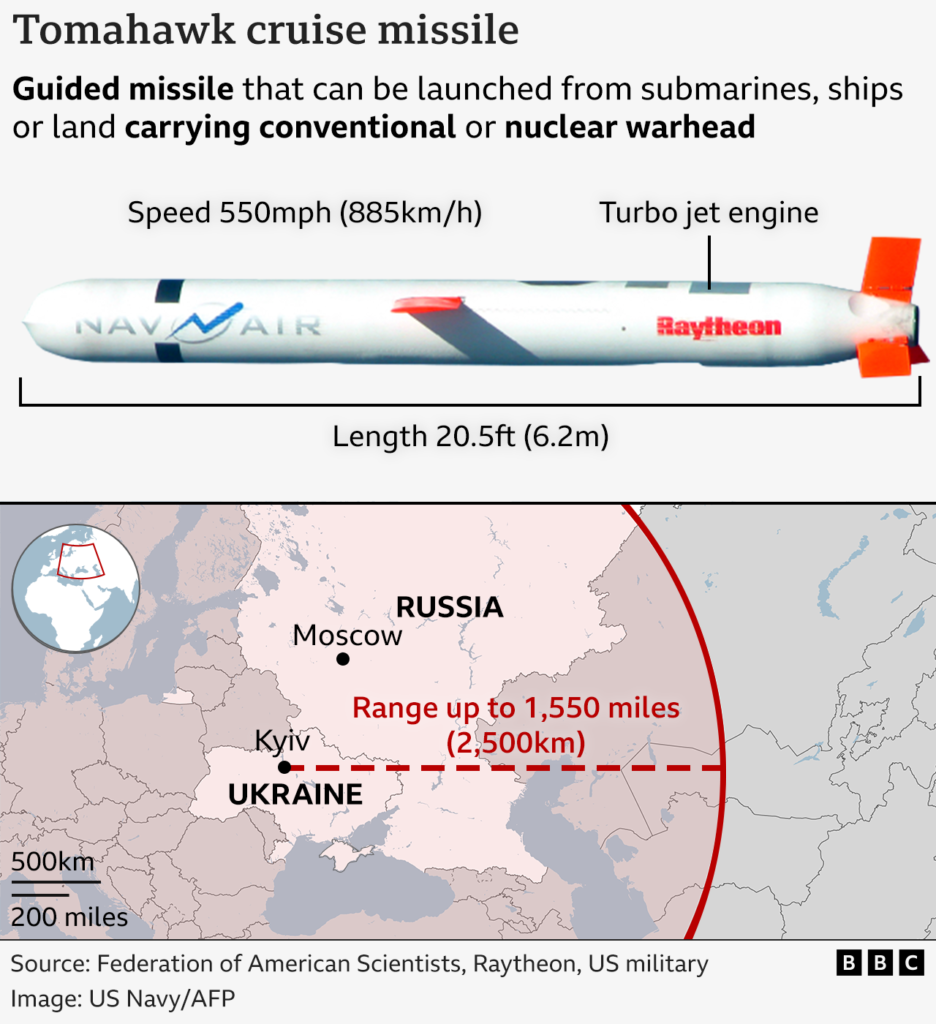
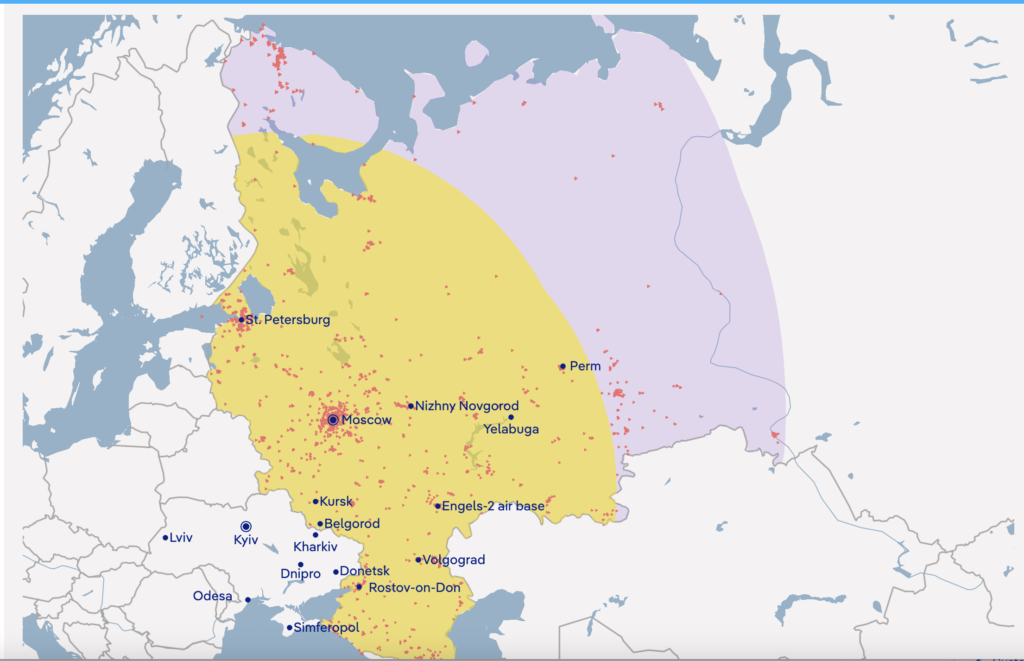
Conflict analysts at the Institute for the Study of War, a Washington-based think tank, have determined that there are at least 1,900 Russian military targets within range of the 1,550-mile Tomahawk variant, and more than 1,600 targets within range of the 1,000-mile variant of the missile.
Executive summary
Recent public comments by U.S. President Donald Trump that he is “sort of made a decision, pretty much” about supplying or enabling the supply of Tomahawk cruise missiles to Ukraine have reopened a high-stakes debate about capability, logistics, escalation risk, and legal/political constraints. Tomahawk missiles are long-range, precision, subsonic cruise missiles capable of striking high-value targets deep inside adversary territory. Supplying them to Ukraine would materially increase Kyiv’s deep-strike options, but also raises immediate questions about how Ukraine would launch them, command-and-control, U.S. inventory and industrial constraints, and the political risk of escalation with Russia. This paper (1) summarizes the technical characteristics and variants of the Tomahawk, (2) assesses operational and logistical realities for Ukraine, (3) evaluates strategic and legal/political implications for European partners, and (4) provides policy recommendations for European decision-makers.
1. Background: why Tomahawks matter now
Tomahawk cruise missiles have entered the public discussion because of high-level U.S. statements and concurrent diplomatic activity between Washington, Kyiv and Moscow. The allure is simple: a U.S. Tomahawk would give Ukraine a reliable, long-range precision strike capability able to hit logistics nodes, airbases, and other high-value targets at ranges on the order of hundreds to ~1,600 km (exact figures depend on variant and are partly classified). Proponents argue this could change the operational calculus on the battlefield by threatening rear-area logistics and command nodes; opponents warn of escalation, transfer and launch challenges, and political risks.
2. Technical overview — what a Tomahawk is and which variants matter
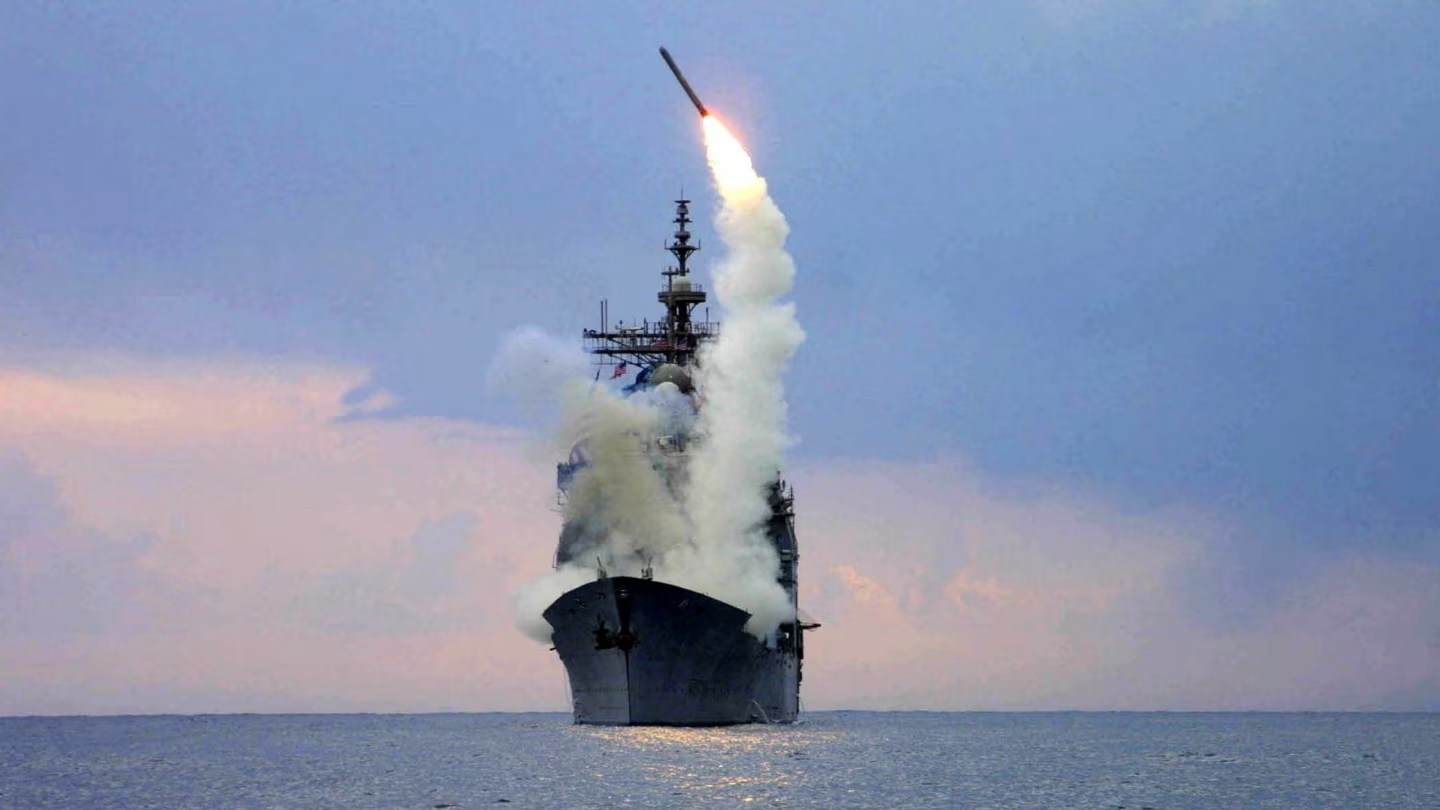
- Basic type: The Tomahawk (BGM/UGM/RGM-109 family) is a subsonic, jet-powered, terrain-following cruise missile designed primarily for land-attack missions. Launch platforms include surface ships (cruise missile-capable VLS cells) and submarines (torpedo tubes and VLS). Modern variants include the Block IV (TLAM-E / TACTOM) and the Block V family with enhanced navigation, data-linking and payload options.
- Range & warhead: Publicly reported ranges for Block IV/V variants are on the order of ~900–1,600 km (varies by reporting and classification). The missile carries a unitary high-explosive warhead (~450 kg class in common references for the unitary Tomahawk). Block IV has in-flight retargeting, loitering and battle damage assessment features.
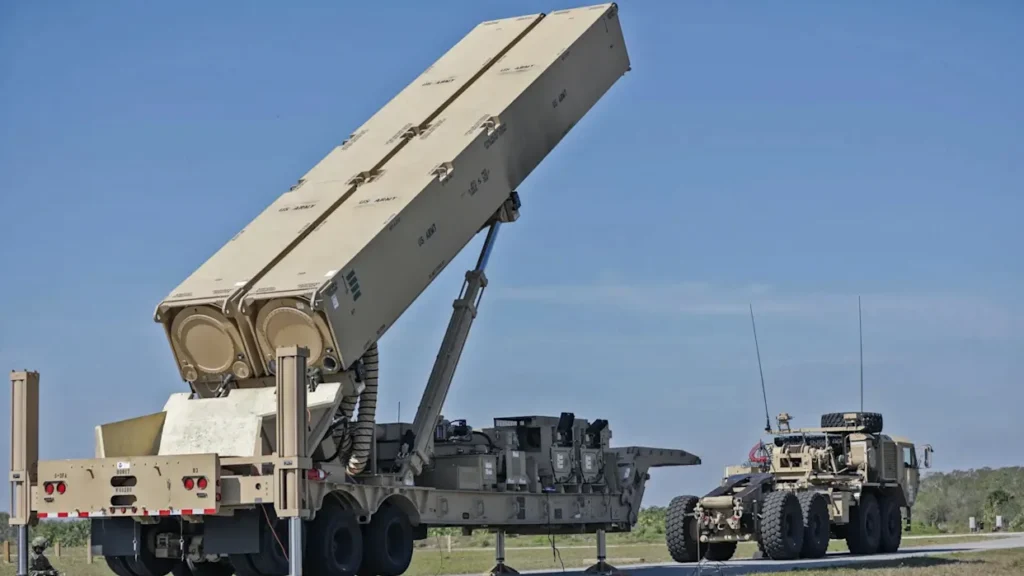
- Launch requirements: Traditionally launched from U.S. and allied surface combatants and submarines equipped with Mark-41 VLS or compatible submarine torpedo/VLS systems; a ground-based launcher (e.g., Typhon or other TEL developments) has been demonstrated experimentally but is not widely available. Deployment normally requires integrated targeting data, mission planning tools and trained crews.
3. Operational implications for Ukraine: capabilities and constraints
3.1 What Ukraine would gain
- Deep-strike reach: Tomahawks would permit strikes on deeper logistics hubs, repair depots, command centres and airbases that are otherwise out of reach of many Ukrainian systems, putting pressure on Russian rear areas and logistics lines.
- Precision and stand-off: The guided nature and stand-off range reduce risk to aircraft and artillery units while increasing precision against time-sensitive high-value targets.
3.2 Practical constraints and hurdles
- Launch platform shortage: Ukraine’s navy and coast-based strike infrastructure do not currently include the ship or submarine classes widely used to fire Tomahawks. Ground launchers exist in concept/limited form (and recent systems may change this), but mass fielding is non-trivial. Training and integration of launch, mission planning, and targeting chains will take time.
- Sensor and C2 needs: Effective use requires reliable ISR for target identification and battle damage assessment, secure data-links for in-flight retargeting (if employed), and robust command-and-control protocols to avoid fratricide and escalation.
- Supply and sustainment: Tomahawks are expensive and relatively scarce. Transferring them would draw from U.S. inventories or require FMS (Foreign Military Sales) procurement and sustainment packages, training, and supply chains.
4. Legal, political and escalation risks
4.1 Legal considerations
- Transfer approvals and end-use controls: Any U.S. transfer would be subject to export controls, political approval processes (congressional notification in some cases), and end-user agreements that may constrain use. European partners proposing to re-transfer U.S.-origin weapons would face similar legal/regulatory steps.
4.2 Political and strategic risks
- Escalation framing: Russia has warned that transfer/use of U.S. long-range strike weapons could constitute a major escalation and has linked such moves to a deterioration in bilateral relations. Policymakers must weigh military utility against the risk of provoking wider conflict.
- Domestic political constraints (U.S. & allies): Supply decisions are influenced by domestic politics (inventory, cost, public sentiment) and alliance management (NATO unity, burden sharing). Recent reporting shows U.S. political debate about whether to supply Tomahawks directly or to sell them to NATO for onward transfer.
5. Alternatives and complementary options for Europe and Ukraine
- Existing Western capabilities: Ukraine already fields or has been promised other long-range options (e.g., ATACMS variants, Storm Shadow/SCALP, Ukrainian Neptune/Flamingo). These may be more immediately deployable from land launchers or aircraft.
- Ground-based cruise options: If Tomahawk ground launchers or compatible land TELs can be supplied, Tomahawks become more practical; otherwise, European cruise missiles that can be air- or ground-launched may fill the gap more rapidly.
- Non-kinetic measures: Enhanced ISR, cyber, and electronic warfare can complement missile strikes to degrade logistics and C2 without introducing the same political escalatory profile.
6. Strategic scenarios — likely effects and second-order consequences
- Best-case operational effect: Controlled, intelligence-driven Tomahawk strikes degrade Russian logistics and command nodes, creating operational breathing room for Ukrainian manoeuvre without triggering a major strategic escalation.
- Worst-case escalation: Perceived or actual strikes against targets Russia treats as critical could provoke retaliatory strikes, expanded targeting of allied infrastructure, or an upsurge in Russian use of long-range weapons and attacks on energy infrastructure in Ukraine and beyond. Recent Russian rhetoric and military responses to related developments indicate this is a real risk.
7. Policy recommendations for European decision-makers
European policymakers must balance military utility, alliance cohesion and escalation management. Recommended actions:
- Demand clarity on U.S. intent and conditions. Europe should seek transparent briefings from U.S. counterparts on what is being offered (sale vs transfer), conditions, timelines, and training/sustainment packages. This reduces surprises and enables synchronized allied planning.
- Assess launch/operational feasibility quickly. Conduct a rapid technical assessment of how Tomahawks (if supplied) could be launched and integrated into Ukrainian C2 — including whether land-based launchers or NATO platforms would be used — and identify capability gaps.
- Prepare complementary European options. Accelerate procurement/deployment of European cruise missiles, loitering munitions, and ISR assets that can achieve similar effects with fewer political downsides or faster timelines.
- Harmonize legal and end-use frameworks. If re-transfer via NATO/allied channels is contemplated, Europe should agree common legal frameworks and red lines regarding targets and rules of engagement to prevent divergent practices that could increase escalation risk.
- Strengthen de-escalation diplomacy. Parallel diplomatic channels to Moscow should be maintained to explain defensive intent and to reduce misperception — while planning for deterrence and resilience against potential Russian escalation.
- Invest in training and sustainment for Ukraine. Offer targeted training packages, secure communications and mission-planning support so any transferred systems are used with appropriate safeguards.
8. Recommendations for intelligence and investigative units (ECSAP relevance)
- Open-source tracking: Monitor public procurement notices, FMS disclosures and parliamentary notifications for early signs of transfer decisions or allied sales.
- Platform/source verification: Map potential launch platforms in allied inventories (surface combatants, submarines, any ground TELs) and track any redeployments to European/NATO bases.
- Legal/forensic research: Prepare briefings on the international law implications of transfer and use, and document statements and legal positions from Moscow to anticipate legal contestation.
9. Conclusion
The Tomahawk is a potent and symbolically significant weapon. A decision to provide Tomahawks — directly or indirectly — to Ukraine would change Kyiv’s operational options and carry substantial political and escalation risks. For European policymakers and strategic analysts, the immediate priorities are clarity (what exactly is being offered and under what terms), feasibility (how would Ukraine launch and sustain the weapon), and coordination (how Europe and NATO will align operationally and legally). Complementary investments in European cruise-capability, ISR and de-escalatory diplomacy can mitigate risks while preserving Ukraine’s ability to impose costs on adversary logistics and command systems.