Prepared for the European Centre for Strategic Studies and Policy (ECSAP)
Executive Summary
Pakistan faces a rapidly escalating security crisis along its northwestern frontier, where renewed clashes with Taliban militants have intensified since 2023. The Taliban’s resurgence in Afghanistan has emboldened militant factions such as Tehrik-i-Taliban Pakistan (TTP), triggering violent incursions into Pakistani territory. The Pakistani military’s counterinsurgency operations, coupled with the deteriorating diplomatic relationship between Islamabad and Kabul, have raised fears of a wider regional conflict. This paper analyzes the structural roots of the conflict, its regional implications, and potential scenarios of escalation or de-escalation, drawing on military intelligence reports, cross-border data, and regional political analysis.
1. Background: The Shifting Balance of Power
The Taliban’s return to power in Kabul in August 2021 reshaped South Asia’s security architecture. Initially, Pakistan’s establishment perceived the Taliban victory as a strategic gain, expecting the group to curb anti-Pakistan militants operating from Afghan soil. However, by late 2022, the relationship deteriorated when the Taliban refused to restrain the TTP, which launched coordinated attacks on Pakistani security forces and infrastructure.
Between 2022 and 2025, Pakistan recorded more than 1,000 militant incidents attributed to the TTP, the highest level of violence since 2014. The group has consolidated its operations in Kunar, Nangarhar, and Paktika provinces in Afghanistan, enjoying safe havens and logistical support networks that Pakistan claims are tolerated, if not facilitated, by the Afghan Taliban government.
2. The Current Escalation: Cross-Border Clashes and Retaliatory Strikes
In early 2025, the Pakistan Armed Forces launched a series of air and artillery strikes targeting TTP bases inside Afghan territory, particularly in Khost and Paktika provinces. Kabul condemned these actions as violations of Afghan sovereignty, while Islamabad justified them as preemptive counterterrorism measures.
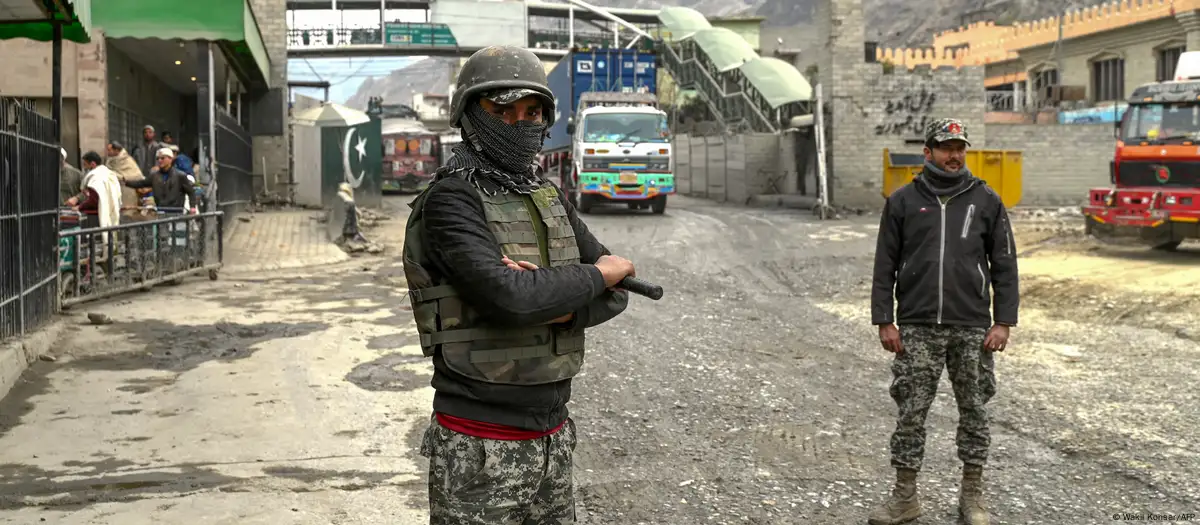
The Afghan Taliban responded by reinforcing border positions along the Durand Line, deploying additional fighters, and reportedly allowing local militias to assist in repelling Pakistani incursions. This tit-for-tat escalation has led to the most severe border clashes between the two sides since the fall of Kabul in 2021. Civilian casualties have risen sharply, and thousands have been displaced along both sides of the border.
3. Internal Dynamics: Pakistan’s Strategic Dilemma
Pakistan’s internal security is deteriorating amid the intensification of cross-border attacks. The TTP’s capacity has grown due to increased access to advanced weapons left behind by NATO forces in Afghanistan. The Pakistani military faces pressure to demonstrate decisive strength, yet domestic instability, economic crisis, and political fragmentation undermine sustained operations.
Civilian leadership in Islamabad—currently preoccupied with economic restructuring and IMF negotiations—has offered limited political oversight, leaving strategic decision-making largely in the hands of the military establishment. The risk of an overextension of resources and a multi-front confrontation (including renewed tensions in Balochistan and along the Line of Control with India) looms large.
4. The Afghan Taliban’s Calculus
For the Taliban leadership in Kabul, confronting Pakistan serves multiple purposes. First, it reinforces nationalist credentials among Afghan factions skeptical of Islamabad’s historical interference. Second, it deflects internal criticism of Taliban governance failures by rallying public opinion around external threats. Third, it strengthens ties with regional actors—particularly China, Iran, and Russia—who seek to balance Western influence in South Asia while avoiding direct involvement.
However, the Taliban government remains internally divided between pragmatic officials seeking stability and hardline commanders advocating open resistance against Pakistan. This factionalism contributes to erratic border policies and the fluctuating intensity of cross-border attacks.
5. Regional Implications: A Potential Proxy Theatre
The confrontation risks transforming into a broader proxy conflict. China’s Belt and Road investments through the China–Pakistan Economic Corridor (CPEC) are under threat, compelling Beijing to mediate discreetly while bolstering Pakistan’s counterterrorism capabilities. Iran, wary of instability on its eastern border, maintains cautious engagement with both sides. The United States, though militarily absent, continues to monitor the situation closely, fearing a resurgence of transnational jihadist networks that could spill over into Central Asia.
India, meanwhile, views Pakistan’s predicament as a strategic advantage, using diplomatic channels to highlight Islamabad’s inability to control terrorism, potentially undermining its international credibility. The escalation could therefore reconfigure regional alliances, with Afghanistan and Pakistan each seeking external patrons for military or diplomatic support.
6. Humanitarian Fallout
The fighting has produced significant civilian displacement. The UNHCR estimates that over 250,000 civilians have fled cross-border regions since early 2024, seeking refuge in Khyber Pakhtunkhwa and parts of Nangarhar. Humanitarian corridors remain closed in several contested areas, exacerbating food insecurity and disrupting vaccination and education programs. Reports of cross-border shelling targeting civilian zones have drawn condemnation from international NGOs.
7. Possible Scenarios
Scenario 1 – Contained Conflict:
Pakistan and the Afghan Taliban maintain limited engagements through back-channel talks mediated by China and Qatar. Cross-border violence persists but remains geographically contained.
Scenario 2 – Escalation to Regional War:
A major incident—such as a Pakistani strike causing mass civilian casualties—triggers full-scale hostilities. Afghanistan mobilizes fighters along the Durand Line, and Pakistan retaliates with airpower. Neighboring powers intervene diplomatically to prevent collapse, but regional spillover becomes likely.
Scenario 3 – Managed De-escalation:
Facing economic crises, both governments seek stabilization through a mediated security agreement, possibly involving intelligence-sharing mechanisms and joint border patrols. This outcome would require unprecedented cooperation and trust-building measures.
8. Policy Recommendations
- Reopen Diplomatic Channels: ECSAP recommends an EU-led dialogue initiative involving Pakistan, Afghanistan, and China to establish deconfliction protocols and prevent escalation.
- Strengthen Intelligence Cooperation: A trilateral mechanism under UN auspices could coordinate intelligence-sharing on cross-border militant movements.
- Targeted Sanctions on Spoilers: Impose sanctions on entities or commanders proven to facilitate TTP activities or cross-border arms smuggling.
- Humanitarian Corridors: Urgent EU and UN involvement is needed to secure access for aid delivery and civilian evacuation.
- Support for Governance Reform: Encourage both Kabul and Islamabad to pursue reforms addressing militant recruitment drivers—economic exclusion, tribal marginalization, and ideological radicalization.
9. Conclusion
The Pakistan–Afghanistan frontier is once again emerging as one of the world’s most volatile flashpoints. The convergence of political fragility, militant resurgence, and mutual mistrust has created a tinderbox with potential for regional destabilization. Unless immediate de-escalatory and diplomatic measures are undertaken, South Asia risks sliding into a prolonged, hybrid war with global security implications.