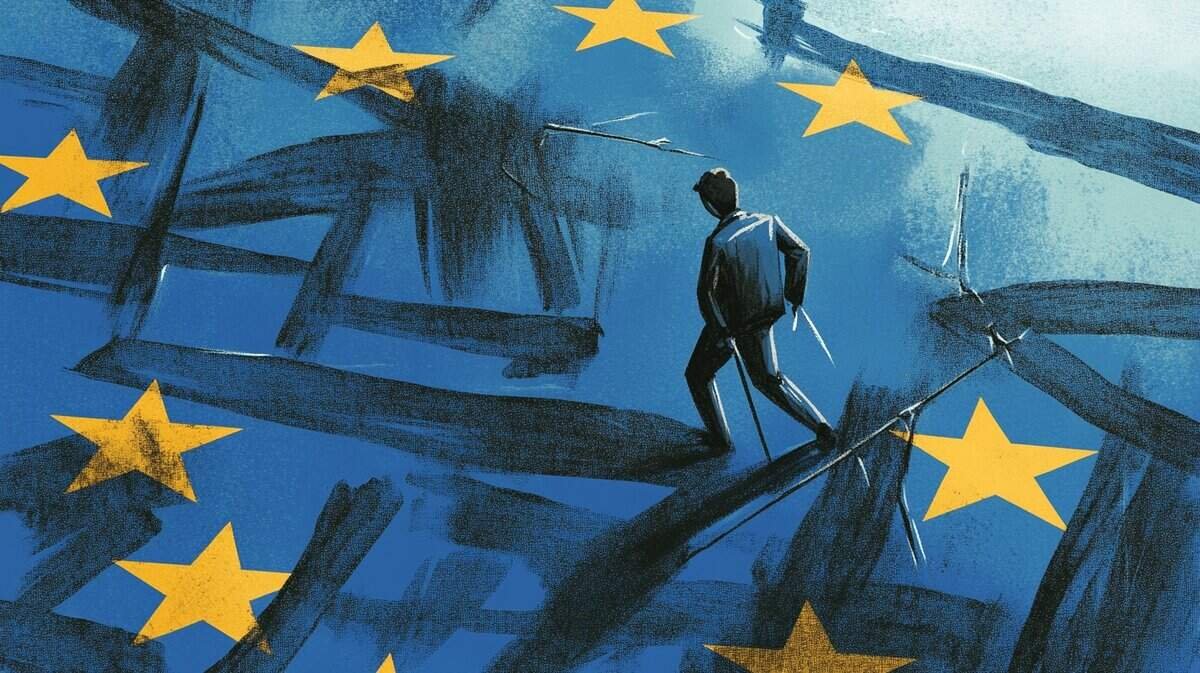
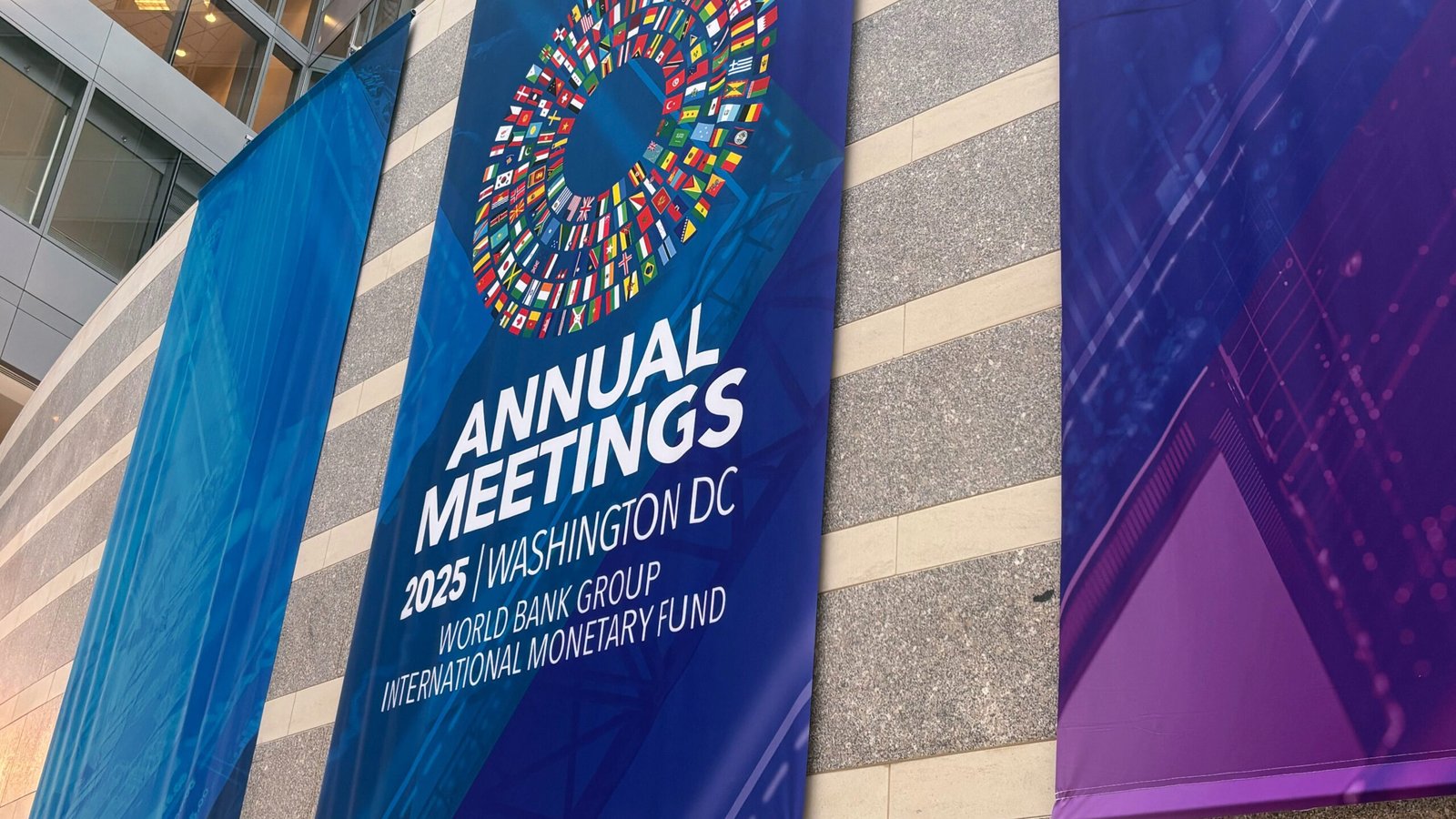
As financial leaders descend upon Washington, DC, this week for the annual meetings of the International Monetary Fund (IMF) and World Bank, IMF Managing Director Kristalina Georgieva issued them some bleak advice: “Don’t get too comfortable.”
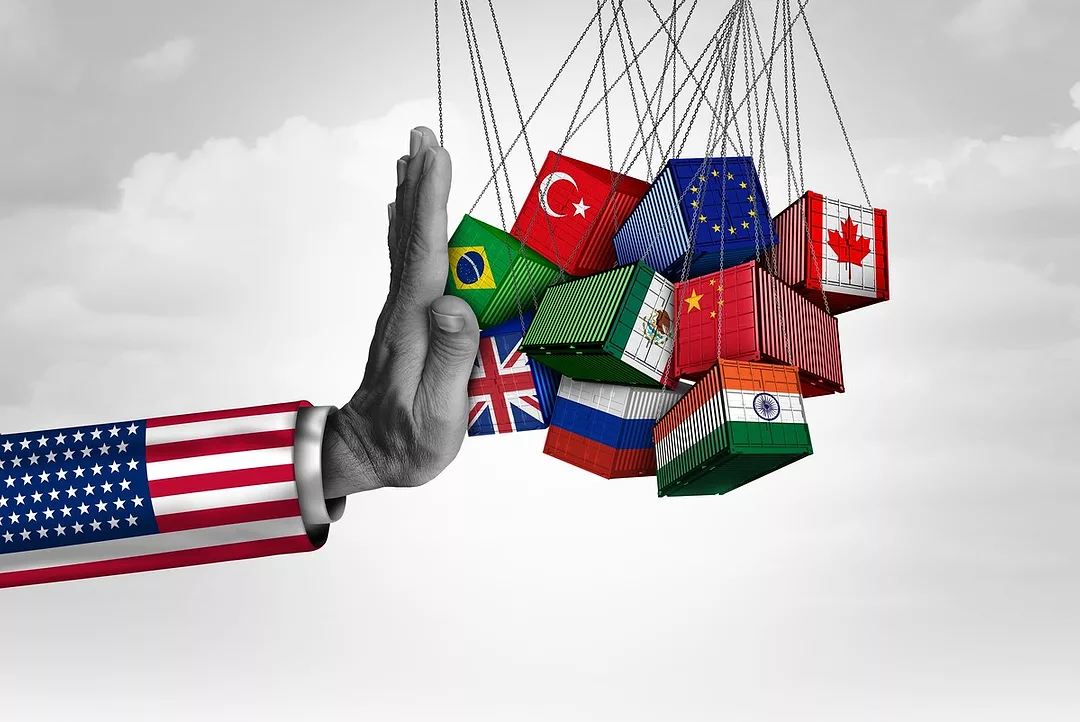
Georgieva’s warning last week came as the global economy continued to prove resilient against global shocks ranging from the United States’ tariff-rate changes to an artificial-intelligence investment boom that many believe is a bubble at risk of bursting. And while the global economy has done better than many feared, risks still linger. As Georgieva put it: “Uncertainty is the new normal, and it is here to stay.” An example of that played out just days before the annual meetings, when US President Donald Trump threatened to impose 100 percent tariffs on Chinese goods, but backtracked shortly after.
We sent our experts to the IMF and World Bank headquarters to sort through all the uncertainty and glean a sense of what may lie ahead for the global economy—and what policymakers should do about it. Below are their insights, in addition to highlights from our own conversations with economic leaders about how they plan to navigate tumultuous times.
The IMF-World Bank Annual Meetings kicked off today, on the same day that US President Donald Trump visited Israel to mark the implementation of phase one of his Gaza peace plan.
On the surface, the two events seem completely disconnected, but anyone who has been part of international finance over the past two years knows the opposite is true.
On October 8, 2023, I landed alongside my Atlantic Council colleagues in Marrakesh for that year’s IMF-World Bank Annual Meetings. Throughout the airport, our hotel, and the conference venue, television news played the horrific images of October 7 on loop, and the world’s finance ministers and central bank governors were asked for their thoughts on the unfolding war. They largely demurred, arguing that it was too early to tell if there would be any economic repercussions. I criticized that response at the time.
Fast forward to the 2024 spring meetings. Two days before the meetings began, Iran launched hundreds of drones and missiles toward Israel. The markets reacted sharply, and the risk of a wider war trickled into every conversation. But the threat passed, markets rebounded, and the world’s finance ministers went back to business.
Now, here we are again. Financial leaders will discuss tariffs, debt, a US government shutdown, the growth of artificial intelligence, the future of the dollar, the bailout in Argentina, and more. But the one thing they likely won’t talk about is the cease-fire in Gaza.
Economists have been trained for decades to separate the worlds of macroeconomics and geopolitics, despite time and again being reminded that’s not how the world works. Just look back to Russia’s invasion of Ukraine, which triggered the most sweeping sanctions response in history.
Events over the past few years remind us why the Bretton Woods institutions were created in the midst of World War II: to deliver economic prosperity in the hopes of fostering peace. But in recent decades, the world’s financial leaders have focused solely on the prosperity part (with mixed results) and have sometimes forgotten the larger goal.
To continue to earn the trust of the member countries they serve, these institutions must remember their roots.
Once again, the International Monetary Fund (IMF) and World Bank Annual Meetings will unfold against a turbulent global backdrop. In their speeches and prepared statements, delegates will raise concerns about the global economic outlook, fret about rising fiscal deficits and hidden risks in private equity and crypto markets, and make the case for their own policy efforts in front of the global community. A joint communiqué is unlikely, in part because both the United States and China will not agree to language aimed at reining in their isolationist or mercantilist tendencies for the benefit of the rest of the world.
But this is not what observers should focus on most this week. Instead, it’s worth closely watching for a hint of what is happening behind closed doors. There, conversations will focus on the few areas for which the two institutions still enjoy the support of their major shareholders—not the least because the IMF’s and World Bank’s considerable financial resources look ever more appealing to finance ministers who are running out of fiscal space at home.
The United States and the IMF
To begin with, most delegations will be keenly interested in Washington’s relationship with the Bretton Woods twins. US Treasury Secretary Scott Bessent signaled support for the institutions at the spring meetings this year, recently firmed up by the US intervention in the Argentine peso. But while policymakers may talk of partnership, the power asymmetry within the IMF remains evident.
There is a possible upside to greater US engagement—including improved cooperation on major lending cases and a push for the IMF to strengthen its surveillance arm, a core mandate much neglected in recent years. Similarly, the United States could collaborate with the two Bretton Woods institutions to ensure that countries meet their loan conditions, enabling timely repayment. The administration might even convince Congress to ratify the 2023 quota increase, shifting the fund’s finances to a more permanent capital base.
But there is also a risk. Already reeling from the dissolution of the US Agency for International Development, many delegates are bracing for US demands to cut climate and, perhaps, development programs at the IMF and World Bank, which could lead to substantial friction with emerging market and developing countries. Moreover, there are concerns that the United States could politicize both lenders’ loan operations, exposing all shareholders to the risks of misconstrued lending programs.